 Anacortes
 One Product, On Purpose
Most siding contractors will install whatever a homeowner picks: vinyl, LP SmartSide, fiber cement from any of several manufacturers, even primed wood if that's what the budget calls for. We don't work that way. Anacortes Siding installs James Hardie fiber cement siding, exclusively. No vinyl, no LP SmartSide, no Cemplank or Allura, no primed spruce or cedar lap. That's not a marketing gimmick or a manufacturer kickback arrangement — it's a standard we set after weighing what actually holds up on homes here in Anacortes and across Skagit County, against a coastline that does not go easy on exterior building products.
This page explains the reasoning, plainly. We'll cover what a one-product standard actually buys a homeowner, why our regional climate makes the choice matter more than it would somewhere drier and calmer, and what James Hardie's product system actually consists of so you're not just taking our word for it.
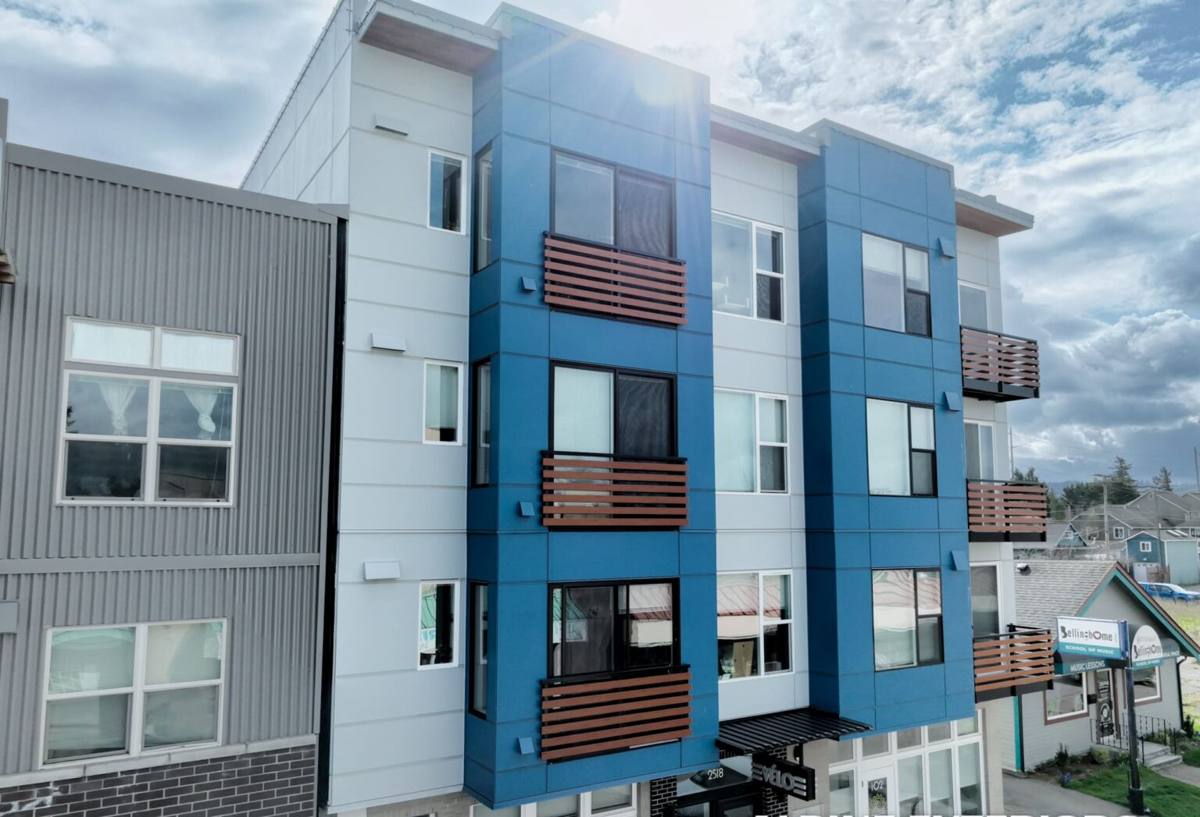
What Anacortes and Skagit County Throw at a House
Anacortes sits at the water's edge — Rosario Strait on one side, Fidalgo Bay on the other. That means salt-laden air moving across siding surfaces essentially every day of the year, not just during storms. Combine that with the marine layer's driving rain, long stretches of damp shoulder-season weather, and a moss season that can run from October through May in shaded, north-facing exposures, and you've got an environment that's actively working against most exterior materials, all the time.
Three specific stresses matter for siding selection here:
- Salt air corrosion and finish breakdown: airborne salt accelerates the degradation of paint films, adhesives, and some composite binders faster than it would inland.
- Sustained moisture exposure: it's not occasional heavy rain that does the damage — it's weeks of low-grade dampness that gives moisture time to work into seams, fastener holes, and any place a product's water-resistance depends on a coating rather than the material itself.
- Moss and organic growth: shaded elevations and roof-adjacent siding areas hold moisture long enough for moss and algae to take hold, which matters because some siding materials handle scrubbing and moss treatment far better than others.
Any siding product can be marketed as weather-resistant. Whether it actually performs after ten or twenty years in this specific climate is a different question, and it's the one we've built our installation standard around.
Why We Don't Install the Alternatives
Vinyl Siding
Vinyl is inexpensive and low-maintenance in mild climates, and we understand why it's popular. Our objection isn't that vinyl is a bad product in the abstract — it's that it's a poor match for this specific environment. Vinyl expands and contracts significantly with temperature swings, which over years can loosen its interlocking panels and open gaps at seams. In salt air and driving rain, those gaps become entry points for moisture behind the cladding. Vinyl also can't be painted to refresh its color as it fades in UV and salt exposure — when it chalks or discolors, the only fix is replacement.
LP SmartSide
LP SmartSide is engineered wood — strand board treated with resins and zinc borate for moisture and insect resistance. It performs reasonably well in many parts of the country. But it's still wood at its core, and wood-based products depend entirely on their factory coating and installation detailing staying intact to keep moisture out. In a climate with Anacortes' sustained dampness, any breach in that coating — a fastener that backs out, a cut edge left unsealed, a scuff from a ladder — gives moisture a path into a substrate that swells and deteriorates once it's wet. We've made the call that we don't want to be the ones installing a product whose long-term performance here depends that heavily on perfect maintenance follow-through.
Cemplank, Allura, and Other Fiber Cement Brands
This one's a closer call, because these products are genuinely similar to Hardie in basic composition — cement, sand, and cellulose fiber. The differences that matter to us are in the manufacturing consistency, the factory finish systems, and the warranty structure. James Hardie has the longest track record of any fiber cement manufacturer in North America and the deepest bench of climate-specific product engineering (more on that below). Standardizing our crews, our fastening specs, and our warranty conversations on one manufacturer also means our installers aren't switching between different manufacturers' installation requirements from job to job — which is a real factor in installation quality, not just a convenience for us.
Primed Spruce or Cedar
Real wood siding has a genuine appeal, and we're not going to pretend otherwise. But primed wood puts the entire moisture-defense burden on paint film and caulk joints, both of which need repainting and re-caulking on a cycle that most homeowners underestimate — especially in a climate that's damp more months than it's dry. Cedar handles moisture more gracefully than spruce but still needs regular finish maintenance to avoid cupping, checking, and moss colonization on shaded walls. We'll be honest with anyone who asks: wood siding can look great, but it asks a lot of ongoing upkeep that most homeowners don't want to sign up for once they understand what it involves.
What James Hardie Actually Is
James Hardie fiber cement siding is made from Portland cement, sand, and cellulose fiber, cured under pressure and heat. That composition is what makes it non-combustible — it doesn't burn, warp, or provide fuel to a fire the way wood-based products can. It's also dimensionally stable across the temperature and humidity swings that stress vinyl, and it doesn't absorb and swell with moisture the way wood or wood-composite products do at a cut edge or fastener hole.
ColorPlus Factory Finish
Most Hardie siding we install carries the ColorPlus finish — a color baked on at the factory under controlled conditions, rather than field-painted after installation. That finish is backed by its own multi-year warranty against fading, chipping, and peeling, and it holds up meaningfully better against UV and salt exposure than a field-applied paint job, because factory application achieves more even coverage and cure than what's practical on a job site.
HZ5 and Climate-Engineered Product Lines
James Hardie engineers specific product formulations for different climate zones. The HZ5 line is formulated for regions with significant moisture exposure and freeze-thaw cycling — which fits the Pacific Northwest well. That's a meaningful difference from a one-size-fits-all approach: the product itself is matched to what it has to withstand, not just marketed as generically "weather resistant."
Warranty Structure
James Hardie backs its siding with a long, transferable limited warranty, and the ColorPlus finish carries its own separate finish warranty. Transferability matters if you sell your home — it's a real asset a buyer's inspector or agent will notice, not just paperwork.
Comparing the Options Side by Side
| Material | Moisture Behavior in Marine Climate | Maintenance Burden | Fire Resistance |
|---|---|---|---|
| James Hardie fiber cement | Dimensionally stable, doesn't swell or rot at cut edges | Low — occasional wash, no repainting on ColorPlus finish | Non-combustible |
| Vinyl | Seams can open with expansion/contraction over time | Low, but no refinishing option once faded | Combustible, can melt/deform near heat sources |
| LP SmartSide | Wood-based; depends on coating integrity to resist moisture | Moderate — coating and edge maintenance matter | Treated, but wood-based core |
| Primed cedar/spruce | High — needs finish maintenance to prevent cupping/rot | High — recurring paint/stain and caulk cycle | Combustible |
What Correct Installation Looks Like
Fiber cement's reputation problems, where they exist, almost always trace back to poor installation rather than the product itself. James Hardie publishes detailed installation requirements, and following them precisely is what keeps the manufacturer's warranty valid and keeps the siding performing for decades. In our climate, a few details matter more than most homeowners realize:
- Correct clearances: siding held the specified distance above roof lines, decks, and grade so water can't wick up from below.
- Proper fastening: the right fastener type and placement so panels don't work loose under the wind loads common along the strait.
- Weather-resistive barrier and flashing details: a correctly lapped barrier and flashing at every window, door, and penetration, so the siding is a second line of defense rather than the only one.
- Sealed and painted cut edges: factory finish protects the face of the board, but any field cut needs to be sealed per spec or it becomes a moisture entry point.
- Proper joint treatment: butt joints and trim intersections detailed to shed water rather than trap it.
This is also part of why we standardized on one manufacturer: our crews install to one set of specifications, repeatedly, rather than juggling different requirements for different brands from job to job.
What This Means for Your Project
If you're comparing bids and another contractor is offering a lower price with a different material, that's worth understanding clearly rather than dismissing outright — cost is real and we won't pretend otherwise. But we'd rather explain upfront why we've limited ourselves to one product than sell you something we don't believe will hold up on a house exposed to Fidalgo Bay's salt air and Skagit County's long wet season. A lower material cost that needs earlier replacement or heavier maintenance isn't actually the lower-cost option once you look at it over the life of the siding.
If you'd like to see how this plays out on your specific home — orientation, exposure, existing siding condition, and what a Hardie installation would involve — we're glad to walk the property with you and put together a free, no-pressure estimate.