 Anacortes
 Two Fiber Cement Brands, One Big Decision
If you've started researching siding replacement in Anacortes, you've probably run into two names that keep showing up: James Hardie and Allura. Both are fiber cement products, both are sold as durable alternatives to wood and vinyl, and on a spec sheet they can look almost interchangeable. They aren't. We install James Hardie exclusively on every project we take on, and we think homeowners deserve a straight answer about why — not a sales pitch, not a takedown of the competition, just an honest comparison based on the material itself and what holds up in this part of Washington.
Anacortes sits on Fidalgo Island, surrounded by saltwater on three sides, with a climate that swings between driving winter rain, salt-laden air off Guemes Channel and Rosario Strait, and a long damp season where moss and algae get a real foothold on anything that stays wet. That combination is tough on exterior products, and it's a big part of why the brand and formulation behind your siding matters more here than it would in a drier inland climate.
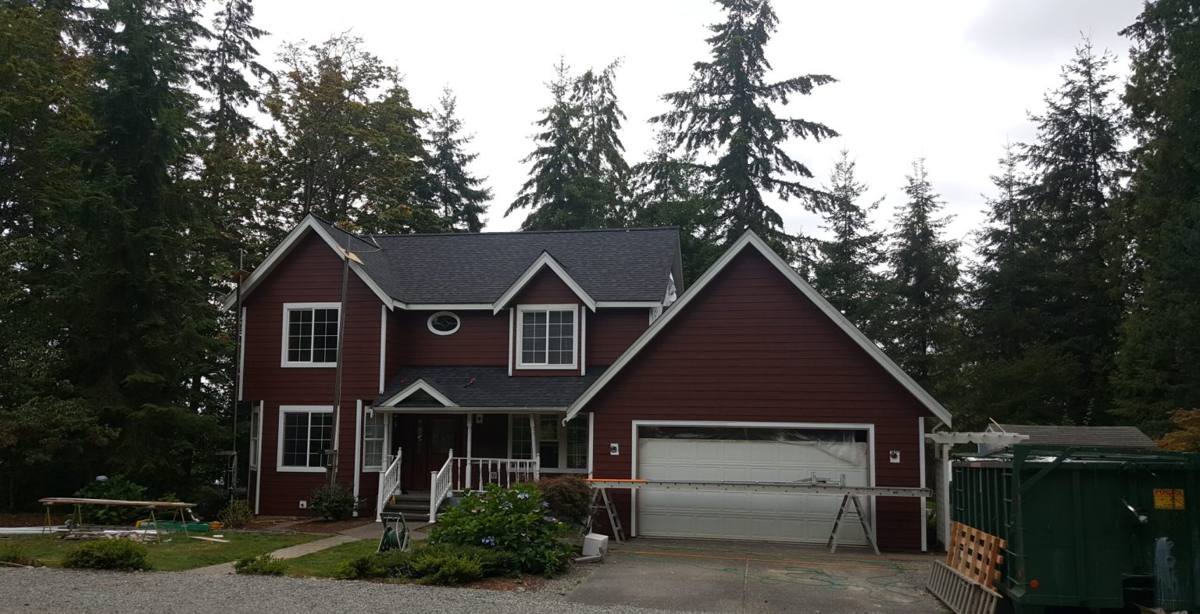
What Allura Gets Right
We want to be fair to Allura, because it's a legitimate fiber cement product, not a knockoff. Allura is manufactured using an autoclaved fiber cement process similar in concept to Hardie's, and it's been sold in North America for years under names including Allura and formerly Cemplank. It offers lap siding, panels, and trim in profiles that look similar to Hardie's lineup, and it costs less installed in most markets, which is the main reason it gets specified on some projects.
Fiber cement as a category — whether it's Allura or Hardie — is a real upgrade over vinyl and untreated wood. It resists fire better than most siding materials, it doesn't attract insects, and it holds paint or factory finish longer than cedar. If a homeowner asked us "is fiber cement a good choice for the Pacific Northwest," the honest answer is yes, generally. The harder question is which fiber cement, and that's where the two brands diverge.
Where the Differences Start to Matter
The core issue isn't that Allura is a bad product on paper. It's that James Hardie has spent decades engineering formulations specifically for regional climate zones, backing the product with a manufacturing and quality-control track record at a scale Allura hasn't matched in the U.S. market, and building a factory-finish system and warranty structure that we can stand behind when we're the ones putting our name on the installation.
| Factor | Allura Fiber Cement | James Hardie |
|---|---|---|
| Climate-specific engineering | General formulation across regions | HZ5 (formerly HardieZone 5) engineered for the wet, marine Pacific Northwest |
| Factory finish system | Factory-primed or painted options vary by product line | ColorPlus baked-on finish with dedicated touch-up system and matched caulk |
| Market track record in PNW | Smaller regional install base | Long-established, high install volume in Western Washington |
| Warranty structure | Manufacturer warranty, terms vary by product | Non-prorated limited warranty, transferable, with ColorPlus finish warranty layered on top |
| Contractor familiarity locally | Less common, fewer local crews trained specifically on it | Widely installed; most Skagit County siding crews have direct Hardie experience |
Why Climate Engineering Isn't a Marketing Line
Fiber cement is cement, sand, and cellulose fiber pressed and cured into a board. How that mixture is formulated affects how the board handles moisture cycling — repeated wetting and drying — over its lifespan. Western Washington, and Anacortes specifically, puts siding through more of that cycling than almost anywhere else in the country: rain most of the winter, fog rolling off the water, humidity that doesn't fully clear even in summer.
James Hardie sells different formulations for different climate zones in the U.S., with a version specifically engineered for regions like ours that deal with sustained damp conditions and freeze-thaw swings. That's not a small detail. A siding board that's over-engineered for a dry climate and under-engineered for ours will show it over time — not necessarily through dramatic failure, but through more maintenance, more moisture-related wear at joints and cuts, and a shorter effective service life than the warranty period suggests. Allura doesn't offer that same level of documented regional differentiation in its published product line, which is one of the concrete reasons we don't specify it for homes here.
The Finish Is Half the Product
A siding board is only as good as what's protecting its surface, and this is where the gap between the two brands is most visible day to day. James Hardie's ColorPlus finish is baked on in a factory-controlled process, cured to resist fading, chipping, and cracking, and it comes with a matched caulk and touch-up system so that repairs and trim work blend in instead of standing out. That system is a big reason Hardie siding still looks sharp a decade or more after installation on homes around Skagit County.
Allura offers primed and pre-finished options as well, but the factory finish ecosystem — the depth of color options, the touch-up matching, the field-proven fade resistance specific to marine, salt-air exposure — isn't built out to the same degree. For a house a few miles from saltwater, where UV, salt, and moisture are working on the finish simultaneously, that difference shows up faster than it would in a milder inland climate.
Salt Air and Moss: The Local Stress Test
Anacortes homes deal with two things a lot of siding installations never have to handle at the same intensity: salt-laden air and moss. Salt air accelerates corrosion on fasteners and hardware and can stress painted or coated surfaces over time. Moss and algae thrive in our shaded, damp microclimates — under eaves, on north-facing walls, in the tree cover common around Fidalgo Island neighborhoods — and they hold moisture against the siding surface longer than open, sunny walls would. A finish and formulation built for this kind of exposure isn't a luxury feature here; it's the baseline requirement for siding that's still doing its job in fifteen or twenty years.
Installation Sensitivity and Warranty Reality
Fiber cement siding of any brand is only as good as the installation. Improper flashing, wrong fastener spacing, caulking gaps as sealant instead of proper joint treatment, and cutting corners on rainscreen or drainage detailing will cause moisture problems regardless of whether the boards say Allura or Hardie on the back. That said, warranty structure matters when something does go wrong.
James Hardie's limited warranty is non-prorated and transferable to a subsequent homeowner, which matters both for your own protection and for resale value. Allura's warranty coverage exists too, but the terms and the manufacturer's claims process don't carry the same track record or transferability reputation in this region. When we're recommending an exterior investment that's supposed to last decades, we want to be confident the paperwork behind it will actually hold up if a claim is ever needed — not just today, but for whoever owns the house in year eighteen.
Why We Standardized on One Brand
We made a deliberate decision to install James Hardie exclusively rather than carrying multiple fiber cement lines. There are a few practical reasons behind that, beyond the product differences above.
- Our crews train specifically on Hardie's installation specs, fastening patterns, and flashing details — depth of expertise beats spreading a crew thin across multiple systems.
- We can back our workmanship warranty with confidence because we know exactly how the product behaves over time in this climate.
- ColorPlus finish and matched trim components mean repairs and additions years later blend seamlessly instead of becoming a visible patch.
- Hardie's climate-specific HZ5 formulation is a direct match for Skagit County's marine, high-moisture conditions.
- A single, well-documented supply chain means fewer surprises on lead times, color matching, and replacement parts if storm damage or an addition calls for more material later.
None of that means Allura is an unreasonable product for every homeowner in every market. It means that for the specific conditions we build in — salt air, sustained rain, moss pressure, and a homeowner base that wants siding they won't think about again for two decades — Hardie has consistently been the product we trust our name to.
What to Ask Before You Choose a Fiber Cement Product
Whatever contractor you're talking to, and whatever brand they're proposing, a few questions will tell you a lot about whether the product and the installer are a good match for a marine Pacific Northwest home.
- Is this specific product formulated or rated for high-moisture, marine climate zones, or is it a general-purpose formulation?
- What does the factory finish warranty actually cover, and is it transferable if I sell the house?
- How many installations has this crew done with this specific brand in Skagit County or similar coastal conditions?
- What's the flashing and rainscreen detail at windows, corners, and the foundation line?
- If a board is damaged or needs replacement in ten years, how easily can it be color-matched?
Cost Context, Honestly
Allura and similar fiber cement alternatives are usually priced somewhat below James Hardie installed, and that price gap is real and worth acknowledging rather than glossing over. For some homeowners on a tight budget, that difference matters. What we'd encourage you to weigh against it is the cost of the finish system, the climate-specific formulation, and the warranty transferability over a 20-to-30-year siding lifespan — because siding is not a purchase most homeowners repeat every few years. The lower upfront number is only a good deal if the product performs for decades in salt air and constant winter rain without extra maintenance cost eating up the savings.
Our Recommendation for Anacortes Homes
For a home on Fidalgo Island or anywhere in Skagit County dealing with year-round moisture, salt exposure, and moss pressure, we recommend James Hardie fiber cement siding, installed to manufacturer spec with proper flashing and drainage detailing behind it. That's not brand loyalty for its own sake — it's the product and finish system that has, in our experience, held up best against exactly the conditions this region throws at a house.
If you're weighing Allura, Hardie, or another siding material for your home, we're happy to walk through the specifics with you in person. Reach out for a free, no-pressure estimate and we'll take a look at your home's exposure, existing siding condition, and give you a straight recommendation — use the form below to get started.