 Anacortes
 Why This Decision Is Harder Near the Water
Every siding contractor gets some version of this question: "Can you just fix this part, or do I need to replace the whole thing?" In most parts of the country, that's a fairly simple call based on age and visible damage. In Anacortes, it's a little more complicated. Salt air off Fidalgo Bay and Rosario Strait accelerates the breakdown of fasteners, paint, and any wood-based siding product. Add in the driving rain that comes with fall and winter storms, plus a moss season that can stretch from October through May on shaded or north-facing walls, and siding here ages differently than it does forty miles inland.
That means a repair-vs-replace decision shouldn't be based on how old the siding is alone, or how bad one section looks. It has to account for what the material is, how it's held up to this specific climate, and what's likely happening behind the surface where you can't see it.
When Repair Is Still the Right Call
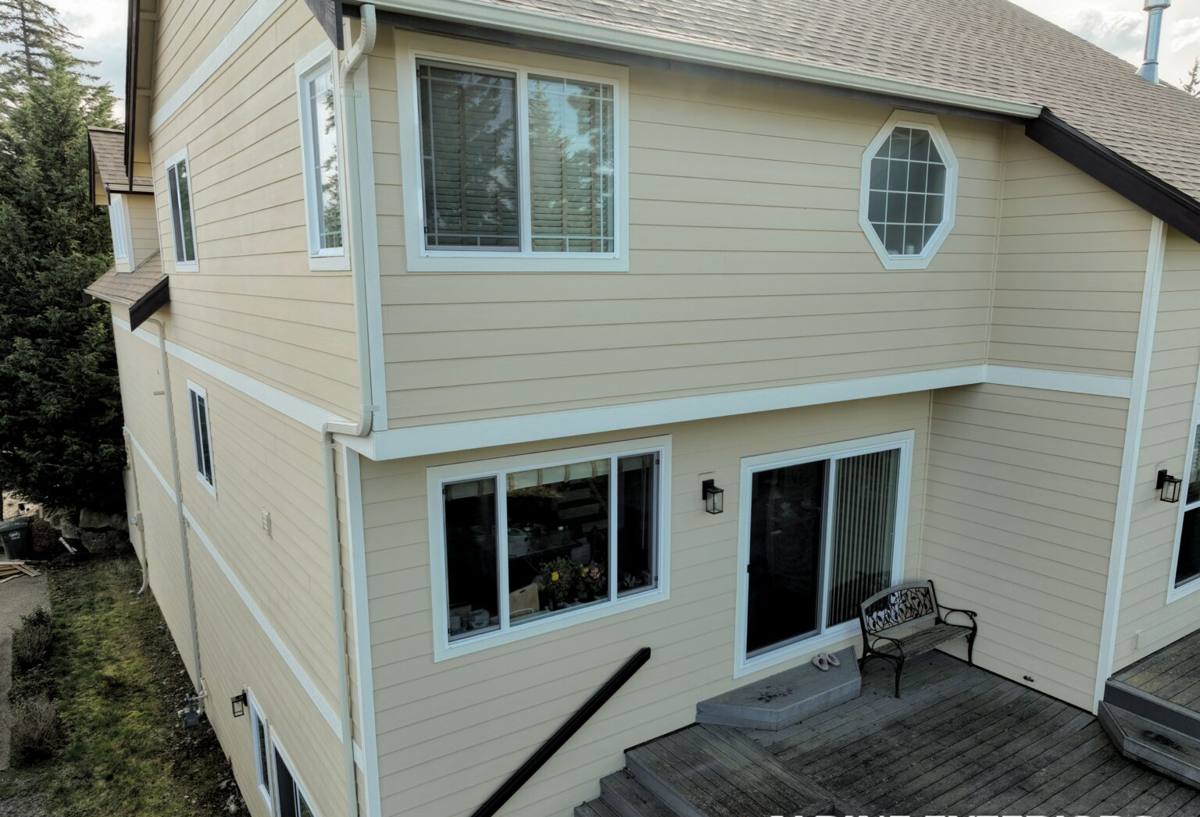
Repair makes sense when the damage is isolated, the underlying material is sound, and the rest of the siding still has useful life left. Homeowners spend money they don't need to spend when they replace an entire elevation over a problem that was really confined to one board or one corner.
Good candidates for repair
- A single cracked or split board from an impact, with no rot in the surrounding area
- Localized caulk failure at trim or window returns, letting in minor moisture without structural damage yet
- Isolated fastener pops or nail popping causing a board to bow slightly
- Paint failure limited to sun-exposed elevations, with the substrate still solid underneath
- Minor pest entry points that were sealed early, before framing was compromised
If a contractor can probe the area with a screwdriver and hit solid wood or intact fiber cement, not soft, spongy material, repair is usually the honest recommendation. Anyone who pushes full replacement for a problem that's genuinely contained isn't doing you any favors.
Signs You've Moved Past Repair Territory
The harder calls are the ones where damage looks minor on the surface but points to something systemic. This is where a lot of Anacortes homes end up, because the same conditions that cause one visible failure point are usually working on the rest of the wall too.
Red flags that usually mean replacement
- Soft or spongy siding in multiple, unrelated locations rather than one isolated spot
- Persistent moss or algae growth that keeps returning within a season or two of cleaning, especially on north and west walls
- Visible warping, buckling, or delamination across more than one section
- Paint that won't hold for more than a couple of years no matter how it's prepped
- Interior signs like peeling paint, musty smells, or soft drywall near exterior walls, which suggest moisture has already gotten past the siding
- Siding that's original to a home built more than 20-25 years ago, particularly wood-based products
When you see two or more of these at once, patch repairs tend to become a repeating expense rather than a solution. You end up paying for the same fix on a different wall every couple of years.
What's Actually Happening Behind the Siding
The visible siding is the least important part of this evaluation. What matters more is the condition of the water-resistive barrier and sheathing behind it. Siding's real job is to shed water before it reaches that layer. Once fasteners loosen, caulk joints fail, or a board cups and creates a gap, water starts working its way behind the cladding during Anacortes's wetter months.
Because of the driving rain patterns common to this stretch of the Salish Sea coastline, wind-driven moisture doesn't just run down the face of a wall, it gets pushed sideways and upward into laps and joints that would stay dry in a calmer climate. That's why a home here can show more interior moisture damage than the exterior siding condition would suggest. If a contractor pulls a section of siding for repair and finds soaked or delaminating sheathing underneath, that's usually the moment a "small repair" job turns into a full-wall or full-elevation replacement, because patching new siding over compromised sheathing just seals the moisture problem back in.
Repair vs. Replacement by Siding Material
How repairable a siding system is depends heavily on what it's made of. Some products age gracefully and take repair well. Others tend to fail in ways that make partial repair a short-term patch at best.
| Siding Type | How It Typically Fails | Repair Outlook |
|---|---|---|
| Cedar (untreated or lightly finished) | Cupping, splitting, rot at butt joints, moss retention | Repairable early; poor once rot spreads past the surface |
| Primed spruce/wood composite panels | Edge swelling, delamination when finish is breached | Difficult; swelling often spreads beneath intact-looking paint |
| Vinyl | Cracking in cold snaps, warping from heat/reflection, fading | Individual panels replaceable if color match is still available; whole-wall issues are common with age |
| Fiber cement (James Hardie) | Impact chips, caulk joint wear, factory finish fade over decades | Very repairable; board-for-board replacement is straightforward and doesn't compromise the rest of the wall |
This is a big part of why we standardized on James Hardie fiber cement for every installation we do. It's not that other products can't be repaired at all, it's that fiber cement holds its shape and resists moisture intrusion in a way that keeps repairs genuinely local instead of triggering a chain reaction across the wall.
Cost Factors Worth Weighing
We won't quote you a number here, every home and scope is different, but these are the real variables that push a project toward repair or replacement cost-wise:
- Extent of hidden damage: the cost difference between "replace the siding" and "replace the siding and the sheathing behind it" is significant, and you often don't know which one you're facing until the wall is opened up
- Color and product matching: older siding, especially discontinued vinyl or weathered wood, may not match closely enough to make a partial repair look acceptable
- Scaffolding and access: repairs on a single low wall cost far less to mobilize for than repairs spread across multiple elevations or a second story
- Long-term maintenance: a cheaper repair now on a failing wood or composite product often means another repair bill in a few years; a full replacement resets that clock
- Energy and moisture performance: replacement is a chance to correct house wrap, flashing, and insulation issues that repair alone won't touch
A straight repair is almost always cheaper up front. The question worth asking is whether it's cheaper over the next ten years, or just cheaper this month.
Age, Warranty, and the Math That Matters
Most siding products carry a manufacturer warranty, and those warranties matter more than people expect when weighing repair against replacement. If your siding is past its warranty period, or the warranty was voided by a prior repair, poor installation, or a change of ownership without transfer paperwork, you're carrying 100% of the risk on any future failure yourself. That changes the math. Spending money on a repair to siding with no remaining warranty coverage is a bet that nothing else fails in the next few years. Given Skagit County's weather, that's not always a safe bet, particularly for wood-based or older vinyl products nearing 20 years old.
James Hardie's ColorPlus finish and product lines carry strong transferable warranty coverage, which is part of why replacement with fiber cement tends to be viewed as resetting the clock rather than delaying the inevitable.
When Full Replacement Is the Better Investment
There's a point where continuing to repair stops being the frugal choice and starts being the expensive one. If you're facing your second or third repair call in five years, if damage keeps surfacing in new spots, or if the sheathing behind the siding is already compromised in more than one area, replacement is usually the more honest recommendation, even though it costs more today.
When we do recommend full replacement, we install James Hardie fiber cement exclusively. We don't offer vinyl, LP SmartSide, Cemplank, Allura, or untreated wood siding as alternatives, not because those products don't have a place in the market, but because we've made a professional judgment that fiber cement holds up better to the specific combination of salt air, wind-driven rain, and moss growth that this area sees year after year. Hardie's HZ5 product line is engineered specifically for climates like ours, it's non-combustible, and the factory-applied ColorPlus finish holds color far longer than field-applied paint on wood or composite siding. That's a meaningful difference when you're deciding whether to spend replacement money once or repeat smaller repairs indefinitely.
A Practical Checklist Before You Decide
Before committing either direction, walk your home's exterior and check for these:
- Probe suspect areas with a screwdriver or awl, does it hit solid material or something soft?
- Count how many separate locations show damage, not just how big the worst spot looks
- Check north and shaded walls specifically for recurring moss or algae after cleaning
- Look inside near exterior walls for peeling paint, staining, or soft drywall
- Pull your paperwork and confirm whether any manufacturer warranty is still active
- Get a straight answer from whoever inspects it: is this contained, or is it likely to recur elsewhere?
If most of these come back clean, repair is a reasonable, cost-effective path. If several raise concerns, it's worth getting a full exterior evaluation before spending money on a fix that may not hold.
Get a Straight Answer, Not a Sales Pitch
The honest answer to "repair or replace" depends on what's actually happening on your specific home, not a rule of thumb. We're happy to come take a look, tell you plainly which category your siding falls into, and explain the reasoning either way. If you'd like a free, no-pressure estimate and an honest read on where your siding stands, use the form below to get in touch.