 Anacortes
 Serving Oak Harbor From Right Next Door
Oak Harbor sits on Whidbey Island in Island County, connected to our home base in Anacortes by the Deception Pass Bridge — a short, scenic drive that we make regularly. We're not a national chain dispatching a rotating cast of subcontractors from out of the area. We're a crew based in Skagit County that already knows the wind patterns, the rain exposure, and the way marine air treats an exterior on this stretch of the Salish Sea. When you call us for a siding, roofing, window, or deck project in Oak Harbor, you're getting people who understand this specific environment, not a generalized weatherproofing playbook written for a different climate.
That local familiarity matters more than most homeowners realize until something goes wrong. An exterior contractor who only shows up once, from an hour away, has no reason to think hard about how a house performs across four seasons in this particular pocket of the Pacific Northwest. We do, because we're back in this area on a regular basis and we hear about it directly when something was installed wrong.
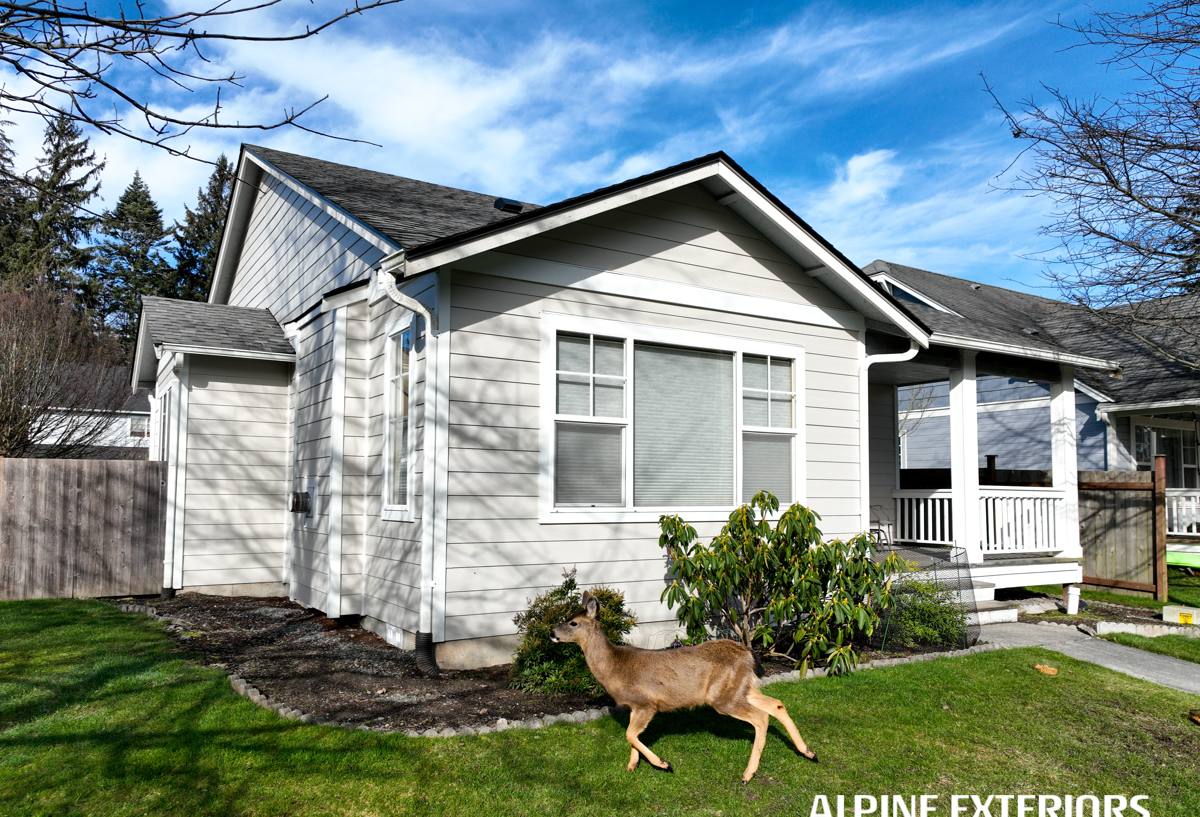
What the Climate Actually Does to Oak Harbor Homes
Oak Harbor's position on Whidbey Island means homes there deal with a fairly specific combination of stressors, and it's worth naming them plainly rather than in vague marketing language.
Salt Air and Marine Moisture
Proximity to Puget Sound puts a steady low-level dose of salt-laden moisture on exterior surfaces. Over years, that accelerates corrosion on unprotected metal fasteners and trim, and it speeds up the breakdown of paint films and lower-grade siding materials that weren't engineered with coastal exposure in mind.
Driving, Wind-Blown Rain
Storms coming off the water don't just fall straight down — wind pushes rain sideways into wall assemblies, wall-to-window transitions, and anywhere flashing or caulking is even slightly out of spec. Siding and trim on the weather-facing sides of a house take a disproportionate beating compared to the sheltered sides, which is why we pay close attention to orientation when we plan a project.
A Long Moss and Algae Season
Shaded, north-facing walls and anything under tree cover stay damp for extended stretches, which is exactly the environment moss and algae need to take hold. Once organic growth gets established on a wall surface, it holds moisture against the substrate underneath, which is a slow but steady path toward rot if it's never addressed.
None of this means Oak Harbor is a hard place to keep a home looking good — it just means the materials and installation details matter more here than they would somewhere drier and calmer.
Why We Install Only James Hardie Fiber Cement Siding
We made a decision as a company to install James Hardie fiber cement exclusively, and we don't install LP SmartSide, vinyl siding, Cemplank, Allura, primed spruce, or raw cedar. That's not a marketing gimmick — it's a standard we hold because of what we've seen play out on real houses in this climate over time.
What the Alternatives Get Right — and Where They Struggle Here
Vinyl siding is inexpensive and low-maintenance in mild climates, but it can become brittle in cold snaps, it expands and contracts more than fiber cement, and it's not the product to reach for when wildfire-conscious, non-combustible exterior materials are a growing consideration in the region. LP SmartSide and other engineered wood products perform reasonably when installation and caulking are perfect and stay perfect for decades — but they're wood-based, and wood-based siding is inherently more sensitive to sustained moisture exposure than fiber cement is. Cemplank and Allura are also fiber cement, and they're not bad products, but we've standardized our crews, our fasteners, our flashing details, and our warranty conversations around one system rather than splitting our expertise across several. Primed spruce and raw cedar are honest, attractive materials, but they demand a maintenance commitment — regular refinishing, vigilant caulk inspection — that most homeowners don't sign up for once they realize what it actually takes to keep bare or minimally finished wood siding sound near saltwater.
What James Hardie Delivers Instead
James Hardie fiber cement is non-combustible, dimensionally stable in wide temperature and moisture swings, and available in HZ5 formulations engineered for exactly this kind of wet, marine-influenced climate. The factory-applied ColorPlus finish is baked on under controlled conditions rather than field-painted, which gives it better fade and chip resistance than a job-site paint job ever will, and it comes with a real transferable warranty backing both the substrate and the finish. When it's installed to Hardie's published spec — correct fastener spacing, proper clearances, flashing done right — it holds up to salt air and driving rain far better than the products we chose not to carry.
Comparing Siding Materials for Oak Harbor's Climate
| Material | Moisture Resistance | Maintenance Needs | Combustibility | Our Position |
|---|---|---|---|---|
| James Hardie Fiber Cement | Excellent (HZ5 coastal formulation) | Low — factory finish, occasional wash | Non-combustible | What we install |
| Vinyl Siding | Fair — seams and gaps are vulnerable | Low, but can crack/fade over time | Combustible | Not installed |
| LP SmartSide / Engineered Wood | Good if perfectly maintained | Moderate — caulk and paint upkeep | Combustible | Not installed |
| Cedar / Primed Spruce | Fair — sensitive to standing moisture | High — regular refinishing required | Combustible | Not installed |
How We Approach Siding, Roofing, Windows, and Decks Together
An exterior is a system, not a collection of separate products. Siding, roofing, windows, and decks all meet at edges and transitions, and water problems almost always start where two systems intersect — a window flange that wasn't flashed under the siding correctly, a roof-to-wall step flashing detail that was rushed, a deck ledger board bolted to a rim joist without proper waterproofing behind it. We work on all four because it lets us think about the whole envelope of an Oak Harbor home at once, rather than fixing one piece and leaving another vulnerable spot untouched.
Roofing
A roof in this climate needs to shed sustained rain and resist the moss growth that shaded, north-facing slopes are prone to. We look at ventilation, underlayment, and flashing details as carefully as the shingle or roofing material itself.
Windows
Old or poorly flashed windows are one of the most common hidden water-entry points we find. Replacing windows correctly means integrating the new unit's flashing with the surrounding wall assembly, not just swapping the sash.
Decks
Outdoor living structures in a marine climate take a direct hit from both rain and salt air. Fastener choice, ledger flashing, and board spacing all affect how long a deck stays solid rather than becoming a slow-motion rot problem.
What a Project in Oak Harbor Typically Involves
Every home is different, but a siding project generally follows the same sequence: an on-site assessment of the existing exterior and any moisture or rot damage, a review of the Hardie product line and color that fits the home, removal of the old siding, correction of any water intrusion issues found underneath, installation of new water-resistive barrier and flashing where needed, and then the Hardie installation itself to manufacturer spec.
A Practical Pre-Project Checklist for Homeowners
- Walk the exterior and note any soft spots, staining, or visible moss/algae buildup, especially on shaded or weather-facing walls
- Check around every window and door for caulking that's cracked, shrunk, or missing
- Look at where the roofline meets any sidewall — this is a common leak point in wind-driven rain
- Note any deck ledger connections or areas where wood touches masonry or soil
- Ask any contractor you're considering which specific siding, fastener, and flashing products they use — and why
Why a Local Crew Matters More Than It Seems
Anacortes and the surrounding Skagit County area, along with Whidbey Island communities like Oak Harbor, share a climate that's different in real, specific ways from siding advice written for the Southwest, the Midwest, or even the drier side of Washington State. A crew based nearby has a reason to get the details right the first time — we're going to be in this area for years, and our reputation here is built on what's still standing on people's houses five and ten years after we leave the job site. That's a different incentive structure than a traveling install crew that's unlikely to see the same neighborhood again.
We also don't treat Oak Harbor as an afterthought tacked onto our Anacortes service area. The drive across Deception Pass is short, and we schedule projects there with the same attention and the same crews we use on the Fidalgo Island side.
Getting Started
If you're weighing a siding, roofing, window, or deck project on your Oak Harbor home, we're happy to come take a look, walk the exterior with you, and talk through what we're seeing — no pressure, no obligation. Fill out the form below to request a free estimate.