 Anacortes
 La Conner's Exterior Climate, in Plain Terms
La Conner sits right on the Swinomish Channel, with open water on one side and the flat farmland of the Skagit Valley on the other. That combination gives homes here a specific set of exterior challenges that don't show up the same way twenty miles inland. Wind off the channel carries salt and moisture onto siding, trim, and window frames. Winter storms bring driving rain that hits walls sideways rather than falling straight down. And the mild, damp, shaded conditions that make this part of Skagit County so green also make it a place where moss, algae, and mildew get a long head start every year.
None of this is unusual for western Washington. But La Conner's waterfront exposure pushes those effects a little harder than a typical inland Anacortes street. Homeowners here tend to notice paint failing sooner, caulk lines opening up, and green or black staining creeping across north-facing walls and rooflines faster than they'd expect. That's not bad luck — it's the local environment doing what it does, and it's exactly the kind of thing exterior materials and installation details need to be chosen for, not just tolerated.
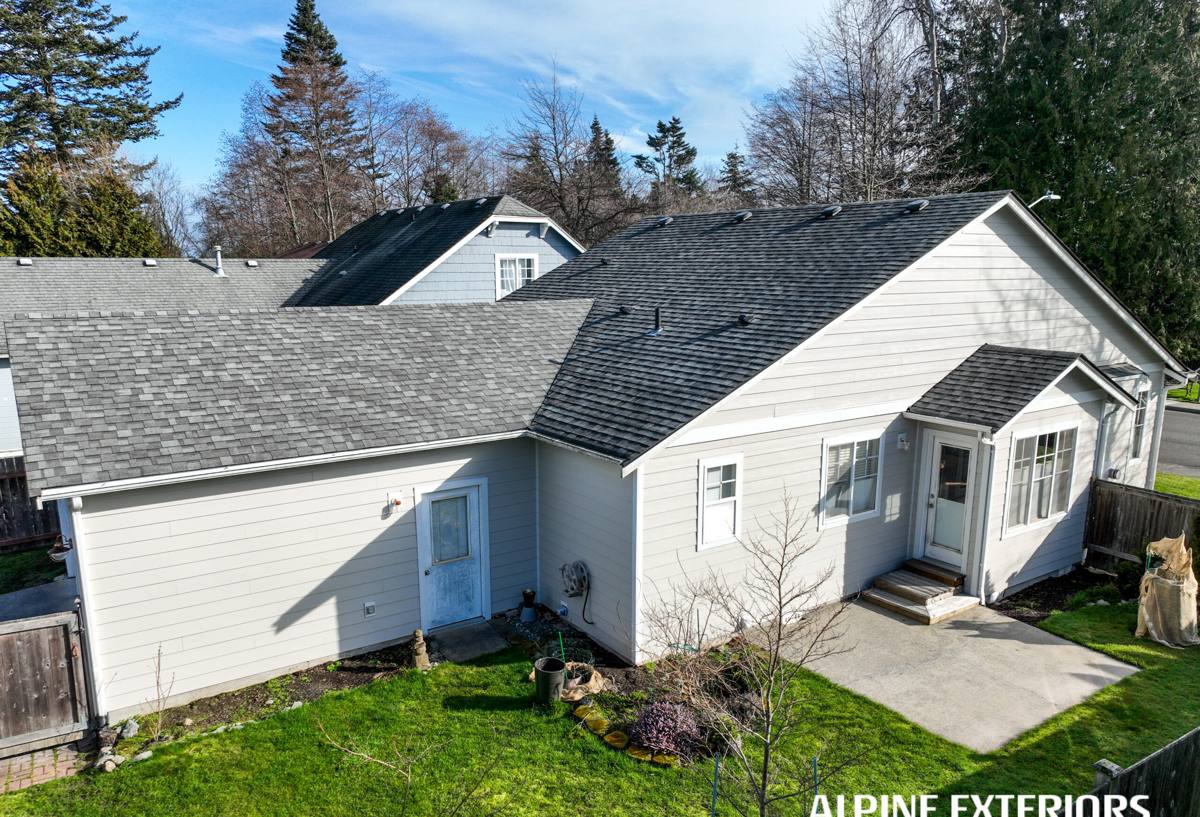
Salt Air: The Quiet Long-Term Problem
Salt in the air doesn't announce itself the way a storm does. It settles slowly on siding, fasteners, and metal flashing, and over years it accelerates corrosion and breaks down certain coatings faster than they'd wear in a drier, inland location. Homes closer to the channel feel this more than homes set back on higher ground, but La Conner as a whole gets more salt exposure than most of the Skagit Valley interior.
What this means practically:
- Fasteners and flashing matter as much as the siding itself — corrosion-resistant hardware isn't optional this close to the water.
- Factory-applied finishes generally outlast field-applied paint in salt-air conditions, because the bond and cure process happens under controlled conditions rather than on a ladder in variable weather.
- Trim details around windows, doors, and rooflines need to shed water cleanly — salt residue sitting in a poorly flashed joint accelerates whatever damage moisture would cause on its own.
Driving Rain and Wind-Driven Moisture
Anacortes and the surrounding islands get plenty of rain, but La Conner's open exposure to the channel means more of it arrives sideways during winter and fall storms. Wind-driven rain finds weak points that vertical rain never would — lap joints, butt seams, and anywhere caulking has started to fail. Siding that's marginal on water resistance in a sheltered inland yard can perform noticeably worse on an exposed La Conner lot.
This is where installation quality is at least as important as the material itself. Proper flashing above windows and doors, correctly lapped siding courses, and rain-screen detailing where it's called for all matter more here than they would on a home tucked behind trees a few miles inland. A siding product that's technically water-resistant can still fail early if it's installed without attention to how water actually moves across a wall in a storm coming off open water.
Where Rain Damage Shows Up First
On homes we've looked at around La Conner and the channel-facing parts of Anacortes, the earliest signs of water trouble tend to cluster in predictable spots: below window sills, at the bottom courses of siding near grade, around deck ledger boards, and at any point where two different materials or trim pieces meet. Catching these early — soft spots, dark staining, peeling paint concentrated in one area — is usually cheaper than waiting for the wall assembly behind the siding to get involved.
Moss, Algae, and the Shaded Season
La Conner's mix of marine humidity and mature landscaping means a lot of homes have at least one wall or roof section that stays damp and shaded for long stretches of the year. That's ideal growing conditions for moss and algae, and it's a bigger factor here than in drier parts of Washington. Moss holds moisture against a surface far longer than open air would, and on wood-based or wood-look siding, sustained moisture contact is what eventually leads to soft spots, delamination, or rot at seams and edges.
Regular cleaning helps, but the underlying material matters more over a 20-30 year horizon. A siding product that doesn't absorb and hold moisture the way wood fiber composites do simply has less to worry about from a season of moss growth. That's one of the bigger reasons we standardized on fiber cement rather than wood-based composite sidings for homes in this kind of climate.
Why We Only Install James Hardie Fiber Cement
We install James Hardie fiber cement siding exclusively — we don't do vinyl, LP SmartSide, Cemplank, Allura, primed spruce, or cedar. That's a deliberate standard, not a default, and in a climate like La Conner's it matters more than it would somewhere drier.
Fiber cement is made from cement, sand, and cellulose fibers rather than wood fiber or vinyl resin. It doesn't absorb water the way wood-based composite sidings can, which matters directly for the moss-and-moisture problem described above. It's also non-combustible, which is a real consideration anywhere in western Washington given wildfire smoke seasons and the general push toward fire-resistant building materials. And Hardie's ColorPlus factory finish is baked on and cured under controlled conditions, which holds up better against salt air and UV than most field-applied paint jobs — fewer repaints, less color fade, and a cleaner long-term appearance on an exposed waterfront home.
Hardie's HZ5 product line is engineered for regions with sustained moisture and freeze-thaw cycling, which fits the Skagit County climate well. The combination of the material itself, the factory finish, and Hardie's transferable warranty is why we put it on every home we side, rather than offering it as one option among several.
Comparing Siding Options for a La Conner Home
| Factor | Vinyl | Wood/Composite (LP, Cedar) | James Hardie Fiber Cement |
|---|---|---|---|
| Moisture absorption | Doesn't absorb, but can warp/buckle | Absorbs moisture; vulnerable in shaded, damp areas | Does not absorb moisture into the material |
| Salt air performance | Fades and becomes brittle over time | Coatings degrade faster; more repainting | Factory finish resists fade and salt exposure |
| Moss/algae vulnerability | Surface growth, but material unaffected | Growth plus moisture retention into the material | Surface growth cleans off; material unaffected |
| Fire resistance | Combustible | Combustible | Non-combustible |
| Typical repaint cycle | N/A (doesn't hold paint well) | 5-10 years | 15+ years (ColorPlus finish) |
What Our Service Looks Like in La Conner
We work across the Anacortes and Skagit County area, and La Conner's homes get the same approach as anywhere else we side, roof, or re-window: an in-person look at the specific exposure your home has, not a generic quote. A house set back from the channel with tree cover behaves differently than one facing open water, and we account for that in how we detail flashing, choose fastener hardware, and sequence the work around weather windows.
Beyond siding, we also handle roofing, windows, and decks — which matters in a place like La Conner because these systems interact. A deck ledger board improperly flashed against the wall, a roofline that dumps water onto a siding course below, or an old window that's no longer sealing against wind-driven rain can all undermine even well-installed siding. Looking at the whole exterior together, rather than one component in isolation, catches problems that a siding-only view would miss.
What to Expect from a Local Crew
- An on-site assessment of your home's specific exposure — waterfront, shaded, or a mix — before any recommendation.
- Attention to flashing and water management details at windows, doors, and roof-to-wall transitions, not just the siding panels themselves.
- Corrosion-resistant fasteners and hardware appropriate for salt-air exposure.
- Straight answers about what your home actually needs, including projects that aren't siding replacement if that's not the right call yet.
Signs Your La Conner Home May Need Attention
A quick self-check can help you decide whether it's worth having someone look:
- Paint peeling or bubbling in patches, especially on walls facing the channel or shaded by trees
- Persistent moss or dark staining that returns quickly after cleaning
- Soft or spongy spots when you press on siding near the bottom courses or around windows
- Visible gaps or cracking in caulk lines at trim, corners, or window frames
- Rust streaking from fasteners or flashing
- Musty smell or visible staining on interior walls that back up to exterior siding
None of these guarantee a full siding replacement is needed — sometimes it's a repair, a re-caulk, or better gutter management. But catching them early keeps small problems from becoming structural ones, which matters more in a wet, salt-exposed climate than it would somewhere drier.
Cost Factors Homeowners Should Know
Every home is different, but a few things tend to move the price on siding work in this area more than others: the extent of any hidden water damage found once old siding comes off, the complexity of the roofline and trim detailing, access and staging on channel-front or hillside lots, and how much window and door trim work is bundled into the same project. We give straightforward, itemized estimates rather than vague ranges, and we'll tell you plainly if we find something during the work that changes the scope.
If your La Conner home is showing signs of wear from salt air, rain, or moss — or you're just planning ahead for a home in this climate — we're happy to take a look and give you a straightforward, no-pressure estimate using the form below.