 Anacortes
 Siding Built for Mount Vernon's Skagit Valley Climate
Mount Vernon sits in the Skagit River valley, a few miles inland from saltwater but still squarely inside the maritime weather pattern that defines this corner of Washington. That means long stretches of low-pressure systems rolling off the Pacific, driving rain that comes in sideways more often than straight down, and a moss and algae season that can run eight months or longer on the shaded or north-facing walls of a house. Add in the humidity that collects in a river valley — fog that sits low over the fields in the morning, air that doesn't dry out quickly even after the rain stops — and you have a climate that is genuinely hard on exterior building materials, even when a home looks fine from the street.
We're based in Anacortes and have worked exterior projects throughout Skagit County long enough to know that "hard on siding" doesn't always look dramatic. It's rarely a single storm that causes damage. It's years of moisture cycling — wet, dry, wet again — working into seams, fastener holes, and butt joints that weren't sealed or flashed correctly the first time. That slow process is why the material choice and the installation details matter more here than they would in a drier climate.
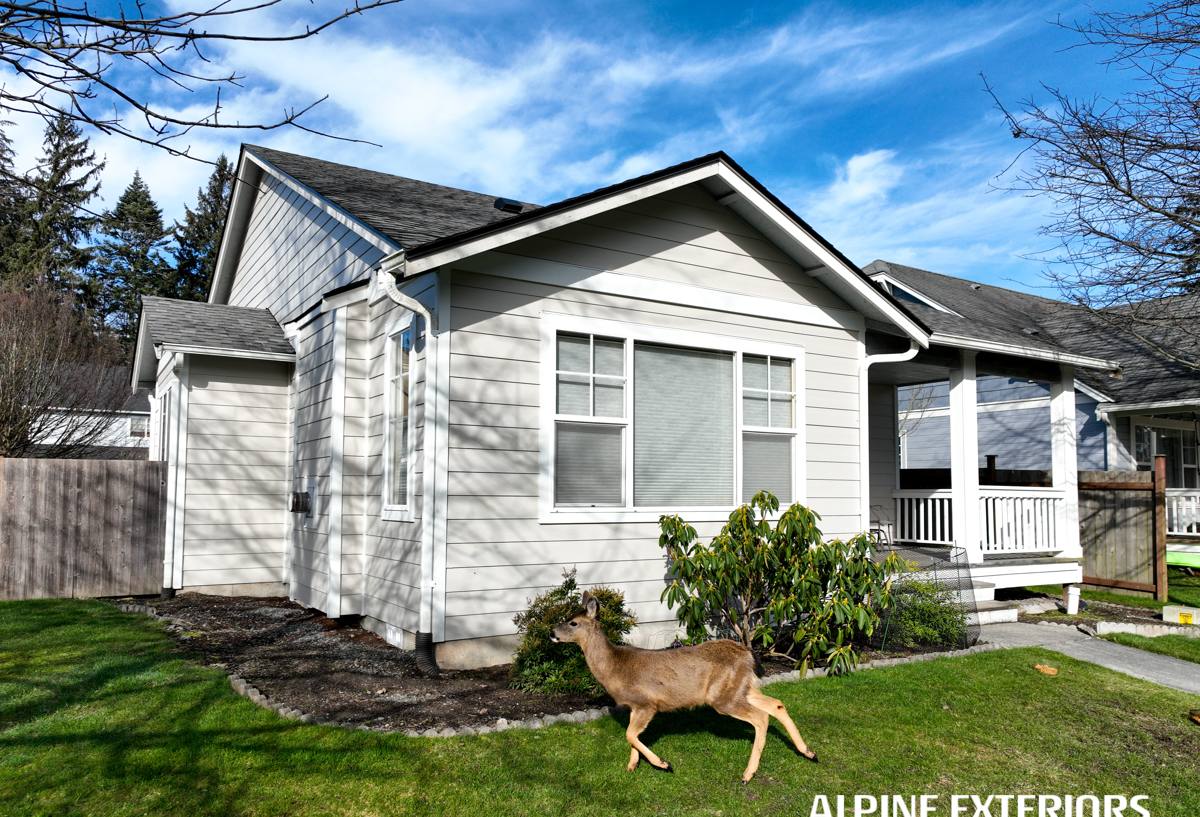
What Mount Vernon Homes Commonly Deal With
Moss and Algae Growth
Homes with north-facing walls, mature landscaping, or nearby tree cover hold moisture longest and green up first. On wood-based or poorly finished siding, that green film isn't just cosmetic — moss and algae hold water against the surface, which accelerates rot in anything that isn't genuinely moisture-resistant at its core.
Driving Rain and Wind-Driven Moisture
Storms moving through the valley don't just fall — they push. Wind-driven rain finds horizontal seams, exposed end cuts, and gaps around trim and penetrations. Siding systems that rely on caulking alone to keep water out, rather than proper lap geometry and flashing, tend to show their weak points here first.
Valley Humidity and Slow Drying
Compared to more open, breezy sites closer to the water, valley locations can hold humidity a little longer after a storm. Materials that absorb moisture and swell need a full, quick drying cycle to avoid long-term damage — and in Mount Vernon, that cycle is often interrupted by the next system moving in before the last one has fully dried out.
Why We Install James Hardie Fiber Cement — and Nothing Else
Anacortes Siding installs James Hardie fiber cement exclusively. We don't install vinyl, LP SmartSide, Cemplank, Allura, primed spruce, or cedar. That's not a marketing position — it's a standard we settled on after weighing how different siding materials actually perform over years of Pacific Northwest weather, not just how they look on installation day.
| Material | Where It Falls Short Here |
|---|---|
| Vinyl | Can warp or crack in temperature swings, and seams rely on overlap rather than a sealed, engineered joint |
| Wood-based composite (LP SmartSide) | Engineered wood core is more moisture-sensitive than fiber cement; edge sealing and maintenance are critical and easy to fall behind on |
| Primed spruce / cedar | Natural wood needs consistent refinishing to resist moss, rot, and moisture intrusion — a heavy long-term maintenance load in this climate |
| Other fiber cement brands (Cemplank, Allura) | May be a reasonable core product, but we standardize on one system, one warranty structure, and one factory finish we trust and install consistently |
| James Hardie fiber cement | Non-combustible, engineered for Pacific Northwest moisture cycling, factory-applied ColorPlus finish, strong transferable warranty |
James Hardie fiber cement is cement, sand, and cellulose fiber — it doesn't rot, it doesn't feed moss the way wood fiber can, and it isn't vulnerable to the swelling and delamination that moisture-sensitive composite products can experience over time. James Hardie also builds region-specific HZ5 product lines engineered for the wetter, colder climate zones the Pacific Northwest falls into, rather than a single generic formulation used everywhere in the country.
The factory-applied ColorPlus finish matters just as much as the substrate. It's baked on under controlled conditions, which gives it better fade and moisture resistance than field-applied paint — and it's backed by its own finish warranty separate from the substrate warranty. In a climate where a home might get repainted every seven to ten years if the finish is field-applied, that factory finish is a real, tangible difference in long-term maintenance.
Our Siding Process for Mount Vernon Properties
- On-site assessment — we look at existing siding condition, moisture damage, trim and flashing details, and how the home's exposure (shade, wind direction, roof overhangs) affects long-term performance.
- Tear-off and inspection of sheathing — we don't cover up rot or hidden moisture damage; if we find it, we address it before new siding goes on.
- Weather-resistive barrier and flashing — this layer, done correctly, is what actually keeps water out of the wall assembly. Siding is the second line of defense, not the first.
- James Hardie installation to manufacturer spec — correct fastening, gapping, and clearance from grade, decking, and roof lines, all of which affect both performance and warranty coverage.
- Final detail work — trim, caulking at appropriate joints only (not as a substitute for proper flashing), and a walkthrough of the finished work.
Roofing, Windows, and Decks — The Whole Exterior Envelope
Siding doesn't work in isolation. A roof that's shedding water onto a wall it shouldn't, windows that aren't flashed correctly into the siding plane, or a deck ledger board that's trapping moisture against the house can all undermine even a well-installed siding job. We handle roofing, windows, and decks alongside siding so the whole exterior envelope is considered together, rather than treating each component as a separate project with separate blind spots.
This matters in Mount Vernon specifically because valley homes often have complex rooflines, covered porches, and mature landscaping that all affect how water moves around the building. A siding-only contractor who never looks up at the roofline or down at the deck ledger can miss the actual source of a moisture problem.
What to Check Before Hiring a Siding Contractor
- Do they carry current Washington contractor licensing and insurance, and can they provide proof without hesitation?
- Are they a James Hardie-certified or preferred installer, with documented training on manufacturer installation specs?
- Do they explain flashing and weather-resistive barrier details, or only talk about the visible siding panels?
- Will they put material, labor, and warranty terms in a written contract before work starts?
- Do they have experience with Skagit County's specific rain and humidity patterns, not just siding in general?
- Are they willing to walk you through why they recommend one material over another, rather than pushing the cheapest option?
Cost Factors for Mount Vernon Siding Projects
Every home is different, so we don't publish blanket per-square-foot pricing — but the factors that move a siding estimate up or down are consistent:
| Factor | Why It Matters |
|---|---|
| Home size and wall complexity | More corners, gables, and dormers mean more cutting, flashing, and labor time |
| Existing siding removal | Tear-off and disposal of old material adds cost versus a bare-wall install |
| Sheathing repair needs | Hidden rot or moisture damage found during tear-off requires repair before new siding goes on |
| Hardie product line and profile | Lap width, texture, and trim details affect material cost |
| Access and site conditions | Landscaping, fencing, or tight lot lines can add labor time |
The most reliable way to get an accurate number is a walk-through of your specific home, not a generic estimate based on square footage alone.
Why a Local Crew Matters
We're an Anacortes-based crew that works throughout Skagit County, including Mount Vernon. That local footprint means we've seen how homes in this valley actually age — which walls green up first, where driving rain tends to find its way in, and what details get skipped on jobs that weren't built for this climate in the first place. It also means if a warranty question or a follow-up concern comes up years down the road, you're not chasing down a contractor who's moved on to a different region.
Get a Free, No-Pressure Estimate
If your Mount Vernon home is due for new siding — or you want a second opinion on moss growth, moisture damage, or an aging exterior — we're happy to take a look. There's no obligation and no pressure, just a straightforward assessment and an honest recommendation based on your specific home. Use the form below to request your free estimate.