 Anacortes
 Old Town Anacortes: A Neighborhood With Its Own Climate Story
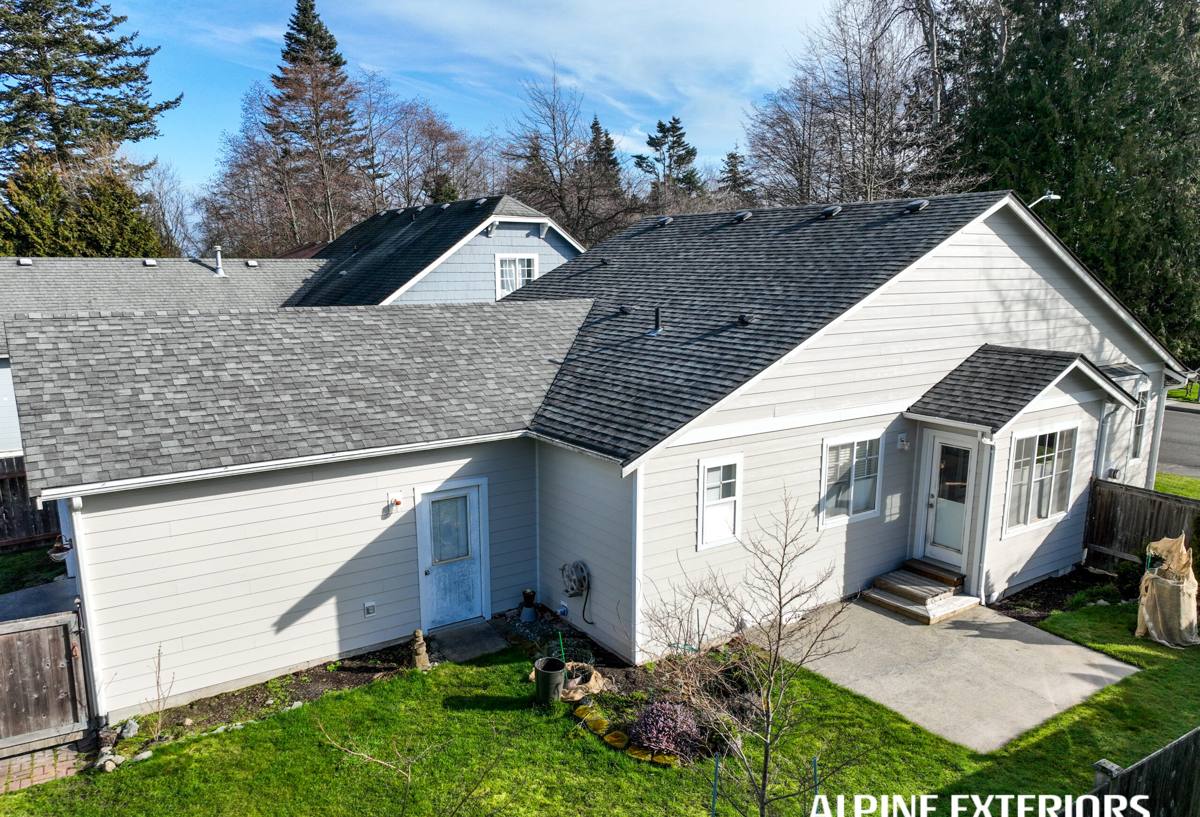
Old Town Anacortes is one of the city's older residential pockets, sitting close enough to the water that salt air is simply part of daily life for the people who live there. Homes in this part of Anacortes tend to be a mix of vintages — some original construction, some remodeled over the decades, many with siding that's been patched, repainted, or replaced piecemeal as problems came up rather than addressed all at once. That patchwork history is common in older Skagit County neighborhoods, and it's usually the first clue that a home is due for a full look at its exterior rather than another spot repair.
Being on Fidalgo Island means Old Town Anacortes gets the same weather pattern as the rest of the city, just concentrated by proximity to the water: salt-laden air, driving rain off Rosario Strait and the Sound, and a shady, damp stretch of the year that's practically its own season for moss and algae growth. None of that is unusual for western Washington. What matters is how a home's siding is built and installed to handle it — and that's where a lot of older homes in this area start showing their age.
What Salt Air, Rain, and Moss Do to Siding Here
Salt air is corrosive in ways that aren't always obvious right away. It accelerates the breakdown of paint film, works into fastener heads and trim joints, and speeds up wear on materials that weren't engineered with coastal exposure in mind. Combine that with driving rain — the kind that hits siding at an angle instead of falling straight down — and you get moisture pushed into seams, laps, and butt joints that a drier climate would never test.
Then there's moss. Anacortes gets a long stretch of gray, damp months where shaded walls, especially north- and west-facing ones under trees or eaves, stay wet longer than they dry. Moss and algae take hold in that environment, and once they're established on a wall they hold moisture against the siding surface even longer, which compounds every other problem. On wood-based or engineered wood siding, that sustained dampness is exactly the condition that leads to swelling, delamination, and rot at edges and fastener points. On old, thin-coat paint jobs, it just accelerates the failure of the finish.
Homes in Old Town Anacortes that haven't had their siding evaluated in a while are worth a second look specifically because of this combination — salt exposure, wind-driven rain, and moss all working on the same wall, year after year.
Why We Only Install James Hardie Fiber Cement
We install James Hardie fiber cement siding exclusively. We don't install vinyl, LP SmartSide, Cemplank, Allura, primed spruce, or cedar — not because those products don't have their place, but because after years of exterior work in this climate, Hardie is the one system we're willing to put our name behind for the conditions Skagit County homes actually face.
What We Don't Install and Why
Wood-based sidings — cedar, primed spruce, engineered wood products like LP SmartSide — perform well when everything about the installation, finishing, and ongoing maintenance is done right and kept up over time. The problem is what happens when it isn't: any wood-based product is vulnerable to moisture intrusion at cut edges, fastener penetrations, and joints, and in a climate with this much sustained dampness and moss pressure, that vulnerability shows up faster than it would somewhere drier. Vinyl siding is low-maintenance in a different way, but it can warp under heat and impact, its seams and butt joints are permanent moisture entry points, and its color is baked in rather than factory-finished with a fade-resistant coating — meaning it can't be refreshed the way a painted or ColorPlus surface can. Cemplank and Allura are also fiber cement products, and reasonable ones, but Hardie's ColorPlus finish, its HZ5 formulation engineered specifically for this Pacific Northwest climate zone, and its long, transferable warranty are what we've settled on as our standard.
The Hardie System We Install
James Hardie fiber cement is non-combustible, dimensionally stable, and doesn't feed moss and algae growth the way wood-based products can. Its HZ5 product line is engineered for climates with significant moisture exposure — which describes Anacortes and the rest of Skagit County well. ColorPlus finishes are baked on at the factory under conditions no field-applied paint job can match, which means better fade resistance and a longer stretch before repainting is even a conversation. Installed correctly — proper flashing, correct fastener placement, appropriate clearances at grade and roofline — it's a system built to handle exactly the salt air, wind-driven rain, and damp shoulder seasons that define this part of the state.
How We Approach a Siding Project in Old Town Anacortes
Every job starts with an honest look at what's actually going on with the current siding, not just what's visible from the street. That means checking for soft spots, moisture damage around windows and trim, condition of existing flashing, and how the home's exposure — sun, shade, wind direction — has affected different walls differently. It's common to find that one side of a house is in far worse shape than the others simply because of which way it faces.
From there we talk through scope: full replacement, or in some cases a more targeted repair if the damage is limited and the rest of the siding is sound. We're not in the business of selling a full re-side to someone who doesn't need one. When a full replacement is the right call, we handle removal, any necessary sheathing or moisture-barrier repair underneath, and a correct Hardie installation from there — proper flashing details at every window, door, and roofline intersection, since that's where most siding failures actually start.
Roofing, Windows, and Decks — the Whole Exterior
Siding doesn't work in isolation. A roof that's shedding water onto a wall, windows with failed flashing, or a deck ledger board tied into the house without proper flashing can all undermine even a well-installed siding job. Because we handle roofing, windows, and decks as well as siding, we can look at a home's exterior as one connected system rather than a series of unrelated projects — which matters in a climate where water finds every gap between trades if the details aren't coordinated.
For Old Town Anacortes homes specifically, that often means checking how the roofline sheds water relative to wall sections below, whether window flashing integrates cleanly with the new siding plane, and whether a deck attachment point needs correction before new siding goes up around it. Catching those issues at the siding stage saves a homeowner from paying to fix the same water problem twice.
Cost Factors for Old Town Anacortes Homes
Every home is different, but a few factors consistently drive the cost of a siding project in this neighborhood more than others:
| Factor | Why It Matters |
|---|---|
| Extent of moisture damage | Rotted sheathing or framing found during removal adds repair scope beyond the siding itself |
| Home size and wall complexity | More corners, gables, and trim details mean more labor and material cuts |
| Current siding type | Removal and disposal of certain materials takes more time than others |
| Trim and accessory scope | Fascia, soffits, and trim boards are often replaced or upgraded alongside siding |
| Access and site conditions | Older lots with mature landscaping or tight setbacks can affect staging and labor time |
We give straightforward, itemized estimates after an in-person look at the home — not a ballpark over the phone — because these variables genuinely change the number, and we'd rather a homeowner see the real scope up front.
Signs Your Siding Needs Attention
Some warning signs are easy to spot from the ground; others require a closer look. Homeowners in Old Town Anacortes should watch for:
- Soft or spongy spots when you press on the siding, especially near the bottom edges
- Persistent moss or algae growth that keeps coming back after cleaning
- Paint that's peeling, bubbling, or failing faster than it used to
- Visible gaps, cracks, or separation at joints and corners
- Warping, cupping, or buckling panels, particularly on shaded walls
- Water stains or discoloration on interior walls near exterior corners
- Increasing heating bills that might point to compromised insulation behind failing siding
Any one of these on its own might not mean much. Several together, especially on a home that hasn't had its exterior evaluated in years, is worth a professional look.
Why a Local Crew Matters
A crew that works regularly in Skagit County understands things a traveling or out-of-area installer doesn't always account for: how far wind-driven rain actually pushes water on an exposed wall, how long moss season really runs here, and how salt air changes the calculus on fastener choice and finish durability. That local knowledge shapes real decisions on the job — where extra flashing attention is warranted, which walls need the most careful moisture-barrier work, and how to sequence a project around the weather this area actually gets rather than a generic install timeline.
It also means being reachable after the job is done. Warranty questions, a follow-up look at a detail, or just a straight answer about how a home is holding up — that's easier with a crew that's local and plans to still be around.
If you're in Old Town Anacortes and want an honest read on where your siding stands, we're happy to take a look. Reach out for a free, no-pressure estimate — we'll tell you what we see, what it would take to fix it, and let you decide from there.