 Anacortes
 Cap Sante's Exposure Is Different From the Rest of Anacortes
Cap Sante sits right up against the water, with homes and lots facing the marina, the boat haven, and open exposure to wind coming off Fidalgo Bay and the Guemes Channel. That position gives residents some of the best views in Skagit County, but it also means the exterior of a house here works harder than a home tucked a few miles inland. Salt-laden air, near-constant humidity, and driving rain off the water are simply part of living at Cap Sante, and the siding, trim, and roofing on a home have to be chosen and installed with that in mind.
We've worked on enough homes along this stretch of Anacortes to know that generic siding advice doesn't hold up here. What performs fine in a dry inland climate can fail early a few blocks from the water. That's the lens we bring to every estimate in this neighborhood.
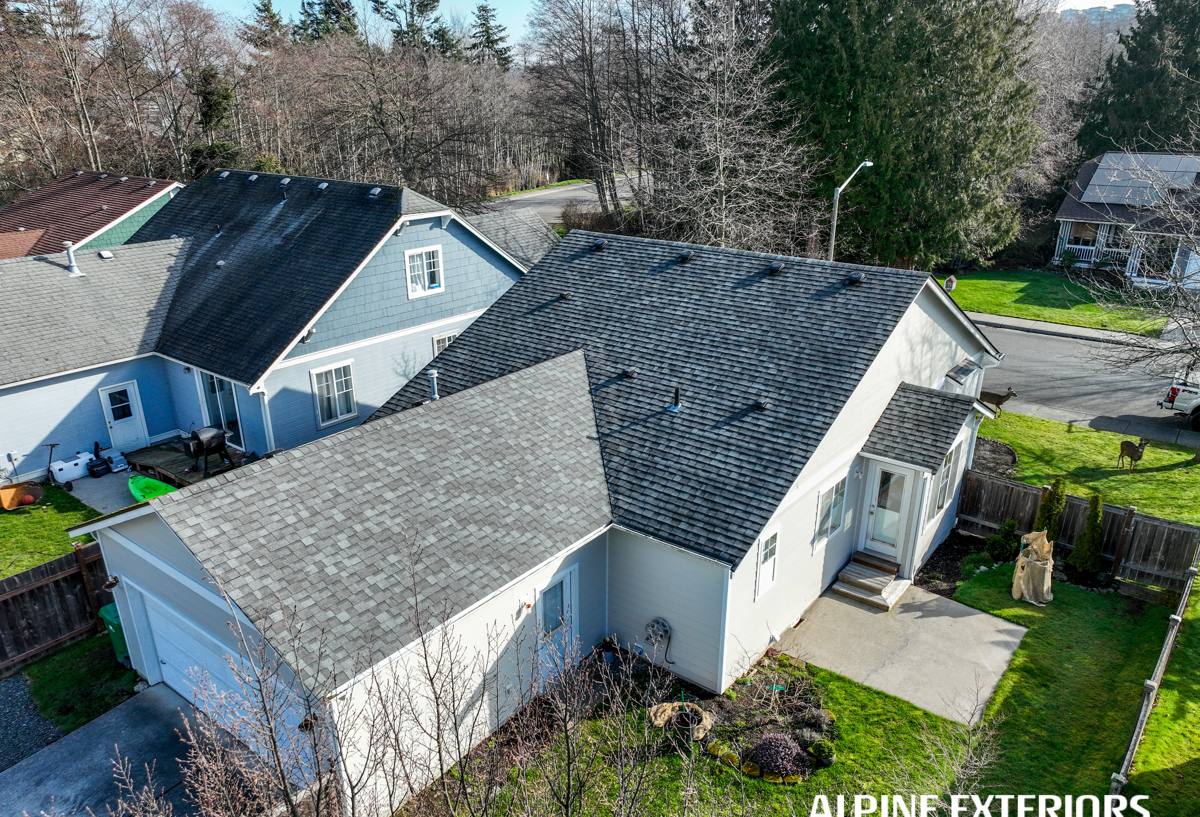
What Salt Air, Wind-Driven Rain, and Moss Actually Do to a House
Salt Air and Corrosion
Airborne salt doesn't just affect boats and metal railings. It settles on siding, trim, fasteners, and paint film, and over years it accelerates the breakdown of coatings and speeds corrosion on any exposed metal components. Homes closer to the marina and open water see this faster than homes set back or shielded by terrain.
Driving Rain
Cap Sante's waterfront exposure means rain frequently arrives sideways, not straight down. That matters enormously for siding performance, because wind-driven rain gets pushed into laps, seams, and butt joints that would stay dry in a calmer setting. Flashing details, caulking choices, and the water-shedding design of the siding product itself all become more important here than they would be on a sheltered lot.
Moss, Mildew, and the Long Wet Season
Skagit County's marine climate already runs a long wet season, and Cap Sante's exposure and shade patterns can extend the months where siding stays damp. Moss and mildew growth on north-facing walls and shaded trim is common, and any siding material that absorbs moisture or lacks a durable factory finish will show staining, swelling, or paint failure well before its inland counterparts.
How We Approach Exterior Work in This Neighborhood
Every Cap Sante estimate starts with a walk of the exposed sides of the house — the faces that take direct wind and rain off the water versus the more sheltered sides. That distinction affects product selection, fastening patterns, flashing detail, and sometimes even color choice, since darker colors absorb more heat and can stress some materials differently than lighter tones in a marine environment.
We handle siding, roofing, windows, and decks as a connected system rather than separate trades. A new roofline without correct kick-out flashing will dump water straight into a siding seam below it. A deck ledger attached without proper flashing becomes a moisture entry point into the wall assembly behind it. On an exposure like Cap Sante's, those details are not optional extras — they're the difference between an exterior that lasts decades and one that needs rework in five years.
Why We Only Install James Hardie Fiber Cement
We made a decision as a company to install James Hardie fiber cement siding exclusively, and we don't install vinyl, LP SmartSide, Cemplank, Allura, primed spruce, or cedar. That's not a marketing position — it's a standard we hold ourselves to because of what we've seen these products do, and not do, in exactly this kind of coastal-adjacent climate.
- Non-combustible core: Fiber cement doesn't feed a fire the way wood-based products can, which matters for insurance considerations and long-term peace of mind.
- Factory-applied ColorPlus finish: The color and protective topcoat are baked on in a controlled factory setting, which holds up far better against salt air and UV than field-applied paint on wood or engineered wood products.
- Climate-engineered HZ product lines: James Hardie manufactures HZ5 formulations specifically for wetter, harsher climates like ours, which is a meaningful difference from one-size-fits-all siding.
- Moisture stability: Fiber cement doesn't swell, rot, or delaminate the way engineered wood or untreated wood siding can when it stays damp for extended periods, which is a realistic scenario on Cap Sante's shaded and north-facing walls.
- Transferable warranty: A strong, transferable warranty adds resale value, which matters in a desirable, view-driven neighborhood like this one.
None of this means other products are without merit — vinyl is inexpensive and low-maintenance in mild climates, and cedar has real aesthetic appeal. But we've chosen not to install materials that we believe carry real trade-offs in this specific climate, and we'd rather stand behind one system we trust completely than offer several we have reservations about.
What Correct Installation Looks Like This Close to the Water
Even the best siding product fails early if it's installed wrong, and that risk goes up with exposure. On Cap Sante projects we pay particular attention to:
- Proper fastener spacing and type to resist wind load and avoid corrosion-prone hardware
- Correct clearance between siding and grade, decks, and roof lines to keep splash-back and standing water away from the bottom edge of the siding
- Weather-resistant barrier and flashing integration at every window, door, and penetration
- Caulking only where the manufacturer's install specifications call for it, not as a substitute for proper flashing
- Field-cut edges primed and sealed per Hardie's installation instructions, since an unsealed cut edge is one of the more common ways moisture gets into any fiber cement installation
These details are what separate a siding job that looks good on install day from one that still looks good in year fifteen.
Comparing Siding Options in a Marine Exposure Like Cap Sante
| Factor | James Hardie Fiber Cement | Vinyl | Engineered Wood (LP-type) | Cedar |
|---|---|---|---|---|
| Salt air / coastal resistance | Strong, HZ5 formulation available | Can become brittle and fade faster in sun/salt over time | Vulnerable if moisture gets past the coating | Requires diligent maintenance to resist rot |
| Moisture / rot resistance | Does not rot; cement-based core | Doesn't rot but can trap moisture behind panels | Wood-based core can swell or delaminate if wet | Natural wood, prone to rot without upkeep |
| Finish durability | Factory-baked ColorPlus finish | Color molded through, but can chalk/fade | Factory-primed or coated, variable durability | Field-applied stain/paint, needs recoating |
| Fire performance | Non-combustible | Can melt/deform under heat | Combustible, wood-based | Combustible |
| Typical maintenance | Low — occasional wash, no repainting for years | Low, but limited repair options if damaged | Moderate — watch seams and cut edges | High — regular staining/sealing |
Roofing, Windows, and Decks: The Rest of the Envelope
Siding is only one part of what protects a Cap Sante home from the elements. We also handle:
Roofing
Roofs here take the same wind-driven rain and salt exposure as siding, with the added stress of wind uplift on an open waterfront lot. Proper underlayment, ice-and-water-shield at vulnerable areas, and correctly detailed valleys and flashing matter as much as the shingle or roofing material itself.
Windows
Window flashing and integration with the siding weather-resistant barrier is one of the most common failure points we find on older Cap Sante homes. Replacing windows without correcting the flashing detail just relocates the problem rather than solving it.
Decks
Decks facing the water take direct sun, rain, and salt spray, and ledger board attachment is a frequent source of hidden moisture damage to the wall behind it if not flashed correctly during construction or replacement.
A Practical Maintenance Checklist for Cap Sante Homeowners
- Rinse siding and trim of salt residue a couple of times a year, especially on wind-facing walls
- Check caulking around windows, doors, and trim annually for cracking or separation
- Look for moss or dark streaking on shaded or north-facing walls and address it before it spreads
- Inspect deck ledger and flashing connections for staining or soft spots
- Have roof valleys and flashing checked after major windstorms
- Keep gutters clear so water isn't overflowing onto siding below rooflines
Why a Local Crew Matters at Cap Sante
A crew that only works inland, or only works in drier parts of the state, doesn't always account for how much harder marine exposure is on an exterior. We're based in this area, we've seen how Cap Sante homes weather over the years, and we build our installation approach — fastening, flashing, product selection — around that reality rather than a generic install manual. That local knowledge is part of what you're paying for, not just the labor.
If you're planning siding, roofing, window, or deck work on a Cap Sante property, we're happy to walk the exterior with you and talk through what your home's specific exposure calls for. Reach out for a free, no-pressure estimate — there's no obligation, just an honest look at what your house needs.