 Anacortes
 What LP SmartSide Actually Is
LP SmartSide is an engineered wood siding product made from wood strands bonded with resins and waxes, treated with a zinc borate preservative, then pressed into panels or lap boards and finished with a factory primer or coating. It's a legitimate, widely used product, and LP has spent years improving its resistance to moisture and insects compared to older generations of engineered wood. For a lot of climates and applications, it performs reasonably well.
We get asked about it often enough that we think homeowners deserve a straight answer on why we don't put it on houses here in Anacortes, rather than just quietly steering the conversation toward what we do install.
How It's Manufactured
Unlike solid wood siding, SmartSide is a composite: wood strands are oriented, coated with resin, and heat-pressed, similar in concept to OSB sheathing but engineered specifically for exterior exposure. The zinc borate treatment is meant to resist fungal decay and insect damage, and the factory-applied coating is the first line of defense against moisture intrusion.
Where It Genuinely Performs Well
In drier climates, or on homes with generous roof overhangs and good site drainage, SmartSide can hold up for a long time with routine caulk maintenance. It's lighter than fiber cement, easier on installers' saws, and typically costs less installed. None of that is a knock on the product — it's just not what we're optimizing for when we recommend materials for homes in Skagit County.
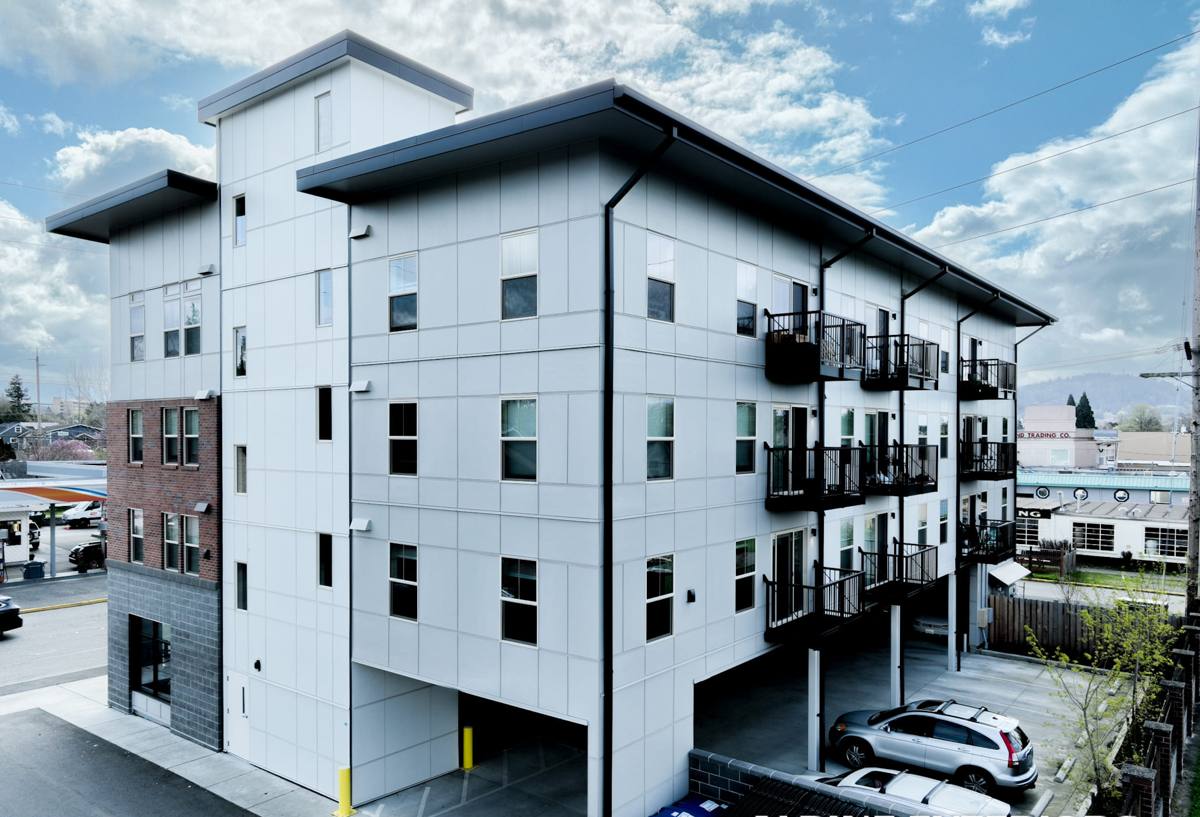
The Real Issue: It's Still Wood at Its Core
Every improvement LP has made to this product is really about managing the same underlying vulnerability — it's a wood-based material, and wood swells, wicks moisture, and eventually breaks down when it stays wet. The zinc borate and coatings slow that process down; they don't eliminate it. The places where the wood strands are exposed — cut ends, mitered corners, drilled fastener holes, and butt joints — are where the factory protection stops and field workmanship has to pick up the slack.
Anacortes' Wet Season Puts That to the Test
We're on the water, which means salt-laden air, driving rain off the Strait, and a moss season that can run from fall through spring. Siding here doesn't get a break to dry out the way it might in a drier inland climate — north-facing and shaded walls in particular can stay damp for days at a stretch. Any siding material that depends on an intact factory seal at every cut edge is going to be under more stress in this climate than in most.
Installation Sensitivity Is the Real Cost
SmartSide's manufacturer instructions are specific and, frankly, unforgiving: every cut end has to be primed or sealed before installation, every joint has to be caulked with the right product, flashing details have to be followed precisely, and ground clearance and roof-line clearances have to be respected. Skip one of those steps on one board, and that's the spot where moisture eventually gets in.
What Happens When a Step Gets Missed
The failure mode with engineered wood siding is rarely dramatic. It's usually a slow softening or swelling at a butt joint, a corner, or a fastener hole — the kind of thing that doesn't show up on a walkthrough the week the job finishes, but shows up in year three or four once repeated wetting has worked its way past the coating. Because the substrate is wood, once moisture gets past the seal, decay can spread before it's visually obvious from the outside.
We're not saying every SmartSide installation fails — plenty don't, especially when installers follow every detail to the letter every single time, on every board, on every job. Our concern is that "every detail, every time, forever" is a hard standard to guarantee across a whole crew and a whole career, especially in a climate that punishes the first missed step more than a drier one would.
Warranty Structure Worth Understanding
LP's warranty on SmartSide is a manufacturer's product warranty, and like most engineered wood warranties, it's prorated after the first several years and carries exclusions tied to installation practices — meaning if a failure is traced back to a missed sealing or flashing step, coverage can be denied. That's standard for the category, not unique to LP, but it does mean the practical protection a homeowner has often comes down to how carefully the original installation followed the manual, which isn't something a warranty document can verify after the fact.
The Maintenance Reality Over Time
Engineered wood siding is not a paint-once, forget-it product. To keep the manufacturer warranty intact and keep the material performing, it typically needs:
- Recaulking of joints and seams on a recurring cycle, not just at install
- Repainting or recoating on a schedule, since the factory finish is not designed to last the life of the product untouched
- Prompt attention to any nicks, gouges, or exposed cut ends before they take on moisture
- Regular moss and mildew removal, especially on shaded or north-facing walls common in this area
- Periodic inspection of low-clearance areas near grade, decks, and roof lines where splash-back and water pooling are most likely
That's a real, ongoing commitment for a homeowner, and it's the piece that often gets underestimated at the time of the original purchase decision.
How LP SmartSide Compares to James Hardie Fiber Cement
| Factor | LP SmartSide (Engineered Wood) | James Hardie (Fiber Cement) |
|---|---|---|
| Core material | Wood strands + resin, zinc borate treated | Cement, sand, and cellulose fiber — non-combustible |
| Moisture behavior | Resistant when sealed; vulnerable at cut ends and joints if seal fails | Engineered to resist swelling and rot; not wood-based |
| Coastal/moss climate fit | Requires diligent sealing and upkeep to hold up long-term | HZ5 product line engineered for wet, high-moisture regions like ours |
| Finish | Factory primer or coating; repainting needed on a cycle | ColorPlus factory finish, baked-on, warrantied separately from the substrate |
| Installed cost | Generally lower | Generally higher |
| Warranty structure | Prorated, with installation-related exclusions | Long-dated, transferable substrate warranty plus separate finish warranty |
Why We Standardized on James Hardie Instead
We made a decision as a company to install one siding system — James Hardie fiber cement — rather than offer a menu of products with very different moisture tolerances and maintenance demands. That decision was driven directly by what this climate does to a house over years, not just what looks good at handoff.
A Non-Combustible, Non-Wood Substrate
Fiber cement is made from cement, sand, and cellulose fiber. It doesn't have a wood core to swell, rot, or feed fungal growth the way any wood-based product eventually can if water gets past the surface. That changes the entire risk profile at cut ends, joints, and fastener penetrations — the exact spots where engineered wood siding depends most heavily on perfect field sealing.
ColorPlus Factory Finish
Hardie's ColorPlus finish is baked on in a controlled factory environment rather than field-applied, which gives it a warranty of its own and means homeowners aren't on a repainting clock the way they are with most wood and engineered wood products.
Climate-Engineered Product Lines
Hardie makes region-specific formulations, including an HZ5 line built for wetter, harsher climates. That's a meaningfully different starting point than a single product meant to serve every climate zone in the country.
A Warranty Built for the Long Haul
Hardie's transferable warranty on the fiber cement substrate is long-dated and adds real resale value, since a new owner isn't stepping into someone else's maintenance gap.
Questions Worth Asking Before You Choose Engineered Wood Siding
- Will every cut end and fastener hole on my house actually get primed and sealed before installation — and how would I know?
- What is the manufacturer's warranty exclusion language for improper sealing or flashing, and who determines whether that applies if there's a future problem?
- What does the ongoing maintenance schedule look like in writing — recaulking intervals, repainting intervals — and am I prepared to keep up with it?
- How does this product's moisture tolerance compare on the shaded, north-facing, or low-clearance walls of my specific house?
- If I sell the home in ten or fifteen years, what condition will the siding likely be in, and does that maintenance history transfer clearly to a buyer?
Our Bottom Line
LP SmartSide isn't a bad product — it's a wood-based product asked to perform like it isn't, and that puts a lot of weight on flawless installation and ongoing upkeep in a climate that doesn't offer much room for error. Between the salt air, the rain off the water, and a moss season that lingers longer here than in most parts of the state, we decided the safer long-term bet for our customers was a non-combustible fiber cement system engineered for exactly these conditions. That's why James Hardie is the only siding we install.
If you're weighing siding options for a home in Anacortes or elsewhere in Skagit County, we're happy to walk your specific house — roof lines, shaded walls, grade clearance, the works — and give you a straight assessment. Reach out for a free, no-pressure estimate using the form below.