 Anacortes
 Guemes Island Is Its Own Climate — Not Just an Extension of Anacortes
Guemes Island sits a short ferry ride from downtown Anacortes, but the exposure a house takes out there is a different animal than a lot with tall it on the mainland. Homes on Guemes catch wind and salt spray off Rosario Strait and the surrounding waters with almost nothing to break it — no dense tree cover on the water-facing lots, no city blocks of buildings to slow the wind down. Add in Skagit County's long, wet fall-through-spring stretch and you've got a building envelope that has to handle salt, moisture, and wind pressure all at once, for months at a time.
We've worked on enough island and waterfront properties around Anacortes to know that materials which hold up fine in a sheltered inland neighborhood can fail early out here. That's a big part of why we standardized on one siding product instead of offering a menu of options — more on that below.
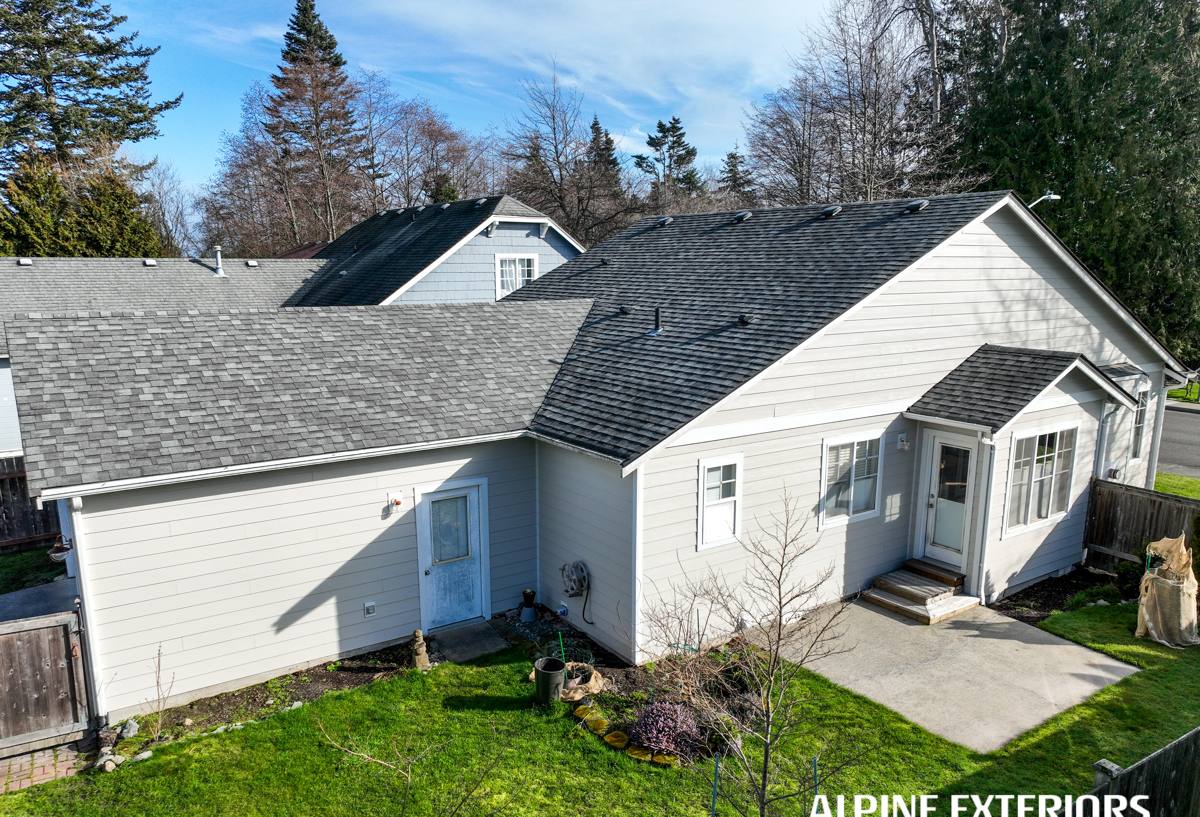
What the Marine Environment Actually Does to a House
Salt Air
Airborne salt doesn't just sit on the surface — it works its way into seams, fastener heads, and any spot where a coating has started to break down. On metal, that means accelerated corrosion. On wood-based sidings, salt-laden moisture speeds up the cycle of swelling, cracking, and paint failure. Homes closer to the water take the brunt of it, but even lots set back from the shoreline get more salt exposure than a typical Anacortes in-town property.
Driving Rain and Wind-Driven Moisture
Skagit County gets a genuine wet season, and on an exposed island lot, rain rarely falls straight down — wind pushes it sideways into siding, trim, and window flashing. That's a harder test for a wall system than vertical rain alone. Poorly flashed seams, gaps around windows, and butt joints that aren't properly sealed are where wind-driven rain finds its way in.
Moss and Mildew Season
Shaded, north-facing walls and anything under tree cover on Guemes stay damp for long stretches of the year. That's exactly the environment moss, algae, and mildew need to establish themselves on siding, trim, and roofing. Once organic growth takes hold on a porous or absorptive surface, it holds moisture against the material and makes the underlying moisture problem worse — not just a cosmetic issue.
Why Ferry-Access Jobs Need a Contractor Who Plans Differently
Working on Guemes Island means working around a ferry schedule, not just a work schedule. Material deliveries, crew transport, dumpster and debris hauling — all of it has to be staged and timed so the job doesn't stall waiting on the next boat. A crew that hasn't done island work before can burn a lot of time (and your money) relearning that logistics puzzle on your project.
A local crew that already knows the ferry cadence, has relationships for barging larger material orders when needed, and plans deliveries around sailing times keeps an island project moving at close to the same pace as a mainland job. That planning matters as much as the actual installation craftsmanship.
Why We Install Only James Hardie Fiber Cement Siding
We don't install vinyl, LP SmartSide, Cemplank, Allura, primed spruce, or cedar siding. That's a deliberate standard, not a lack of options. On an exposure like Guemes Island, the trade-offs of those other products get magnified:
- Vinyl can warp and become brittle under sustained UV and temperature swings, and its seams give wind-driven moisture more places to get behind the cladding.
- Cedar and primed spruce are wood — they need consistent refinishing to keep salt-laden moisture out, and a missed maintenance cycle on an island property (which is often a second home or rental) shows up fast as cupping, checking, or rot.
- LP SmartSide is an engineered wood product and, like other wood-based sidings, depends heavily on intact caulking and coatings staying ahead of moisture — a tougher ask in a marine environment.
- Cemplank and Allura are fiber cement competitors to Hardie; we simply have more field experience, factory support, and confidence in Hardie's specific formulation and finish system for this climate.
James Hardie fiber cement is non-combustible, engineered specifically for climate resistance (its HZ5 product line is formulated for the kind of freeze-thaw and moisture cycling the Pacific Northwest coast sees), and finished at the factory with the ColorPlus coating system rather than painted on-site. That factory finish is baked on under controlled conditions and backed by its own finish warranty — a meaningful difference from field-applied paint that has to cure in whatever weather shows up that week.
What "Climate-Engineered" Actually Means
Hardie makes regionally formulated versions of its siding — HZ5 for areas that see more freeze-thaw and moisture exposure, HZ10 for hot-humid climates, and so on. For Guemes Island and the greater Anacortes area, that means the product going on your walls was engineered for wet, marine-influenced conditions rather than a one-size-fits-all formula. Installed correctly — proper clearances, fastening, and flashing — it resists moisture intrusion, doesn't feed mold or moss the way organic materials can, and holds its factory finish for years without the recoat cycle that wood siding demands.
Siding Material Comparison for a Marine Exposure Lot
| Material | Salt/Moisture Resistance | Maintenance Burden | Typical Longevity |
|---|---|---|---|
| James Hardie Fiber Cement | High — non-combustible, engineered for coastal climates | Low — factory ColorPlus finish, occasional wash | Decades with correct install |
| Cedar / Primed Wood | Moderate — vulnerable without consistent refinishing | High — regular painting/sealing required | Shorter without upkeep |
| Vinyl | Moderate — seams and fasteners are weak points | Low, but can warp/fade over time | Variable, UV and impact sensitive |
| LP SmartSide | Moderate — depends on intact coating/caulking | Moderate — coating maintenance matters | Shorter if coating fails |
Beyond Siding: The Full Exterior Envelope
Siding is only part of what keeps water out of an island home. We also handle roofing, windows, and decks, and on Guemes Island properties we look at all four together, because they share the same job: managing wind-driven moisture and salt exposure.
Roofing
A roof system that's properly flashed and ventilated matters even more on an exposed lot, where wind uplift and driving rain test every seam. We check roof-to-wall flashing details as part of any siding project, since that's a common failure point for water intrusion.
Windows
Window flashing and sealant are often the weak link on older island homes. Wind-driven rain finds gaps around frames long before it finds a flaw in the siding itself, so window replacement or re-flashing is frequently part of getting a wall assembly watertight.
Decks
Outdoor living matters on the water, and decks on Guemes take the same salt and moisture exposure as the siding — sometimes worse, since they're horizontal and hold standing water and debris. Material choice and proper drainage detailing matter just as much here as they do on the walls.
What to Expect From a Guemes Island Project
Because of the ferry logistics, we plan island jobs with a bit more lead time on scheduling and material staging than a comparable in-town Anacortes project. That's not a downside — it just means the planning conversation happens earlier, so once work starts, it moves efficiently. We assess the existing siding or cladding, check for moisture damage or rot in the sheathing underneath (common on older wood-sided island homes), and scope the work around what the specific exposure of your lot actually needs — a waterfront-facing wall usually needs more attention to flashing detail than a sheltered interior-island lot.
Signs Your Guemes Island Home's Exterior Needs Attention
- Paint or coating peeling, cracking, or chalking on siding or trim
- Soft spots, warping, or visible cupping in wood siding boards
- Persistent moss or algae growth on north- or shade-facing walls
- Staining or discoloration around window and door trim
- Corrosion on fasteners, flashing, or metal trim pieces
- Gaps or separation at siding seams and butt joints
- Musty odors or visible moisture inside exterior walls
Catching any of these early is a lot cheaper than waiting until water has reached the sheathing or framing behind the cladding.
A Local Crew That Knows Island Work
We're based in Anacortes and treat Guemes Island projects as part of our regular service area, not a special trip. That means a crew that already understands ferry timing, has done the logistics planning before, and knows what marine exposure actually does to a building envelope over time in Skagit County — not generic advice pulled from a national playbook.
If you're planning a siding, roofing, window, or deck project on Guemes Island, we're happy to take a look and talk through what your specific lot and exposure call for. Reach out for a free, no-pressure estimate using the form below.