 Anacortes
 Fidalgo Island's Exterior Climate Isn't Like Inland Skagit County
Fidalgo Island sits surrounded by saltwater — the Guemes Channel to the north, the Salish Sea to the west, Padilla Bay to the east, Fidalgo Bay tucked in close. That geography shapes everything about how a home's exterior ages here. Homes closer to the water take on salt-laden air that settles on siding, trim, and fasteners day after day. Homes tucked into wooded lots on the island's interior deal with less salt but more shade, more standing moisture, and a longer moss season on roofs and north-facing walls. Either way, the exterior envelope is working harder than it would on a typical inland property, and the materials and installation details need to reflect that.
We're a local siding, roofing, window, and deck contractor working throughout Anacortes and greater Skagit County, and Fidalgo Island is a big part of that territory. We've seen how salt air, wind-driven rain, and moss combine to wear down the wrong exterior materials faster than homeowners expect — and we've built our approach around materials and details that hold up to it.
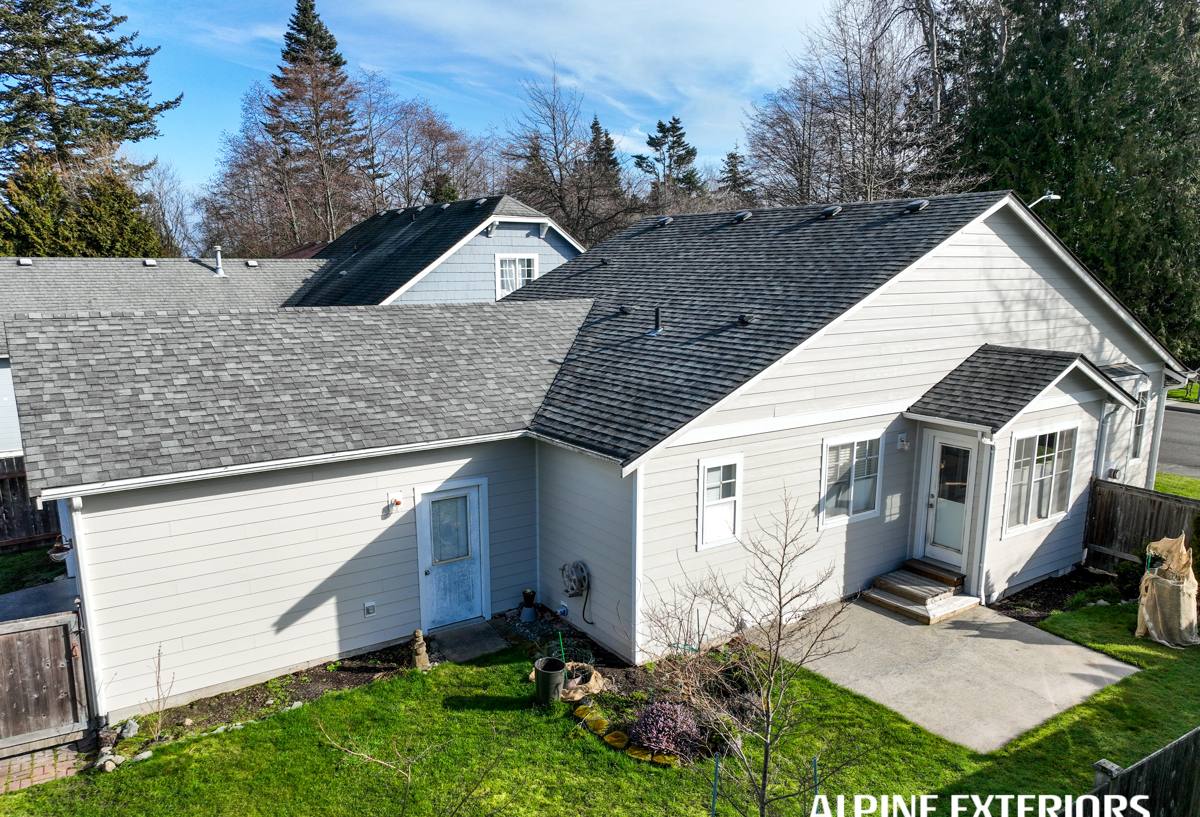
What Fidalgo Island Homes Are Actually Up Against
Salt Air and Corrosion
Airborne salt doesn't just affect homes on the waterfront. Wind carries fine salt particles well inland, and over years that exposure accelerates corrosion on metal flashing, fasteners, and hardware, and it can degrade certain siding finishes faster than manufacturers' standard testing accounts for. This is one of the reasons fastener selection and flashing material matter as much as the siding product itself on an island property.
Driving Rain
Storms moving through the Salish Sea corridor bring rain that doesn't just fall straight down — it drives sideways into walls, especially on west- and southwest-facing elevations that catch the prevailing weather. That means water-resistive barriers, properly lapped house wrap, and correctly flashed windows and doors aren't optional extras; they're the difference between a wall assembly that sheds water and one that slowly traps it.
Moss, Shade, and Standing Moisture
A lot of Fidalgo Island's charm comes from mature evergreens and wooded lots, but that shade keeps siding, trim, and roofing damp longer after every rain. Moss and algae take hold readily in those conditions, particularly on north-facing walls and anywhere siding sits close to landscaping or overhanging branches. Left unaddressed, sustained moisture and organic growth against a wall system is one of the most common ways siding fails early — not from one bad storm, but from years of never fully drying out.
Why We Only Install James Hardie Fiber Cement
We don't install vinyl siding, LP SmartSide, Cemplank, Allura, primed spruce, or cedar. That's a deliberate standard, not a lack of options. On an island with this much moisture exposure, the material choice has to hold up to conditions that are more demanding than a typical mainland Skagit Valley property.
- Vinyl can warp or become brittle with age and temperature swings, and its seams and J-channels give wind-driven rain more opportunities to find a way behind the panel.
- Wood-based composite sidings (LP SmartSide) use engineered wood substrates that, if a seam or cut edge isn't sealed and maintained correctly, are vulnerable to moisture intrusion — a real risk in a marine climate with this much standing dampness.
- Primed spruce and cedar are natural wood products that need regular refinishing to keep moisture out, and in a shaded, damp environment they're also more prone to rot and moss colonization if maintenance slips even one season.
- Other fiber cement brands (Cemplank, Allura) are legitimate fiber cement products, but we've standardized on one manufacturer so we can guarantee consistent factory finish quality, warranty terms, and installation specs across every job — rather than juggling multiple systems and their different requirements.
James Hardie fiber cement is non-combustible, dimensionally stable in wet-dry cycling, and available in HZ5 formulations engineered for climates with sustained moisture exposure — which describes Fidalgo Island well. The ColorPlus factory finish is baked on under controlled conditions, which holds color and resists the fading, chalking, and moisture absorption that field-applied paint is more prone to over time near saltwater.
Product and Warranty Comparison
| Factor | Vinyl | Wood/Composite | James Hardie Fiber Cement |
|---|---|---|---|
| Moisture resistance | Moderate — seams are vulnerable | Low to moderate — depends on sealed edges | High — engineered for wet climates |
| Salt air durability | Can become brittle over time | Prone to swelling and rot near seams | Stable; not a wood or plastic substrate |
| Moss/algae resistance | Susceptible in shaded, damp areas | Susceptible, especially at cut edges | Resistant surface; still needs periodic cleaning |
| Finish longevity | Field color, can fade/chalk | Field-applied paint, needs recoating | Factory ColorPlus finish, long color retention |
| Fire resistance | Can melt/deform | Combustible | Non-combustible |
| Typical transferable warranty | Varies by brand | Varies, often shorter on finish | Strong limited warranty, transferable to new owners |
What Correct Installation Looks Like on This Island
Material choice only gets you halfway there — installation details are what actually keep water out of the wall assembly over the long run, especially with the driving rain this area sees.
- Properly lapped and sealed water-resistive barrier behind every wall section
- Correctly flashed and sealed window and door openings, with attention to west- and southwest-facing walls that take the brunt of storms
- Corrosion-resistant fasteners appropriate for a salt-air environment, not standard-grade hardware
- Proper clearance between siding and grade, decks, and roof lines to avoid trapped moisture
- Correct joint and butt-seam sealing per manufacturer spec, since a poorly sealed seam undoes a lot of what the material itself offers
- Ventilation gaps and rainscreen details on shaded or heavily wooded lots where drying time matters most
James Hardie backs its products with a strong warranty, but that warranty depends on installation to spec. We install what we sell, to the manufacturer's requirements, which is part of why we limit ourselves to one product line we know thoroughly rather than spreading across several.
Roofing, Windows, and Decks on Fidalgo Island
Siding is only one piece of the exterior envelope, and the same climate factors — salt air, wind-driven rain, moss, shade — affect roofing, windows, and decking on the island too. Roofing takes the most direct hit from moss and standing moisture, especially on shaded, low-slope sections. Windows need flashing and sealing details that match the same driving-rain exposure as the siding around them. Decks, particularly ones built from wood in shaded or damp areas, need material and fastener choices that account for the same corrosion and moisture pressures. Handling all four under one roof means the flashing, sealing, and drainage details are coordinated across the whole exterior rather than treated as separate, disconnected projects.
Why a Local Crew Matters Here
Fidalgo Island isn't a generic Pacific Northwest job site. A crew that works this area regularly knows which elevations catch the worst of the driving rain, which neighborhoods deal with heavier salt exposure, and which lots need extra attention to moss and shade. That local knowledge shows up in small decisions — where to add extra flashing, which fastener grade to use, how much ventilation gap a shaded wall needs — that don't show up on a spec sheet but matter over the life of the exterior. It also means we're not driving in from out of the area when something needs a follow-up look after the first real storm season.
Maintenance Realities for Island Homes
No siding material is maintenance-free in this climate, but the maintenance burden differs a lot by product. Fiber cement generally needs periodic washing to keep salt residue and light algae from building up, plus normal caulk and trim upkeep — but it doesn't need repainting on the same cycle that wood siding does, and it isn't vulnerable to the seam and edge failures that plague vinyl and composite products in wet, shaded conditions. For homeowners weighing long-term cost, the lower recoating frequency and stronger moisture resistance of James Hardie siding often offsets a higher upfront cost compared to vinyl or composite over a 15-to-20-year horizon.
Cost Factors to Expect
| Factor | How it affects your project |
|---|---|
| Home size and wall complexity | More corners, gables, and dormers mean more cutting, flashing, and labor |
| Existing siding removal | Tear-off and disposal of old material adds to the scope |
| Water damage found during tear-off | Rot or sheathing damage from prior moisture issues may need repair before new siding goes on |
| Siding profile and trim detail | Lap width, board-and-batten, and trim complexity affect material and labor |
| Access and site conditions | Wooded lots, tight setbacks, or slope can affect staging and labor time |
If you're on Fidalgo Island and dealing with siding, roofing, window, or deck concerns brought on by salt air, driving rain, or moss buildup, we're happy to take a look and give you a straightforward, no-pressure estimate — just fill out the form below.