 Anacortes
 Cemplank Is a Real Fiber Cement Product — Here's Why We Still Don't Install It
Cemplank is fiber cement siding, and fiber cement as a category is the right call for a house in Anacortes. It doesn't rot, it stands up to moisture better than wood or engineered wood, and it holds paint or factory finish far longer than most alternatives. We're not going to tell homeowners that Cemplank is junk, because that's not true and it wouldn't be honest. What we will tell you is why, after years of installing and standing behind siding in Skagit County, we made the decision to install only James Hardie products and to turn down jobs that call for anything else, Cemplank included.
This isn't a marketing page dressed up as education. It's the actual reasoning behind a business decision that affects what we can offer you, so you understand it before you ask us to bid your project.
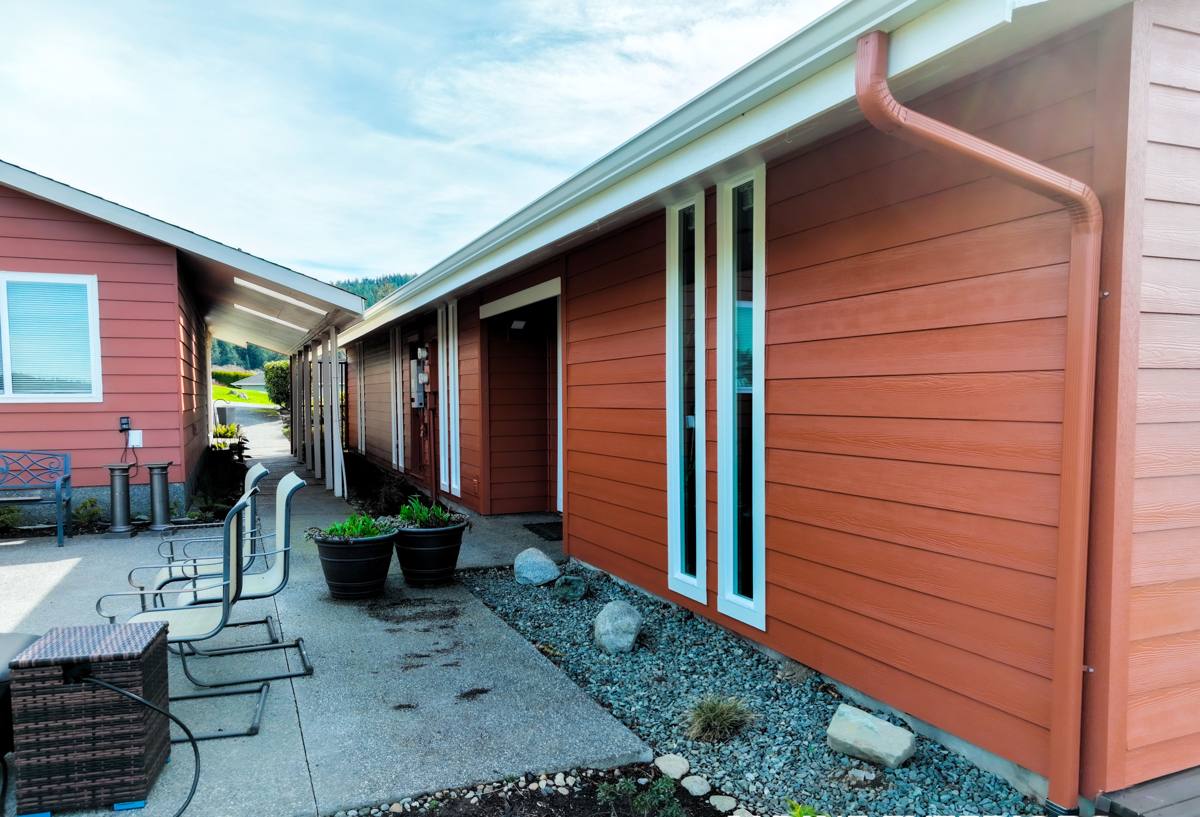
What Cemplank Gets Right
Fiber cement in general — Cemplank, James Hardie, and a handful of smaller brands — is made from cement, sand, and cellulose fiber pressed into boards or panels. That composition is what makes it non-combustible, dimensionally stable, and resistant to the kind of moisture damage that eventually takes down wood and vinyl siding in a marine climate. Cemplank is manufactured to meet the same general ASTM standards as other fiber cement products, and it's a legitimate step up from vinyl or primed wood in terms of durability.
Where we start to have concerns is not the raw material — it's everything around the material: how it's engineered for specific climates, how consistently it performs from batch to batch, what backs it up when something goes wrong, and how easy it is to keep looking good ten and twenty years down the road.
The Real-World Differences That Changed How We Bid Jobs
Climate Engineering
James Hardie builds different formulations for different climate zones — a version engineered for humid, wet regions like ours (HardieZone HZ10) and a separate version for hot-dry climates. The idea is that a board sitting through a Skagit County winter of near-constant drizzle, and one sitting in an Arizona attic-hot climate, should not be made the same way. Cemplank does not offer that kind of regionally engineered product line. For a coastal town where driving rain off Rosario Strait and a long moss season keep siding wet for a good chunk of the year, we'd rather install a product that was specifically formulated for exactly that condition than one that wasn't.
Factory Finish
James Hardie's ColorPlus finish is baked on in a controlled factory environment, cured, and backed by its own dedicated finish warranty separate from the substrate warranty. Cemplank is more commonly sold primed, meant to be field-painted after installation, or with a less established factory-finish program depending on the product line and region. Field-applied paint depends heavily on weather conditions at the time of the job, the quality of the paint crew, and how well the site is prepped — none of which you can fully control on a job that has to work around Pacific Northwest weather windows. A factory finish removes that variable entirely.
Warranty Structure
James Hardie's warranty is well established, transferable to a new owner if you sell the home, and has a long track record of the company actually standing behind it across a large national network of contractors. Cemplank's warranty coverage exists, but the company's presence, distribution, and long-term support infrastructure in this region is thinner. If a warranty claim ever needs to go through the manufacturer years from now, we want our clients working with a company that has deep roots and a proven claims process here in the Pacific Northwest, not one where support depends on how a regional distributor is doing that year.
Installer Network and Product Consistency
Because James Hardie is the dominant fiber cement brand nationally, there's a mature ecosystem around it: consistent product specs, widely available trim and accessory pieces that are designed to match, and installers everywhere who are deeply familiar with its handling requirements. Cemplank's distribution and product-line consistency vary more by region, which matters if you ever need matching replacement pieces after a repair, an addition, or storm damage a decade from now.
Cemplank vs. James Hardie: A Side-by-Side Look
| Factor | Cemplank | James Hardie |
|---|---|---|
| Climate-specific formulation | Not regionally engineered | HZ10 formulation built for wet/humid climates like ours |
| Factory finish | Commonly primed for field paint | ColorPlus factory finish standard on most lines |
| Finish warranty | Varies by dealer/paint used | Separate, dedicated ColorPlus finish warranty |
| Regional distribution & support | Thinner in the Pacific Northwest | Established regional supply and installer network |
| Warranty transferability | Varies | Transferable to new homeowner |
| Core material durability | Genuine fiber cement, non-combustible | Genuine fiber cement, non-combustible |
Note that the last row is the same for both — this isn't a case of one product being fake and the other real. It's a case of one having a support system and a climate-specific formulation built for exactly where your house sits, and one that doesn't.
Why This Matters More in Anacortes Than in Drier Climates
Skagit County siding lives a harder life than siding in most of the country. Salt air off the water accelerates corrosion on fasteners and finishes that aren't rated for it. Driving rain doesn't just wet the surface of a wall — it drives moisture into seams, laps, and butt joints if the material and the finish aren't built to shed it. And our moss season runs long, which means siding stays damp and shaded for stretches at a time, feeding any spot where a coating is thin or a board wasn't sealed correctly at the factory.
None of that is a hypothetical. It's the actual set of conditions we bid jobs against every week. A product engineered generically, without a formulation built for a wet marine climate, is more likely to show its weak points here than in a drier region — even if it performs perfectly fine somewhere else.
What "We Don't Install It" Actually Means
We're not saying Cemplank is unsafe or that every installation of it will fail. Plenty of fiber cement products, installed correctly, last a long time. What we're saying is that after weighing climate engineering, factory finish quality, warranty backing, and regional support, we decided we could only stand fully behind one product line — and for us, on the coast in Skagit County, that's James Hardie. Once we made that call, it didn't make sense to keep two different install processes, two different trim and accessory inventories, and two different warranty conversations going. We picked one, learned it inside and out, and built our crew's expertise around installing it correctly every time.
What We Install Instead, and Why
James Hardie's HZ10 product line is formulated specifically for regions with high humidity and heavy rain — which describes Anacortes for a good part of the year. Combined with the ColorPlus factory finish, a transferable warranty, and a well-established supply chain for matching trim and repair pieces, it's the product we can commit to installing to spec and standing behind for the long haul. That's the whole reason we narrowed our offering instead of installing whatever a homeowner asks for.
What to Ask Any Siding Contractor Before You Sign a Contract
- Which specific fiber cement product line and climate formulation are they proposing for your home?
- Is the finish factory-applied or field-painted, and what does that finish's warranty actually cover?
- Is the manufacturer's warranty transferable if you sell the house?
- How established is that manufacturer's distribution and support in the Pacific Northwest specifically?
- Does the contractor have documented, manufacturer-recognized installation training on the product they're proposing?
- What fastener and flashing details will they use at seams and butt joints, given how much rain this area gets?
Any contractor should be able to answer these plainly. If the answers are vague, that's worth paying attention to before work starts, not after.
Where This Leaves You as a Homeowner
If you already have Cemplank siding on your home, that doesn't mean you have a problem — it means you have a different product than what we install going forward, and we're happy to talk through its condition honestly during an inspection. If you're planning new siding or a full replacement, we'll walk you through exactly why we recommend James Hardie for a house in this climate, what it costs relative to the alternatives, and what correct installation looks like so the product performs the way it's designed to.
If you'd like a straight answer about your specific home, reach out for a free, no-pressure estimate. We'll take a look, tell you what we see, and explain our recommendation the same way we explained it here.