 Anacortes
 Exterior Work Built for Ship Harbor's Conditions
Ship Harbor sits close enough to the water that its homes deal with a different set of exterior pressures than houses further inland in Skagit County. Salt-laden air moves in off the harbor, wind-driven rain hits siding at angles that gutters and overhangs weren't always designed for, and the shaded, damp pockets around mature trees stay wet long after a storm has passed. None of that is unusual for this part of Anacortes — it's just the baseline homeowners here are working with, and it's the baseline we design every siding, roofing, window, and deck project around.
We're a local crew, not a call center dispatching subcontractors from out of the area. That matters more than it sounds like it should. A contractor who works this stretch of Anacortes regularly already knows which sides of a house take the worst weather, where moss tends to build up first, and how a home near Ship Harbor should be flashed and vented differently than one a few miles inland. That knowledge shows up in the details — not in the sales pitch.
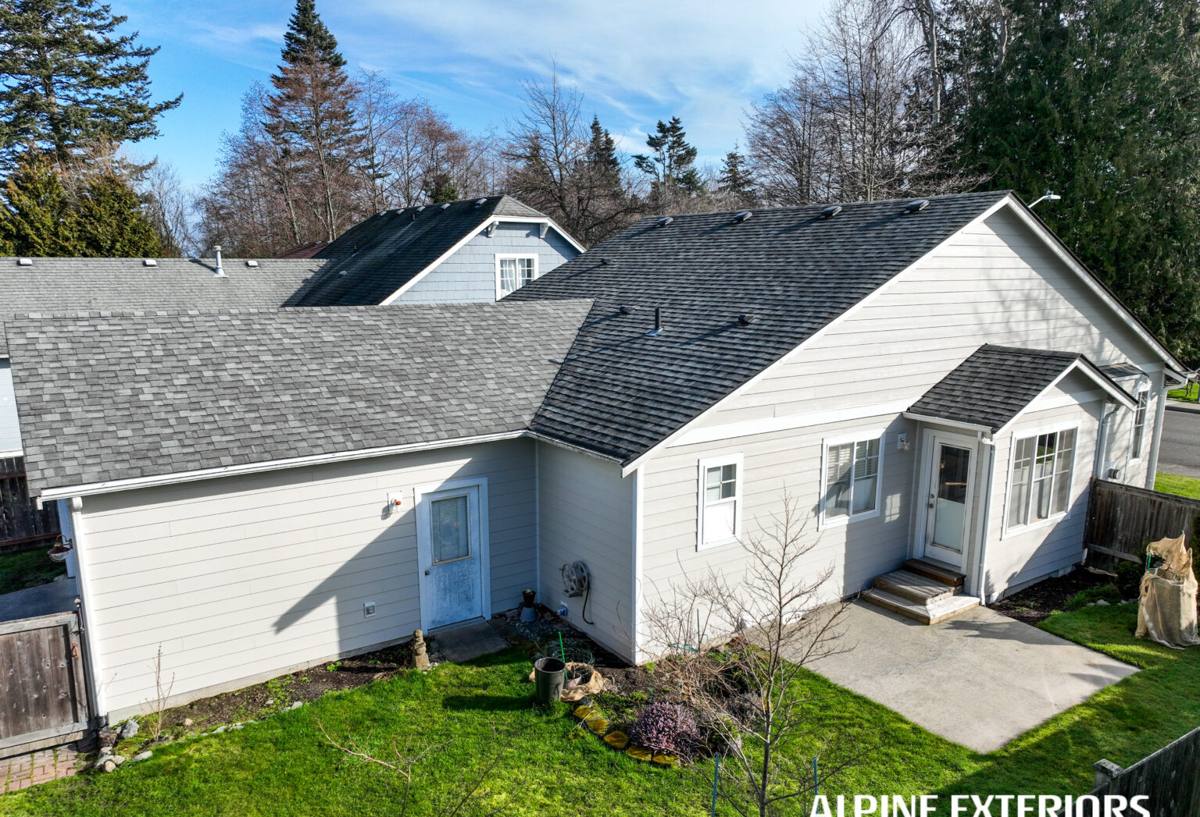
What Salt Air Actually Does to a House
Salt air is corrosive in ways that aren't always obvious until years in. It accelerates the breakdown of cheap fasteners, dulls and chalks lower-grade paint finishes faster than inland exposure would, and works its way into any gap in a home's exterior envelope. Over time, homes closer to the water tend to show wear on their south and west-facing walls first — the sides that catch the most direct weather and salt spray off Rosario Strait and the surrounding waterways.
Where It Shows Up First
- Fading and chalking on painted or lower-quality siding finishes, especially on sun- and wind-exposed elevations
- Corrosion on fasteners, flashing, and hardware that wasn't rated for coastal exposure
- Premature caulk and sealant failure around windows and trim
- Faster paint breakdown on window trim and fascia boards compared to homes further from the water
None of this means a Ship Harbor home is destined for constant repairs. It means material selection and installation detail matter more here than they would on a dry-side property, and it's why we don't cut corners on flashing, fastener spec, or product selection just to save a day of labor.
Driving Rain and the Long Moss Season
Anacortes gets a long stretch of the year — roughly fall through spring — where the ground stays saturated, the air stays damp, and surfaces that don't dry out quickly start growing moss and algae. Add wind-driven rain off the water and you get moisture pushed into places that a calmer inland rain wouldn't reach: under lap siding edges, around window returns, and into any siding seam that wasn't properly sealed or lapped.
Moss isn't just a cosmetic problem. On roofing, it holds moisture against shingles and lifts them over time. On siding and decking, it traps damp organic material against the surface, which is exactly the environment wood-based products struggle with. This is a big part of why we standardized on fiber cement for siding rather than wood-based alternatives — it doesn't feed moss growth or swell the way organic materials can, and it holds up to repeated wet-dry cycling far better over the long run.
Practical Moss and Moisture Prevention
- Keep gutters clear so water isn't overflowing directly onto siding and trim
- Trim back branches and shrubs that keep a wall shaded and damp longer than it needs to be
- Have roofing inspected before moss gets thick enough to lift shingles or hold standing moisture
- Address any siding caulk gaps or trim separation before winter rains set in
- Rinse algae and moss growth off exterior surfaces periodically rather than letting it build up for years
Why We Install James Hardie and Nothing Else
We made a deliberate call as a company: we install James Hardie fiber cement siding exclusively. We don't install vinyl, LP SmartSide, Cemplank, Allura, primed spruce, or cedar. That's not a marketing angle — it's a standard we hold because of what we've seen these products do, and not do, in coastal Washington conditions over time.
Vinyl is inexpensive and low-maintenance, but it's a thin plastic product that expands, contracts, and can warp or crack under UV exposure and temperature swings, and it doesn't offer the impact resistance or fire performance of fiber cement. Wood-based products like LP SmartSide use engineered wood strand cores — they perform reasonably well when maintained perfectly, but wood-based cores are inherently more vulnerable to moisture intrusion at cut edges and seams, which is a real liability in a climate with as much sustained dampness as this one. Primed spruce and cedar are traditional, attractive materials, but they require an ongoing maintenance commitment — repainting, sealing, and moisture monitoring — that most homeowners don't want to sign up for indefinitely, especially in a region where damp weather shortens the useful life of any coating. Other fiber cement brands like Cemplank and Allura are legitimate competitors to Hardie in the same product category, but we've standardized on one manufacturer so our crews install one system to one spec, consistently, rather than splitting expertise across several.
James Hardie's fiber cement is non-combustible, doesn't support moss or rot the way wood-based products can, and comes with a factory-applied ColorPlus finish that's baked on under controlled conditions rather than field-painted — which matters a lot in a climate where field-applied paint has a shorter useful life. Hardie also engineers specific product lines (their HZ5 line, for example) for regions with more moisture and temperature variation, which fits the Pacific Northwest better than a one-size-fits-all product.
Hardie vs. Common Alternatives, at a Glance
| Factor | James Hardie Fiber Cement | Vinyl | Wood-Based (LP, Cedar, Primed Spruce) |
|---|---|---|---|
| Moisture/rot resistance | High — cement-based, not organic | High, but can trap moisture behind panels | Moderate — vulnerable at cut edges and seams |
| Fire performance | Non-combustible | Combustible, can melt/warp under heat | Combustible |
| Finish durability | Factory-baked ColorPlus finish | Color molded in, can fade/chalk | Field-applied paint, needs repainting |
| Ongoing maintenance | Low — periodic wash and inspection | Low | Higher — repainting/sealing cycle |
| Warranty structure | Long-term, transferable | Varies by manufacturer | Varies, often shorter on finish |
Siding, Roofing, Windows, and Decks — One Envelope
Siding doesn't work in isolation. A house near Ship Harbor is really one connected system: roof, siding, windows, flashing, and decking all have to work together to keep water moving out and away from the structure. That's why we handle all four trades instead of just one. When we're on a siding job, we're also looking at how the roofline sheds water onto the walls below, whether window flashing is integrated correctly with the new siding, and whether an attached deck is creating a moisture trap against the house.
How the Trades Connect
- Roofing: A roof that's shedding water properly, with clean valleys and gutters, is the first defense for siding below it
- Siding: Correctly lapped, fastened, and sealed fiber cement resists the driving rain and salt air common near the water
- Windows: Flashing details around window openings are one of the most common failure points on older homes — we integrate new siding with proper window flashing rather than caulking around the problem
- Decks: Ledger boards and deck-to-house connections need the same moisture management attention as any other penetration in the exterior envelope
What a Ship Harbor Siding Project Involves
Every home is different, but a well-run siding replacement in this area generally follows the same sequence:
- An on-site assessment of the existing siding, sheathing condition, and any trouble spots — trim, window returns, deck ledgers, north-facing walls
- Removal of old siding and inspection of the sheathing underneath for hidden moisture damage before anything new goes up
- Installation of a proper weather-resistive barrier and flashing details at every penetration — windows, doors, vents, deck attachments
- Installation of James Hardie fiber cement siding to manufacturer spec, including correct fastening, clearances, and caulking
- A final walkthrough to confirm trim, caulking, and paint touch-up all meet the standard we'd want on our own homes
Cost Factors Homeowners in This Area Should Know
We don't publish blanket pricing because every home's size, existing condition, and complexity is different — but these are the factors that most affect the cost of a siding project near Ship Harbor:
| Factor | Why It Matters Here |
|---|---|
| Sheathing condition under old siding | Homes with a history of moisture intrusion may need sheathing repair before new siding goes on |
| Home size and wall complexity | More corners, dormers, and trim details mean more labor and material |
| Siding profile and color selection | ColorPlus finishes and certain textures carry different material costs |
| Access and site conditions | Wooded lots, slopes, and tight setbacks near the harbor can affect staging and labor time |
| Scope beyond siding | Bundling roofing, window, or deck work into one project can reduce overall disruption and cost versus separate projects |
Why a Local Crew Matters Here
Anacortes and the surrounding Skagit County coastline have their own microclimate quirks compared to inland Washington — the salt exposure, the extended damp season, and the wind patterns off the water all shape how an exterior holds up. A crew that works this area regularly isn't guessing at flashing details or moss-prone spots; they've seen the same conditions on the house down the street. That's the standard we hold every Ship Harbor project to, whether it's a full siding replacement or a roof-and-window project bundled in alongside it.
If you're weighing a siding, roofing, window, or deck project on a home near Ship Harbor, we're happy to walk the property, look at what your exterior is actually dealing with, and give you a straight assessment. Reach out for a free, no-pressure estimate using the form below.