 Anacortes
 Burlington's Exterior Climate Challenges
Burlington sits in the Skagit Valley, close enough to the Salish Sea that salt-laden air reaches homes on a regular basis, and close enough to the Cascade foothills that rain systems stall out and dump for days at a time. That combination is hard on exterior building materials. Salt air accelerates corrosion of fasteners and metal trim, driving rain finds every gap in flashing and siding laps, and the long stretch of gray, wet months each year gives moss, algae, and mildew plenty of time to take hold on north-facing walls, rooflines, and anything shaded by trees.
Homes in and around Burlington also deal with wind-driven rain during fall and winter storms, which pushes moisture sideways into wall assemblies rather than just down. Combined with the marine layer humidity common to Skagit County, this means exterior materials here need to handle sustained wetness, not just occasional rain. Products that perform fine in a drier climate often show their weaknesses within a few years of Burlington weather.
Why Siding Fails Faster Here Than People Expect
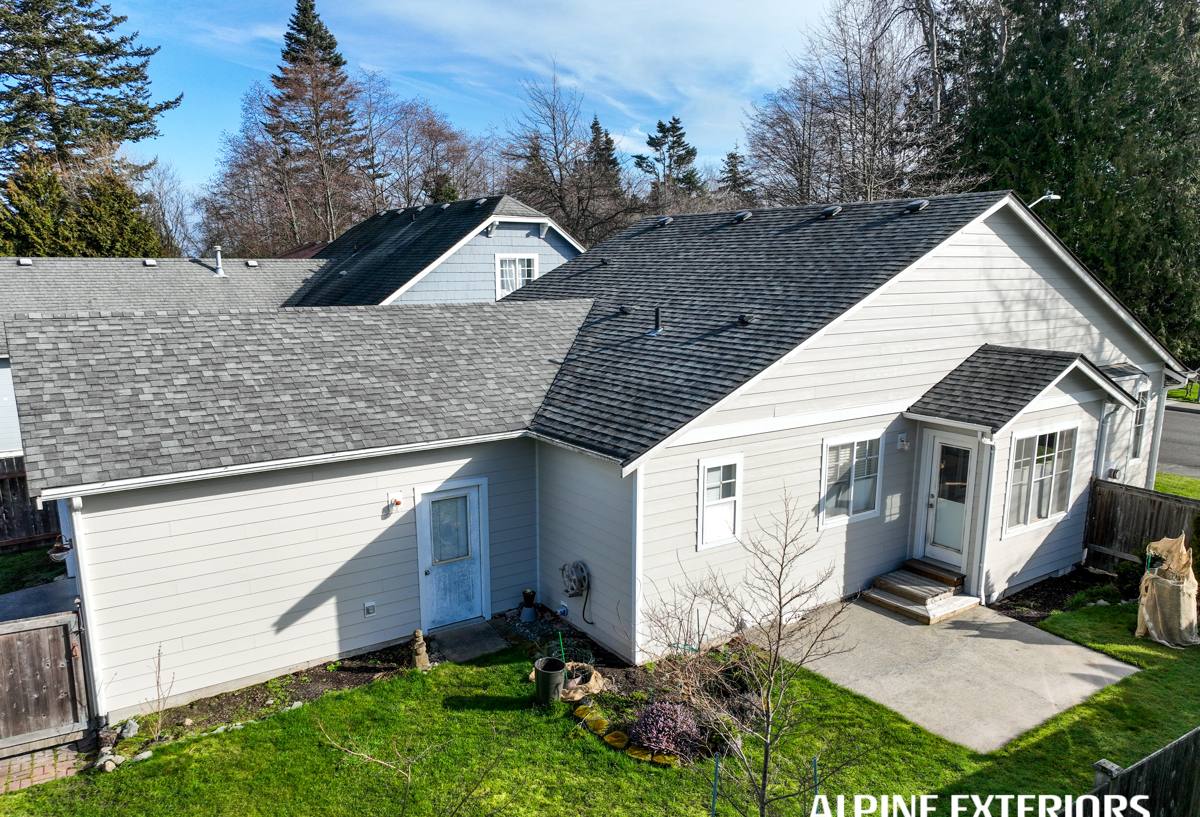
Most siding problems we see on Skagit County homes trace back to moisture that got in and had nowhere to go. Wood-based products swell, delaminate, or rot at butt joints and corners where water collects. Vinyl can hold its shape but does little to stop moisture from tracking behind it, and hidden rot underneath often goes unnoticed until it's a structural issue. Moss and algae growth on shaded or north-facing walls isn't just cosmetic — sustained organic growth holds moisture against the surface far longer than open air would allow, which speeds up whatever failure mode a given material is prone to.
Salt air adds a second layer of wear. Fasteners, flashing, and trim pieces that aren't rated for coastal exposure corrode faster here than in inland parts of Washington. A siding system is only as good as the materials and installation details working together — the field material, the flashing, the fasteners, and the finish all have to hold up under the same conditions at the same time.
Why We Install James Hardie — and Nothing Else
We made a decision a while back to stop installing several materials that are common elsewhere in the industry, including vinyl siding, LP SmartSide, and other fiber cement or fiber-based alternatives to James Hardie. That wasn't a marketing decision — it came from watching how these products actually perform over a decade or more in this specific climate, versus how they're marketed to perform.
Vinyl siding is inexpensive and easy to install, but it's a cladding layer only — it doesn't add structural rigidity, it can warp or crack in temperature swings, and its seams and J-channels give wind-driven rain plenty of entry points. Wood-based composite sidings like LP SmartSide use engineered wood strand technology that resists some of the failure modes of solid wood, but they're still an organic wood product at the core, which means sustained moisture exposure — the kind Burlington gets every winter — is exactly the condition that stresses them the most over time.
James Hardie fiber cement is a genuinely different category of material: a mix of cement, sand, and cellulose fibers that doesn't rot, doesn't feed pests, and doesn't burn. It's not immune to poor installation, but the material itself doesn't have the moisture-absorption or organic-decay vulnerabilities that drive most of the siding failures we get called out to inspect. That's why it's the only siding brand we put on homes.
What James Hardie Offers Skagit County Homes Specifically
- HZ5 climate engineering: Hardie's HZ5 product line is engineered for the Pacific Northwest's wet, moderate-temperature climate rather than a one-size-fits-all formula.
- ColorPlus factory finish: A baked-on finish applied under controlled conditions, which holds up better against UV and moisture cycling than field-applied paint and reduces how often the exterior needs repainting.
- Non-combustible core: Fiber cement doesn't contribute fuel to a fire, which matters given Washington's increasing wildfire smoke and ember exposure in recent summers.
- Transferable warranty: A written, transferable warranty that adds real value if the home is ever sold.
Beyond Siding: The Full Exterior Envelope
Siding doesn't work in isolation — it's one part of a system that includes the roof, the windows, and any attached decks or covered outdoor spaces. We handle all four because they all interact with the same moisture and weather exposure, and a weak point in one usually shows up as damage in another. A roof with failing flashing at a wall intersection will soak the siding below it. Windows with degraded seals let water track down into the wall cavity behind the cladding. A deck ledger board attached without proper flashing is one of the more common sources of hidden rot we find on Northwest homes.
When we look at a Burlington home for a siding project, we're also checking how the roof, windows, and any decks tie into that same exterior envelope, because recommending new siding while ignoring a roofing or window issue that's actively letting water in doesn't solve the underlying problem.
Comparing Exterior Siding Options
| Material | Moisture Behavior in Wet Climates | Maintenance | Typical Lifespan |
|---|---|---|---|
| Vinyl siding | Sheds water on the surface but doesn't stop moisture behind panels; can trap water against sheathing | Low, but limited repair options if damaged | Variable; can fade, warp, or crack over time |
| LP SmartSide / wood composite | Engineered wood strand product; performs better than solid wood but still moisture-sensitive at seams and cut edges | Moderate; edge sealing and repainting needed over time | Depends heavily on installation quality and moisture exposure |
| Cedar / primed spruce | Natural wood; absorbs moisture readily, prone to rot and insect activity in sustained wet climates | High; regular refinishing and inspection required | Shorter in wet coastal climates without diligent upkeep |
| James Hardie fiber cement | Non-organic core resists rot, doesn't feed pests, holds factory finish well under UV and moisture cycling | Low; occasional washing to manage moss/algae growth | Long-term durability when installed to Hardie's specifications |
These are general performance patterns, not guarantees — installation quality, sun and shade exposure, and how well an individual home's flashing and drainage plane are built all affect real-world results for any material.
What Correct Installation Actually Involves
James Hardie siding is only as good as the installation behind it. The manufacturer's own instructions call for specific fastener spacing, proper clearance at grade and roof lines, correctly lapped and sealed joints, and a functioning drainage plane behind the siding so any moisture that does get past the surface has somewhere to go instead of sitting against the sheathing. Skipping these details is one of the most common reasons fiber cement siding underperforms its reputation — the material gets blamed for installation shortcuts.
In a climate like Burlington's, we pay particular attention to flashing at windows, doors, and any roof-to-wall transitions, since those are the spots where wind-driven rain finds its way in first. We also factor in moss and algae exposure on shaded elevations when planning maintenance recommendations, since those areas need more frequent washing than a south-facing wall that dries out between rain events.
Maintenance Checklist for Burlington Homeowners
- Rinse siding annually, and more often on shaded or north-facing walls where moss and algae build up fastest.
- Inspect caulking around windows, doors, and trim each fall before the wet season sets in.
- Keep gutters clear so overflow doesn't run down and sit against siding or trim.
- Trim back vegetation and tree limbs that keep exterior walls shaded and damp longer than necessary.
- Check for any soft spots, staining, or discoloration near ground level, decks, or roof intersections — these are early signs of a moisture problem, not just cosmetic issues.
- Have flashing at roof-to-wall transitions and deck ledger boards inspected periodically, since these are common hidden entry points for water.
Why a Local Crew Matters in Burlington
Skagit County's weather isn't identical from one neighborhood to the next — proximity to the water, tree cover, and elevation all change how much moisture, salt exposure, and moss pressure a given home actually deals with. A crew that works in this specific area regularly gets a feel for which details matter most on which type of lot, and can plan flashing, drainage, and material choices accordingly rather than applying a generic approach. Local availability also matters for warranty service and follow-up — if a question comes up two or five years after installation, it helps to have a crew that's still working in the area and stands behind its own work.
We serve Burlington as part of our broader Anacortes and Skagit County service area, working on siding, roofing, windows, and decks with the same standard for materials and installation quality across every job.
Ready for a Straight Answer About Your Home's Exterior
If you're noticing moss buildup, soft spots, fading, or just an aging exterior on your Burlington home, we're happy to take a look and give you an honest assessment — no pressure, no sales script. Use the form below to request a free estimate, and we'll walk through what we see and what your options actually are.