 Anacortes
 Vinyl Siding Isn't a Bad Product — It's Just the Wrong Product Here
We get asked about vinyl siding often enough that it's worth explaining, plainly, why we don't install it. This isn't a knock on vinyl as a category. It's affordable, it's widely available, and in a lot of the country it does a perfectly reasonable job for a lot of years. Our objection is narrower and more practical: we install siding on homes in Anacortes and around Skagit County, and this particular corner of Washington puts a specific set of stresses on exterior cladding — salt-laden air off the water, driving wind-driven rain, and a moss and mildew season that runs long and stays damp. Vinyl's known weak points line up almost exactly with those stresses.
We standardized on James Hardie fiber cement years ago and haven't looked back. Below is the honest version of why — what vinyl does well, where it struggles in our climate specifically, and what we put on homes instead.
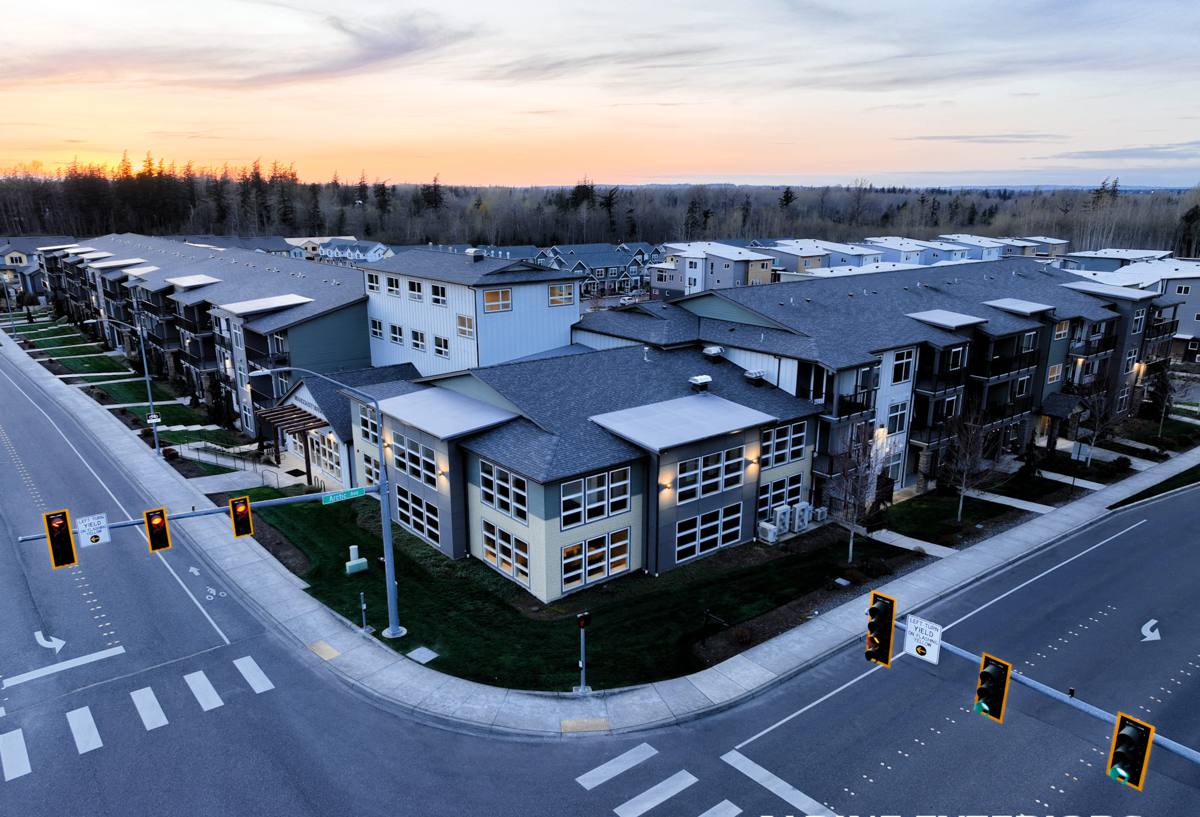
What Vinyl Siding Actually Gets Right
Fair is fair. Vinyl earned its market share for real reasons:
- Low upfront cost. Materials and labor both tend to run cheaper than fiber cement or wood alternatives.
- No painting. Color is baked into the material, so there's no repaint cycle in normal use.
- Lightweight and fast to install. Crews can cover a house quickly, which keeps labor costs down.
- Doesn't rot. As a plastic product, it won't absorb water and decay the way untreated wood will.
If you're in a dry climate with mild temperature swings and modest wind exposure, a lot of these advantages hold up well over the life of the product. That's just not the environment most Anacortes homes sit in.
Salt Air: The Corrosion and UV Problem
Anacortes sits right on the water, and a meaningful share of the homes we work on are within a few miles of salt water in one direction or another. Salt-laden air doesn't just affect metal fasteners and flashing — it accelerates the breakdown of a lot of exterior plastics, including vinyl, through a combination of chemical exposure and constant fine moisture film on the surface. Combine that with the UV load in the Pacific Northwest's long summer daylight hours, and vinyl's color and surface finish tend to chalk, fade, and become brittle faster near the water than the same product would inland.
Brittle vinyl is a real problem, not a cosmetic one. A panel that's gone brittle from years of UV and salt exposure cracks under impact — a ladder bump, a wind-thrown branch, even aggressive pressure washing — where a newer, more flexible panel would have simply flexed and survived.
Why This Matters More Here Than Elsewhere
Inland siding jobs don't deal with this combination of constant marine humidity plus salt exposure plus long UV days. It's a fairly specific coastal Pacific Northwest condition, and it's one of the clearest reasons a product that performs fine in, say, a dry inland climate doesn't perform the same way in a waterfront or near-waterfront Skagit County installation.
Driving Rain and the Moisture-Management Problem
Vinyl siding is designed as what the industry calls a "drainage plane" product — it's not meant to be fully sealed. It's installed with intentional gaps and slots so that water that gets behind the panel can drain and evaporate. That design assumption works fine in light, gentle rain. It's tested a lot harder in wind-driven, near-horizontal rain, which is a regular feature of fall and winter weather here.
Under sustained driving rain, water can get pushed further behind vinyl panels than the drainage design anticipates, especially around inside corners, window trim, and butt joints where panels meet. Because vinyl itself won't rot, homeowners sometimes assume that means no damage is happening — but the water doesn't stop at the back of the vinyl. It reaches the wall sheathing, the housewrap, and the framing behind it. Vinyl can look fine on the surface for years while moisture-related damage builds underneath, and by the time it's visible (soft trim, staining, interior wall issues), the repair is bigger than a siding job.
Moss Season Compounds It
Skagit County's moss and algae season isn't a two-week event — shaded, north-facing, and tree-adjacent walls stay damp for months at a stretch. Moisture that lingers longer promotes more surface growth, and vinyl's slightly textured, matte finish gives moss and mildew spores more to hold onto than a smoother, factory-sealed surface. It's not that vinyl "grows mold" on its own — it's that the combination of surface texture and prolonged dampness makes it a hospitable place for growth to take hold, which then means more pressure washing, which then accelerates the UV and impact damage described above.
Installation Sensitivity: Vinyl Punishes Small Mistakes
This is the trade-off that gets the least attention, and it matters as much as the climate factors. Vinyl siding expands and contracts significantly with temperature — more than most homeowners expect. Manufacturers build this into the installation spec: panels have to be nailed loosely enough to slide slightly, nails go in the center of the nailing slot rather than tight, and there are specific expansion gaps required at corners, trim, and openings.
Get any of that wrong — and it's an easy, common mistake for less experienced crews — and the result shows up later, not immediately:
- Panels nailed too tight buckle and wave once temperatures swing, especially on south- and west-facing walls that see the most direct sun.
- Insufficient expansion gaps cause panels to bow or pop loose at the ends.
- Improper overlap or J-channel work at corners becomes a direct water entry point during driving rain.
None of this is unique to any one installer — it's inherent to how the material behaves. But it means vinyl's real-world performance depends heavily on installation precision in a way that's easy to get wrong and expensive to diagnose after the fact, because the wall has to come apart to find the actual cause.
Warranty Reality: Read the Fine Print
Vinyl siding warranties often look strong on paper — lifetime coverage is a common marketing claim. In practice, most are prorated: coverage value declines every year you own the home, and many exclude fading and color change outright, or cap what they'll cover for it. Warranties are also frequently non-transferable, or transferable only once, with reduced terms for a subsequent owner. If you plan to sell within the warranty period, that matters more than it might seem to at first glance.
We compare this directly to James Hardie's ColorPlus finish warranty when we walk homeowners through options, because the contrast is part of why we made the switch to Hardie exclusively.
Vinyl vs. Fiber Cement: The Side-by-Side
| Factor | Vinyl Siding | James Hardie Fiber Cement |
|---|---|---|
| Material | PVC plastic | Cement, sand, cellulose fiber |
| Combustibility | Combustible; can soften/melt near heat sources | Non-combustible |
| Behavior in driving rain | Drainage-plane design; relies on gaps to shed water | Engineered HZ lines for regional moisture exposure |
| UV/salt air fading | Chalking and fading common over time, faster near water | Factory-baked ColorPlus finish, warrantied against fading |
| Impact resistance | Brittle with age, cracks under impact | Rigid, holds up to impact and moss-removal cleaning |
| Installation tolerance | Sensitive to nailing/expansion errors | More forgiving; standard fastening spec |
| Typical warranty structure | Often prorated, fade exclusions common | Strong transferable non-prorated coverage |
| Upfront cost | Lower | Moderate-to-higher, offset by lower lifecycle cost |
Why We Standardized on James Hardie Instead
We install James Hardie fiber cement exclusively — not LP SmartSide, not vinyl, not Cemplank or Allura, not primed spruce or cedar. Hardie's HZ product lines are engineered for climate zones like ours, the ColorPlus factory finish is baked on rather than painted on-site, and it's non-combustible, which matters more every year given regional wildfire smoke and ember exposure even outside direct fire zones. It holds up to the specific combination we deal with constantly: salt air, driving rain, and long stretches of damp, moss-prone shade. When it's installed to Hardie's spec — correct fastening, correct clearances, correct flashing — it's a product we're comfortable standing behind for the long haul, which is why it's the only siding system we put our name on.
Questions Worth Asking Before You Choose Vinyl Siding Here
- Is the warranty prorated, and does it exclude fading or chalking?
- Does the installer follow the manufacturer's exact nailing and expansion-gap specs, or "close enough"?
- How is the wall's moisture barrier and flashing detailed behind the panels, not just the panels themselves?
- How exposed is the wall to direct salt air, prevailing wind-driven rain, or shaded dampness?
- What does the same square footage cost in fiber cement, accounting for the lifecycle difference rather than just install-day price?
If you're weighing siding options for a home in Anacortes or elsewhere in Skagit County, we're happy to walk your specific property, point out the exposure factors that apply to your walls, and give you a straight comparison — no pressure, no hard sell. A free estimate is a good way to see the real numbers side by side before you decide.