 Anacortes
 What Board and Batten Actually Is
Board and batten is one of the oldest siding patterns in the Pacific Northwest — wide vertical panels or boards with narrow strips (battens) covering the seams between them. It started as a practical way to weatherproof barns and farmhouses with minimal material, and it's carried through into modern architecture because the strong vertical lines read as clean, deliberate, and a little more custom than standard horizontal lap siding.
On Anacortes homes we see it used two ways: as a full exterior on modern farmhouse and craftsman builds, and as an accent — gables, dormers, entry bays — paired with lap siding on the rest of the house. Both are legitimate design choices. The material behind the look matters more than the look itself, which is where fiber cement earns its keep over the alternatives.
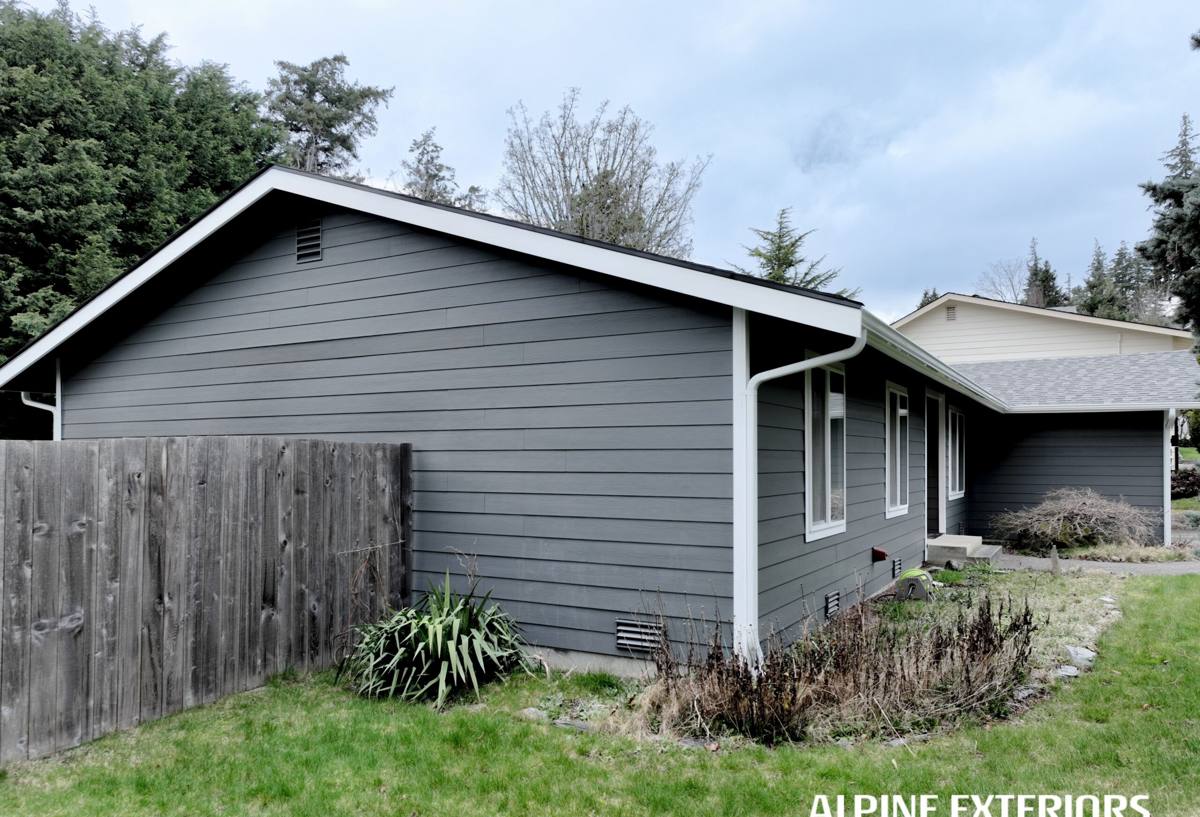
How James Hardie Builds a Board and Batten System
James Hardie doesn't make one board and batten product — it's a system of parts engineered to work together, which is part of why we standardized on it instead of mixing dimensional lumber battens onto a different base panel.
The Core Components
- HardiePanel vertical siding — the base panel, available in smooth or stucco-textured finish, installed as the "board" portion of the wall.
- HardieTrim boards — the battens themselves, factory-primed or ColorPlus-finished, engineered fiber cement rather than wood, so they don't cup, split, or telegraph knots through the paint.
- Rainscreen furring — a drainage gap behind the panel that Hardie's installation instructions call for in high-moisture climates, which absolutely includes ours.
The distinction that matters: this isn't plywood siding with strips of trim nailed over the seams. It's a panel and batten system engineered specifically to shed water at the joints, which is exactly where board and batten historically failed when built out of dimensional lumber.
Style Directions: What Board and Batten Can Do
Full Board and Batten
A full vertical treatment on a farmhouse or modern build gives a clean, monolithic look. It photographs well and reads as higher-end, but it also shows every imperfection in a wall's flatness more than lap siding does, so the substrate underneath needs to be straight and properly prepared before panels go up.
Mixed with Lap Siding
The most common application we install is a mix: HardiePlank lap siding on the main body of the house, board and batten on gables, a bump-out, or a second story, sometimes with a horizontal band board marking the transition. This breaks up a large wall visually and lets a homeowner get the board and batten look without committing the whole exterior to it.
Craftsman and Modern Farmhouse Pairings
Board and batten pairs naturally with craftsman trim details — wide window casings, exposed rafter tails — and with the black-window, white-or-charcoal-body look that's become common in newer Skagit County builds. It also works on smaller accent structures like shop buildings and detached garages where a full lap-siding treatment can feel busy.
Color and Finish Options
Every board and batten component — panel and batten — is available in Hardie's ColorPlus factory-applied finish, which is baked on and warranted separately from the substrate. That matters more on vertical board and batten than on lap siding, because the battens create hundreds of extra linear feet of edge and seam where field-applied paint is most likely to fail first.
| Finish Option | What You Get | Best For |
|---|---|---|
| ColorPlus (factory) | Baked-on finish, color-matched caulk, separate finish warranty | Most homeowners — lower long-term maintenance |
| Primed for field paint | Hardie-primed panel and trim, painted after install | Custom or unusual colors not in the ColorPlus palette |
Popular choices on Anacortes exteriors run toward deep charcoals, warm whites, and muted greens and grays that sit well against evergreen backdrops and the marine layer light we get off Fidalgo Bay — but the honest answer is it comes down to what the homeowner likes. We'll walk through physical color samples on-site rather than screen colors, since factory finishes read differently outdoors than they do on a chip.
Why This Matters More in Anacortes' Climate
Skagit County siding takes a specific kind of beating: salt-laden air off the Sound and the Strait, long stretches of driving rain, and a moss season that can run most of the year on north-facing and shaded walls. Board and batten has more seams and more edge exposure per square foot than plain lap siding, so the material choice behind it carries more weight here, not less.
- Salt air accelerates corrosion on fasteners and degrades cheaper coatings faster than it does a factory-baked finish.
- Driving rain tests every seam and batten joint for actual water-shedding capability, not just appearance.
- Extended moss and moisture season punishes any product that swells, delaminates, or holds water against wood substrate.
Fiber cement doesn't swell or rot the way primed spruce or engineered wood products can when a seam holds moisture longer than it should. That's the core reason board and batten — a style with inherently more seams — is a place where we're especially firm about material choice.
Installation Details That Actually Determine Longevity
Board and batten fails or succeeds based on details most homeowners never see once the house is finished. We follow Hardie's published fastening and clearance specs on every job, not as a formality but because these are the details that separate a board and batten wall that looks the same in year one and year fifteen from one that doesn't.
What Correct Installation Involves
- Rainscreen drainage gap behind the panel, per Hardie's climate-zone installation guidance
- Battens fastened independently of the base panel at engineered spacing, not just nailed through both layers at once
- Minimum clearance from grade, roof lines, and horizontal trim to keep water from wicking up from below
- Hardie-approved, color-matched caulk at joints — not generic exterior caulk that chalks and cracks under UV
- Corrosion-resistant fasteners, especially important this close to saltwater
Skipping any one of these doesn't show up on install day. It shows up in three to five years as staining, a soft spot at a batten seam, or paint failure that looks like a finish problem but is actually a moisture-management problem.
Cost Factors to Understand
Board and batten generally costs somewhat more than a straightforward lap siding job on the same wall area, mainly because of the extra material and labor in the battens themselves. Exact numbers depend on the scope of your project, so we won't quote a number here — but the factors below are the honest drivers.
| Factor | Why It Affects Cost |
|---|---|
| Batten spacing and count | More battens per square foot means more material and more fastening labor |
| Full exterior vs. accent use | Accent applications (gables, bump-outs) cost less in total but more per square foot due to setup and detail work |
| Wall flatness and prep | Vertical panels show substrate irregularities more readily; some walls need extra prep |
| ColorPlus vs. field paint | Factory finish costs more upfront but reduces repaint cycles over the life of the siding |
| Trim complexity | Transitions between board and batten and other siding styles add cutting and detail time |
Maintenance You Can Expect
A correctly installed Hardie board and batten wall is low-maintenance, not no-maintenance. Realistic upkeep looks like:
- Periodic rinse-down to clear salt residue and organic buildup, especially on shaded or north-facing walls prone to moss
- Visual check of caulk joints every couple of years, since caulk is the one component with a shorter service life than the siding itself
- Prompt attention to any landscaping or downspout changes that direct extra water or standing moisture at the wall
- Repainting only if you chose field-applied paint rather than ColorPlus — ColorPlus is designed to go much longer between refinishing
Checklist: Is Board and Batten Right for Your Project?
- You want strong vertical lines rather than traditional horizontal lap siding
- You're building or renovating in a farmhouse, craftsman, or modern style where the look reads naturally
- You're open to using it as an accent rather than a full exterior if budget or wall layout favors that
- You want a factory-finished product rather than field-painted trim that will need repainting sooner
- You care about how the material performs against salt air and sustained rain, not just how it looks on install day
If you're weighing board and batten against a more traditional lap siding look, or trying to figure out where it makes sense on your specific home, we're happy to walk the exterior with you and talk through it in person. Reach out for a free, no-pressure estimate — there's a form right below this page.