 Anacortes
 Why Moisture Is the Real Enemy of Your Siding
Paint fades. Colors go out of style. But the thing that actually ends a siding system's life is moisture that gets behind it and stays there. In Anacortes and the rest of Skagit County, that's not a hypothetical — it's the default condition for about eight months of the year. Marine air off Rosario Strait and the Guemes Channel keeps humidity high, driving rain off Puget Sound pushes water sideways into wall assemblies, and shaded, north-facing walls under fir and cedar cover can stay damp for days after a storm passes. Siding doesn't have to leak to fail. It just has to hold water against wood long enough for rot fungi to get established.
This page walks through how moisture damage actually happens, what it looks like at each stage, how different siding materials behave when they get wet, and what we tell homeowners who are trying to decide whether to repair, patch, or replace.
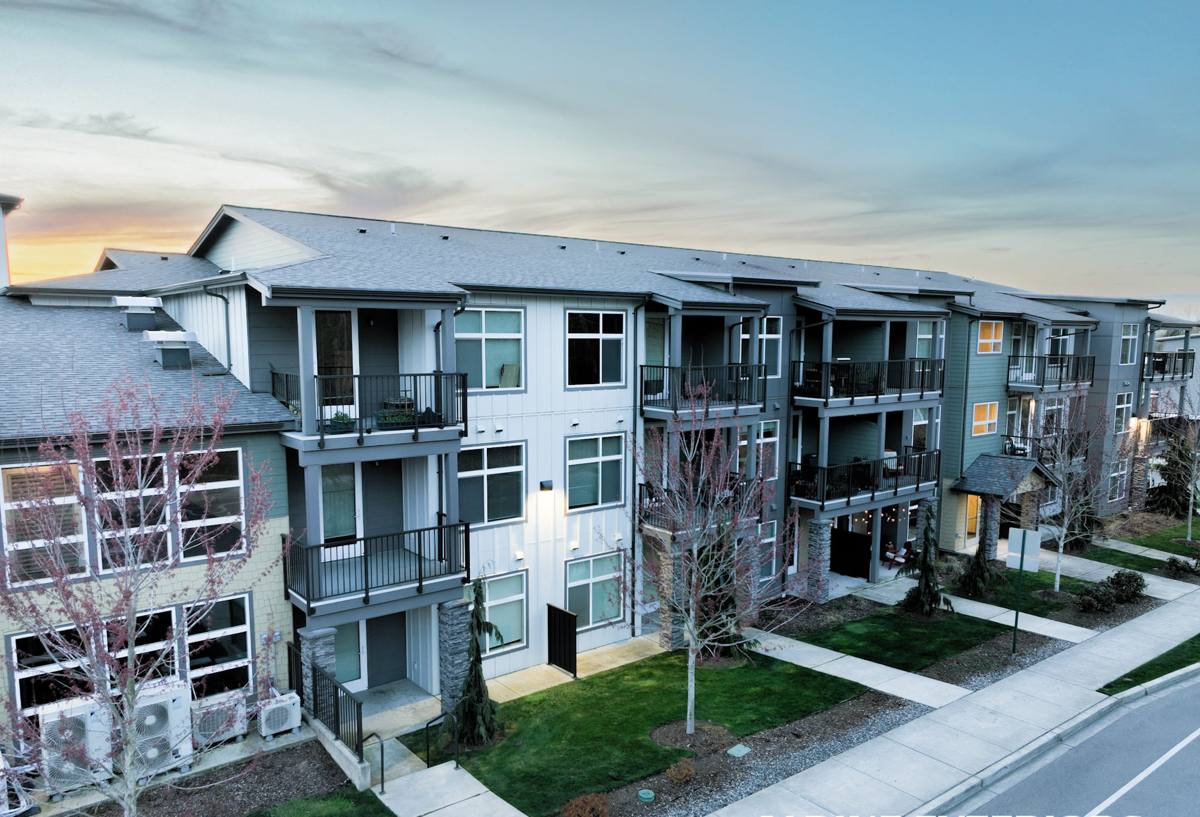
How Rot Actually Starts
Wood rot isn't caused by water alone — it's caused by fungi that need three things to grow: oxygen, a food source (wood or wood-based material), and moisture above roughly 20% wood content, sustained for an extended period. Coastal Washington gives fungi the first two for free. The only variable a homeowner or contractor actually controls is the third.
The Sequence Behind a Wall
- Water intrusion point: a failed caulk joint, a nail hole, a poorly flashed window, or a seam where two siding pieces butt together without proper overlap.
- Trapped moisture: water gets behind the siding but has no path to drain or evaporate, often because house wrap was installed without a drainage gap or the siding itself absorbed water directly.
- Sustained wet conditions: in a drier climate this might dry out in a few days. In Skagit County, back-to-back weather systems can keep sheathing damp for weeks at a stretch.
- Fungal growth and structural breakdown: by the time rot is visible from the outside, the sheathing or framing behind it is usually already compromised.
The practical takeaway: the material's job isn't just to look good, it's to either shed water completely or, when water inevitably gets past a joint, to not absorb it and hold it against the wall.
Where Rot Actually Shows Up First
We see the same failure points on Anacortes homes over and over. If you're inspecting your own house, start here before you worry about the broad wall fields.
High-Risk Zones
- Bottom courses of siding near grade, where splashback and soil moisture stay in contact longest
- Window and door trim, especially top corners where flashing was skipped or reverse-lapped
- Butt joints and seams, particularly on horizontal lap products that weren't properly staggered or caulked
- Deck ledger and porch roof intersections, where two building systems meet and flashing details get complicated
- North and west-facing walls that face prevailing wind-driven rain and get the least sun exposure to dry out
- Areas beneath overflowing or undersized gutters, where water sheets down the wall face repeatedly
How Different Siding Materials Actually Behave When They Get Wet
This is the part that matters most when you're choosing a replacement product, because every siding material handles moisture differently — and that difference determines how long it lasts in a climate like ours.
| Material | Moisture Behavior | Coastal Climate Risk |
|---|---|---|
| Untreated or primed wood (spruce, cedar) | Absorbs water directly into the fiber; swells, cups, and checks with repeated wet/dry cycles | High — needs frequent repainting and caulk maintenance to stay ahead of moisture |
| Engineered wood (OSB-based composite) | Wood strands and resin can swell and delaminate at cut edges and joints if moisture reaches the substrate | Moderate to high — edge sealing and strict installation detailing are critical, especially at butt joints |
| Vinyl | Doesn't absorb water itself, but panels aren't a true water barrier — moisture can travel behind the panel and no material provides a moisture buffer at the wall | Moderate — the wall assembly behind it does all the real work, and gaps/warping from heat cycling create new entry points over time |
| Fiber cement (James Hardie) | Dimensionally stable; cement-based composition doesn't swell, cup, or absorb water the way wood-based products do | Low — engineered specifically for moisture cycling when installed to manufacturer spec |
None of these materials are waterproof by themselves — siding is one layer in a larger water-management system that includes house wrap, flashing, and drainage gaps. But the material's own moisture response determines how forgiving the system is when something behind it isn't perfect, and in a marine climate, something is eventually not perfect.
Salt Air, Driving Rain, and Moss Season — The Anacortes Factor
Three regional conditions compound the moisture problem here specifically:
Salt Air
Being surrounded by saltwater means airborne salt settles on exterior surfaces, accelerates the breakdown of some paints and caulks, and can corrode fasteners over time. Corroded nails and staples lose their grip, which opens tiny gaps at panel edges that let water in.
Driving Rain
Storms coming off the Strait don't just fall straight down — wind pushes rain sideways into wall assemblies, which is why lap siding needs correct overlap, sealed joints, and properly flashed openings far more than it would in a drier, calmer inland climate.
Moss and Algae Season
Shaded, moisture-retentive surfaces in Skagit County grow moss and algae for a good chunk of the year. Beyond the cosmetic issue, moss holds water against the siding surface long after rain has stopped, extending the wet period on a wall well past the storm itself — exactly the condition rot fungi need.
Warning Signs to Check For
- Soft or spongy spots when you press on siding, especially near the bottom courses
- Visible cupping, bubbling, or peeling paint that keeps coming back in the same spot
- Dark staining or streaking below window sills and butt joints
- A musty smell near an exterior wall from the inside of the house
- Siding that looks swollen or has separated slightly from the wall
- Moss or algae buildup that hasn't been addressed in more than a season
- Visible gaps at corners, trim, or panel seams where caulk has shrunk or cracked
Any one of these on its own isn't necessarily an emergency. Several together, especially on the same wall, usually means moisture has been getting in for a while.
Repair, Patch, or Replace?
Homeowners often want to know if a rotten section can just be cut out and patched. Sometimes it can. The honest answer depends on a few factors:
Questions That Determine the Right Call
- Is the damage isolated to one board or section, or does it show up in multiple spots across the wall?
- Has the sheathing behind the siding been affected, or is the damage limited to the siding material itself?
- How old is the rest of the siding, and is it the same material and finish as what's available for a clean patch?
- Is the damage a symptom of a larger flashing or drainage problem that will just cause the same failure again nearby?
A single damaged section on an otherwise sound wall is often a legitimate repair. Recurring rot in multiple locations, or rot tied to a systemic flashing issue, usually means a full section or full wall replacement is the more honest recommendation — patching over a root cause just delays the same call a year or two down the road.
Why We Only Install James Hardie Fiber Cement
We made the decision years ago to install James Hardie fiber cement exclusively, and moisture performance is the biggest reason why. Fiber cement is made from cement, sand, and cellulose fibers — it doesn't swell, cup, or absorb water into its fiber structure the way wood and wood-composite products can. Hardie's HZ5 product line is specifically engineered for harsh, wet climates like ours, and the factory-applied ColorPlus finish is baked on under controlled conditions, which gives it better adhesion and moisture resistance than a field-applied paint job that has to fight our weather from day one.
That doesn't mean fiber cement is maintenance-free or immune to problems from bad installation — correct flashing, proper gapping, and manufacturer-spec fastening still matter enormously. But when it's installed correctly, it removes the material itself as a point of failure, which is the single biggest variable we can control as installers. That's the whole reason we standardized on one product line instead of offering several.
Simple Maintenance That Prevents Moisture Damage
Regardless of what siding is currently on your home, these habits meaningfully extend its life in our climate:
- Walk the exterior twice a year (spring and fall) and check caulk joints, especially around windows and doors
- Keep gutters clean and confirm downspouts direct water away from the foundation, not down the wall face
- Trim back vegetation and tree limbs that keep a wall section shaded and damp longer than the rest of the house
- Rinse off moss and algae buildup gently before it has a chance to hold moisture against the surface for a full season
- Address any soft spots or staining promptly rather than waiting for the next dry season — rot doesn't pause, it compounds
If you're seeing any of the warning signs above, or you'd just like an honest assessment of how your current siding is holding up against our marine climate, we're happy to come take a look. We offer free, no-pressure estimates and can tell you plainly whether you're looking at a repair, a partial replacement, or something that still has years of life left in it.