 Anacortes
 Sedro-Woolley's Climate: What It Actually Does to a House
Sedro-Woolley sits inland along the Skagit River, in the shadow of the Cascade foothills, which sets it apart a bit from waterfront Anacortes. Homes here don't take the direct salt spray that coastal Skagit County properties deal with, but they get plenty of the region's other exterior stressors: long stretches of steady rain, high humidity trapped in the river valley, and shorter, weaker winter sun that lets moisture linger on north- and east-facing walls far longer than it should. Add tree cover from the surrounding foothills and farmland, and you get a climate that's less about salt corrosion and more about sustained moisture exposure and moss.
That distinction matters when you're choosing exterior materials. A product that's marketed as "coastal-rated" for salt resistance isn't necessarily the right fit for Sedro-Woolley's specific combination of rain volume, humidity, and shade. What matters more here is how a material handles repeated wet-dry cycling over months at a time without swelling, delaminating, or feeding mold and moss growth.
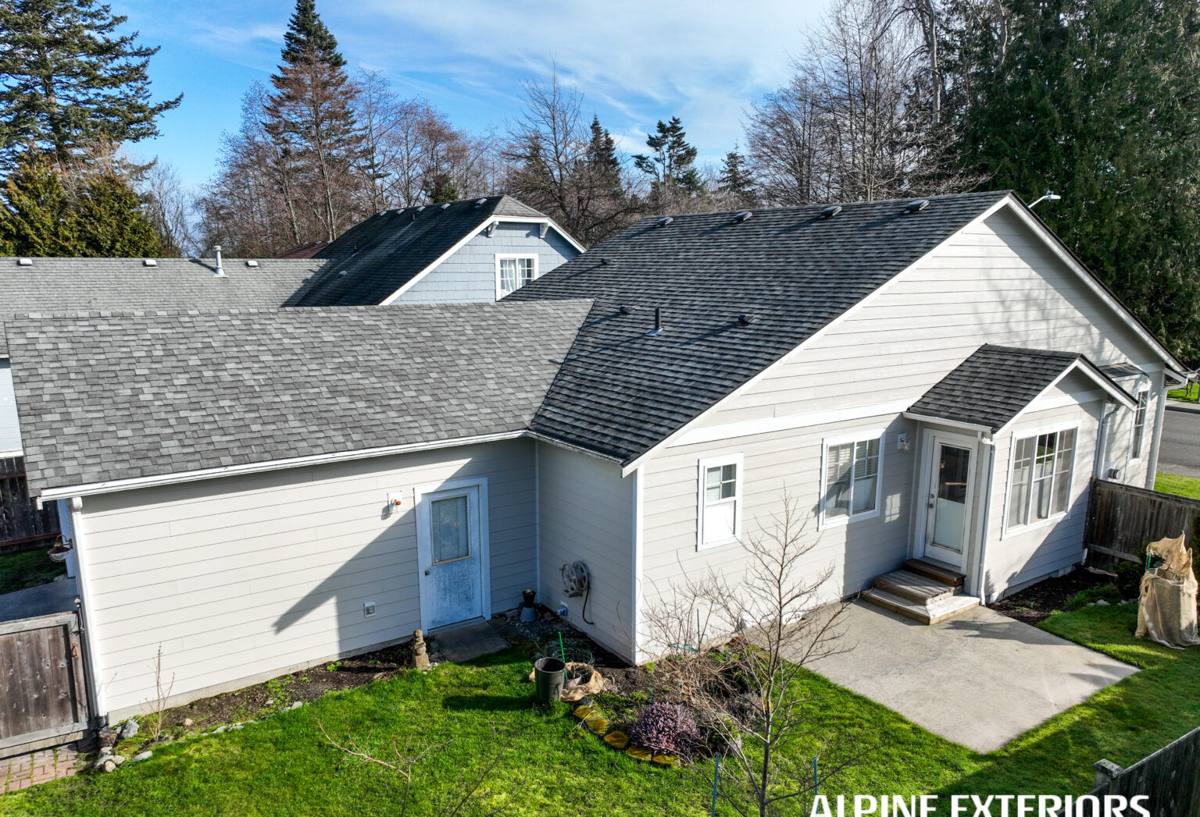
Common Siding Problems We See on Sedro-Woolley Homes
Moisture Trapped Behind Older Siding
Older wood, hardboard, and even some vinyl installations weren't always detailed with proper drainage gaps or house wrap integration. In a climate where it can rain steadily for days, any siding system that traps moisture against the sheathing instead of shedding it is working against the house, not for it. We see this most on additions and garages where original builders cut corners on flashing and weather barriers.
Moss and Algae Streaking
Shaded walls, especially those facing north or backed up against trees, develop moss and green algae streaking faster here than in more open, sun-exposed parts of the county. On porous or poorly sealed siding, that growth isn't just cosmetic — it holds moisture against the surface and accelerates whatever's happening underneath.
Sun-Faded and Chalking Paint Films
Even with less direct salt exposure, Skagit Valley homes still get real seasonal UV on south and west walls. Painted wood and some engineered wood sidings chalk and fade unevenly over a five-to-ten-year window, which means repainting becomes a recurring maintenance line item rather than a one-time cost.
Why We Only Install James Hardie Fiber Cement
We made a standing decision as a company to install James Hardie fiber cement siding exclusively — not vinyl, not LP SmartSide, not primed spruce or cedar, not other fiber cement brands like Cemplank or Allura. That's not a marketing position; it's a practical one built around what holds up in this specific climate over decades, not just years.
Built for Wet Climates
Hardie's HZ5 product line is engineered specifically for climates with heavy moisture cycling like ours. Fiber cement doesn't absorb and swell the way engineered wood products can, and it won't rot the way untreated or under-maintained wood siding does. For a valley town that sees extended wet seasons, that moisture stability is the single biggest reason we stand behind it.
Non-Combustible
Fiber cement is non-combustible, which matters increasingly in Washington as wildfire risk expands beyond the dry side of the state into western Cascade foothill communities. It's not the primary reason a Sedro-Woolley homeowner calls us, but it's a real, permanent benefit of the material.
ColorPlus Factory Finish
Hardie's ColorPlus finish is baked on in a controlled factory environment rather than field-applied, which gives it far better fade and chip resistance than a job-site paint job. In a climate where shaded, moss-prone walls already fight an uphill battle against organic growth, starting with a finish that resists fading and doesn't need repainting on a five-year cycle is a real, practical advantage — not a marketing line.
What We Turn Down, and Why
Vinyl siding is inexpensive and easy to install, but it can warp under sustained heat and UV exposure, and its seams and fasteners are more forgiving of average installation than of great installation — which shows over time. LP SmartSide, Cemplank, and Allura are legitimate manufactured products, but they don't match what we've found to be Hardie's combination of moisture engineering, factory finish durability, and transferable warranty structure. Primed spruce and cedar look great fresh off the truck, but they demand a maintenance commitment — repainting, caulking, moisture monitoring — that most homeowners underestimate until they're five years in.
Our Full Exterior Services in Sedro-Woolley
Siding is our specialty, but exteriors don't fail in isolation. Roofing, windows, and siding all interact at flashing points, and a deck built without the right ledger and moisture detailing will rot at the house connection regardless of what's on the walls. We handle all four so those transitions are done by one crew that understands how they fit together, not four separate contractors guessing at each other's work.
| Service | What We Address |
|---|---|
| Siding | James Hardie fiber cement replacement, repair, and re-siding over damaged substrates |
| Roofing | Roof replacement and repair with attention to the flashing details that protect siding below |
| Windows | Replacement windows integrated with proper flashing so water is directed out, not behind the wall |
| Decks | Deck construction and replacement with ledger flashing and moisture separation from the house |
What a Local Crew Actually Means for Sedro-Woolley
A lot of exterior contractors work out of the Seattle or Everett metro areas and treat Skagit County jobs as add-ons between bigger contracts. That shows up in small but real ways: slower callbacks, less familiarity with how the Skagit Valley's specific moisture and shade patterns affect different parts of a property, and less accountability if something needs a follow-up visit. We're based in the Anacortes area and work Skagit County regularly, which means we're not guessing about how a north-facing wall behind mature trees in Sedro-Woolley behaves differently than a south-facing wall in open farmland five miles away — we've seen both.
It also means permitting and inspection coordination with Skagit County or City of Sedro-Woolley requirements isn't a new process for us on every job.
How the Siding Replacement Process Works
Every project starts with an honest look at what's actually happening behind the existing siding, not just what's visible from the ground.
- On-site inspection of current siding, trim, and any visible moisture or moss damage
- Check of flashing at windows, doors, and roof-to-wall transitions
- Assessment of sheathing condition once old siding is removed
- Written estimate covering material, labor, and any substrate repair needed
- Installation to Hardie's fastening, clearance, and caulking specifications
- Final walkthrough before we consider the job finished
That substrate check matters more than people expect. Installing new siding over rotten or moisture-damaged sheathing just hides a problem instead of fixing it, and it's the single most common shortcut we see from past work in this area.
Cost Factors for a Sedro-Woolley Siding Project
Every home is different, but a few factors consistently move the price on siding jobs in this area more than others.
| Factor | Why It Matters Here |
|---|---|
| Substrate condition | Moisture-damaged sheathing behind old siding needs repair before new siding goes on |
| Home size and complexity | Multiple gables, dormers, and trim details add labor time regardless of material |
| Existing siding removal | Full tear-off versus siding over an existing layer changes both cost and long-term performance |
| Access and tree clearance | Shaded, tree-lined lots common in Sedro-Woolley can require extra site prep |
| Trim and color selection | ColorPlus factory colors versus field-painted trim affects both price and future maintenance |
We don't quote broad per-square-foot numbers over the phone without seeing the house, because the substrate condition alone can shift a project significantly. A walk-through is the only way to give a number worth trusting.
Living With Moss Season: Maintenance That Actually Helps
No siding material makes a home immune to moss in a climate like this, but Hardie's factory finish and moisture resistance mean maintenance is about upkeep, not damage control. Keeping gutters clear so water doesn't sheet down walls, trimming back vegetation that shades and dampens siding, and a periodic gentle wash on north-facing or heavily shaded sections go a long way. What you're avoiding with fiber cement is the deeper concern that comes with wood or engineered wood siding in this climate — moss and moisture sitting on a surface that can actually absorb and degrade over time.
If you're seeing moss buildup, moisture staining, or aging siding on a Sedro-Woolley home, we're happy to take a look and give you an honest, no-pressure estimate — no obligation, just a straight assessment of what your exterior actually needs.