 Anacortes
 Siding Built for Flounder Bay's Waterfront Conditions
Flounder Bay sits on the water on Fidalgo Island, and that location shapes everything about how a home's exterior ages there. Homes close to the shoreline take on a steady diet of salt-laden air, wind-driven rain coming off the water, and long stretches of overcast, damp weather that Skagit County is known for. Add in the tree cover common around Anacortes neighborhoods and you get near-constant shade on north- and west-facing walls, which is exactly the recipe for moss, algae, and moisture problems that inland homes rarely deal with to the same degree.
We're a local Anacortes exterior contractor, and Flounder Bay is part of our regular service area. We handle siding, roofing, windows, and decks, but siding is where we've drawn a hard line on materials: we install James Hardie fiber cement exclusively. That's not a marketing angle — it's a decision based on what actually holds up on homes like the ones in Flounder Bay, year after year, without a homeowner needing to babysit the exterior.
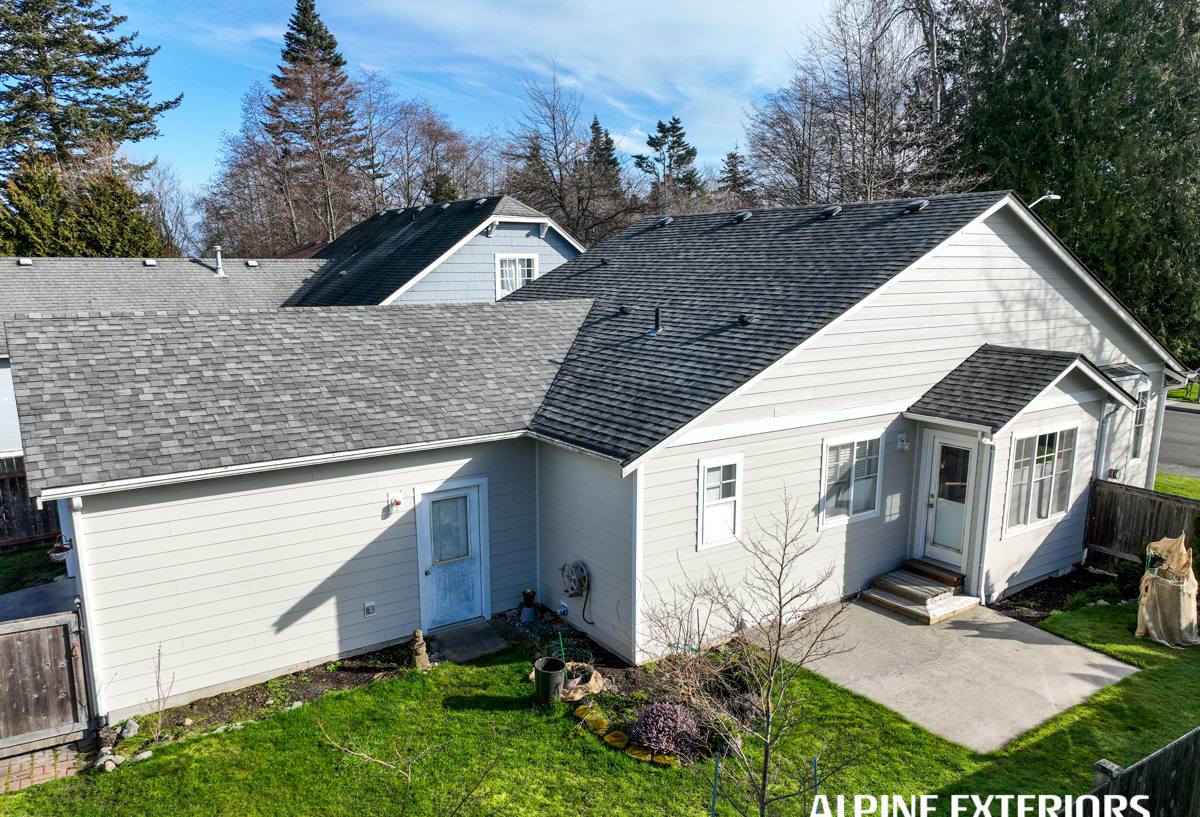
What Salt Air and Driving Rain Do to a House
Salt Exposure
Salt spray carried on the wind settles on siding, trim, and fasteners. Over time it accelerates corrosion on anything metal — nail heads, flashing, hardware — and it can degrade paint films and caulk joints faster than a home even a mile or two inland would experience. Materials and finishes that aren't engineered for coastal exposure tend to show their weaknesses here first: chalking, fading, and fastener staining show up years ahead of schedule.
Driving Rain
Wind off the water doesn't just drop rain straight down — it pushes it sideways into wall assemblies, seams, and butt joints. That means the details matter as much as the material: how siding is lapped, how joints are flashed, and how water is directed away from the wall rather than allowed to sit against it. A product that shrugs off vertical rain in a lab test can still fail on a home in Flounder Bay if the installation doesn't account for wind-driven moisture.
Moss and Algae Season
Anacortes gets a long stretch of cool, wet, low-sun months where shaded siding simply doesn't dry out between rain events. That's what drives moss and algae growth on north-facing and tree-shaded walls. Some siding materials absorb moisture into the substrate itself, which feeds organic growth from the inside out rather than just on the surface. Fiber cement doesn't behave that way — it's not a food source for moss the way wood-based products can be, and it doesn't swell or soften when it stays damp for weeks at a time.
Why We Only Install James Hardie
We used to install a wider range of products. We narrowed to James Hardie fiber cement because, on the North Sound coast, it's the material that consistently holds up without turning into a maintenance project. A few specific reasons:
- Non-combustible core: fiber cement doesn't burn, which matters for wildfire-adjacent insurance considerations and general peace of mind.
- Dimensionally stable: it doesn't swell, cup, or warp with repeated wet-dry cycles the way wood-based and some engineered wood products can.
- Factory-applied ColorPlus finish: baked-on color resists fading and chalking far longer than field-applied paint, and it's backed by its own finish warranty.
- Climate-engineered HZ product line: Hardie's HZ5 formulation is built for wetter, cooler climates like ours, versus formulations aimed at hot, dry regions.
- Strong transferable warranty: a real, well-documented warranty structure that follows the house, not just the original owner.
None of this means other products are junk — vinyl, LP SmartSide, and other fiber cement brands all have legitimate use cases. But for the specific combination of salt air, driving rain, and moss season that Flounder Bay deals with, Hardie is the product we're willing to put our name behind and back with our own installation work.
How the Siding Project Works
Assessment
We start by walking the exterior and looking at what's actually happening: where moisture is getting in, where old caulk or flashing has failed, whether there's hidden rot behind the current siding, and how exposed each wall is to wind and rain off the water. Waterfront and near-waterfront homes in Flounder Bay often need a closer look at wall assemblies than homes further inland, simply because moisture has had more opportunities to work its way in over the years.
Removal and Wall Prep
Old siding comes off and we inspect sheathing underneath for soft spots or rot before anything new goes on. This step gets skipped by contractors trying to move fast, and it's the single most common reason a siding job looks fine for two years and then fails at year five. A proper water-resistive barrier and correctly lapped flashing at every window, door, and penetration matters more on a house that takes wind-driven rain than almost anywhere else.
Installation
Hardie panels and lap siding get installed to the manufacturer's specifications — correct fastener type and spacing, proper clearances at grade and roof lines, and careful attention to butt joints and corners, which are the most common failure points when installers cut corners. We also flash and caulk according to spec rather than relying on caulk to do a flashing detail's job.
Finish Details
Trim, corner boards, and transitions get the same attention as the field siding. A siding job is only as good as its weakest detail, and on a coastal property those details take more punishment than they would elsewhere in Skagit County.
Comparing Common Siding Materials for a Coastal Property
| Material | Moisture Behavior | Maintenance | Coastal Suitability |
|---|---|---|---|
| James Hardie fiber cement | Doesn't absorb/swell; stable in wet-dry cycles | Low — factory finish, occasional wash | Strong fit for salt air and driving rain |
| Vinyl | Doesn't absorb moisture, but can warp/crack in temperature swings and impact | Low, but color fades over time | Workable, but less durable finish long-term |
| Cedar | Absorbs moisture; prone to swelling and rot without diligent upkeep | High — regular sealing/staining required | Demanding in a wet, shaded coastal environment |
| Engineered wood (e.g., LP SmartSide) | Treated to resist moisture, but edges/cut ends are vulnerable if not sealed properly | Moderate — repainting and edge sealing over time | Workable with diligent installation and upkeep |
What Homeowners in Flounder Bay Should Watch For
- Green or black staining on north- or west-facing walls, especially under tree cover
- Soft spots or visible swelling near the base of walls or around window trim
- Peeling or chalking paint that returns within a year or two of repainting
- Rust streaks below fasteners or trim, a sign of corroding hardware
- Gaps opening up at butt joints or corner boards where caulk has failed
- Higher-than-expected heating bills, which can point to compromised wall assemblies behind the siding
Any of these are worth a look before they turn into a bigger repair. Coastal exposure tends to turn small problems into bigger ones faster than homeowners expect.
Roofing, Windows, and Decks in the Same Conditions
The same salt air, wind-driven rain, and moss pressure that affects siding in Flounder Bay affects the rest of the exterior too. Roofing takes direct exposure to wind and moisture and is a common spot for moss growth on shaded slopes. Windows near the water benefit from proper flashing and weatherstripping to keep wind-driven rain from working past the frame. Decks facing the bay deal with the same salt exposure and moisture cycling as siding, so material choice and fastener selection matter there as well. We handle all four — siding, roofing, windows, and decks — because they're connected systems on a house, and problems in one area often show up as damage in another.
Why a Local Crew Matters Here
A contractor who only occasionally works this stretch of the Skagit County coast doesn't build the same instinct for where water actually gets in on a Flounder Bay home. Knowing which walls take the worst of the wind, how much moss pressure to expect on shaded sides, and how salt exposure ages materials differently than it does twenty miles inland comes from doing this work locally and repeatedly. It shows up in the small decisions — flashing details, fastener choice, where to add extra attention — that determine whether a siding job holds up for decades or needs rework in five years.
Get a Straightforward Estimate
If you're noticing moss buildup, moisture issues, or aging siding on a Flounder Bay home, we're happy to take a look and give you an honest assessment — no pressure, no inflated urgency. Reach out for a free estimate using the form below, and we'll walk you through what we see and what your options actually are.