 Anacortes
 Siding in Edison: Built for a Working Landscape Near the Water
Edison sits in one of the more distinctive corners of Skagit County — low-lying farmland folded in against the tidal flats near Samish and Padilla Bay, with the kind of damp, marine-influenced air that doesn't let up for most of the year. Homes and outbuildings here take a steady beating from moisture in a way that's different from siding on a dry hillside lot or a sun-exposed in-town street. If you own property in or around Edison, you already know the drill: things stay wet longer than they should, algae and moss find a foothold fast, and anything with a weak point in its exterior envelope tends to show it within a few seasons rather than a decade.
We're a local exterior contractor working out of Anacortes, and we spend a lot of time on homes in exactly this kind of environment — coastal-adjacent, tree-shaded, and humid for long stretches of the year. This page walks through what that climate actually does to siding, roofing, windows, and decks in the Edison area, and how we approach exterior work here.
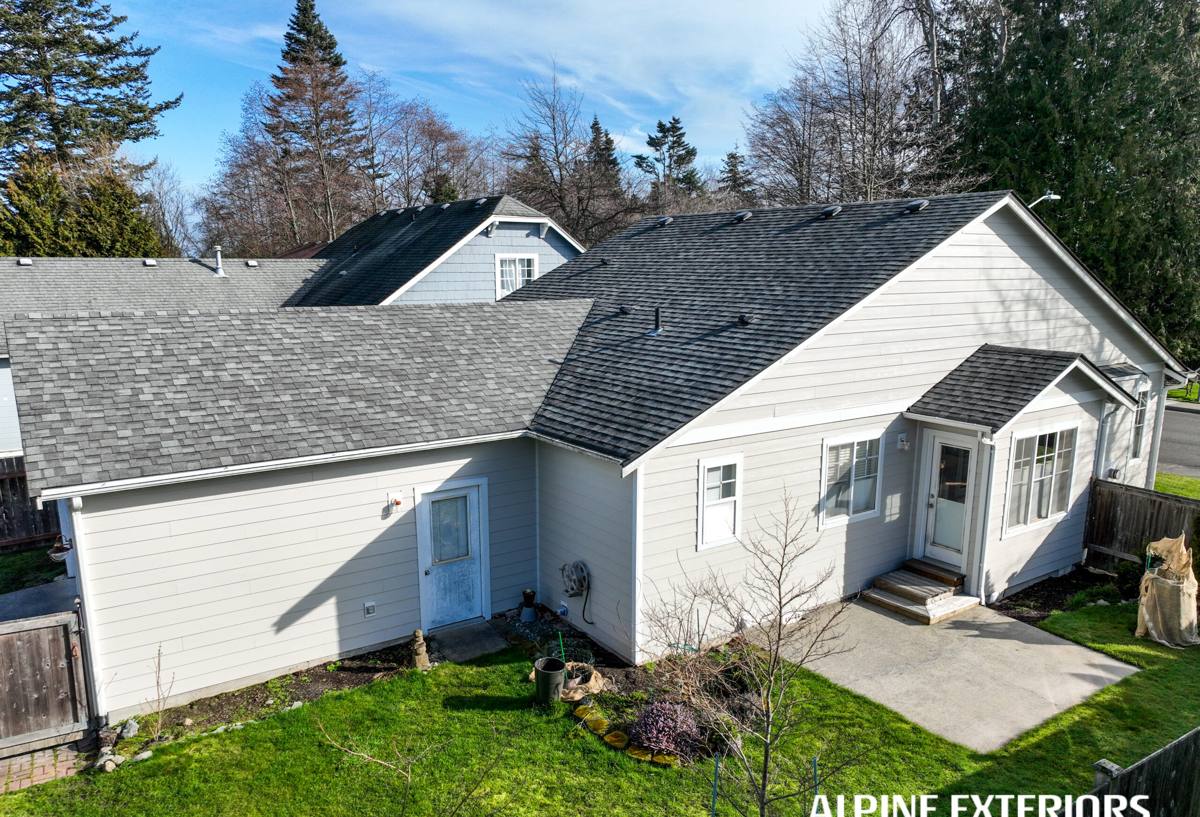
What the Edison Climate Does to a Home's Exterior
Salt Air and Moisture
Proximity to Samish Bay and Padilla Bay means salt-laden air is a real factor here, not a theoretical one. Salt air accelerates corrosion on fasteners, flashing, and any metal trim that isn't rated for coastal exposure. It also interacts with certain siding finishes over time, dulling paint and stressing caulked joints faster than the same product would wear further inland.
Driving Rain
Storms moving in off the water tend to arrive with wind behind them, which means rain doesn't just fall on a house — it gets driven sideways into seams, laps, and trim joints. Siding systems that rely on face-sealing (caulk and paint doing the work of keeping water out, rather than a properly lapped and drained assembly) are the first to show staining, soft spots, or bubbling paint under these conditions.
A Long Moss Season
Between the tree cover common on rural Edison lots and the extended stretch of damp, low-light months typical of Skagit County, moss and algae get a long runway to establish themselves on north-facing walls, roof planes, and anything shaded most of the day. Moss holds moisture directly against the siding or roofing surface, which is a slow but steady path to rot, delamination, or granule loss depending on the material underneath it.
What This Means in Practice
- North and west-facing walls typically need the most durable, moisture-tolerant siding material on the house
- Flashing and fastener corrosion resistance matters as much as the siding product itself
- Roofing in shaded, tree-covered lots needs proactive moss management, not just reactive cleaning
- Window seals and flashing details are frequent failure points in driving-rain conditions
- Deck framing and ledger connections near grade or shade are especially vulnerable to sustained moisture
Why We Install James Hardie Fiber Cement — and Nothing Else
We made a deliberate decision as a company to install only James Hardie fiber cement siding. We don't install vinyl, LP SmartSide, Cemplank, Allura, primed spruce, or cedar. That's not a marketing position — it's a standard we hold because of what we've seen these materials do (and not do) in exactly the kind of climate Edison sits in.
Why Not the Alternatives
Vinyl siding is affordable and easy to install, and it holds up fine in mild, dry conditions. In a coastal, high-moisture, moss-prone environment, though, vinyl's weak points show up: it expands and contracts more than fiber cement with temperature swings, its seams and laps are more forgiving of water intrusion than they should be, and it doesn't offer the same fire resistance. Wood siding — cedar or primed spruce — has real aesthetic appeal, but it's organic material in a climate that stays wet for months at a time. Even with diligent maintenance, wood siding in a shaded, humid setting is fighting rot and moss from day one, and the maintenance burden (re-staining, caulking, spot repairs) never really ends.
LP SmartSide and other engineered wood products improve on solid wood in some respects, but they're still wood-based composites, meaning moisture management at every seam and cut edge is critical — a single missed detail during installation can lead to swelling or edge deterioration down the line. Cemplank and Allura are also fiber cement, and they're reasonable products on paper, but we standardized on one manufacturer so we can guarantee installation quality, warranty support, and color consistency across every job we do — and James Hardie is the one we trust most for both product engineering and long-term backing.
Why James Hardie
James Hardie fiber cement is non-combustible, dimensionally stable, and engineered specifically for climate zones like ours through its HZ5 product line, which is formulated for wetter, harsher weather regions. The factory-applied ColorPlus finish is baked on under controlled conditions, which means far more consistent, long-lasting color than field-applied paint — a real advantage when salt air and UV exposure are working against any painted surface. It also comes with a strong transferable warranty, which matters if you ever sell the home. None of that replaces correct installation — flashing, gaps, and fastening still have to be done right — but it gives us a material that's built to handle what Edison's weather throws at it, provided the installation matches the product.
Roofing, Windows, and Decks in Edison's Conditions
Roofing
Roofs in shaded or tree-lined Edison lots need attention to moss and debris buildup, proper ventilation to manage the moisture load in the attic space, and flashing details that hold up to driven rain at valleys, penetrations, and eaves. A roof that looks fine from the ground can still be losing granules or holding moisture under a moss mat that's been there for a season or two.
Windows
Window failures in this climate are usually about flashing and sealing, not the glass itself. Properly integrated window flashing that ties into the siding's water management plane is what keeps driving rain from working its way behind the trim over time.
Decks
Decks near grade, under tree cover, or close to the water table hold moisture longer than decks in open, sunny yards. Ledger board connections, joist hangers, and any wood-to-wood contact points are where we pay the closest attention, since that's where rot typically starts on a shaded coastal deck.
Comparing Siding Options for an Edison Home
| Factor | James Hardie Fiber Cement | Vinyl | Wood / Engineered Wood |
|---|---|---|---|
| Moisture tolerance in coastal/damp conditions | Strong | Moderate — seams are a weak point | Requires ongoing maintenance |
| Fire resistance | Non-combustible | Combustible | Combustible |
| Finish durability | Factory-baked ColorPlus, long-lasting | Can fade, especially in UV/salt exposure | Field-applied paint or stain, needs recoating |
| Moss/algae resistance | Good with proper install and upkeep | Susceptible on shaded walls | Highly susceptible without diligent maintenance |
| Typical maintenance | Periodic washing, occasional caulk check | Low, but repairs can be visible/mismatched | Regular re-staining, caulking, spot repair |
| Warranty structure | Strong, transferable manufacturer warranty | Varies by manufacturer | Often limited or workmanship-only |
Why a Local Crew Matters for Edison Properties
Edison isn't a dense subdivision — it's a spread-out rural community with a mix of older farmhouses, newer builds, and properties tucked back from the main roads under tree cover. A crew that works this area regularly understands the practical realities: longer driveways and access considerations, the specific microclimate created by proximity to the bay and surrounding wetlands, and the moss and moisture patterns that repeat from one property to the next. We're based in Anacortes and work throughout Skagit County, so Edison isn't an unfamiliar drive for us — it's part of our regular service area, and we bring the same crew and standards here that we do on any job closer to home.
What to Expect from an Estimate
When we walk an Edison property, we're looking at more than just the siding surface. We check for moss and algae patterns that hint at moisture retention, inspect flashing at windows, doors, and roof-to-wall transitions, and look for any signs of water intrusion at trim and corner boards. For a full siding replacement, that assessment also covers the condition of the sheathing and weather-resistive barrier underneath, since those layers matter just as much as the finish material on top.
A Practical Pre-Estimate Checklist for Homeowners
- Note any walls with visible moss, algae, or persistent green staining
- Check for soft or discolored trim around windows and doors
- Look for peeling or bubbling paint, which can indicate trapped moisture
- Note any areas where gutters overflow or direct water toward the siding
- Flag any deck areas near grade or under shade that feel spongy underfoot
Get a Free, No-Pressure Estimate
If you're weighing a siding, roofing, window, or deck project on an Edison property, we're happy to take a look and give you a straightforward assessment — no pressure, no inflated quote to negotiate down from. Use the form below to request a free estimate, and we'll walk you through what we see and what your options actually are.