 Anacortes
 Exterior Work Built for the Skagit Delta
Conway sits low in the Skagit River delta, a few miles south of Anacortes and Mount Vernon, where farmland, sloughs, and river flats meet the tidal reach of Skagit Bay. It's a different exposure than the hillier, more sheltered parts of Skagit County. Homes here sit on flat, open ground with little wind break, and that combination of moisture, fog, and salt-tinged air is hard on exterior building materials in ways that don't always show up until years later.
We work throughout Anacortes and the surrounding Skagit County communities, and Conway is one of the areas where we see the clearest evidence of what damp, low-lying exposure does to siding, trim, roofing, and decking over time. If you own a home out here, understanding that exposure is the first step to choosing materials and a contractor that can actually hold up to it.
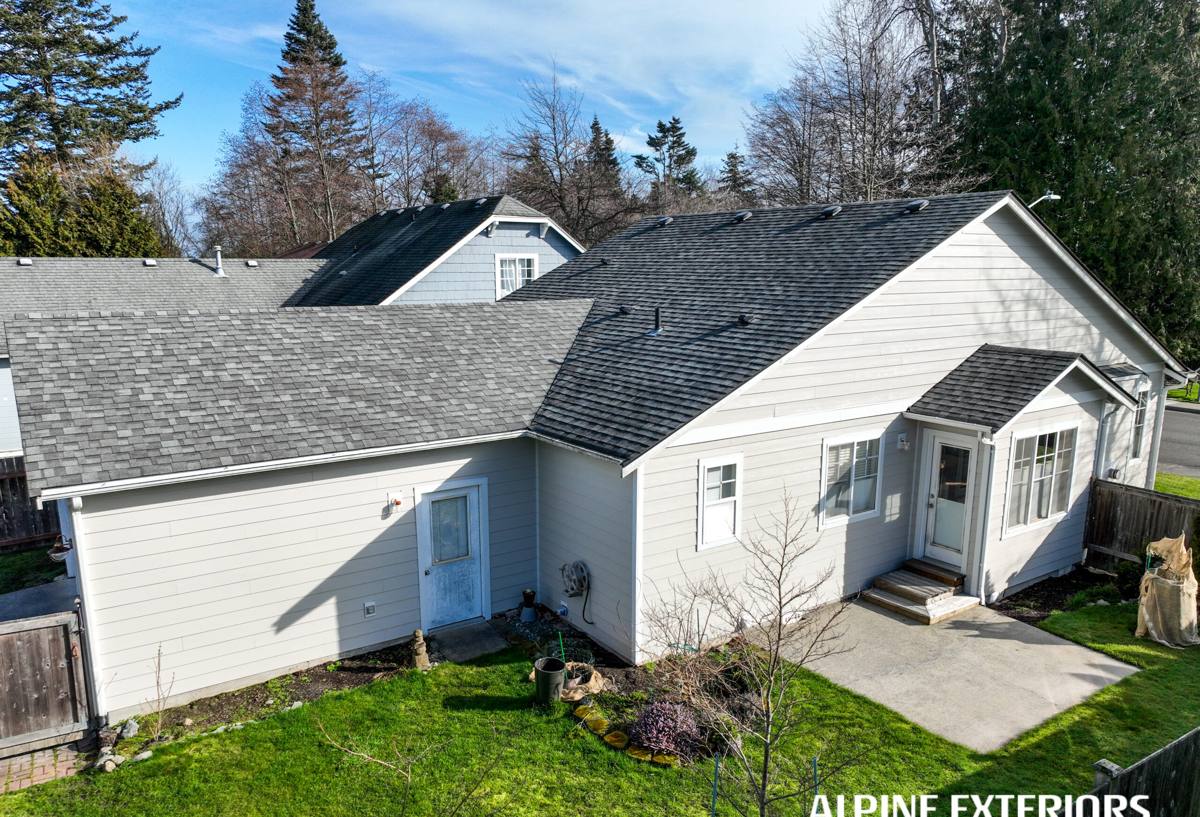
What the Conway Climate Does to a House
Salt Air and Driving Rain
Conway isn't right on the water, but it's close enough to Skagit Bay and the estuary that salt-laden air reaches the area regularly, especially with the prevailing marine winds off Puget Sound. Salt air accelerates corrosion on fasteners, flashing, and any metal trim, and it speeds up the breakdown of coatings and finishes that aren't rated for coastal exposure. Add in wind-driven rain crossing flat, open farmland with nothing to slow it down, and siding seams, window flashing, and roof penetrations all take more abuse than they would in a more sheltered inland location.
The Long Moss Season
Low elevation, poor drainage in places, and persistent river and delta fog mean Conway holds moisture longer than higher ground nearby. That extended damp period is exactly what moss, algae, and mildew need to establish themselves on roofing, siding, and shaded decking. Once organic growth takes hold, it holds moisture directly against the material surface, which is where slow, hidden damage tends to start — swelling in wood-based products, coating failure, and in some cases rot behind the surface long before anything looks wrong from the ground.
Flat Terrain and Standing Moisture
Because much of Conway sits in the river delta's floodplain, drainage around foundations and low rooflines can be a real factor. Gutters, downspouts, and grading that direct water away from the house matter more here than in areas with natural slope. When water lingers near the base of siding or under a deck, it extends the time that material spends wet — which is the single biggest driver of long-term exterior damage in this climate.
Why We Only Install James Hardie Fiber Cement
We made a deliberate decision, years ago, to stop installing vinyl siding, LP SmartSide, and other engineered wood or composite products, and to standardize on James Hardie fiber cement for every siding job we do — Conway included. That's not a marketing position; it's a practical one built around what actually survives this kind of exposure.
- Non-combustible: Fiber cement doesn't burn, unlike wood-based siding products, which matters in a region that sees wildfire smoke and periodic burn restrictions in dry stretches.
- Moisture resistance without a moisture-driven core: Hardie's fiber cement composition doesn't swell, delaminate, or absorb water the way engineered wood substrates can when a seam or fastener point is compromised.
- Factory-applied ColorPlus finish: The finish is baked on in a controlled factory process rather than field-applied, which gives far more consistent coverage and adhesion than job-site paint — a real advantage when a house sits in a damp, salt-influenced environment that's hard on any coating.
- Climate-engineered HZ product lines: Hardie manufactures regional formulations (HZ5 for this part of the Pacific Northwest) specifically tuned for moisture and freeze-thaw conditions like ours, rather than a one-size-fits-all product.
- A warranty that's meaningful: Hardie's transferable warranty terms reflect a product designed for decades of real-world exposure, not a shorter service life masked by low upfront cost.
We're not going to tell you vinyl or engineered wood siding is junk — plenty of it is manufactured and installed reasonably well. But in an exposure like Conway's, with sustained dampness, salt air, and long moss seasons, we've seen enough of the long-term maintenance burden and failure patterns in those products that we won't put our name on installing them anymore. Fiber cement, installed correctly, is what we believe holds up.
Siding Installation Done Right
Fiber cement performs the way it's supposed to only when the installation matches the manufacturer's specifications — correct fastener spacing and type, proper clearance from grade and roofing, correctly lapped and sealed joints, and flashing detailed to shed water away from the wall assembly, not into it. In a wet, low-elevation area like Conway, installation quality is arguably more important than the product choice itself, because a poorly flashed window or an incorrectly caulked seam will let moisture in regardless of what the siding is made of.
Our crews follow Hardie's published installation guidelines on every job, which is also what keeps the manufacturer's warranty intact. We handle full siding replacement, trim and fascia work, and repairs to storm or moisture-damaged sections.
Roofing for Delta Exposure
Roofs in Conway deal with the same moss and moisture pressure as siding, plus direct rain and wind loading with little natural windbreak from surrounding trees or terrain. We handle roof replacement and repair with attention to proper ventilation, ice-and-water underlayment at vulnerable areas, and flashing details around penetrations — the places roofs actually fail first. A roof that's ventilated and flashed correctly resists moss establishment and sheds standing moisture far better than one that just looks new.
Windows That Hold Up to Wind-Driven Rain
Flat, open exposure means wind-driven rain hits window assemblies directly, with no buildings or heavy tree cover to break it up. Failing seals or poorly flashed window openings are one of the most common sources of hidden water intrusion we find in older Skagit County homes. We install and replace windows with attention to proper flashing integration with the surrounding siding, so the whole wall assembly — not just the window unit — is doing its job of keeping water out.
Decks Built for a Wet, Shaded Climate
Outdoor living space in Conway has to contend with prolonged dampness and, depending on the lot, shade from surrounding trees or structures that slows drying time even further. We build and repair decks with material choices and detailing — proper board spacing, ledger flashing, and joist protection — aimed at managing moisture rather than fighting a losing battle against it season after season.
Comparing Siding Options for a Delta-Exposure Home
| Factor | Vinyl Siding | Engineered Wood (LP SmartSide) | James Hardie Fiber Cement |
|---|---|---|---|
| Moisture behavior | Can warp or buckle; seams are a weak point | Wood-based core can swell or degrade if moisture reaches it | Cement-based composition resists moisture damage at the core |
| Salt air durability | Can chalk and become brittle over time | Coating and edge sealing are critical and can fail | Factory finish holds up well; material itself doesn't corrode |
| Fire resistance | Combustible | Combustible | Non-combustible |
| Finish longevity | Color can fade; not repaintable easily | Field-applied or factory paint, variable durability | Factory-baked ColorPlus finish, long service life |
| Warranty structure | Varies widely by manufacturer | Manufacturer-dependent, installation-sensitive | Strong transferable warranty when installed to spec |
What to Check Before Hiring a Contractor in Conway
- Do they carry active Washington contractor licensing and insurance, and will they show you proof without hesitation?
- Do they have specific experience with low-lying, high-moisture exposure sites, not just general siding work?
- Will they explain their flashing and moisture-management details, not just the surface product they're installing?
- Are they a manufacturer-recognized installer for the products they're putting on your home?
- Do they give you a written scope and timeline, rather than a vague verbal estimate?
- Are they local enough to respond quickly if a warranty or workmanship issue comes up later?
Why a Local Crew Matters Here
Conway's exposure is specific enough — flat delta terrain, tidal-influenced air, prolonged dampness — that a crew unfamiliar with this part of Skagit County can miss details that matter. We're based in Anacortes and work this region regularly, so we know what moss growth on a north-facing wall usually means, how far salt air travels inland here, and where standing water tends to collect around older delta-area homes. That local knowledge shapes how we flash, fasten, and detail every job, not just what siding brand goes on the wall.
If you're dealing with aging siding, a roof that's holding moss longer than it should, or windows that let in more draft and moisture than they used to, we're happy to take a look and give you a straightforward, no-pressure assessment. Reach out for a free estimate, and we'll walk your property, talk through what we're seeing, and give you options that make sense for your home and budget.