 Anacortes
 Mount Vernon's Siding Climate: Valley Rain, Marine Air, and a Long Moss Season
Mount Vernon sits inland from Anacortes along the Skagit River, in the wide agricultural flats of the Skagit Valley. It's a few miles removed from the open salt water of the San Juans and Puget Sound, but it is not sheltered from the region's weather. Westerly systems still push moisture up the valley corridor, river-bottom humidity lingers longer than it does on higher, more exposed ground, and the same driving winter rain that soaks Anacortes reaches Mount Vernon within the hour. Add a marine-influenced air mass that carries a faint salt component even this far inland, and you get a climate that is genuinely hard on exterior building materials.
The practical result for homeowners is a long moss and algae season — often eight or nine months out of twelve — combined with siding that stays damp longer than in drier parts of the state. Wood-based products swell, check, and rot under those conditions. Vinyl becomes brittle and fades. Paint film on traditional wood siding fails faster than the manufacturer's chart suggests. None of this is unique to any one street or neighborhood in Mount Vernon; it's a valley-wide condition, and it's the reason siding choice matters more here than in a drier climate zone.
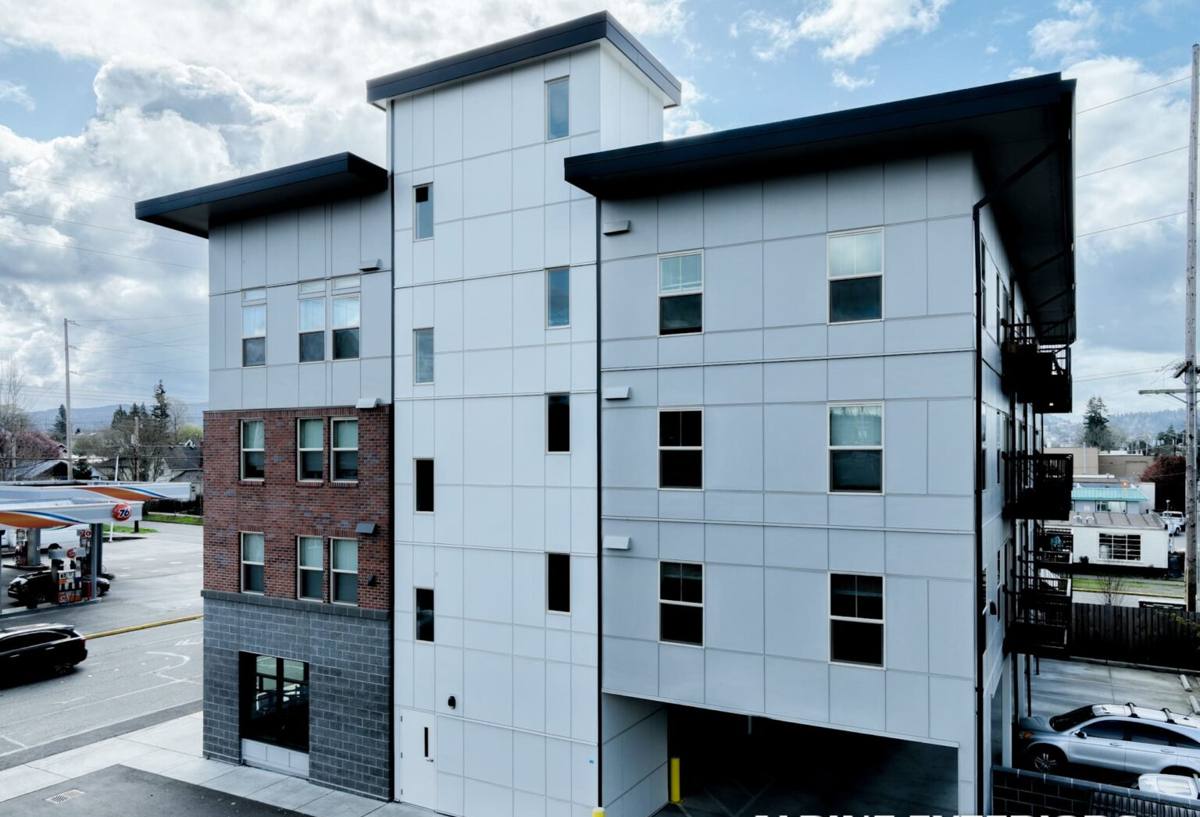
Why James Hardie Fiber Cement Fits This Climate
James Hardie siding is fiber cement — sand, cement, and cellulose fiber, cured into a rigid board. It doesn't absorb water the way wood does, it won't rot, and it's non-combustible, which matters given how many Skagit Valley properties sit near dry brush, agricultural fields, or wooded lots that see seasonal burn risk. For a climate defined by sustained dampness rather than occasional storms, a material that simply doesn't take on moisture in the first place solves more problems than one that's been treated or sealed to resist it.
HZ5 Engineering for the Pacific Northwest
James Hardie makes region-specific product lines, and the HZ5 formulation is engineered for climates like ours — places with prolonged moisture exposure and freeze-thaw cycling. It's not a marketing label; the mix design and moisture-management performance are built for exactly the conditions the Skagit Valley produces every winter. We install HZ5 product on Mount Vernon homes for that reason, not because it's the only option James Hardie sells, but because it's the right one for this specific climate.
ColorPlus Factory Finish
James Hardie's ColorPlus finish is baked on at the factory under controlled conditions, rather than field-applied paint over cellulose fiber board. In a climate where site-applied paint has to cure between rain events, that difference shows up directly in how long the finish holds color and resists peeling — factory-cured finishes simply don't have the same weak points a field paint job does.
What a Correct Installation Actually Involves
Fiber cement siding is only as good as the installation behind it. Hardie board itself resists moisture, but a poorly installed job can still let water behind the siding, where it will sit against sheathing and framing that were never designed to handle it. In a climate as wet as ours, installation mistakes don't just show up as cosmetic flaws — they show up as rot inside the wall a few years later.
The details that matter most here
- Correct clearance between the bottom edge of the siding and grade, decks, patios, and roof lines — too tight and the board wicks moisture every time it rains
- Proper weather-resistive barrier and flashing integration at windows, doors, and penetrations, so water is directed out and away rather than trapped
- Manufacturer-specified fastener type, spacing, and depth — over-driven nails crack the board's edge and create entry points for moisture
- Correct joint treatment and caulking at butt joints and trim, using products rated for the movement and moisture cycling this climate produces
- Ventilation behind the cladding where the assembly calls for it, so any incidental moisture can dry out instead of being sealed in
Where installations go wrong
Most of the Hardie problems we get called to look at in Skagit County weren't caused by the product — they were caused by a crew treating fiber cement like it installs the same way as vinyl or wood lap siding. It doesn't. It has its own clearance requirements, its own fastening schedule, and its own flashing details, and skipping them voids the warranty as well as compromising the wall behind it.
Our Process for a Mount Vernon Home
We approach every Mount Vernon project the same methodical way, whether it's a single wall replacement after storm damage or a full re-side.
| Step | What Happens | Why It Matters Here |
|---|---|---|
| Site walk and assessment | Inspect existing siding, sheathing, moisture staining, and trim condition | Catches hidden rot or water intrusion before it's covered by new siding |
| Product and color selection | Choose HZ5 profile, plank width, and ColorPlus color to match the home | Matches performance to the valley's damp, marine-influenced conditions |
| Substrate prep | Repair or replace any compromised sheathing, install weather barrier and flashing | Sets up correct drainage before a single piece of siding goes up |
| Installation | Hang siding to manufacturer clearance, fastening, and joint specifications | Preserves the warranty and keeps water out of the wall assembly |
| Final detailing | Trim, caulking, touch-up, and site cleanup | Finishes the weather seal and leaves the property clean |
Why a Crew That Already Works Mount Vernon Matters
Fiber cement installation quality depends on a crew that's done it enough times in this specific climate to know where water actually tries to get in — not just where a generic install manual says to flash. A crew based in Anacortes and working regularly throughout Skagit County, including Mount Vernon, has already seen how the valley's damp, moss-heavy conditions affect siding over years, not just on installation day. That matters for decisions like clearance heights above grade, how aggressively to flash a window on a west-facing wall, and which joints need extra attention given how long moisture sits on this side of the county.
It also matters for logistics. A crew that already routes through Mount Vernon regularly can schedule efficiently, source materials without delay, and be available if a warranty question or a minor issue comes up after the job is done — instead of a one-off crew that's hard to reach once they've moved on to the next county.
James Hardie Product Lines for Mount Vernon Homes
Not every profile fits every home, and part of our job is helping homeowners choose the one that fits both the architecture and the climate demands of a Skagit Valley property.
| Profile | Best Fit | Climate Note |
|---|---|---|
| HardiePlank Lap Siding | Traditional and craftsman-style homes, the most common re-side choice | Wide range of exposures and textures; performs well under sustained valley rain |
| HardieShingle | Accent gables, dormers, or full shingle-style homes | Gives a cedar-shake look without the moisture absorption and moss vulnerability of real shingle |
| HardiePanel | Modern and farmhouse-style exteriors, board-and-batten look | Clean vertical lines; requires careful joint detailing given valley moisture |
| HardieTrim | Corners, window and door casing, fascia | Matches the siding's moisture resistance so trim doesn't become the weak point |
Living With Fiber Cement in This Climate: Maintenance Reality
James Hardie siding is low-maintenance, not no-maintenance. In a climate with a long moss season, a little seasonal attention keeps it looking and performing the way it should for decades.
- Rinse the siding down once or twice a year, especially on north- and west-facing walls that stay shaded and damp longer
- Keep gutters clear so overflow doesn't run down the face of the siding and feed moss growth at the top courses
- Trim back landscaping and tree limbs that keep sections of the wall in constant shade — moss needs damp shade to establish, and airflow is the simplest defense
- Check caulking at trim joints and penetrations every year or two and re-caulk if it's cracked or pulling away
- Address any impact damage promptly — a cracked or chipped board is a moisture entry point until it's repaired
Warranty and Long-Term Value
James Hardie backs its fiber cement products with a substantial, transferable non-prorated limited warranty, and ColorPlus finishes carry their own separate finish warranty covering fade and peeling. That warranty coverage depends on installation meeting manufacturer specifications — another reason installation quality isn't a detail to compromise on. Homeowners in Mount Vernon are effectively buying two things when they choose James Hardie: a material engineered for exactly this climate, and a warranty that only holds up when the crew installing it does the job correctly the first time.
If you're weighing a re-side or repair on a Mount Vernon home, we're happy to take a look and talk through what your home actually needs — no pressure, no upsell. Fill out the form below for a free estimate.