 Anacortes
 Why Windows Wear Out Faster in Old Town Anacortes
Old Town Anacortes sits close to the water, and that proximity shapes everything about how a window ages here. Salt-laden air off Fidalgo Bay and the Guemes Channel works on exposed metal hardware, weatherstripping, and painted wood trim year-round, not just during storms. Add Skagit County's long stretch of driving rain each fall and winter, plus a moss season that can run from October well into spring, and you've got a climate that finds every weak point in a window assembly — the seal at the glass edge, the caulk line at the frame, the sill that's supposed to shed water but doesn't quite anymore.
Many of the homes in this neighborhood predate modern window technology by decades. That's part of the charm, but it also means a lot of original or early-replacement windows in Old Town are working harder than they were designed to. Single-pane glass with old storm windows, early aluminum-frame units, or first-generation vinyl replacements from the 1990s are common finds here. None of them were built with today's insulated glass units, warm-edge spacers, or low-E coatings, and all of them are now old enough to be losing whatever performance they once had.
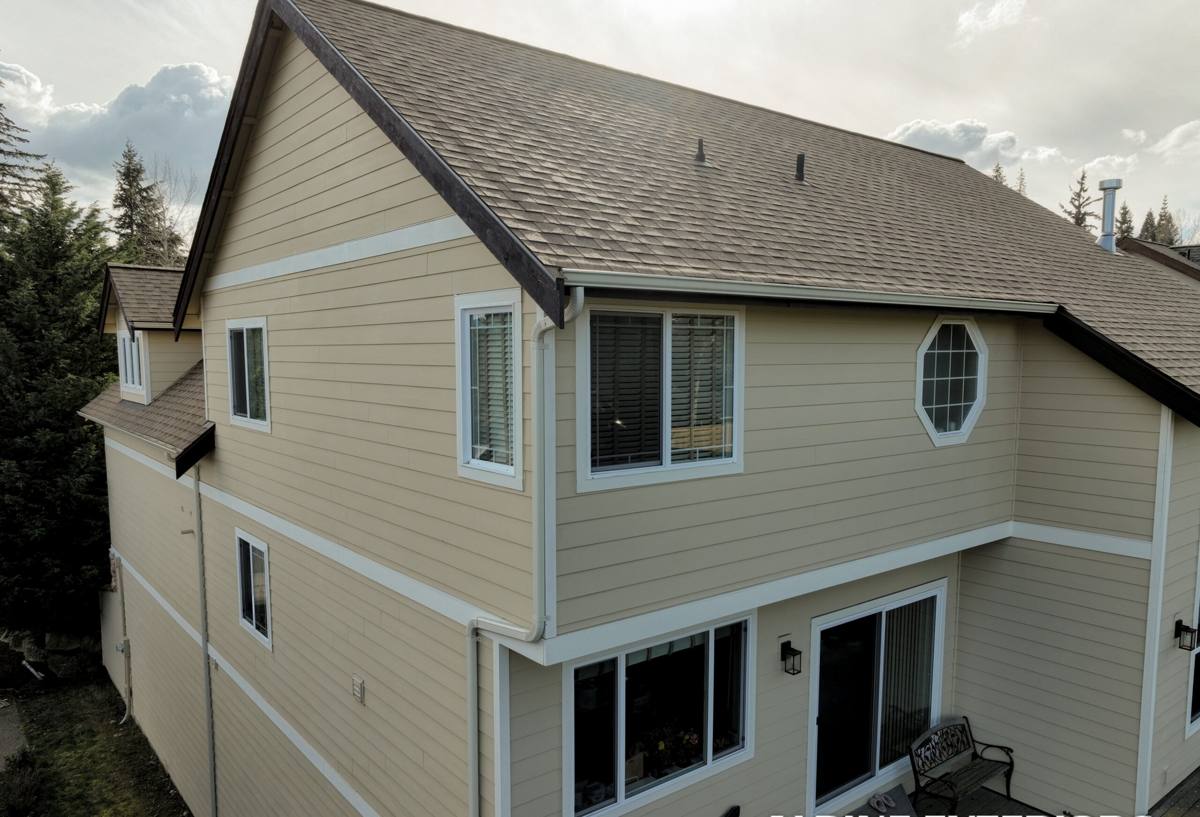
What "Energy-Efficient" Actually Means for a Coastal Window
Energy efficiency in a window isn't one number — it's a combination of factors that all need to work together, especially in a marine climate like ours.
U-Factor
This measures how well the window resists heat loss. Lower is better. In our climate, where the bigger cost is usually heating rather than cooling, U-factor is the number that matters most for your winter energy bill.
Solar Heat Gain Coefficient (SHGC)
This measures how much solar heat passes through the glass. In the Pacific Northwest we generally want a moderate SHGC — enough to pick up some free winter warmth on south- and west-facing walls without overheating rooms on the rare hot summer afternoon.
Condensation Resistance
This is the number homeowners here notice most in daily life. Cool, damp air combined with warm interior air causes condensation on glass and, in bad cases, inside the wall cavity. A window with poor condensation resistance will fog, drip, and eventually feed the moss and mildew problems that are already a fact of life this close to the water.
Frame Material and Glazing
Dual-pane with a quality low-E coating and argon fill is the standard baseline for this climate. Triple-pane can make sense on north-facing walls or in homes right along the water where wind-driven rain and temperature swings are more extreme, but it's not always necessary — we'll tell you honestly when it is and when it isn't worth the added cost.
Common Problems We See on Old Town Homes
- Fogged or "blown" insulated glass units — the seal between panes has failed and moisture has gotten between the glass, usually accelerated by years of salt air on the seal edge
- Soft or rotted sills and jambs — wood-frame windows where paint failed years ago and driving rain has been getting behind the trim ever since
- Pitted or corroded aluminum hardware — cranks, latches, and balances that no longer seal tight because salt exposure has worn them down
- Moss and organic growth in window tracks and sills — a direct result of our long wet season combined with shaded, north-facing exposures common in this older, tree-lined neighborhood
- Drafts around original trim — older installations that were never properly flashed or insulated to begin with, so cold air finds a path in regardless of the glass itself
What a Correct Installation Actually Involves
Replacing a window is not just pulling out the old sash and dropping in a new unit. Done right, it's a moisture-management job first and a window installation second — especially on a house that's spent decades absorbing coastal weather.
Assessment Before Removal
We check the condition of the framing and sill behind the existing window before anything comes out. If there's hidden rot or water damage from years of a failed seal, that needs to be addressed before a new window goes in — otherwise you're sealing a problem inside the wall.
Flashing and Weatherproofing
Proper flashing tape and a correctly lapped weather-resistive barrier around the new unit are what actually keep driving rain out over the next twenty years. This step gets rushed on cheap installs, and it's the single biggest predictor of whether a window will leak in a storm coming off the water.
Sealant Selection
Standard caulk breaks down faster in salt air and constant damp than it does inland. We use sealants rated for marine and coastal exposure at the exterior joints, which matters more here than it would twenty miles inland.
Respecting the Home's Character
A lot of Old Town's appeal is its older housing stock — the proportions, trim profiles, and window patterns that give the neighborhood its look. We match sightlines, grid patterns, and trim details so a new, efficient window doesn't look out of place on an older home.
Comparing Frame Materials for a Marine Climate
| Frame Material | Salt Air / Coastal Suitability | Maintenance | Relative Cost |
|---|---|---|---|
| Vinyl | Good — won't corrode or rot, handles moisture well | Low — occasional cleaning | Lower to mid |
| Fiberglass | Very good — dimensionally stable, resists warping in temperature swings | Low | Mid to higher |
| Wood-clad | Fair to good — the exterior clad shell protects the wood, but any breach in the clad or seal exposes wood to rot | Higher — needs monitoring at joints and sills | Higher |
| Aluminum | Poor to fair — prone to pitting and corrosion from salt exposure over time, also a weaker thermal performer | Moderate | Lower to mid |
We don't push one material on every home. A century-old house with wood trim throughout might be better served by a wood-clad unit that matches the existing look, while a home closer to the water with heavy salt exposure often does better long-term with vinyl or fiberglass. This is a conversation we have on-site, not a one-size answer.
Our Process
- On-site assessment — we look at every window being considered, check framing condition, note drafts, moisture staining, or hardware failure
- Honest recommendation — which windows need replacement now, which can wait, and which frame/glass combination fits your home and budget
- Measurement and ordering — precise measurements so units fit correctly the first time, minimizing gaps that require excessive shimming or filler
- Removal and inspection — old units come out carefully, and we check the opening for hidden rot or water damage before proceeding
- Installation with proper flashing — weatherproofing done to shed water the way this climate demands, not just caulked and trimmed
- Final inspection and cleanup — operation check on every window, site cleaned up, and a walkthrough so you know what was done
What to Ask Before Hiring Anyone for This Job
- Will you inspect the framing and sill for rot before installing the new window, not just after a problem shows up?
- What sealant and flashing products do you use, and are they rated for coastal or marine exposure?
- Can you show me the U-factor, SHGC, and condensation resistance ratings for the specific window you're recommending?
- How do you handle grid patterns and trim to match the existing look of an older home?
- What's covered under warranty — glass seal failure, hardware, labor — and for how long?
- Have you worked on other homes in this neighborhood, and do you understand the difference between an inland install and one this close to the water?
Why Local Experience Matters Here
A window crew that mostly works drier, inland parts of Skagit County will size up a job differently than one that regularly works Old Town Anacortes. The difference shows up in the details: how much flashing overlap is enough when wind-driven rain comes off the water at an angle, which sealants actually hold up through a full wet season instead of just the first one, and where moss and organic growth are likely to become a maintenance issue based on which way a window faces and how shaded it is. None of that is guesswork when you've done the work in this specific area repeatedly — it's just what the job requires.
There's also a practical side: older homes in this neighborhood sometimes have non-standard rough openings, older framing dimensions, or trim details that a production-line installer isn't set up to handle carefully. Getting it right the first time matters more here, because a poorly flashed window won't show its problems until the next big storm season — and by then the damage is inside the wall, not just at the surface.
Get a Straight Answer for Your Home
If you're dealing with drafty rooms, fogged glass, or a window that's just never sealed right, it's worth having someone take a real look rather than guessing from a product brochure. We'll walk your home, tell you honestly which windows need attention and which don't, and give you a clear, no-pressure estimate — use the form below to get started.