 Anacortes
 Storm Damage in the Skagit Valley: What Mount Vernon Homes Are Up Against
Mount Vernon sits low in the Skagit Valley, close enough to Puget Sound to pick up salt-laden air and open enough to catch the wind that funnels through the valley during winter storms. That combination is hard on roofs. Salt air accelerates corrosion on metal flashing, fasteners, and vent components. Driving rain, pushed sideways by wind rather than falling straight down, finds its way under shingles and around flashing details that would stay dry in a calmer climate. And the long, wet moss season here — often stretching from fall through late spring — keeps roofs damp for months at a time, which weakens shingles and shortens their working life well before a storm ever hits.
None of this means every Mount Vernon roof is in trouble. It does mean that when a storm rolls through Skagit County, the damage is rarely limited to one obvious spot. A roof that's already been softened by moss and moisture is more likely to lose shingles, granules, or flashing seal in a wind event than a roof that's been kept clean and dry. That's the local reality we work from on every storm repair call.
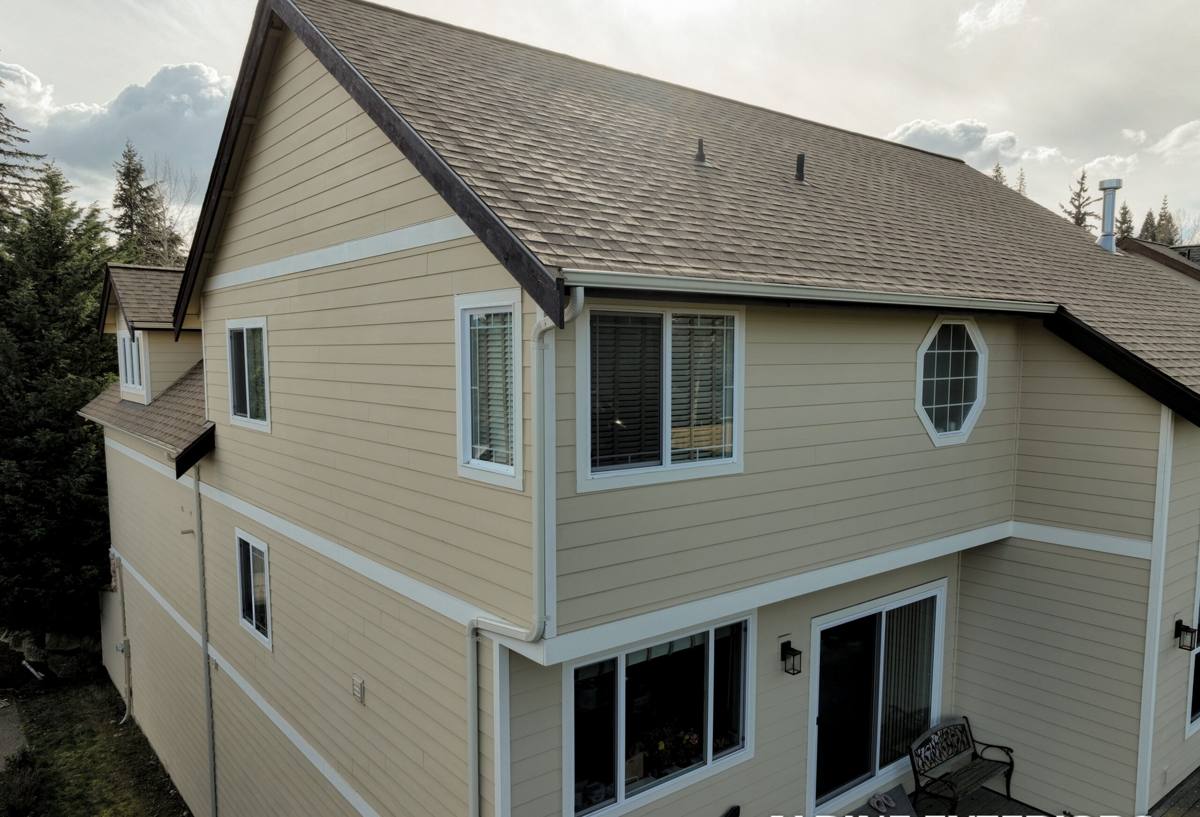
Common Types of Storm Damage We See in Mount Vernon
Wind Damage
Wind doesn't need to be extreme to cause damage. Sustained gusts can lift shingle tabs, break the adhesive seal strip, and creep underneath the shingle above it. Once that seal is broken, the shingle may look fine from the ground but will leak the next time it rains, and it's far more likely to tear loose in the following storm.
Rain and Moisture Intrusion
Driving rain exploits weak points — nail pops, aged pipe boot collars, undersized or poorly lapped flashing at walls and chimneys, and valleys where debris has built up. Water doesn't have to pour in to cause damage; a slow drip into the attic over a few storms can rot sheathing long before it shows up as a stain on the ceiling.
Moss and Debris-Related Wear
Moss holds moisture against the shingle surface and, as it grows, physically lifts shingle edges, which gives wind and rain an opening they wouldn't otherwise have. Fir and cedar debris from nearby trees clogs valleys and gutters, backing up water during heavy rain and adding weight during wind events.
Impact Damage
Fallen branches and wind-blown debris can crack shingles, dent metal flashing or gutters, and knock granules loose in a way that isn't always visible from the ground but shows up clearly on a close inspection.
Our Storm Damage Inspection Process
After a storm, we walk the roof — not just look at it from the driveway. A ground-level look misses lifted tabs, cracked flashing, and granule loss almost every time. Our inspection covers:
- Shingle condition: lifted, cracked, torn, or missing shingles and tabs
- Flashing at chimneys, walls, skylights, and roof-to-wall transitions
- Valleys and penetrations, including pipe boots and vent seals
- Gutters and downspouts for damage, blockage, or separation
- Attic and decking, checked for water staining, soft spots, or daylight where there shouldn't be any
- Existing moss growth and drainage patterns that could cause repeat problems
We document what we find with photos and give you a straight answer: what's cosmetic, what's a real leak risk, and what can wait. If you're planning to file an insurance claim, this documentation is also what your adjuster will want to see.
Repair or Replace? How We Make the Call
Not every storm-damaged roof needs full replacement, and we don't push people toward one. The right call depends on the roof's age, how widespread the damage is, and whether the underlying roof was already near the end of its service life.
| Factor | Leans Toward Repair | Leans Toward Replacement |
|---|---|---|
| Roof age | Under 12–15 years, shingles otherwise sound | Near or past expected lifespan |
| Extent of damage | Localized area (one slope, one section) | Damage spread across most or all of the roof |
| Decking condition | Dry, solid sheathing | Soft or water-stained decking found under damage |
| Shingle match availability | Matching shingles still obtainable | Discontinued product, visible mismatch unavoidable |
| Moss/moisture history | Minimal prior moss buildup | Heavy moss history suggesting shortened remaining life |
When a roof is a genuine borderline case, we'll tell you that too, along with the trade-offs, rather than steering you toward the bigger job by default.
What a Correct Storm Repair Actually Involves
A storm repair that's done right addresses the cause, not just the visible symptom. That generally means:
- Removing damaged material fully — not just patching over lifted shingles, but pulling them and inspecting what's underneath.
- Checking and repairing decking before anything new goes down, since covering wet or soft sheathing just hides a bigger problem.
- Replacing underlayment in the repair area so the new section has proper water protection, not just new shingles over old felt.
- Correcting flashing details at any wall, chimney, or penetration in the repair zone — reused flashing is a common source of repeat leaks.
- Matching shingle profile and color as closely as current products allow, so the repair doesn't stand out as a patch.
- Re-sealing and re-nailing to current fastening standards, since storm damage often reveals that the original installation was under-nailed or improperly sealed to begin with.
Skipping any of these steps is how a "repaired" roof ends up leaking again in the next storm.
Materials and Craftsmanship Standards
We repair with materials suited to this climate, not just whatever's cheapest or fastest to source. On asphalt composition roofs — the majority of what we work on in Mount Vernon — that means using shingles with an adequate wind rating for valley gusts and a sealant strip that performs in our wet, mild-temperature conditions. We're selective about lower-grade shingle lines that use thin mat construction or minimal sealant, since they tend to underperform in wind here and can turn a five-year repair into a two-year repeat call. That's a maintenance and durability judgment on our part, not a knock on any single manufacturer — every product line has trade-offs, and our job is to pick the ones that hold up to Skagit Valley weather.
For flashing, we favor corrosion-resistant metal given the salt air exposure this close to the Sound, and we lap and seal it the way the manufacturer's installation specs actually call for, rather than the faster shortcuts that some repair jobs rely on.
Working With Insurance After a Storm
Many storm repairs in this area are at least partly covered by homeowner's insurance, depending on your policy and the cause of damage. We're not insurance adjusters and won't promise a claim outcome, but we can:
- Provide a written, photo-documented damage assessment you can submit with a claim
- Point out damage that's easy to miss without walking the roof
- Give an honest repair estimate that reflects the actual scope of work needed
If you're unsure whether damage is claim-worthy, it's usually worth getting an inspection before deciding — sitting on storm damage tends to make it worse and more expensive, whether or not insurance ends up covering it.
Preventing the Next Round of Damage
Given how many storms move through Skagit County in a typical fall and winter, prevention matters as much as repair. A few things go a long way toward keeping a Mount Vernon roof out of repeat trouble:
- Keep gutters and valleys clear of needles and debris, especially before the wet season
- Address moss growth before it lifts shingle edges, not after
- Trim back branches that overhang the roof to reduce impact and debris risk
- Have flashing and seals checked periodically, since these fail quietly long before a leak shows up inside
- Get a post-storm walk-through after any significant wind event, even if nothing looks wrong from the ground
Why Local Experience in Mount Vernon Matters
A roof in Mount Vernon isn't dealing with the same conditions as one thirty miles inland. The combination of salt air, valley wind, and a long moss season is specific to this part of Skagit County, and it shapes which materials hold up, where flashing tends to fail first, and how urgently moss or debris buildup needs attention. Working this area regularly means we're not guessing at how local weather affects a roof — we're seeing the same patterns repair after repair, and we build our assessments and material choices around what actually holds up here.
If a recent storm has left you wondering whether your roof took damage, we're glad to take a look. Estimates are free and there's no pressure to move forward — just a straight assessment of what's going on and what it would take to fix it right. The request form below is the easiest way to get started.