 Anacortes
 Flounder Bay's Marine Climate Is Tougher on Siding Than It Looks
Flounder Bay sits right on the water on Fidalgo Island, and that waterfront position is exactly what makes siding decisions here different from a typical inland Skagit County home. Homes close to the bay take a steady diet of salt-laden air, wind-driven rain off the water, and long stretches of damp, shaded weather that keep exterior walls wet far longer than homes even a mile or two inland. Add in the moss and algae that thrive in the Pacific Northwest's mild, wet winters, and you have a climate that actively hunts for weak points in a home's exterior envelope.
None of this is exotic or unusual for Anacortes — it's just the reality of building on the water in this part of Washington. But it does mean that siding material and installation quality matter more here than they would in a drier, more sheltered part of the county. Products and installation shortcuts that hold up fine elsewhere tend to show their weaknesses first in places like Flounder Bay.
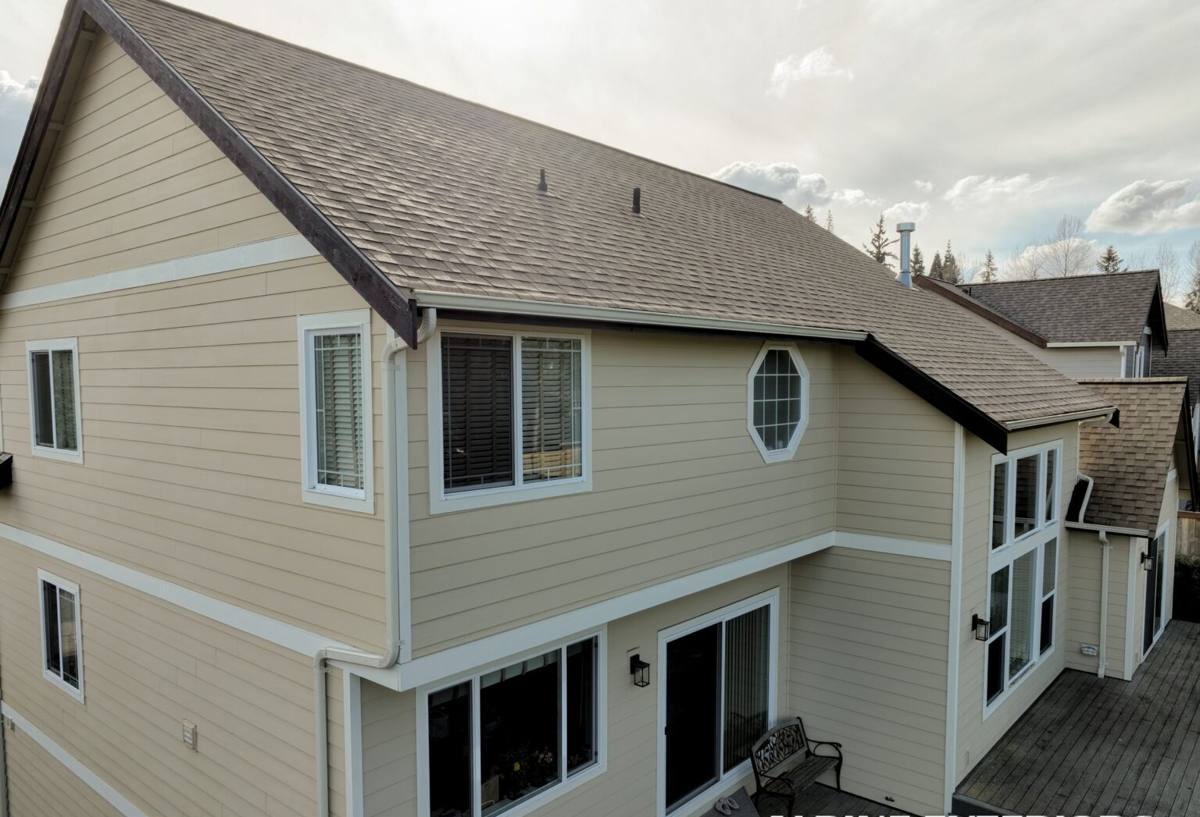
What Flounder Bay Homes Actually Need From Their Siding
Three things drive nearly every siding failure we see on waterfront and near-waterfront homes in this area:
- Moisture that doesn't dry out. Salt air and marine fog keep surfaces damp longer, so any siding material that absorbs or traps water is working against the climate from day one.
- Wind-driven rain hitting the wall assembly at an angle. Bay-facing walls don't just get rained on — they get rain pushed sideways into seams, laps, and trim joints.
- Constant organic growth pressure. Moss, algae, and mildew need shade and moisture to establish, and Flounder Bay's tree cover and marine humidity provide plenty of both.
A siding system that handles all three needs to be dimensionally stable when wet, resistant to moisture intrusion at the material level, and installed with a drainage path that lets incidental water get back out. That's the standard we hold every Flounder Bay project to.
Why We Install Only James Hardie Fiber Cement
We don't offer vinyl, LP SmartSide, primed wood, or other fiber cement brands. That's a deliberate standard, not a sales pitch, and it matters more in a place like Flounder Bay than almost anywhere else we work.
Non-Combustible and Dimensionally Stable
James Hardie panels are fiber cement — sand, cement, and cellulose fiber — which means they don't swell, rot, or delaminate the way wood-based products can when they stay damp for extended periods. That stability matters directly on a bay-facing wall that may not fully dry out for days at a stretch in winter.
HZ5 Climate-Engineered Formulation
Hardie engineers its panels by climate zone, and homes in our region qualify for the HZ5 formulation, built specifically to perform in wet, humid, freeze-prone Pacific Northwest conditions. It's not a marketing label — it's a different product recipe than what gets shipped to the desert Southwest.
ColorPlus Factory Finish
Most Flounder Bay installs we do use Hardie's ColorPlus factory-applied finish rather than field-applied paint. The finish is baked on under controlled conditions and backed by its own finish warranty, which matters in a salt-air environment where field-applied paint tends to fail at the edges and laps first.
Warranty That Transfers
Hardie's product warranty is transferable to a new owner, which is worth noting for a neighborhood like Flounder Bay where waterfront and near-waterfront properties see steady resale interest.
What Correct Installation Involves in This Environment
Fiber cement siding is only as good as the assembly behind it. In a marine climate, the details behind the panel matter as much as the panel itself.
Rain Screen and Drainage Plane
On bay-exposed elevations especially, we build in a drainage gap behind the siding so any moisture that gets past the cladding has somewhere to go instead of sitting against the wall sheathing. This is standard practice for us on wind-exposed walls, not an upcharge item we push only when asked.
Flashing and Sealant Details
Window heads, deck ledgers, and trim transitions are where wind-driven rain finds its way in. We flash these details to shed water down and out, and we're deliberate about where caulk is appropriate versus where it should never be relied on as the primary water barrier.
Fastening for Wind Exposure
We follow Hardie's fastening specifications for wind zone and exposure, which on open, bay-facing walls can mean tighter fastener spacing than an inland wall would need. Skipping this is one of the more common ways fiber cement installs fail early near open water.
Gaps and Clearances
Proper clearance at the foundation, roofline, and adjoining surfaces keeps siding from sitting in standing water or trapped moisture — a detail that gets punished fast in a climate that doesn't give walls much time to dry between rain events.
Our Process for Flounder Bay Projects
The steps are the same ones we'd use anywhere, but the emphasis shifts toward moisture management and wind exposure on a project this close to the water.
- On-site assessment. We look at which elevations face the bay and prevailing weather, existing moisture damage, and the condition of the wall assembly underneath the current siding.
- Tear-off and sheathing check. We remove existing siding and inspect sheathing for rot or soft spots before anything new goes up — covering a compromised wall with new siding just hides the problem.
- Weather-resistive barrier and drainage plane. We install house wrap and, where warranted, a rain screen gap suited to the wall's exposure.
- Flashing at every penetration. Windows, doors, vents, and trim get flashed before siding closes them in.
- Hardie panel and trim installation. Installed to Hardie's published specifications for fastener type, spacing, and exposure zone.
- Final detailing and walkthrough. Caulking where appropriate, cleanup, and a walkthrough so you know exactly what was done and why.
Cost Factors for a Flounder Bay Siding Project
Every home is different, so we won't quote a number without seeing the house, but these are the variables that most often move the price on a project in this area:
| Factor | Why It Matters Here |
|---|---|
| Wall exposure to the bay | Bay-facing walls often need tighter fastening and more attention to flashing, which adds labor |
| Condition of existing sheathing | Moisture-related repairs found during tear-off are common near the water and affect scope |
| Rain screen / drainage gap | Adds material and labor but pays off in longevity on wind-exposed elevations |
| Siding profile and trim complexity | Lap width, panel style, and trim detail all affect material and install time |
| Access and site conditions | Waterfront lots, retaining walls, and limited staging areas can affect logistics |
| ColorPlus color and finish selection | Factory-finished panels vary by color and profile availability |
Living With Fiber Cement in a Salt-Air, Moss-Prone Climate
Hardie siding installed correctly is genuinely low-maintenance, but "low-maintenance" doesn't mean "no maintenance" in a climate like this one. A yearly rinse to clear salt film, pollen, and organic buildup keeps the ColorPlus finish looking right and prevents moss and algae from getting a foothold in shaded or damp areas. Keeping gutters clear and vegetation trimmed back from walls also goes a long way, since standing moisture and constant shade are what moss and mildew need to establish. None of this is unique to fiber cement — every exterior material in Anacortes needs some seasonal attention — but Hardie's resistance to moisture absorption means routine care is about appearance, not structural survival.
Why Local Experience in Flounder Bay Matters
A crew that hasn't worked this specific stretch of Fidalgo Island's waterfront doesn't automatically know which elevations take the worst of the weather, how exposed a given lot really is once you account for tree cover and wind funneling off the bay, or what Skagit County permitting and inspection expects for exterior work on the water. Familiarity with the area means fewer surprises during tear-off, fewer callbacks, and a install plan that accounts for this specific microclimate instead of a generic Pacific Northwest one.
What to Verify Before Hiring a Siding Contractor
- Are they licensed and insured to work in Washington, and can they show proof without hesitation?
- Do they install to the manufacturer's published fastening and clearance specifications, not just "how we've always done it"?
- Will they inspect and address sheathing condition before covering it with new siding?
- Do they use a drainage plane or rain screen on wind- and rain-exposed walls?
- Can they explain, in plain terms, why they recommend the product and installation method they're proposing?
- Do they have experience with waterfront or near-waterfront homes specifically, not just siding in general?
If you're weighing siding options for a home in Flounder Bay, we're happy to take a look and walk you through what we'd recommend and why — no pressure, no obligation. Use the form below to request a free estimate.