 Anacortes
 Flounder Bay Sits Right at the Edge of the Weather
Flounder Bay is a waterfront community on Fidalgo Island, tucked close to the marina and open water near Anacortes. That location is part of what makes it a great place to live, and it's also exactly why the siding on a Flounder Bay home works harder than siding a few miles inland. Homes here take direct salt air off the water, wind-driven rain that comes in sideways during winter storms, and a long, damp moss season that never fully lets up. Siding that isn't built and installed for that combination fails faster here than the manufacturer's brochure would suggest.
This page is specifically about James Hardie fiber cement siding installed on Flounder Bay homes — what the local conditions demand, what a correct installation actually involves, and why a crew that already works this stretch of Skagit County waterfront is worth choosing over a crew that doesn't.
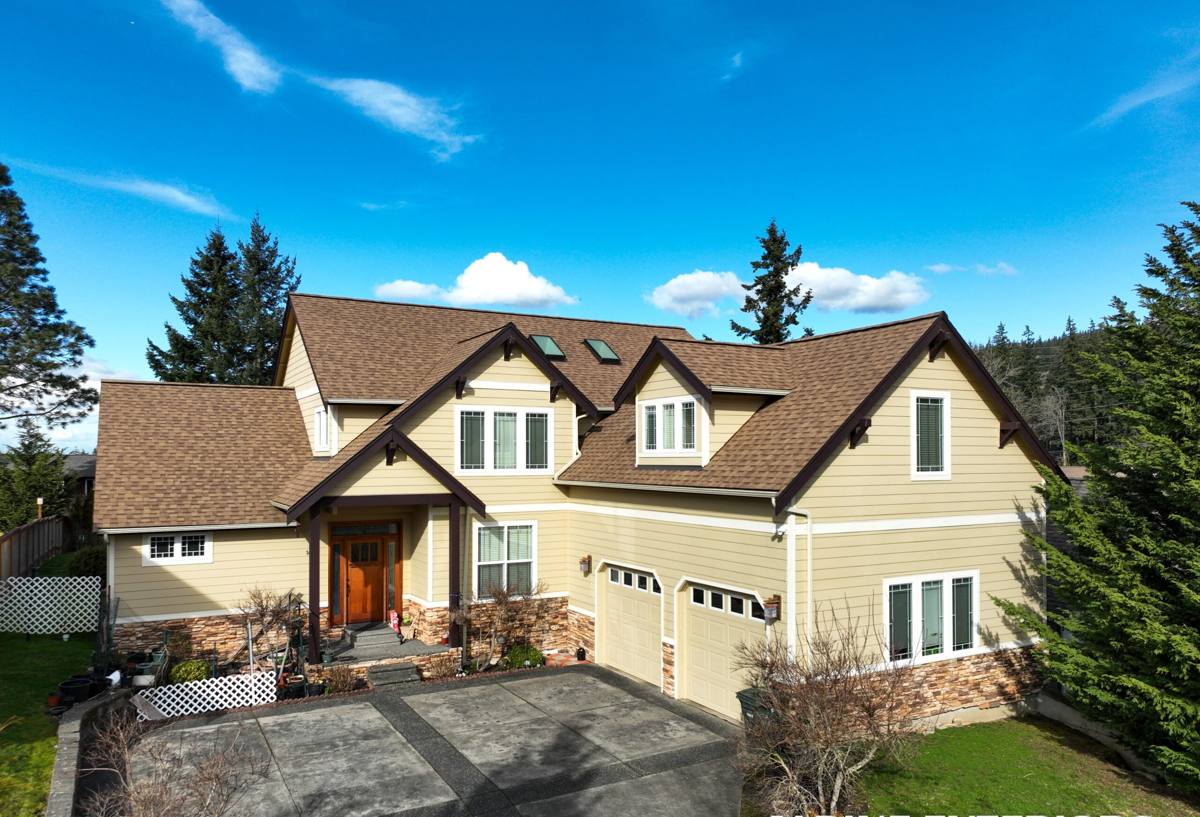
What Salt Air, Rain, and Moss Actually Do to Siding
Salt-Laden Air
Airborne salt from Puget Sound doesn't just affect boats and fasteners at the marina — it settles on exterior surfaces across the whole bay, including siding, trim, and any exposed metal flashing or fasteners. Over years, salt exposure accelerates corrosion in fasteners and metal components, and it degrades paint and coatings faster than the same product would wear a few miles inland. Materials and finishes that aren't rated for coastal exposure show chalking, fading, and fastener rust well ahead of schedule.
Driving Rain and Wind
Flounder Bay's exposure to open water means storms arrive with real wind behind them, which pushes rain sideways into wall assemblies instead of letting it run straight down. That's a water-management problem, not just a material problem — siding, flashing, and house wrap all have to work together to keep wind-driven moisture from getting behind the cladding. A siding job that only accounts for water falling straight down will let moisture in at seams, corners, and penetrations during the next real storm.
A Long Moss Season
Western Washington's damp, shaded conditions already favor moss and algae growth, and a waterfront setting with persistent humidity makes it worse. Moss holds moisture against a wall surface, which is a problem for any siding material but is especially damaging to products that swell, rot, or delaminate when they stay wet. Siding here needs to shed water fast and resist organic growth on its factory finish, not just look good on install day.
Why James Hardie Is What We Install on Flounder Bay Homes
We install James Hardie fiber cement exclusively — not vinyl, not LP SmartSide, not primed wood, not composite panel alternatives. On a site like Flounder Bay, that decision isn't about brand preference. It comes down to what actually holds up against salt air, driving rain, and sustained dampness over decades, not just the first few years.
- Non-combustible core: Hardie's fiber cement composition doesn't burn, rot, or provide a food source for insects, which matters for long-term durability regardless of what's blowing in off the water.
- ColorPlus factory finish: a baked-on finish applied under controlled conditions holds color and resists the fading and chalking that salt air and UV accelerate on field-painted or lower-grade coatings.
- Climate-engineered HZ product lines: Hardie manufactures HZ5 products specifically engineered for wetter, harsher climate zones like ours — a meaningful difference from siding designed for a national average climate.
- Dimensional stability: fiber cement doesn't swell, cup, or warp with moisture cycling the way wood-based and some engineered products can, which matters through a wet Skagit County winter followed by a dry summer.
- A warranty backed by a large manufacturer: Hardie's transferable limited warranty is a meaningful backstop for a coastal-facing home, provided the installation itself was done to spec — which is the other half of the equation.
What a Correct Installation Involves Here
James Hardie siding only performs the way it's designed to when it's installed to the manufacturer's specifications — and on an exposed, wet site like Flounder Bay, the margin for shortcuts is smaller than it is on a sheltered inland lot. The material is only as good as the water management behind it.
Flashing and Water Management
Every window, door, and penetration needs correctly lapped flashing and a properly integrated weather-resistive barrier so wind-driven rain has nowhere to travel behind the cladding. This is the single most common place corners get cut on a fast, cheap siding job, and it's the detail that determines whether a home stays dry through a real Pacific storm.
Fastening and Clearances
Hardie specifies fastener type, spacing, and penetration depth, and those specs exist for a reason — under-driven or over-driven fasteners, or the wrong fastener material near a coastal environment, create failure points and corrosion risk over time. Proper clearance between siding and grade, decks, and roof lines also keeps the bottom edge of the siding from sitting in standing moisture.
Joint and Caulking Discipline
Butt joints, trim intersections, and penetrations need the right sealant, applied correctly, and Hardie's own installation guidance is specific about where caulking is required and where it isn't. Over-caulking can trap moisture just as easily as under-caulking lets it in.
| Detail | Correct approach | Common shortcut we see |
|---|---|---|
| Window and door flashing | Fully lapped, integrated with house wrap, drains outward | Flashing tucked in but not lapped correctly, relies on caulk to seal gaps |
| Fastener spacing | Manufacturer-specified spacing and penetration depth | Wider spacing to save time, fasteners over- or under-driven |
| Bottom clearance | Proper gap above grade, decks, and roofs per Hardie spec | Siding installed tight to grade or a deck surface |
| Joint treatment | Sealant only where specified, correct joint prep | Heavy caulking everywhere as a catch-all fix |
| Fastener material | Corrosion-resistant fasteners appropriate for coastal exposure | Standard fasteners not rated for salt air conditions |
Our Process on a Flounder Bay Job
The steps don't change from one Anacortes neighborhood to the next, but what we're watching for on a waterfront job like this does.
- On-site assessment: we look at wind exposure, existing moisture damage, current wall assembly, and how the home is oriented relative to the water and prevailing weather.
- Tear-off and inspection: removing the old siding lets us check sheathing and framing for hidden moisture damage before anything new goes up — a step that matters more on an exposed lot than a sheltered one.
- Water-resistive barrier and flashing: house wrap, flashing, and any needed repairs to the wall assembly go in before a single piece of siding is hung.
- Hardie installation to spec: correct fastening, clearances, and joint treatment, installed by a crew that installs this product regularly rather than occasionally.
- Trim, caulking, and finish details: the details that determine both appearance and long-term water-tightness.
- Final walkthrough: we go over the finished job with the homeowner before calling it done.
Choosing Colors and Panel Types for a Marine Setting
James Hardie's ColorPlus finishes come pre-selected in a range of colors engineered to hold up under UV and weather exposure, which is a real advantage over field-painted siding that will need repainting on a maintenance schedule. For a waterfront home, we typically talk through lap siding versus panel systems, trim profile options, and how a given color reads against the specific light and surroundings of a bay-facing lot — but the underlying product and installation standard don't change. What changes is fitting the finish to the home and the site.
Cost Factors for a Flounder Bay Siding Project
Every home is different, so we don't publish blanket pricing, but these are the factors that most often move the number on a waterfront Anacortes project:
| Factor | Why it matters here |
|---|---|
| Home size and wall complexity | More corners, dormers, and cutouts mean more flashing detail and labor |
| Extent of hidden moisture damage | Exposed sites more often reveal sheathing repairs once old siding comes off |
| Access and site conditions | Waterfront lots can have tighter access, slopes, or staging constraints |
| Panel vs. lap siding selection | Different profiles carry different material and labor costs |
| Trim scope | Corner boards, window trim, and fascia detail add to both material and labor |
Why a Crew That Already Works Flounder Bay Matters
A siding crew that mostly works drier, inland jobs and occasionally takes a waterfront project doesn't build the same instinct for what fails first on a bay-facing home. A crew that regularly works Anacortes and the surrounding Skagit County waterfront knows to check specific things without being told — how a given wall orientation catches wind-driven rain, where salt air tends to attack fasteners first, and how much moss buildup on a north-facing wall says about the drainage plane behind it. That familiarity shows up in fewer callbacks and a job that's built for the site it's actually on, not a generic spec sheet.
Maintenance That Keeps Flounder Bay Siding Performing
Correctly installed James Hardie siding is low-maintenance, not no-maintenance. A short annual routine keeps it performing the way it's designed to:
- Rinse salt residue and grime off the siding once or twice a year, especially on water-facing walls
- Check and clear gutters and downspouts before the fall rains so water isn't overflowing against the siding
- Watch for moss or algae buildup on shaded or north-facing walls and address it before it spreads
- Inspect caulking at trim joints and penetrations annually and touch up as needed
- Keep plantings and irrigation from spraying directly onto siding or holding moisture against the bottom edge
- Have any impact damage or loose trim looked at promptly rather than waiting for the next storm season
If you own a home in Flounder Bay and want a straight assessment of what your siding needs — whether that's a full replacement or just an honest second opinion — we're happy to take a look. Fill out the form below for a free, no-pressure estimate.