 Anacortes
 Old Town Anacortes Puts Different Demands on Siding Than the Rest of the County
Old Town Anacortes is one of the older residential pockets on Fidalgo Island, and the homes here carry it — original wood-frame construction, decades of repainting, and siding that's been fighting the same weather since long before "rainscreen" was a word anyone used. That combination of age and exposure is exactly why a straightforward siding job here often turns into something more involved once the old material comes off.
Three things drive most of the wear we see on Old Town homes: salt-laden air off the water, wind-driven rain that gets pushed sideways into wall assemblies during winter storms, and a moss and algae season that runs far longer than most homeowners expect. None of these are dramatic on their own. Together, over 60-plus years on an original wood exterior, they add up to soft trim, failed paint, and hidden moisture damage behind siding that still looks okay from the sidewalk.
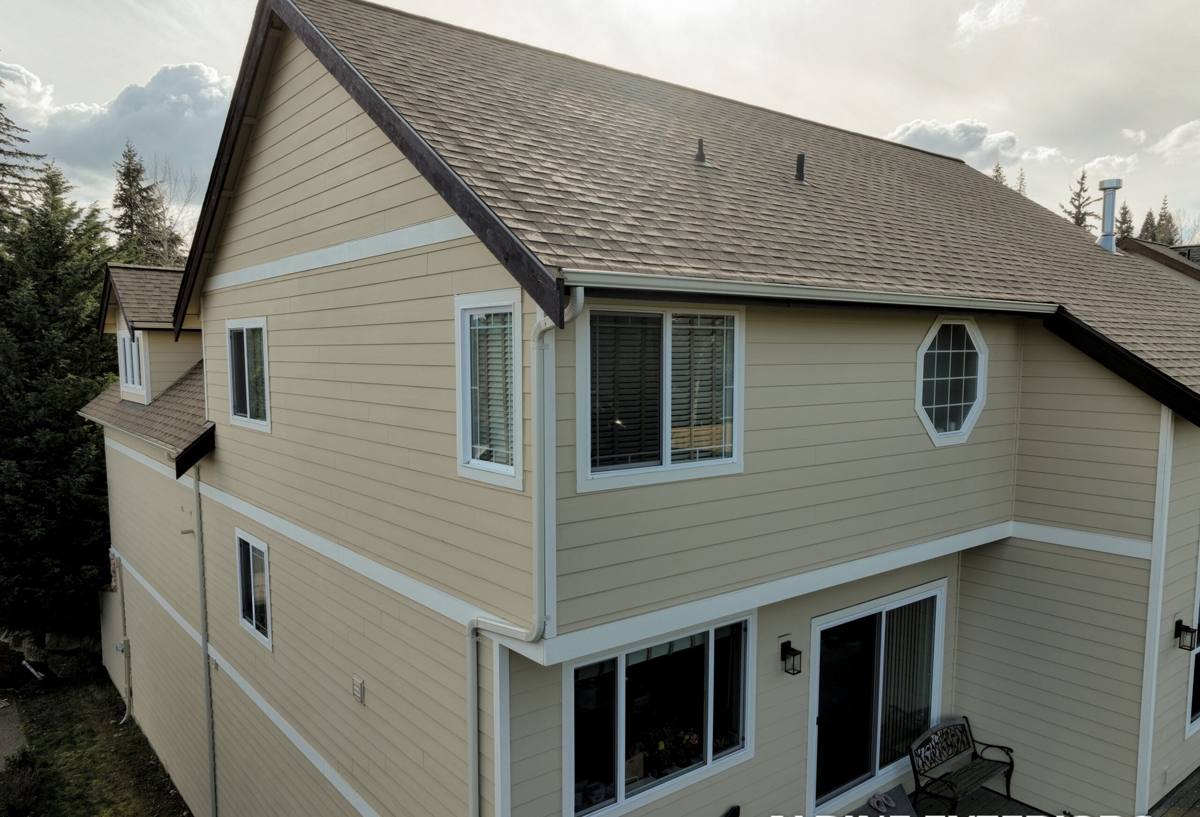
Why Salt Air, Driving Rain, and Moss Take a Real Toll Here
Salt Air
Proximity to the water means airborne salt settles on painted wood and metal fasteners year-round. It accelerates paint breakdown, corrodes exposed nail heads and flashing, and works its way into hairline cracks faster than it would a few miles inland. Homes on the more exposed sides of a lot show this first — chalky, peeling paint and rust streaks below nail heads.
Driving Rain
Storms coming off the Strait don't just fall — they get pushed horizontally against west- and southwest-facing walls. On older homes, that means rain is driven into every lap joint, every butt seam, and every spot where caulk has shrunk or trim has separated slightly from the wall. Old-style siding installed without a proper drainage plane behind it has nowhere for that water to go but into the wall.
A Long Moss Season
Between mature tree cover common in older neighborhoods and the region's extended damp season, north- and east-facing walls in shaded yards stay wet for months at a stretch. Original wood siding is an organic material — it's food for moss, algae, and mildew. Once growth takes hold, it holds moisture against the wall even longer, which is how a shady side of the house can look decades older than a sun-exposed one on the same building.
What's Actually Underneath: Why We Inspect Before We Quote
On a home this age, what you can see is rarely the whole story. Before we talk about replacement siding, we look at what's happening behind the existing material:
- Soft or spongy spots around window and door trim, especially at the bottom corners
- Sheathing condition once a test section of siding is pulled
- Whether the original siding was ever installed over a proper water-resistive barrier
- Flashing at windows, doors, and roof-to-wall transitions
- Signs of past paint-only "fixes" that covered rot instead of addressing it
- Whether old paint layers are pre-1978, which changes how we handle removal and disposal
That last point matters and we're upfront about it: homes built before 1978 may have lead-based paint in older coats, and any siding job that disturbs painted surfaces on a home that age has to follow lead-safe work practices — containment, cleanup, and disposal done correctly, not skipped to save a day. It's a normal part of working on Old Town's older housing stock, not a red flag, but it's something you should hear from your contractor up front, not discover mid-project.
Why We Install James Hardie Fiber Cement — and Nothing Else
We only install James Hardie fiber cement siding. Not vinyl, not LP SmartSide, not primed spruce or cedar. That's a deliberate standard, and it matters most on exactly the kind of home you find in Old Town.
Fiber cement doesn't feed moss and algae the way wood does — it's not an organic food source, so growth that does land on the surface sits on top of it rather than breaking it down. It doesn't absorb driving rain the way wood fibers can, so it holds up better against the sideways storms this area sees every winter. It's non-combustible, which matters given how tightly some older lots are built. And Hardie's ColorPlus factory finish is baked on and warranted against fading and chipping, so you're not repainting every few years to keep ahead of salt air and UV — a real consideration on a house where the last three owners probably did exactly that.
Hardie also engineers specific product lines by climate zone (HZ5 for the wetter, colder regions like ours), which means the product itself is built for the moisture load Skagit County actually sees, not a generic national spec.
What a Correct Replacement Actually Involves
Pulling off old siding and nailing up new boards is the easy part. The work that determines whether a job lasts 30 years or 8 happens in between:
- Full tear-off and sheathing inspection — not spot patching over unknown conditions
- Rot repair — any compromised sheathing or framing gets replaced, not wrapped and hidden
- Water-resistive barrier — a continuous, correctly lapped weather barrier behind the siding
- Rainscreen gap — a drainage space between the barrier and the siding so any water that gets past the cladding can drain and dry instead of sitting against the wall
- Flashing at every penetration — windows, doors, hose bibs, light fixtures, roof lines
- Correct fastening — Hardie-approved fasteners at the right spacing and depth, not whatever was on the truck
- Factory-finished panels — installed per manufacturer spec to keep the warranty intact
Skip the rainscreen and the flashing details, and you can put brand-new Hardie board on a wall and still trap moisture behind it. The material is only as good as the assembly it's installed into — that's true anywhere, but it's especially true on a wall that's going to take direct hits from winter storms for the next several decades.
Keeping Old Town's Character While Upgrading the Materials
A lot of Old Town homeowners aren't looking to modernize the look of their house — they want to keep the character (the trim proportions, the lap reveal, the corner boards) while finally getting off the paint-and-patch cycle. That's one of the strongest cases for Hardie: it's available in lap profiles, shingle-style panels, and trim boards that can match a traditional look far more convincingly than vinyl, while performing like a modern building product underneath.
Matching reveal size, trim width, and color to the rest of the block — or to the home's original details — is a judgment call that's easier to get right when you've done it on other houses in the same neighborhood, with the same lot sizes and the same architectural period, rather than guessing from a spec sheet.
Cost Factors: What Actually Moves the Number
Every quote is different, but the same handful of factors drive most of the variation we see on Old Town projects specifically:
| Factor | Why It Matters Here |
|---|---|
| Hidden rot extent | Older homes with decades of moisture exposure often need more sheathing/framing repair than a newer home would |
| Lead-safe work practices | Required on pre-1978 painted homes; adds containment and disposal steps |
| Trim and detail complexity | Older craftsman-era trim details take more time to match than a plain modern elevation |
| Wall exposure | West/southwest walls facing driving rain and salt air may need more flashing work than sheltered walls |
| Access and lot size | Tighter, older lots can limit staging and equipment access compared to newer subdivisions |
| Siding profile chosen | Lap, shingle-style, and panel systems carry different material and labor costs |
We'd rather walk your specific walls and give you real numbers than throw out a broad range that doesn't mean much for a house this individual.
Before You Hire: A Short Checklist
If you're getting quotes for a siding replacement on an older Old Town home, it's worth asking every contractor the same set of questions:
- Will you inspect sheathing and framing condition before quoting, not just after the contract is signed?
- Do you install a rainscreen gap, or does the siding go straight over the weather barrier?
- How do you handle lead-safe practices if the home was built before 1978?
- What flashing details do you use at windows, doors, and roof-to-wall transitions?
- Are you a certified installer for the specific product you're recommending?
- What does the manufacturer's warranty actually cover, and does it stay valid with your installation method?
If a contractor can't answer these clearly and specifically, that's worth noting before you sign anything.
Why Hiring a Crew That Already Works Old Town Anacortes Matters
Old Town's housing stock isn't uniform new-construction — it's a mix of ages, framing methods, and past repair histories. A crew that's already worked on similar homes in this specific neighborhood knows what to expect when the old siding comes off: where the moisture damage tends to hide, which walls take the worst of the winter storms coming off the water, and how to detail trim so the finished house still looks like it belongs on the block. That local pattern-recognition is the difference between a quote based on what's visible and a quote based on what's actually there.
It also means less guesswork once the job starts. Surprises behind old siding are normal on a home this age — what matters is whether your contractor has seen that surprise before and knows exactly how to handle it, rather than figuring it out for the first time on your wall.
If you're weighing a siding replacement on an Old Town Anacortes home, we're happy to take a look and walk you through what we find — no pressure, no obligation. Fill out the form below to get a free estimate.