 Anacortes
 Roof Replacement in Skyline: Built for What Anacortes Weather Actually Does
Skyline sits close enough to the water that homes here take on a different kind of weathering than roofs just a few miles inland. Salt-laden air off Fidalgo Bay and the surrounding waterways works into fasteners, flashing, and metal components year-round, while Skagit County's long wet season keeps roofs saturated for months at a stretch. Add the moss and moisture that thrive under the tree cover common to Skyline lots, and you have a roofing environment that punishes shortcuts. A roof that would last three decades in a dry inland climate can fail early here if it isn't built and maintained with these specific conditions in mind.
A roof replacement in this neighborhood isn't just about picking a shingle color. It's about choosing materials, fasteners, and ventilation details that are rated for coastal exposure, and having a crew install them correctly the first time. That's the standard we hold every Skyline roof replacement to.
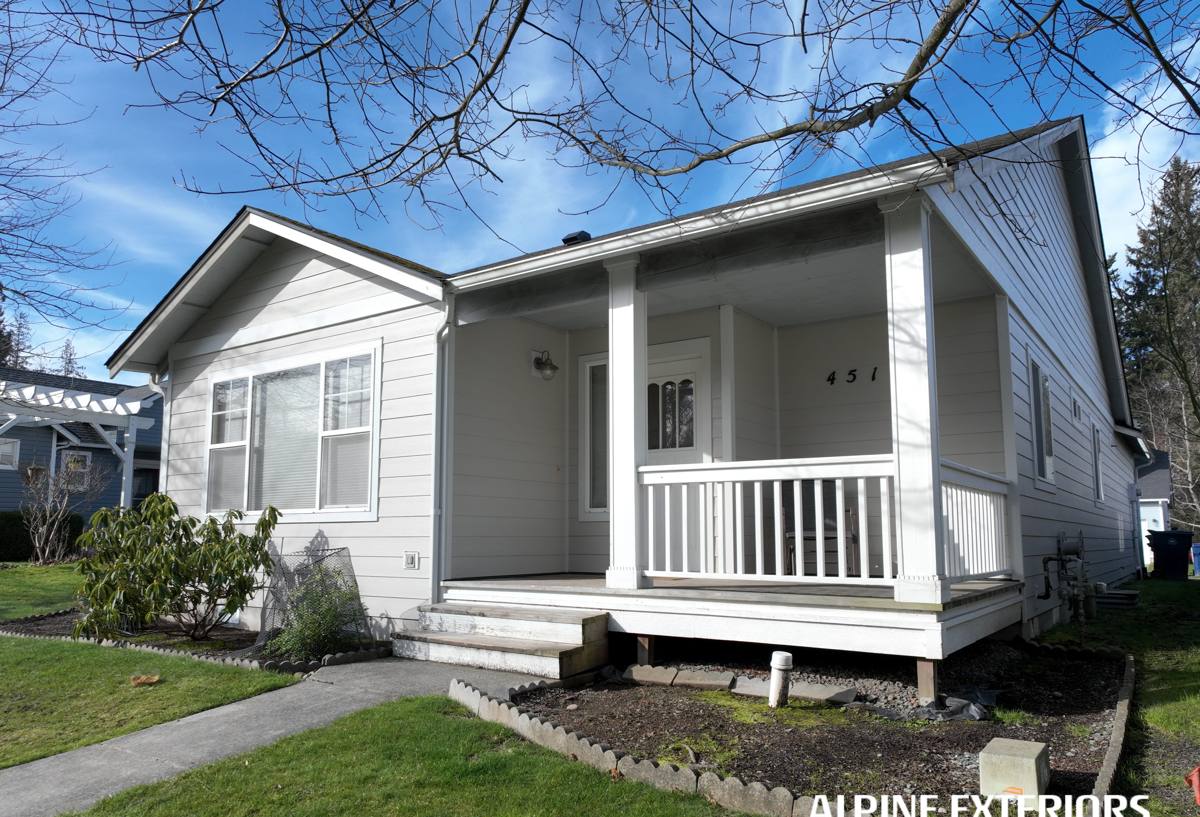
Signs a Skyline Roof Needs Replacement, Not Just Repair
Not every roofing problem calls for a full tear-off. But there are signs that patching is only delaying the inevitable, and in a climate this wet, delaying usually means the underlying deck starts to suffer too.
- Granule loss heavy enough that you're finding grit in gutters and downspouts every season
- Shingles that are cupping, curling, or cracking, especially on south and west-facing slopes
- Persistent moss growth that keeps returning within a year or two of cleaning
- Soft spots or sagging when walked on, which usually points to deck damage underneath
- Daylight visible through the roof deck from inside the attic
- Rusted or failing flashing around chimneys, vents, and valleys
- A roof that's approaching or past the manufacturer's expected service life for this climate
If a roof is showing two or more of these signs, repair costs start adding up without solving the core problem. That's usually the point where full replacement is the more honest recommendation, even though it's the bigger upfront number.
What a Correct Roof Replacement Actually Involves
A roof replacement done right is a system, not just a layer of shingles. Each component has a job to do, and skipping or downgrading any one of them shortens the life of everything else.
Tear-Off and Deck Inspection
We remove the old roofing down to the deck rather than layering over it. This is the only way to actually see what's underneath — soft or delaminated plywood, old leaks, or damaged rafters don't show up until the surface is gone. Any compromised sheathing gets replaced before anything new goes down.
Underlayment
Underlayment is the roof's backup waterproofing layer, and in a climate with driving rain, it matters as much as the shingles themselves. We use synthetic or ice-and-water underlayment in the areas most exposed to wind-driven moisture — eaves, valleys, and around penetrations — because standard felt alone isn't enough insurance against the kind of sideways rain Skagit County sees off the water.
Flashing
Flashing around chimneys, skylights, walls, and valleys is where most roof leaks actually originate, not in the open field of shingles. Salt air accelerates corrosion on lower-grade metal flashing, so we install flashing rated for coastal exposure and seal every transition point correctly rather than relying on caulk as a substitute for proper technique.
Ventilation
Proper intake and exhaust ventilation keeps the attic dry and temperature-balanced, which prevents moisture buildup that leads to rot, mold, and premature shingle failure from the underside. This is one of the most commonly overlooked parts of a roof replacement, and it's a major reason otherwise good roofs fail early in wet climates.
Roofing Materials That Hold Up in Skyline's Coastal, Moss-Prone Conditions
Every roofing material has trade-offs. Our job is to walk homeowners through those trade-offs honestly, based on the specific exposure of their home, rather than pushing whatever is easiest to install.
| Material | Performance in Salt Air & Rain | Moss Resistance | Typical Lifespan Here |
|---|---|---|---|
| Architectural asphalt shingles | Good with proper underlayment and flashing; algae-resistant granules recommended | Moderate; needs periodic cleaning under tree cover | 20-30 years |
| Standing seam metal | Excellent when coated for coastal exposure; sheds water fast | High; moss struggles to grip smooth metal | 40-50+ years |
| Cedar shake | Requires diligent maintenance; absorbs moisture | Low without regular treatment | 20-25 years with upkeep |
| Synthetic composite shingles | Very good; engineered to resist moisture absorption | Moderate to high depending on product | 30-50 years |
We don't install every product on this list for every home. Cedar shake, for example, looks great but demands a maintenance commitment that not every homeowner wants to keep up with in a climate this wet — it's a legitimate choice, but one we make sure homeowners understand fully before committing to it. For most Skyline homes, we steer conversations toward architectural asphalt with coastal-rated components or standing seam metal, because both hold up with realistic, not exceptional, maintenance.
Our Roof Replacement Process, Start to Finish
- On-site assessment — We inspect the existing roof, deck condition, ventilation, and flashing details specific to the home's exposure.
- Material recommendation — Based on the home's orientation, tree cover, and how exposed it is to weather off the water, we recommend materials suited to that specific situation, not a one-size-fits-all package.
- Written estimate — A clear breakdown of materials, labor, and scope, so there are no surprise line items later.
- Tear-off and deck repair — Full removal of old roofing, with any damaged decking replaced before new materials go down.
- Underlayment, flashing, and ventilation install — The parts of the system that determine how long the visible roof actually lasts.
- Final roofing installation — Shingles, metal panels, or your chosen material installed to manufacturer specification.
- Cleanup and final walkthrough — Site cleared of debris and nails, with a walkthrough so you know exactly what was done and why.
Ventilation and Moisture: The Part Most Homeowners Never See
A new roof can still fail early if the attic underneath it isn't managed correctly. In Skyline's climate, trapped moisture is the enemy — it condenses in a poorly ventilated attic, soaks into the deck from underneath, and causes rot, mold, and premature failure of the roofing material above it, regardless of how good that material is. Balanced ventilation, meaning enough intake at the eaves and enough exhaust at the ridge, keeps air moving so moisture doesn't accumulate. We evaluate and correct ventilation as part of every replacement, not as an upsell after the fact.
Cost Factors for a Skyline Roof Replacement
Every roof is different, and we don't quote real numbers without seeing the property, but these are the factors that most often move the price up or down.
| Factor | Why It Matters |
|---|---|
| Roof size and pitch | Steeper and larger roofs require more material, time, and safety equipment |
| Number of layers to remove | Tearing off multiple old layers adds labor and disposal cost |
| Deck condition | Rotted or soft sheathing found during tear-off needs replacement before roofing goes on |
| Material choice | Asphalt, metal, and composite products vary significantly in material cost |
| Roof complexity | Valleys, dormers, skylights, and chimneys all add flashing work and time |
| Access and site conditions | Tree cover, tight lot access, or steep driveways can affect staging and labor |
We give every homeowner an itemized estimate so it's clear what's driving the number, not just a total figure to accept or reject.
Why a Crew That Already Works Skyline Matters
Roofing crews who mostly work drier, inland areas sometimes underspec ventilation, flashing, and underlayment because it's not what their usual jobs demand. A crew that regularly works Skyline and the surrounding Anacortes area already knows which slopes take the worst of the wind-driven rain, how much moss pressure to expect under mature tree cover, and which flashing and fastener grades actually hold up against salt air over years, not just through the first inspection. That local familiarity shows up in fewer callbacks and a roof that performs the way it's supposed to for its full expected life, not just for the first winter.
Before You Sign a Roof Replacement Contract
- Get a written, itemized estimate — not just a one-line total
- Confirm what underlayment and flashing materials are included, not just the visible shingle or panel
- Ask how ventilation will be assessed and corrected if needed
- Confirm whether deck repair, if needed, is included or billed separately
- Check that the contractor is licensed and insured to work in Washington
- Ask about manufacturer warranty terms and what voids them
- Get a clear timeline, including what happens if weather delays the schedule
A roof replacement is a significant investment, and asking these questions upfront prevents most of the disputes that come up later.
If your Skyline roof is showing its age or you're not sure whether repair or replacement is the right call, we're happy to take a look and walk you through your options honestly. Reach out using the form below for a free, no-pressure estimate.