 Anacortes
 Board & Batten Siding in March Point
March Point sits out on the water east of Anacortes, and homes there take a different kind of weather beating than houses tucked a mile inland. The exposure is more direct: wind off Fidalgo Bay carries salt onto exterior walls, driving rain hits siding at an angle instead of straight down, and the shaded, damp stretches of the year keep moss and algae established longer than in drier parts of Skagit County. Board and batten siding — with its bold vertical lines and strong shadow pattern — is a popular choice out here, both as a full exterior and as an accent on gables, dormers, and entry features. Done right, in the right material, it holds up to that exposure for decades. Done with the wrong product or the wrong technique, it becomes a maintenance headache within a few years. This page covers what board and batten actually needs to survive March Point's climate, what a correct installation looks like, and how we approach the work.
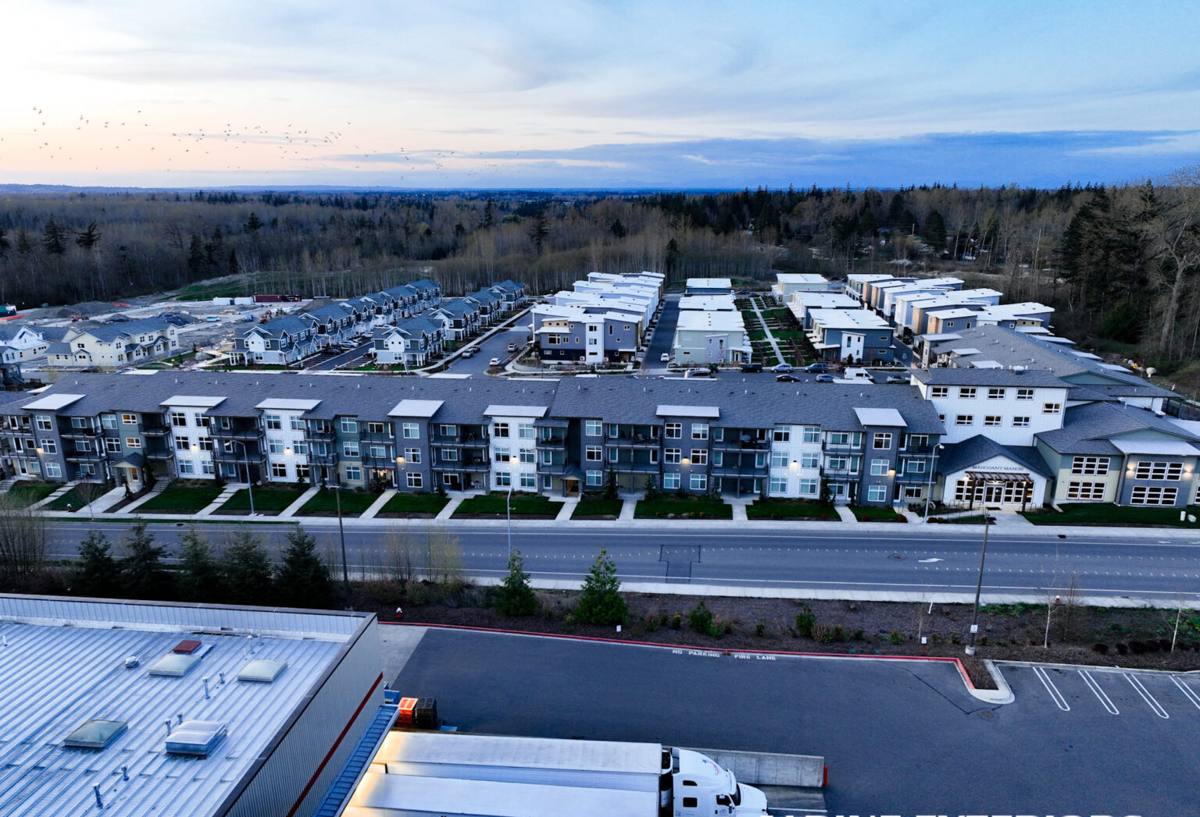
Why Board & Batten Works So Well Out Here
Board and batten is a vertical siding pattern: wide flat boards or panels installed with narrower battens covering the seams. The style has deep roots in Pacific Northwest architecture, and it reads well against the working waterfront character of March Point and the rest of Anacortes. Beyond looks, the vertical orientation has a practical advantage in wet climates — water runs down the face of the board rather than pooling along horizontal laps, which is one reason it has stayed popular in high-rainfall regions for generations.
That said, the style's water-shedding advantage only holds up if the material underneath doesn't absorb moisture and if the installation manages water at the seams and battens correctly. A siding style is only as good as the material and the details behind it.
What Salt Air, Rain, and Moss Actually Do to Vertical Siding
Three environmental factors drive nearly every siding failure we see in this part of Skagit County:
- Salt air accelerates the breakdown of paint film and corrodes fasteners, trim flashing, and any exposed metal. Homes closer to the water lose paint adhesion faster than homes set back from it.
- Driving rain, especially in fall and winter storms, pushes water sideways into seams, board ends, and butt joints — the exact places board and batten is vulnerable if it isn't detailed correctly.
- Extended moss and algae season keeps north-facing and shaded walls damp for long stretches. Wood-based and wood-fiber sidings absorb that moisture, swell, and eventually rot from the inside out, often before the surface damage is visible.
Any one of these factors is manageable. Together, over the life of a house on or near the water, they punish siding materials and installation shortcuts that would go unnoticed somewhere drier.
The James Hardie Board & Batten System We Install
We install James Hardie fiber cement exclusively, and board and batten is one of the styles it handles best. Depending on the look and budget, that means either Hardie vertical panel siding paired with Hardie batten trim, or individual Hardie boards installed in a board-and-batten pattern with the correct gap and fastening spec. Both use Hardie's HZ5 formulation, engineered specifically for the Pacific Northwest's wet, moderate climate.
Fiber cement doesn't absorb water the way wood, wood-composite, or engineered wood products do, so it doesn't swell, cup, or rot from trapped moisture the way those materials can. It's also non-combustible, which matters for a region that sees wildfire smoke and occasional brush fire risk in the drier months even this close to the water. On top of the material itself, factory-applied ColorPlus finish means the color coat is baked on under controlled conditions rather than field-applied, which holds up better against the fading and chalking that salt air and UV speed up on site-painted siding.
We don't install vinyl, LP SmartSide, primed spruce, cedar, or other fiber cement brands. That's a deliberate standard, not a sales pitch — we've seen how each of those performs over time in exactly this climate, and we'd rather turn down work than install something we don't trust to last on a March Point home.
What a Correct Board & Batten Installation Actually Involves
Board and batten looks simple from the street, but it has more failure points than lap siding if it's rushed. A correct install includes:
Drainage plane and rainscreen gap
A weather-resistive barrier goes on first, and we install furring strips or a rainscreen product behind the siding to create an air gap. That gap lets any moisture that does get past the surface drain and dry out instead of sitting against the wall sheathing — critical on a site where wind-driven rain is a regular event.
Flashing at every horizontal transition
Window heads, door heads, roof-to-wall intersections, and any horizontal trim need proper flashing integrated with the water-resistive barrier — not caulk alone. Caulk fails; flashing sheds water by design and keeps working long after caulk has cracked.
Board and batten spacing and fastening
Hardie specifies exact minimum overlaps at batten joints, fastener placement, and clearance at the bottom of the siding from grade, decks, and roofing. Fastening too close to an edge or skipping the specified gap between boards is a common shortcut that leads to cracking and water intrusion years later.
Corner and trim details
Outside corners, inside corners, and butt joints all need to be built to shed water outward, not funnel it into the wall assembly. This is where a lot of the visual character of board and batten comes from, and also where sloppy work shows up fastest.
Every one of these steps is inspectable, and every one of them affects how the siding performs in ten or twenty years, not just how it looks on installation day.
Board & Batten vs. Other Siding Approaches
| Approach | Water Behavior | Best Fit in March Point | Long-Term Maintenance |
|---|---|---|---|
| Hardie board & batten | Vertical shedding, non-absorbent material | Full exteriors or accent gables/entries facing weather | Repaint cycle only; no rot risk |
| Hardie lap siding | Horizontal shedding, non-absorbent material | Full exteriors, more traditional look | Repaint cycle only; no rot risk |
| Wood or wood-composite board & batten | Absorbs moisture at seams and ends | Not recommended this close to the water | Recurring rot repair, more frequent repainting |
| Vinyl board & batten profiles | Sheds water but can trap moisture behind panel | Not what we install | Fades and becomes brittle faster in coastal UV/salt exposure |
Many March Point homeowners use board and batten as an accent — gable ends, a bump-out, a covered entry — paired with Hardie lap siding on the rest of the house. That combination gives the visual variety without complicating the drainage plan across the whole exterior.
Mistakes That Shorten the Life of Board & Batten Siding
Most of the board and batten problems we get called out to look at trace back to a small number of repeat issues:
- No rainscreen gap, so the siding sits tight against the wall with nowhere for incidental moisture to drain or dry
- Battens face-nailed through both boards without the specified overlap, creating a direct path for water
- Caulk used in place of flashing at window and door heads
- Siding installed too close to grade, a deck, or a roof plane, holding moisture and debris against the bottom edge
- Site-applied paint instead of a factory finish, which fails faster under salt air and UV
None of these are visible on day one. They show up three, five, or ten years later, which is exactly why installation quality matters more than it seems to at the time.
Our Process for March Point Projects
We start with a walk-around of the exterior to assess the current siding condition, note any moisture damage at trim and penetrations, and talk through where board and batten makes sense as a full exterior versus an accent. From there:
- We measure and put together a detailed, written estimate — material, labor, trim, and any repair work the walk-around uncovered.
- We remove the old siding down to the sheathing, checking for hidden rot or water damage before anything new goes on.
- We install the water-resistive barrier, rainscreen furring, and flashing at every horizontal transition.
- We install the Hardie boards and battens to manufacturer spec, including fastener placement, gapping, and clearances.
- We finish trim, corners, and caulking at the joints Hardie specifies for sealant, then do a final walkthrough with the homeowner.
Because we work this area regularly, we already know which orientations on a March Point property tend to take the worst of the weather and plan flashing and trim details accordingly, rather than treating every wall the same.
Maintaining Board & Batten in Coastal Skagit County
Fiber cement board and batten is low-maintenance compared to wood, but "low" isn't "none," especially this close to open water. A simple annual routine keeps it performing as designed:
- Rinse salt residue and grime off the siding once or twice a year with a garden hose and soft brush — avoid high-pressure washing, which can force water behind trim and battens
- Check caulking at window and door trim annually and re-caulk any cracked or separated joints
- Keep gutters clear so overflow doesn't run down the face of the siding or pool at the bottom edge
- Trim back vegetation and keep mulch or soil from building up against the bottom of the siding
- Watch shaded, north-facing walls for moss or algae buildup and clean it before it spreads
Why Hire a Crew That Already Works March Point
Board and batten forgives less than lap siding when the details are wrong, and a crew that hasn't worked this specific stretch of coastline can underestimate how much wind-driven rain and salt exposure actually matter here. We've built our process around what this climate does to a house, not around a generic installation manual. That means correct rainscreen and flashing work as standard practice, not an upsell, and a material choice — James Hardie fiber cement — that we're willing to stand behind because we've seen how it performs here over the long run, not just on day one.
If you're considering board and batten siding for a home in March Point or elsewhere around Anacortes, we're glad to walk the property with you and put together a free, no-pressure estimate — just fill out the form below.