 Anacortes
 Similk Beach Sits Right in the Path of Everything the Salish Sea Throws at a House
Similk Beach is a waterfront community on Fidalgo Island, tucked along Similk Bay in Skagit County, close enough to open water that homes here take on weather most inland Anacortes neighborhoods never see. Salt-laden air rolls in off the bay almost daily, wind-driven rain comes in sideways during winter storms, and the long stretch of overcast, damp weather from fall through spring keeps north- and west-facing walls wet for weeks at a time. That combination is hard on exterior materials, and it's especially hard on siding that wasn't engineered with a marine climate in mind.
We install siding across the Anacortes area, and Similk Beach comes with its own set of demands. This page covers what local homes actually need from their siding, what a correct fiber cement installation looks like out here, and why we've standardized on James Hardie products rather than the alternatives.
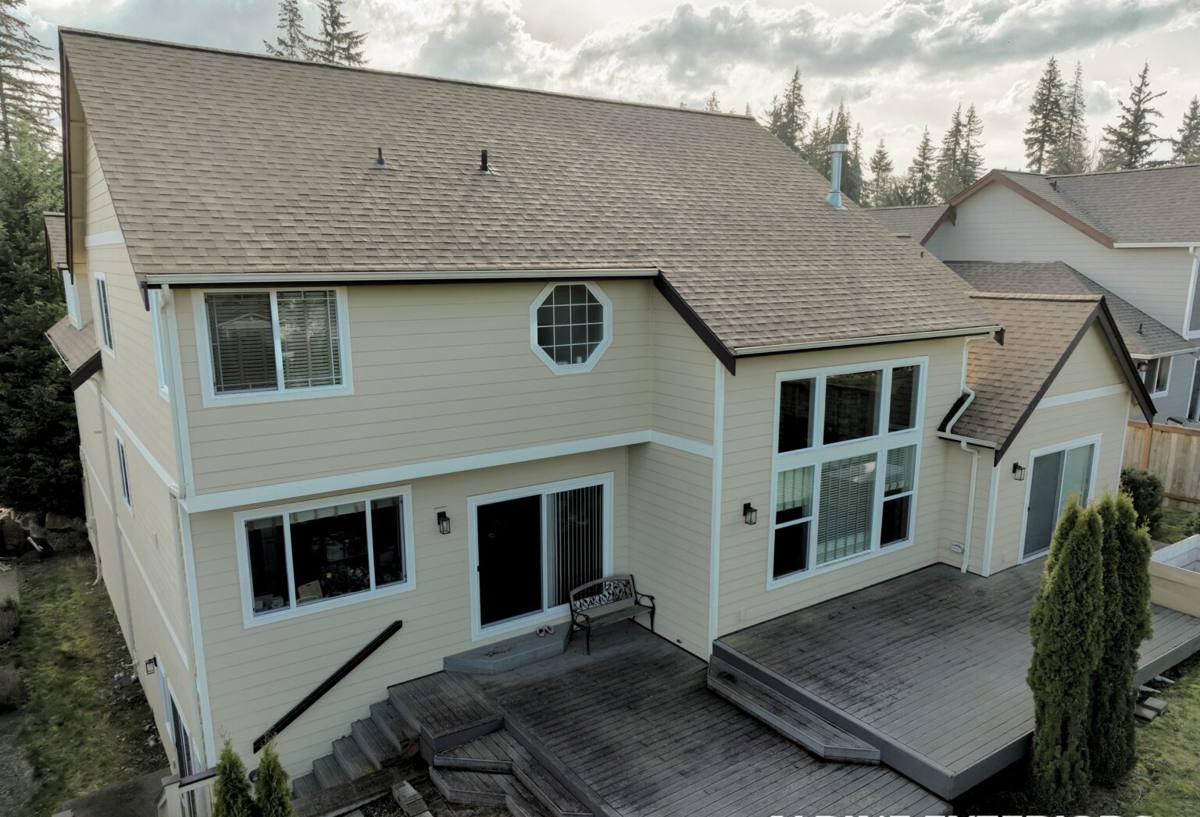
What Salt Air, Rain, and Moss Actually Do to a Home's Exterior
Salt Air and Coastal Corrosion
Airborne salt doesn't just affect metal — it accelerates the breakdown of paint films, caulking, and lower-grade composite materials, and it corrodes fasteners and trim hardware faster than it would a few miles inland. Siding systems that rely on face-nailing with standard fasteners or that use trim accessories not rated for coastal exposure tend to show rust streaking and premature wear on a Similk Beach home years before the same product would fail in, say, Sedro-Woolley or Mount Vernon.
Wind-Driven Rain and Water Intrusion
Rain that comes in horizontally finds every gap in a siding system — unsealed joints, undersized laps, missing flashing, or caulk that's dried out and cracked. Once water gets behind the siding, it doesn't need much time to start softening sheathing and framing, and by the time a homeowner sees a stain or soft spot on an interior wall, the damage underneath is usually well established.
Moss, Algae, and a Long Damp Season
Skagit County's wet season stretches long, and Similk Beach's proximity to water and tree cover keeps humidity high even on days without active rain. Moss and algae take hold on any surface that stays damp and shaded, and on siding that absorbs moisture or has a porous painted finish, that growth can work into the surface itself rather than just sitting on top of it.
What Similk Beach Homes Need From Their Siding
Given that combination of exposure, a siding system out here needs to do four things well: resist moisture absorption at the material level, hold a factory finish that doesn't chalk or fade under constant UV and salt exposure, shed wind-driven rain through correct overlaps and flashing rather than relying on caulk alone, and stand up to repeated wet-dry cycling without warping, delaminating, or rotting at the edges. That's a tall order, and it's the reason we don't install every siding product on the market.
Why We Install Only James Hardie Fiber Cement
We made a deliberate decision to install James Hardie fiber cement siding exclusively, and it comes down to how the material performs in exactly the conditions Similk Beach sees. Fiber cement is non-combustible, dimensionally stable, and doesn't absorb water the way engineered wood products can. James Hardie's HZ5 product line is specifically engineered for the wetter, harsher climate zones of the Pacific Northwest, which matters more here than it does in a lot of the country.
We're not going to tell you every other product is worthless — that wouldn't be honest, and it's not our call to make about a competitor's material. What we will say is that we looked at vinyl, LP SmartSide, primed wood, and cedar, and each of them comes with a real trade-off in a marine environment: vinyl can warp and fade and offers little protection against wind-driven rain at the seams, engineered wood products are more sensitive to sustained moisture exposure at cut edges and butt joints, and cedar and primed wood need a maintenance commitment — regular refinishing and vigilant caulk upkeep — that most homeowners underestimate until they're a few years in. Fiber cement, installed correctly, removes most of that risk. That's why it's the only product we put on a home.
ColorPlus Factory Finish
James Hardie's ColorPlus finish is baked on in a controlled factory environment rather than applied on-site, which gives it better adhesion and UV resistance than field-applied paint — a real advantage against the fading and chalking that salt air and constant sun exposure cause over time. It also comes with a longer finish warranty than a typical field repaint would carry.
What a Correct Fiber Cement Installation Involves
Fiber cement siding is only as good as the installation behind it. A huge share of the siding failures we get called out to inspect — regardless of brand — trace back to installation shortcuts, not the material itself. In a climate like Similk Beach's, those shortcuts show up faster.
Flashing and Water Management
Every window, door, and penetration needs proper flashing integrated with a weather-resistant barrier behind the siding — not caulk used as a substitute for flashing. Housewrap or building paper needs to be lapped correctly, shingle-style, so water is always directed outward and down, never trapped behind the cladding.
Fastening and Clearances
James Hardie specifies exact fastener types, spacing, and minimum clearances from grade, roofing, and decks. Maintaining proper clearance at the bottom of the siding keeps splash-back and standing moisture away from the material's cut edges, which are the most vulnerable point on any fiber cement board if left unsealed.
Caulking and Sealant Choices
Not all caulks perform the same in a salt-air environment. We use sealants rated for the exposure and reserve them for the joints designed to be sealed — not as a catch-all fix for gaps that should have been closed with correct board layout in the first place.
Cut Edge Sealing
Every field cut on a fiber cement board exposes raw material that needs to be primed or sealed before installation. Skipping this step is one of the most common corner-cutting errors in the trade, and it's invisible until moisture finds that unsealed edge a few winters later.
Our Process for Similk Beach Projects
- On-site assessment — we look at existing siding condition, sheathing access points, wind exposure on each elevation, and any signs of past moisture damage before quoting anything.
- Tear-off and substrate check — old siding comes off and we inspect the sheathing underneath; any soft or water-damaged sheathing gets addressed before new siding goes up, not covered over.
- Weather barrier and flashing — housewrap, window and door flashing, and kick-out flashing at roof-wall intersections are installed to manage water before the first board goes on.
- Hardie installation — boards are installed to James Hardie's fastening, clearance, and lap specifications, with cut edges sealed as we go.
- Final inspection and cleanup — we walk the whole exterior, check caulk lines and trim details, and clear the site.
Comparing Siding Options for a Similk Beach Home
| Factor | James Hardie Fiber Cement | Vinyl | Engineered Wood (LP SmartSide) | Cedar / Primed Wood |
|---|---|---|---|---|
| Salt air / moisture resistance | Engineered for wet climates (HZ5) | Doesn't absorb water but seams are a weak point | Moderate — sensitive at cut edges and joints | Absorbs moisture without diligent maintenance |
| Maintenance | Low — factory finish, repaint cycle 15+ years | Low but can crack, fade, warp | Moderate — finish upkeep matters | High — regular refinishing required |
| Fire resistance | Non-combustible | Combustible | Combustible | Combustible |
| Finish stability | Factory-baked ColorPlus finish | Color molded in, can fade | Field-applied or factory finish varies | Field-applied, weathers and needs recoating |
Maintenance in a Moss-Prone, Salt-Air Environment
Fiber cement is low-maintenance, not no-maintenance. Here's what actually keeps siding performing over the long run in a Similk Beach setting:
- Rinse siding once or twice a year with a garden hose to clear accumulated salt residue, pollen, and grime, especially on walls facing the water.
- Check north- and shade-facing walls for early moss or algae growth and address it before it spreads, rather than letting it establish over a full wet season.
- Walk the exterior annually and look at caulk joints around windows, doors, and trim for cracking or separation.
- Keep gutters clear and downspouts directed away from the foundation so splash-back doesn't sit against the bottom courses of siding.
- Trim back vegetation and tree cover that keeps any wall in constant shade and dampness.
- Repaint on the manufacturer's recommended cycle rather than waiting for visible failure — catching it early protects the substrate, not just the appearance.
What Drives the Cost of a Similk Beach Siding Project
We don't publish blanket pricing because every home is different, but the real cost drivers on a project out here are consistent:
| Cost Factor | Why It Matters |
|---|---|
| Tear-off vs. new construction | Removing and disposing of old siding adds labor and dump fees compared to new builds |
| Sheathing or framing repair | Water-damaged substrate found during tear-off needs to be replaced before new siding goes on |
| Home size and story height | More wall area and taller elevations mean more material, more labor, and more staging/scaffolding |
| Trim and architectural detail | Corner boards, window trim, and multiple siding profiles add labor time beyond flat wall coverage |
| Site access | Waterfront lots, slopes, or tight access can slow material staging and equipment setup |
Why a Crew That Already Works Similk Beach Matters
Siding installation isn't identical from neighborhood to neighborhood. A crew that already works Similk Beach knows which elevations on a typical lot here take the brunt of the wind and rain off the bay, understands the moisture patterns that come with this much tree cover and water proximity, and has already worked through Skagit County and City of Anacortes permitting and inspection requirements for exterior work in the area. That familiarity shows up in the details — where extra flashing attention matters most, which finish sheens hold up better against salt residue, and how to sequence a tear-off around this area's weather windows so framing isn't left exposed longer than it needs to be.
If you're weighing a siding replacement or new install on a Similk Beach home, we're happy to take a look and walk you through what your home specifically needs — no pressure, no upsell, just a straight assessment and a written estimate using James Hardie fiber cement siding installed to spec.