 Anacortes
 Ship Harbor's Siding Problem Isn't Like an Inland Home's
Homes along Ship Harbor, on the shoreline side of Fidalgo Island near Anacortes, take a different kind of beating than a house fifteen minutes inland in Skagit County. The water is close enough that salt-laden air reaches the walls year-round, wind-driven rain comes in sideways off the strait during winter storms, and the shaded, damp stretches of the property stay wet long after the rain stops. Siding here isn't just a weather barrier — it's a material fighting corrosion, moisture intrusion, and biological growth all at the same time, every season.
That's the lens we use when we look at a Ship Harbor home: not "what siding looks good" but "what siding actually survives here, and what does it take to install it so it does." This page is specifically about James Hardie fiber cement siding for homes in this neighborhood — what the climate demands, what correct installation looks like, and why we install nothing else.
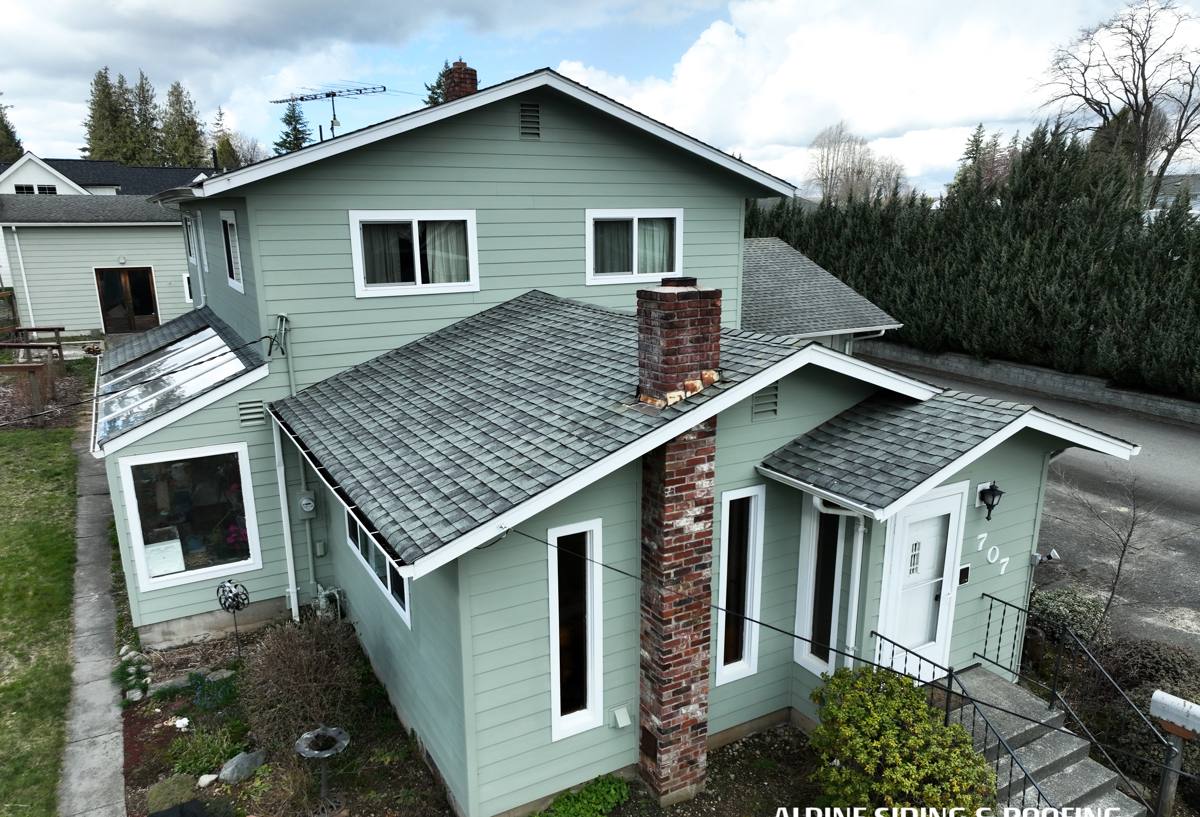
What Salt Air, Driving Rain, and Moss Season Actually Do to Siding
Three things work against exterior walls in this part of Anacortes, and they compound each other:
- Salt air accelerates corrosion of fasteners, flashing, and any metal trim components, and it slowly degrades paint and finish adhesion on materials not engineered to resist it.
- Driving rain, especially in wind events off the water, pushes moisture up under laps and into joints that would stay dry on a calmer site. Any gap in flashing or caulking becomes an entry point.
- Moss season — the long stretch of wet, low-light months typical of the Pacific Northwest — keeps north-facing and shaded wall sections damp for extended periods, which is exactly the environment moss, algae, and mildew need to take hold.
None of these are exotic problems. They're the normal cost of living near the water in Western Washington. But they mean a siding choice that performs fine in a drier climate can fail early here, and an installation that would pass inspection inland can still leak in Ship Harbor if the details aren't right.
Why James Hardie Is Built for This Exact Climate
Fiber cement that doesn't feed moisture problems
James Hardie siding is fiber cement — sand, cement, and cellulose fiber — which does not rot, does not delaminate the way some wood-based composite products can when they take on water, and doesn't provide the organic material that wood or wood-composite siding gives moss and mildew to grow on. That matters directly in a moss-season environment: the siding surface itself isn't feeding the growth, so a homeowner is dealing with surface cleaning rather than material breakdown.
HZ5 engineering for the Pacific Northwest
Hardie manufactures its siding in different HZ ("HardieZone") formulations matched to regional climate demands. Homes in this part of Washington fall into the HZ5 zone, engineered for moisture exposure and temperature swings typical of the coastal Pacific Northwest. That's a meaningfully different product than what gets shipped to a dry, hot climate — it's not a marketing label, it's a different formulation suited to exactly the conditions Ship Harbor sees.
ColorPlus factory finish
Most of what fails on siding near the water isn't the substrate — it's the paint. A factory-applied finish like Hardie's ColorPlus system is baked on under controlled conditions and backed by its own finish warranty, which holds up far better against salt air and UV exposure than field-applied paint. That's less repainting, less fading on sun-facing walls, and a color that stays consistent across the whole house.
What a Correct Installation Looks Like on a Ship Harbor Home
James Hardie siding is only as good as its installation. The material is engineered for this climate, but every manufacturer failure claim we've seen traced back to a shortcut in the install, not a flaw in the product. On a home this close to the water, we treat these details as non-negotiable:
- A drainage/rainscreen gap behind the siding so any moisture that does get past the surface can drain and the wall can dry, rather than trapping water against the sheathing
- Correctly lapped and sealed flashing at every window, door, and roof-to-wall transition — the majority of leaks we find on older homes trace back to flashing, not the siding field
- Corrosion-resistant fasteners rated for coastal exposure, not standard interior-grade fasteners that will rust and stain the face of the siding within a few years
- Manufacturer-specified nailing pattern and depth — over-driven or under-driven fasteners are one of the most common causes of premature siding failure
- Proper starter strip and z-flashing at the base of the wall, keeping the bottom edge protected from splashback and standing moisture
- Minimum ground and roofline clearances maintained so the siding isn't sitting in a perpetually damp zone
- Caulking limited to the joints Hardie actually specifies — over-caulking traps moisture just as often as it keeps it out
Skip any one of these on a shoreline-adjacent home and you've built in a failure point that will show up in a few winters, not a few decades.
How Our Process Works From First Call to Final Inspection
The process on a Ship Harbor home follows the same steps every time, because skipping a step is where problems start:
- Site assessment — we look at wall orientation, sun and shade exposure, existing moisture damage, and how close the home sits to the water and prevailing wind direction.
- Moisture and substrate check — before any new siding goes up, we confirm the sheathing underneath is sound. Covering rot or trapped moisture with new siding just hides a bigger problem.
- Removal and prep — old siding, damaged trim, and compromised flashing come off; we don't install over problems we can see.
- Weather barrier and drainage plane — house wrap and rainscreen components go in correctly lapped, shingle-style, so water sheds down and out rather than in.
- Hardie installation — panels or lap siding installed to manufacturer spec, with the fastening, flashing, and clearance details above followed on every wall, not just the street-facing side.
- Final inspection — we walk the whole exterior checking laps, caulk lines, and fastener placement before calling the job done.
James Hardie vs. the Alternatives for a Ship Harbor Home
We get asked why we don't install vinyl, LP SmartSide, or cedar. Here's the honest comparison for this specific climate:
| Material | Salt Air / Moisture Response | Moss & Algae Resistance | Long-Term Maintenance |
|---|---|---|---|
| James Hardie fiber cement | Does not rot or corrode; HZ5 formulation matched to this climate | Non-organic surface, doesn't feed growth | Occasional wash; factory finish holds color for years |
| Vinyl | Can warp or become brittle with temperature swings and UV over time | Growth sits on the surface, similar cleaning needs | Cannot be repainted if faded or damaged; panel replacement often needed |
| LP SmartSide (wood-strand) | Wood-based substrate is more moisture-sensitive at cut edges and joints | Organic material can support growth if moisture gets in | Edge sealing and caulking maintenance is more critical over time |
| Cedar | Natural wood absorbs and releases moisture; performs best with diligent upkeep | Organic surface, prone to moss and mildew in shaded, damp areas | Regular refinishing and sealing required to prevent decay |
None of these are bad products in every context. But for a home absorbing salt air and standing damp for months at a time, we've standardized on the one that doesn't ask a homeowner to fight moisture and organic growth as a constant maintenance chore.
Cost Factors for a Ship Harbor Siding Job
Every home is different, but the price of a James Hardie job in this area is generally driven by the same handful of factors:
| Factor | Why It Affects Price |
|---|---|
| Tear-off vs. new construction | Removing and disposing of old siding, plus repairing any hidden sheathing damage, adds labor beyond a bare-wall install |
| Home size and number of stories | More wall area and taller elevations require more material, staging, and safety setup |
| Trim, fascia, and accessory work | Corner boards, window trim, and soffit details add labor time separate from the flat wall panels |
| Product line (HZ5 lap, plank, or panel style) | Different Hardie profiles and textures carry different material costs |
| Color and finish choice | Standard ColorPlus colors are typically more cost-effective than custom-matched finishes |
| Site access and layout | Tight lots, slopes, or limited equipment access near the water can add setup time |
We walk every property in person before quoting, because two homes of the same square footage can have very different scopes once you account for existing damage and access.
Living With Hardie Siding Through Moss Season
Even a moss-resistant material benefits from basic upkeep in a climate like this. Shaded, north-facing walls should get an occasional rinse during the wetter months to keep surface growth from building up, gutters and downspouts should be kept clear so water isn't sheeting down the wall face, and any landscaping crowding the siding should be trimmed back to let air and light reach the wall. None of this is heavy maintenance — it's the difference between a wash-down twice a year and a siding system that's fighting moss on its own.
Why Hiring a Crew That Already Works Ship Harbor Matters
Siding installation isn't identical everywhere, and a crew that mostly works drier, inland jobs can miss details that matter on a shoreline property — how tight the flashing needs to be, which fastener grade to actually use, where drainage gaps matter most. A crew that already works this stretch of Anacortes has seen what happens when those details get skipped, and builds every job around avoiding those exact failures. That familiarity is worth more than a lower bid from someone unfamiliar with what salt air and driving rain do to a wall over ten winters.
If you're weighing a siding replacement or repair on a Ship Harbor home, we're glad to walk the property, look at what's there now, and give you a straight assessment along with a free, no-pressure estimate — no obligation, just an honest look at what your home actually needs.