 Anacortes
 Why Cap Sante's Waterfront Position Changes the Siding Equation
Homes on and around Cap Sante sit in one of the more exposed positions in Anacortes. The bluff overlooks the marina and open water, which means more wind, more salt in the air, and more direct exposure to weather moving in off the water than a home tucked into a sheltered inland lot a mile away. Siding that performs fine on a calm street in La Conner or Mount Vernon can struggle here, not because it's a bad product everywhere, but because Cap Sante asks more of it.
Three things drive nearly every siding decision we make for homes in this part of Skagit County: salt-laden air, wind-driven rain, and a moss season that runs longer than most homeowners realize.
Salt Air and Corrosion
Airborne salt from the water doesn't just affect boats and railings. Over years, it accelerates corrosion on fasteners, flashing, and any metal trim components on a home's exterior. It also degrades certain paint films and coatings faster than they'd wear inland, leading to chalking, fading, and bond failure at seams and joints. Siding material and hardware both need to be selected with this in mind, not treated as an afterthought.
Wind-Driven Rain and Water Intrusion
Anacortes gets plenty of rain, but the rain that matters most for siding performance is the kind that comes in sideways. On an elevated, waterfront-facing lot like Cap Sante, wind pushes rain up under laps, into seams, and against trim in ways that straight-down rain never does. If the water-management details behind the siding aren't right — drainage plane, flashing, lap spacing — wind-driven rain will eventually find a way in, even if the siding itself looks fine from the street.
Moss, Algae, and the Shade Factor
Western Washington's wet season is long, and Cap Sante's tree cover and marine humidity keep surfaces damp for extended stretches. North-facing walls and anything shaded by mature trees are especially prone to moss and algae growth. Beyond the cosmetic issue, sustained moisture against a wall assembly is exactly what leads to rot, trapped water, and premature siding failure if the material and installation aren't built to handle it.
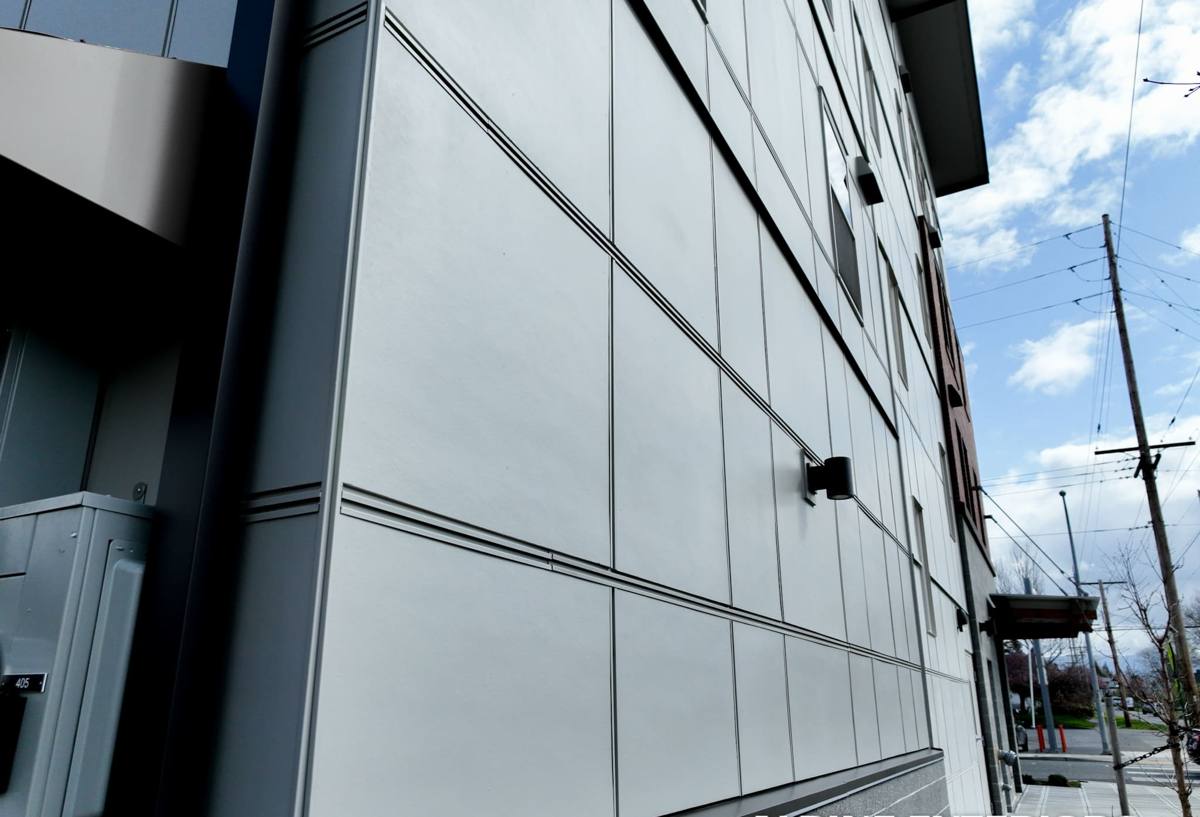
Why We Install Only James Hardie Fiber Cement Here
We standardized on James Hardie fiber cement siding for every home we work on, including the ones on Cap Sante, because it's engineered to handle the specific stresses this location creates. Fiber cement is made from cement, sand, and cellulose fibers — there's no wood core to absorb moisture and rot, and no vinyl skin to crack, fade, or warp in sun and salt exposure.
Non-Combustible, Moisture-Stable Core
Because Hardie siding doesn't have an organic wood core, it doesn't swell, cup, or delaminate the way wood-based products can when they take on repeated moisture exposure. It's also non-combustible, which matters more each year as wildfire smoke and fire risk become a bigger part of Pacific Northwest summers, even in a wetter coastal county like Skagit.
ColorPlus Factory Finish vs. Field-Applied Paint
Most of what we install carries Hardie's ColorPlus finish — a color baked on in a controlled factory environment, rather than a coat of paint applied on-site in whatever weather happens to show up that week. That matters in a marine climate: field-applied paint is more vulnerable to salt exposure and humidity during cure, while a factory finish goes on under consistent, controlled conditions and holds color and sheen far longer before it needs attention.
Choosing the Right Product Line for an Exposed, Waterfront-Facing Home
James Hardie doesn't make one generic siding product — it makes different lines and profiles suited to different climate demands, and it engineers its ColorPlus and HardieZone formulations specifically for regions like ours, where sustained moisture and mild, wet winters are the primary threat rather than deep freeze-thaw cycles. For a Cap Sante home, we typically look at lap siding for the field of the house, paired with panel or shingle accents where the architecture calls for it, and we pay close attention to trim and fastener specification given the salt exposure.
| Material | Moisture / Rot Resistance | Salt Air Durability | Maintenance Burden | Typical Lifespan |
|---|---|---|---|---|
| James Hardie Fiber Cement | Excellent — no organic core to rot | Strong with correct fasteners/flashing | Low — factory finish, occasional wash | Multiple decades with proper install |
| Vinyl Siding | Doesn't rot, but seams can trap moisture | Prone to fading, brittleness, warping in sun/salt | Low, but limited repair options once damaged | Shorter, especially in harsh exposure |
| Wood / Cedar | Vulnerable to rot without diligent upkeep | High maintenance in salt air and shade | High — regular refinishing required | Variable, heavily maintenance-dependent |
| Primed Engineered Wood (e.g. LP-type products) | Wood-based core, moisture-sensitive at edges | Edge and seam exposure is a real risk | Moderate to high, edge sealing critical | Shorter than fiber cement in wet climates |
This isn't a knock on every one of these products in every setting — vinyl and engineered wood siding both have a place, and plenty of manufacturers stand behind them. But for a home absorbing salt air, wind-driven rain, and a long wet season all at once, we've made fiber cement our standard because it's the material we trust to hold up without surprises.
What a Correct Installation Actually Involves
Fiber cement siding is only as good as the installation behind it. A large share of the siding failures we get called out to inspect in Anacortes aren't material failures — they're installation shortcuts that let water in behind a perfectly good product. On a wind-exposed lot like Cap Sante, there's no margin for skipping steps.
The Details That Matter Most
- A drainage plane and rainscreen gap behind the siding so any moisture that does get past the surface can drain and dry instead of sitting against the wall sheathing
- Correctly lapped and sealed weather-resistive barrier, installed before a single piece of siding goes up
- Flashing at every window, door, deck ledger, and roof-to-wall transition — the points where most water intrusion actually starts
- Corrosion-resistant fasteners appropriate for salt air exposure, driven at the spacing and depth Hardie specifies, not just "close enough"
- Proper clearance between the bottom of the siding and grade, roofing, decks, and patios so splash-back and standing water can't wick into the material
- Factory-cut edges re-sealed and field cuts primed before installation, so exposed edges aren't left absorbing moisture
- Caulked joints only where Hardie's specifications call for them — over-caulking traps moisture just as often as under-caulking lets it in
Skip any one of these and the siding can look perfect for a year or two while a moisture problem builds behind it unseen. That's the gap between a fiber cement job that lasts decades and one that needs rework in five years.
Our Process, Start to Finish
We run the same disciplined process on every Cap Sante home, adjusted for site access and the condition of what's already on the wall.
1. Inspection and Moisture Check
Before we talk about new siding, we look at what's happening underneath the old siding. On homes near the water, we're specifically checking for hidden rot, corroded fasteners, and any signs that wind-driven rain has already found a way in around windows, doors, and roof transitions.
2. Tear-Off and Sheathing Assessment
Old siding comes off and we inspect the sheathing underneath. Any soft, rotted, or water-damaged sheathing gets repaired or replaced before anything new goes back up — installing new siding over damaged sheathing just hides the problem for another owner to find later.
3. Weather Barrier and Drainage Plane
We install a properly lapped weather-resistive barrier and rainscreen system suited to the home's exposure, giving the wall assembly a way to shed and dry moisture instead of trapping it.
4. Flashing and Fastening
Flashing goes in at every penetration and transition point, and Hardie siding is installed with the fastener type, spacing, and clearances the manufacturer specifies — not a generalized approach borrowed from a different product.
5. Final Walkthrough
We walk the finished exterior with the homeowner, checking trim lines, caulk joints, and finish quality before calling the job complete.
What Drives Cost on a Cap Sante Job
Every siding estimate is different, but a few factors specific to this area tend to move the number more than homeowners expect.
| Cost Factor | Why It Matters on Cap Sante |
|---|---|
| Site access | Bluff-top and narrow-lot properties can limit staging space and equipment access, affecting labor time |
| Condition behind existing siding | Hidden rot or moisture damage found during tear-off requires sheathing repair before new siding goes on |
| Home height and stories | Elevated, multi-story homes with water views often need additional staging and fall protection |
| Trim and architectural detail | Corner boards, window trim, and accent profiles add labor time versus a simple lap-siding wall |
| Fastener and flashing upgrades | Corrosion-resistant hardware suited to salt air exposure costs more than standard-grade fasteners |
We walk every property in person before quoting, because a Cap Sante estimate based on a generic per-square-foot number almost never reflects what the job actually needs.
Why Hiring a Crew That Already Works Cap Sante Matters
Anacortes isn't a huge town, but conditions still vary block to block, and a bluff-top, water-facing home is not the same install as one three streets inland. A crew that's already worked this specific area understands how wind exposure changes fastener and flashing decisions, how to plan around narrow or sloped lot access, and how weather windows in Skagit County affect scheduling a multi-day tear-off and install without leaving a wall open to the elements. Most siding replacement work here also requires a permit from the local jurisdiction — the City of Anacortes or Skagit County, depending on the property — and a contractor familiar with that process keeps the paperwork from becoming a delay.
That local track record isn't a substitute for a correct installation, but it does mean fewer surprises, better planning around your home's specific exposure, and a crew that isn't learning the neighborhood's quirks on your job.
Living With Fiber Cement Siding in a Marine Climate
Correctly installed Hardie siding is genuinely low-maintenance, but "low-maintenance" isn't "no-maintenance" on a home exposed to salt air. A periodic rinse-down helps clear salt residue and organic buildup before it becomes a moss or algae problem. Keeping gutters clear reduces the amount of water running down the wall surface, which is one of the biggest contributors to streaking and moss growth on shaded elevations. And an occasional look at caulk joints and trim — especially after a hard windstorm off the water — catches small issues while they're still small.
If you're weighing a siding replacement on a Cap Sante home, we're glad to take a look and walk you through exactly what your specific exposure calls for. We offer free, no-pressure estimates — use the form below to get started.