 Anacortes
 Board & Batten Siding for Ship Harbor Homes
Ship Harbor sits close to open water on Anacortes' western shoreline, which means homes here take a different kind of weathering than houses a few miles inland in Skagit County. Wind comes off the water with salt in it, rain arrives sideways more often than straight down, and the shaded, damp stretches of the year give moss and algae months to get established on anything that stays wet. Board and batten siding, done right, handles that combination well. Done wrong, it's one of the faster ways to trap moisture against a wall. This page covers what board and batten needs to hold up in Ship Harbor specifically, what a correct installation actually involves, and why we only install it in James Hardie fiber cement.
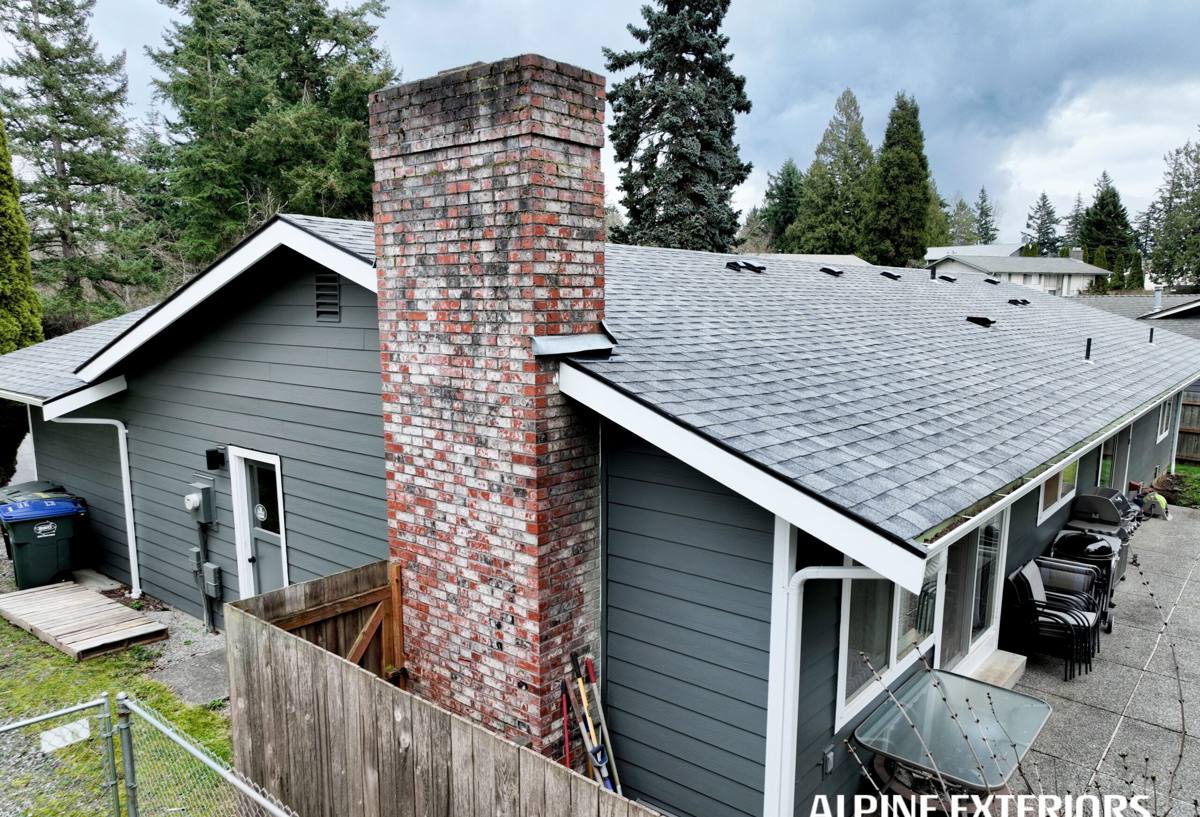
Why Board & Batten Fits This Part of Anacortes
Board and batten has deep roots in Pacific Northwest coastal and farmhouse architecture, and it shows up a lot on homes near the water in Skagit County — the strong vertical lines read well against the shoreline backdrop, and the style pairs naturally with the mix of older cottages and newer builds you'll find around Ship Harbor. It's also a practical choice: the vertical battens shed water down and off the wall rather than letting it pool on a horizontal ledge, which matters when your prevailing weather is coming in wet and sideways off the strait.
That said, the same vertical joints that make board and batten look good are also where water tries hardest to get behind the cladding if the battens, fasteners, and flashing details aren't handled correctly. The style rewards a contractor who's installed it enough times locally to know exactly where it fails when someone rushes it.
What Ship Harbor's Climate Does to Siding Over Time
Salt Air and Fasteners
Homes within a mile or two of the water deal with airborne salt that accelerates corrosion on anything metal — nail heads, flashing, trim fasteners. Standard fasteners can start showing rust streaks and weakening well before a siding job would otherwise need attention. Coastal-rated fastener specs aren't optional this close to the water; they're the difference between battens staying put for decades and battens working loose in ten or fifteen years.
Driving Rain and Wind
Wind-driven rain doesn't just fall on a wall, it pushes into every seam, lap, and joint it can find. On board and batten, that means the vertical seams between boards and the horizontal joints where panels stack need real flashing and sealing detail, not just a bead of caulk and hope. A wall assembly that can't drain and dry after a wind-driven rain event will hold moisture against the substrate, and that's where rot and mold start.
Moss and Prolonged Shade
Anacortes gets a long stretch of the year where north-facing and shaded walls simply don't dry out fast between rain events. Moss and algae take hold on siding surfaces that stay damp, and once established they hold even more moisture against the material. On wood-based products, that sustained dampness is exactly what feeds rot at the surface and at fastener points. The siding material itself needs to be indifferent to that moisture, because you can't fully engineer moss out of a shaded coastal lot.
Why We Install Board & Batten Only in James Hardie Fiber Cement
We get asked why we don't offer board and batten in cedar, primed wood, engineered wood siding, or vinyl. All of those can look fine on day one. The honest answer is what happens by year eight, twelve, or twenty in a climate like this one.
| Material | How it handles salt air & moisture | Long-term maintenance in Ship Harbor |
|---|---|---|
| James Hardie fiber cement | Non-combustible, engineered for moisture — HZ5 product line built for wet, marine-influenced climates | Repaint cycle stretched by factory ColorPlus finish; no rot risk from moisture absorption |
| Cedar / primed wood | Absorbs moisture, swells and shrinks with wet-dry cycles, feeds rot where moss holds water against it | Frequent repainting, sealing, and spot repair; fastener corrosion accelerates the cycle |
| Engineered wood (e.g. treated OSB-based panels) | Resists moisture better than raw wood but edges and cut ends remain vulnerable if not sealed and maintained | Manufacturer maintenance requirements must be followed closely or warranty coverage narrows |
| Vinyl | Doesn't rot, but flexes and can warp or crack in wind and temperature swings; seams and battens are harder to detail cleanly | Low maintenance but limited repair options and a shorter realistic service life on exposed coastal walls |
James Hardie's HZ5 fiber cement is specifically engineered for regions like ours — high moisture exposure, freeze-thaw swings, and wind-driven rain. It won't absorb water and swell, it won't feed rot, and the factory-applied ColorPlus finish is baked on rather than field-applied, which matters when your siding spends a lot of the year damp before it gets a chance to dry. It's also non-combustible, backed by a strong transferable warranty, and it holds paint and color consistency far longer than site-primed wood products. That combination is why it's the only material we put behind a board and batten profile — we're not interested in installing something we know will need real intervention inside a decade in this climate.
What a Correct Board & Batten Installation Involves
Rainscreen and Drainage Plane
A proper installation starts behind the siding, not at it. A drainage gap (rainscreen furring) behind the panels lets any moisture that does get past the cladding drain and evaporate instead of sitting against the sheathing. In a climate with Ship Harbor's rain volume, skipping this step is one of the most common ways a board and batten job fails early.
Panel and Batten Layout
Panel joints need to land on framing, be properly flashed, and be spaced to allow for the material's normal expansion and contraction. Battens go over the panel seams at a consistent, engineered spacing — not just wherever looks even from the ground — and get fastened per the manufacturer's pattern so they're not relying on caulk alone to stay sealed.
Flashing and Water Management
Every horizontal transition — window heads, doors, roof-to-wall intersections, the bottom termination near grade — needs metal or engineered flashing that directs water out and away from the wall assembly. This is the detail work that separates a job that holds up through Anacortes winters from one that starts showing staining and soft spots at those same transitions within a few years.
Fasteners and Sealants
Corrosion-resistant fasteners rated for coastal exposure, and sealant at the joints that's rated for exterior UV and moisture exposure — not general-purpose caulk that chalks and cracks after a couple of Northwest winters.
Our Process for Ship Harbor Projects
The process itself isn't complicated, but skipping steps is exactly how coastal jobs fail early. Here's what a board and batten project with us looks like:
- On-site assessment of the existing wall assembly, moisture exposure, and any current siding condition or damage
- Confirmation of drainage plane and rainscreen approach appropriate to the wall and exposure
- Removal of old siding and inspection of sheathing for hidden rot or moisture damage before anything new goes up
- Installation of weather-resistive barrier, flashing at all penetrations and transitions, and the rainscreen furring
- Panel installation on proper fastening schedule, followed by battens at engineered spacing
- Final sealant, trim, and paint touch-up using ColorPlus-matched or specified finish products
- Walkthrough so you know exactly what was done and what maintenance, if any, to expect going forward
Maintenance in a Salt Air, High-Moss Environment
James Hardie fiber cement is low-maintenance, not no-maintenance. A few habits go a long way toward getting the full service life out of a board and batten install this close to the water:
- Rinse salt residue and grime off the siding once or twice a year, especially on wind-facing walls
- Keep gutters clear so overflow doesn't run down the face of the siding and feed moss growth
- Trim back vegetation and tree cover that keeps any wall shaded and damp longer than necessary
- Check caulked joints at trim and penetrations every couple of years and re-seal if you see cracking or gaps
- Address any impact damage promptly — small chips left alone can become entry points for moisture
Cost Factors for Board & Batten in Ship Harbor
Every home is different, so we don't quote pricing without seeing the job, but these are the main variables that move the number:
| Factor | Why it matters |
|---|---|
| Condition of existing wall/sheathing | Hidden rot or moisture damage found during tear-off adds repair scope before new siding goes on |
| Wall height and access | Multi-story or hard-to-access walls near steep lots take more time and equipment |
| Amount of trim, window, and roofline detail | More transitions mean more flashing and cut work, which adds labor |
| Rainscreen/furring scope | Whether the existing assembly already has proper drainage or needs it added |
| Color and finish selection | Factory ColorPlus finishes vs. field-applied paint carry different material costs |
Why Hire a Crew That Already Works Ship Harbor
Salt exposure, wind direction, and moss pressure aren't uniform across Skagit County — a wall that faces the water in Ship Harbor sees different conditions than one a mile inland, and the fastener, flashing, and drainage decisions should reflect that. A crew that already works this specific stretch of Anacortes has seen what actually fails here, not just what a general installation manual says should work. That local pattern recognition — which walls need extra flashing attention, which orientations hold moss longest, how the wind typically drives rain on this shoreline — is worth as much as the material spec itself.
If you're weighing board and batten for a home in Ship Harbor, we're happy to take a look and give you a straightforward, no-pressure estimate. Use the form below to get started.