 Anacortes
 Siding Built for Skagit County's Weather
Mount Vernon sits in one of the wetter, more moisture-loaded corners of Washington. Homes here deal with a long wet season, wind-driven rain that gets pushed sideways into wall assemblies, salt-tinged air drifting in off the Sound, and a moss season that can stretch for months longer than it does on the dry side of the state. None of that is unusual for Skagit County — but it does mean siding gets tested here in ways it never would in a drier climate, and the material you choose either handles that testing or slowly loses the fight.
Driving Rain and Wind
Storms in this part of the state rarely come straight down. Wind pushes rain at an angle, which forces water into laps, seams, and fastener penetrations that would stay dry in a calmer climate. Siding that isn't installed with the right clearances and flashing details will eventually let that water find a path behind the cladding, where it causes damage long before anyone sees a stain on the outside.
Salt Air and Moisture
Proximity to Puget Sound means a steady low-level exposure to salt-laden air. Over years, that air accelerates corrosion of unprotected fasteners and metal trim, and it adds to the general moisture load that siding, paint, and caulking all have to withstand.
The Long Moss Season
Shaded north and west walls in Mount Vernon can stay damp for weeks at a stretch during fall and winter. That's exactly the environment moss and mildew need to take hold. Siding with a porous surface or a finish that traps moisture gives moss more to grip onto and more time to spread before the next dry stretch knocks it back.
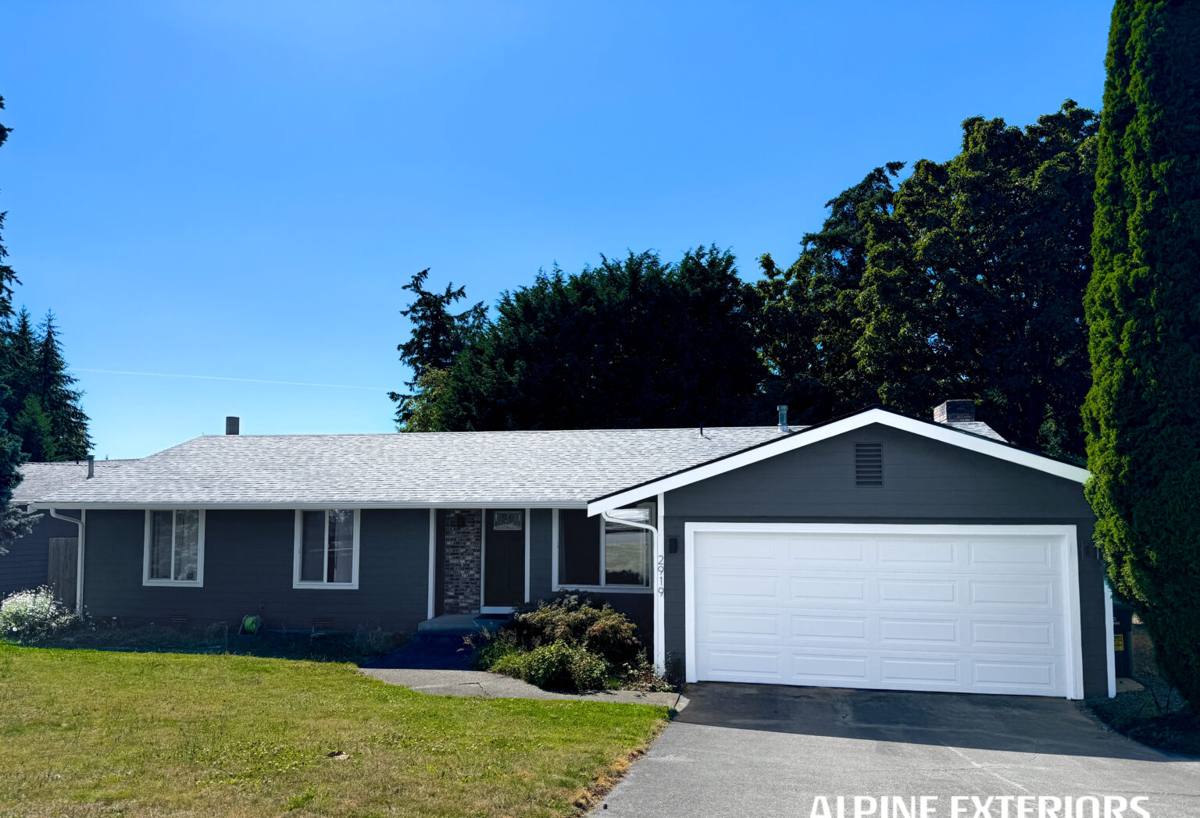
What Local Homes Actually Need From Their Siding
Given all of that, siding in Mount Vernon has a specific job to do: shed wind-driven rain instead of absorbing it, resist swelling and softening from repeated wet-dry cycles, hold a factory finish that doesn't chalk or fade under UV and damp exposure, and stay clean-looking without constant pressure washing or repainting. A lot of siding materials can do one or two of those things. Very few do all four well, year after year, in this climate.
Why We Install Only James Hardie Fiber Cement
We standardized on James Hardie fiber cement for every project we take on, including here in Mount Vernon. It's a non-combustible, cement-and-cellulose composite that doesn't absorb water the way wood-based products do, and it's engineered specifically for regional climates rather than sold as a one-size-fits-all product.
ColorPlus Technology
Hardie's ColorPlus finish is baked on at the factory in multiple coats, which gives it far better fade and moisture resistance than field-applied paint. In a climate where a fresh paint job can start looking tired within a few years, a factory finish that's engineered to outlast site-applied coatings is a real advantage, not a marketing line.
HZ5 Engineering for the Pacific Northwest
Hardie manufactures its siding in different formulations for different climate zones. The HZ5 line is built for regions with more moisture and freeze-thaw cycling, which matches Skagit County's conditions closer than a generic national product would. We use the climate-matched product line rather than whatever happens to be cheapest to stock.
Warranty That Actually Transfers
Hardie backs its products with a long, transferable non-prorated warranty on the siding itself, plus a separate warranty on the ColorPlus finish. That matters to homeowners who plan to sell within the warranty period, and it reflects a manufacturer that's confident the product will still be performing decades from now.
Fiber Cement vs. Other Siding Options in This Climate
We get asked fairly often why we don't offer vinyl, LP SmartSide, or cedar as alternatives. Here's an honest look at how the main options stack up for a wet, moss-prone, salt-influenced climate like ours.
| Material | Moisture Behavior | Moss/Mildew Resistance | Maintenance | Typical Lifespan |
|---|---|---|---|---|
| James Hardie Fiber Cement | Does not absorb or swell; dimensionally stable when wet | Dense, factory-finished surface resists buildup | Occasional rinse; no repainting for many years | 30+ years with proper install |
| Vinyl | Doesn't rot but expands/contracts with temperature; can warp or gap | Smooth surface but seams and laps trap grime | Low, but panels can crack or fade over time | 20-30 years, variable |
| LP SmartSide / Engineered Wood | Wood-strand core is sensitive to sustained moisture exposure | Vulnerable at cut edges and seams if not sealed | Requires diligent caulk and paint upkeep | Highly dependent on installation and maintenance |
| Cedar / Primed Spruce | Natural wood; absorbs moisture, swells and shrinks seasonally | Prone to moss and mildew in shaded, damp areas | Regular repainting/staining and moss treatment needed | Shorter without intensive upkeep |
This isn't a claim that other products are junk — vinyl and engineered wood both have legitimate uses and plenty of homes carry them without issue. It's that in a climate that stacks driving rain, salt air, and a long moss season on top of each other, we've made fiber cement our standard because it holds up with less maintenance burden and fewer moisture-related failure points over the long haul.
What Correct Fiber Cement Installation Involves
Fiber cement is only as good as the installation behind it. A lot of the siding problems we see on older homes trace back to installation shortcuts, not the material itself.
Clearance and Flashing
Siding needs proper clearance above roof lines, decks, and grade, plus correctly lapped flashing at windows, doors, and any wall penetration. Skip these details and wind-driven rain finds its way behind the siding regardless of how good the panel itself is.
Fastening Pattern
Hardie specifies fastener type, spacing, and placement for a reason — get it wrong and you risk cracking at fastener points or panels that aren't secured well enough to handle wind loads common to this area.
Joint and Caulk Detailing
Butt joints, corners, and trim transitions need the right sealants and gaps, sized to allow for expansion without letting water in. Over-caulking is as much a problem as under-caulking — it can trap moisture instead of shedding it.
Rainscreen and Drainage Plane
A drainage gap behind the siding lets any incidental moisture that does get past the cladding dry out instead of sitting against the sheathing. In a climate this wet, that detail is not optional.
Our Process for Mount Vernon Projects
- On-site inspection of existing siding, sheathing, and trim to identify moisture damage before it's covered up
- Product and color selection from Hardie's ColorPlus lineup, matched to the home's exposure and HOA or neighborhood context where relevant
- Removal of old siding with a check of the wall assembly underneath, addressing any rot or water intrusion found
- Installation of house wrap or drainage plane, flashing, and fiber cement panels to manufacturer spec
- Final walkthrough covering caulking, trim details, and cleanup before we consider the job done
Signs Your Current Siding Needs Attention
- Persistent moss or dark streaking on north- or west-facing walls that returns soon after cleaning
- Paint that's peeling, bubbling, or chalking heavily rather than just fading evenly
- Soft or spongy spots when you press on siding, especially near the bottom courses or window trim
- Visible warping, cupping, or gaps opening up between panels or at seams
- Rising energy bills alongside drafts near exterior walls, which can point to a failing weather barrier behind the siding
- Siding that's original to a home built more than 20-25 years ago and has never been fully inspected
Maintenance After Installation
Fiber cement isn't maintenance-free, but it asks much less of you than wood or engineered wood siding. An occasional gentle rinse to clear pollen, moss spores, and road grime keeps it looking clean, and because the ColorPlus finish is factory-cured rather than field-applied, you're not looking at a repaint cycle every few years just to keep up appearances. Caulking and trim paint at cut edges are the main things worth checking periodically, particularly on walls that stay shaded and damp through the wet months.
Why Local Experience in Mount Vernon Matters
Siding crews who work Skagit County regularly know which walls on a given lot orientation tend to hold moisture, how far to run flashing details given the wind and rain patterns here, and which product lines actually perform versus which ones just look good on a spec sheet. That local pattern recognition shows up in the small decisions made on-site — where to add extra flashing, how tight to run a caulk joint, which trim details need reinforcing — that don't show up on a materials list but make the difference between siding that lasts and siding that doesn't.
If you're weighing siding options for a home in Mount Vernon, we're happy to take a look and give you a straightforward, no-pressure estimate — no obligation, just an honest read on what your home needs.