 Anacortes
 Building Decks for Skyline's Exposed, Waterfront Setting
Skyline sits among the more exposed pockets of Anacortes — elevated, view-oriented lots on Fidalgo Island that catch wind and salt spray straight off the water for much of the year. That's part of what makes the neighborhood desirable, but it's also exactly the kind of exposure that shortens the life of a deck built without it in mind. A deck design that works fine in a sheltered inland yard can fail early here — cupped boards, rusted fasteners, soft ledger connections — simply because it wasn't built for the site conditions.
We build custom decks specifically for homes in this part of Anacortes, and we design around the realities of the site: driving wind-driven rain, salt-laden air, and a long stretch of the year where surfaces stay damp and shaded. This page covers what that actually means for materials, framing, and maintenance if you're planning a deck in Skyline.
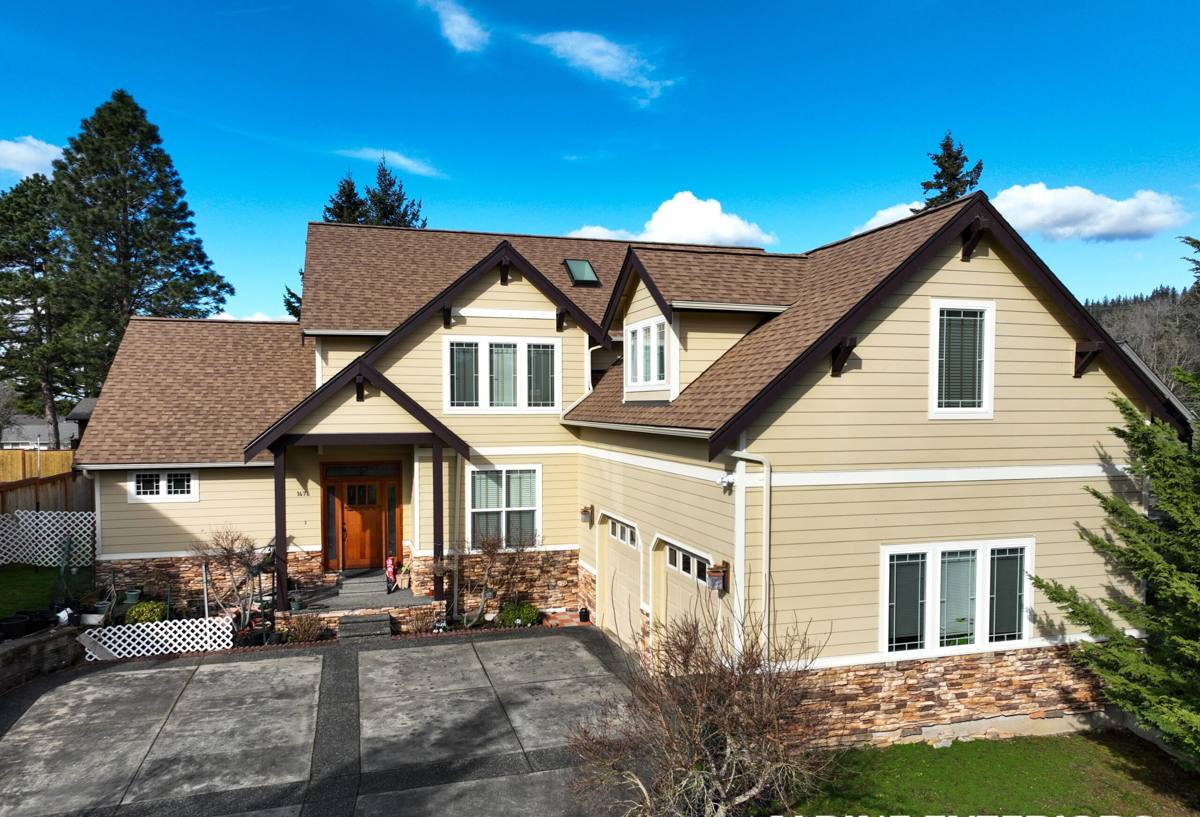
What Salt Air, Rain, and Moss Actually Do to a Deck
Coastal exposure doesn't damage a deck all at once — it works on it steadily, in a few specific ways:
- Salt air accelerates corrosion. Standard galvanized fasteners and hardware can start rusting years before they should on an exposed, view-facing lot.
- Wind-driven rain gets under things. Flashing, ledger connections, and board gaps that would stay dry in a calmer yard take on more moisture here, more often.
- Shaded, damp surfaces grow moss and algae. Skagit County's long wet season gives moss months to establish on decking, stair treads, and railings — and moss holds moisture against the wood or composite surface, which speeds up wear underneath it.
- Freeze-thaw cycles stress joints. We don't get the deep freezes of inland climates, but repeated damp-cold-thaw cycling still works on fasteners and connections over time.
None of this means a deck can't hold up well in Skyline — it means the build has to account for these conditions from the framing up, not just at the surface.
What a Correctly Built Deck Involves Here
Ledger Attachment and Flashing
The ledger board — where the deck attaches to the house — is the single most common source of long-term deck failure, and it matters more in a wet, wind-exposed climate. Proper flashing (not just caulk) directs water away from the house band joist instead of trapping it against the structure. This is not a place to cut corners, and it's not visible once the deck is finished, which is exactly why it's worth asking about.
Fasteners and Hardware
On an exposed, salt-air site, we use fasteners and structural hardware rated for coastal or corrosive environments rather than standard galvanized options. It costs a bit more up front and it's invisible in the finished deck, but it's the difference between hardware that's still sound in fifteen years and hardware that's staining and weakening in five.
Framing and Footings
Footing depth and spacing need to account for our regional frost line and, on sloped or view lots common in Skyline, for grade changes and drainage. Joists and beams sized correctly for span and spacing keep the deck from developing bounce or sag over time — a problem that shows up faster when lumber is cycling through repeated damp-dry conditions.
Drainage Under and Around the Deck
Water needs a clear path off the deck surface and away from the house foundation. On grade-sloped Skyline lots, that sometimes means grading or drainage work below the deck itself, not just gutters and downspouts nearby.
Choosing Decking Material for a Skyline Lot
There's no single "best" decking material — the right choice depends on how much upkeep you want to take on, your budget, and how exposed your particular lot is. Here's how the common options compare for a coastal Anacortes setting specifically:
| Material | Upfront Cost | Maintenance | Salt Air / Moisture Behavior | Typical Lifespan |
|---|---|---|---|---|
| Pressure-treated wood | Lowest | Annual cleaning and periodic re-staining/sealing | Performs well if sealed and maintained; neglect shows quickly in this climate | 10–15 years with upkeep |
| Cedar | Moderate | Regular sealing to maintain color and resist moisture | Naturally rot-resistant, but exposed grain still needs upkeep near salt air | 15–20 years with upkeep |
| Composite decking | Higher | Occasional washing, no staining/sealing | Doesn't absorb moisture like wood; some early composite products had issues with mold in shaded, damp spots — modern capped composites handle this much better | 25–30 years |
| PVC decking | Highest | Lowest — washing only | Fully moisture-resistant, unaffected by salt air; the most maintenance-free option for exposed lots | 30+ years |
For a lot with heavy wind or spray exposure, we usually steer homeowners toward composite or PVC for the deck surface itself, while framing underneath is still typically pressure-treated lumber — the structural wood is protected from direct weather once the deck is built, so it doesn't carry the same exposure concerns as the walking surface.
Railings, Stairs, and Fasteners: Where Corrosion Shows First
If a deck is going to show its age early, it usually starts at the railings and stair hardware — the parts most directly exposed to wind and rain, and the parts homeowners touch and look at most. Metal railing components and exposed screws are where we pay closest attention to corrosion-resistant hardware, because this is where rust stains and loosening connections become visible (and become a safety issue) long before the rest of the structure shows wear.
How We Approach a Skyline Deck Project
1. On-Site Assessment
We look at the specific exposure of your lot — how much direct wind and spray it gets, how much shade it holds through the day, existing drainage patterns, and grade. Two homes a few blocks apart in Skyline can have meaningfully different exposure, so we don't design from a generic template.
2. Design and Material Selection
We walk through decking material, railing style, and layout with you, being direct about the maintenance trade-offs of each option rather than just upselling the most expensive one. Budget matters, and the right answer is different for a weekend cabin than for a full-time residence.
3. Permitting
Most deck construction in the City of Anacortes requires a building permit, and elevated decks or those near property lines or critical areas can involve additional review. We handle this as part of the project rather than leaving it for the homeowner to sort out separately.
4. Construction
Ledger flashing, footings, framing, decking, and railing are built in that order with inspection points along the way — not compressed into a rush job. We don't cover up framing or flashing work before it's been done right.
5. Final Walkthrough
Before we consider the job finished, we walk the deck with you — railings, stairs, drainage, and finish — and go over basic maintenance for whatever material you chose.
Living With a Deck Through Anacortes' Moss Season
Skagit County's damp, low-light stretch of the year is long, and moss doesn't need much encouragement to take hold on a shaded deck surface. A few habits go a long way regardless of material:
- Sweep debris and standing organic matter off the deck surface regularly through fall and winter — it's what moss and algae actually feed on.
- Keep gutters and downspouts clear so water isn't sheeting directly onto the deck.
- Wash the surface at least once a year with a deck-safe cleaner; pressure washing wood decking too aggressively can damage the grain, so lower pressure and the right nozzle matter.
- Check railing posts and stair connections annually for looseness — often the first sign of a fastener or connection issue, well before it becomes a safety concern.
- Reseal wood decking on the schedule the product calls for — skipping a year in this climate tends to show.
Why Hiring a Crew That Already Works in Skyline Matters
A deck built by a crew unfamiliar with coastal Skagit County conditions can look fine on completion day and still be under-built for the site — standard hardware where corrosion-resistant hardware was needed, flashing details sized for a calmer climate, or a decking material chosen without accounting for how much wind and spray a particular lot actually sees. Problems like these don't show up in the first year. They show up in year five or eight, as repair costs.
Working regularly in this specific neighborhood also means we already understand Anacortes' permitting process, typical grade and drainage conditions on view lots in the area, and which material and hardware choices hold up versus which ones look good on day one and struggle by year five. That's not something a crew can fully replicate on a first project in an unfamiliar area.
What to Look for in a Correctly Built Deck
Whether you're evaluating our work or getting a second opinion on an existing deck, these are reasonable things to check:
- Ledger board has proper flashing, not just caulk, where it meets the house
- Fasteners and structural hardware are rated for coastal/corrosive exposure, not standard galvanized
- Footings are sized and spaced appropriately for the deck's height and load
- Decking material was chosen with your lot's actual wind and moisture exposure in mind, not a one-size-fits-all default
- Railings and stairs meet current code height and spacing requirements
- Drainage under and around the deck directs water away from the foundation
- A permit was pulled where required, with inspections completed
If you're planning a new deck or replacing one that hasn't held up to a few Anacortes winters, we're glad to take a look and talk through honest options for your lot — no pressure, no upsell. Use the form below to request a free estimate.