 Anacortes
 Decks on Similk Bay Take a Different Kind of Beating
Similk Beach sits right on the water, and that changes what a deck has to survive. Homes a few miles inland in Anacortes deal with plenty of rain, but a deck facing Similk Bay is also getting salt-laden air off the water almost year-round. That salt air works its way into fastener heads, hardware, and any exposed end grain, and it doesn't take a break in the winter months. Add in the driving rain that comes with Skagit County storms — often blown sideways off the water rather than falling straight down — and you've got moisture finding its way into joints and connections that a inland deck would rarely see.
Then there's moss. Anacortes has a long, damp moss season, and a shaded or north-facing deck near the water can stay wet for days after a storm passes. Moss and algae hold moisture against the decking surface, which accelerates rot in wood and can make composite or even textured PVC surfaces slick and slippery underfoot. None of this means a deck at Similk Beach can't last — it means it has to be built with these specific conditions in mind, not built the same way you'd build one on the east side of the county.
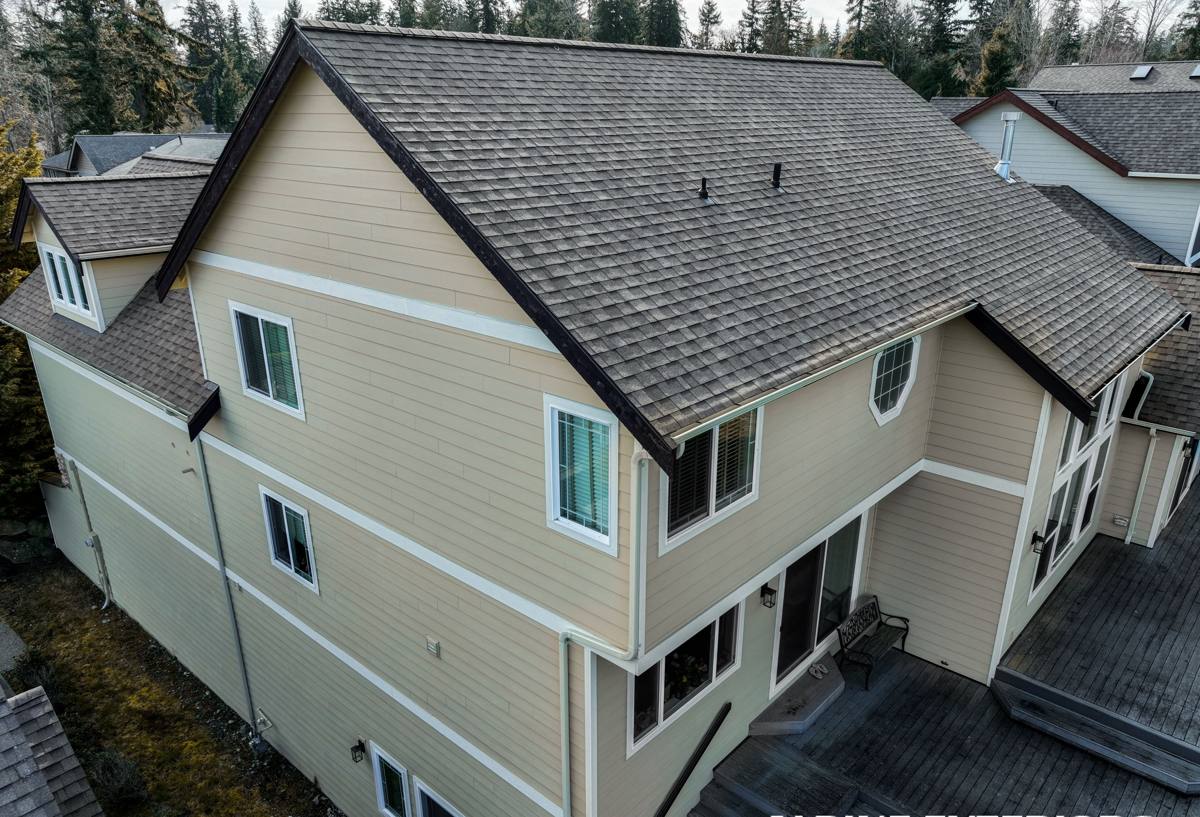
Signs a Similk Beach Deck Needs Replacement, Not Just Repair
Not every deck problem calls for a full tear-off. But when the structure itself — not just the surface boards — has been compromised by years of salt air and moisture, patching becomes a short-term fix at best. Here's what we look for during an assessment:
- Soft or spongy spots in the decking boards, especially near the house or in shaded corners where moisture lingers
- Rust streaking or corrosion around fastener heads and metal connectors — a strong sign salt air has been working on the hardware
- A ledger board (where the deck attaches to the house) that's soft, discolored, or separating slightly from the siding
- Wobble or give in the railing posts, which often points to rot in the framing below, not just a loose railing
- Persistent moss or algae staining that keeps coming back no matter how often the surface is cleaned
- Joists or beams that show rot at the ends or where they contact concrete footings
If the framing underneath is sound and it's really just the surface boards showing wear, a resurfacing or board replacement can make sense. If the structure itself is compromised, replacement is the honest recommendation — patching over failing framing just delays a bigger repair later.
Why Ledgers and Framing Fail First Near the Water
The ledger board is usually the first thing to go on a shoreline deck. It sits directly against the house, and if the flashing behind it isn't doing its job, water gets trapped between the ledger and the siding with nowhere to dry out. Combine that with salt-laden moisture in the air and you get accelerated rot in a spot that's hard to inspect without pulling boards. This is one of the main reasons we recommend a full evaluation of the structure, not just the visible decking, before deciding what a project actually needs.
What a Correct Deck Replacement Looks Like Here
A deck replacement done right for a Similk Beach property isn't just swapping old boards for new ones. It starts from the ground up:
- Footings and posts: checked or replaced as needed, especially on sloped waterfront lots where drainage and soil movement are bigger factors than on a flat inland lot
- Framing: joists and beams sized correctly for the deck's span and load, using fasteners and connectors rated for the corrosion exposure this location sees
- Ledger flashing: proper flashing and a water-shedding detail where the deck meets the house, since this is the single most common failure point near the water
- Joist protection: a moisture barrier or joist tape over framing members to slow down the rot cycle before decking ever goes down
- Hardware: stainless steel or coated fasteners and connectors appropriate for salt air exposure, not standard interior-grade hardware
- Decking and railing: material selected with the homeowner based on maintenance tolerance, budget, and how much shade and moss exposure the specific deck location gets
Skipping any one of these to save a day of labor is exactly how a deck ends up needing replacement again in eight years instead of twenty-five.
Choosing Decking Material for a Similk Beach Property
There's no single "best" decking material — it depends on how much maintenance a homeowner wants to do and how exposed the deck is to moss and moisture. Here's how the common options actually compare in this specific climate:
| Material | How It Handles Salt Air & Moisture | Moss/Algae Behavior | Maintenance |
|---|---|---|---|
| Pressure-treated wood | Holds up reasonably well if sealed and maintained; end cuts and fastener holes are vulnerable points | Prone to staining if not cleaned and resealed regularly | Annual cleaning and resealing recommended |
| Cedar | Naturally rot-resistant but still needs sealing near saltwater exposure | Can gray and stain if left untreated in shaded areas | Periodic sealing to maintain appearance and protection |
| Capped composite | Excellent — doesn't absorb moisture or corrode like wood | Can develop a slick film in shaded, wet spots; needs periodic washing | Low — occasional washing, no sealing or staining |
| PVC decking | Excellent — fully synthetic, unaffected by salt or rot | Same as composite; smooth or textured finish affects grip when wet | Low — washing only |
For a deck that gets regular shade and moisture off the bay, we typically steer homeowners toward capped composite or PVC for the walking surface, since the maintenance burden of resealing wood every year in this environment adds up fast. That said, some homeowners prefer the look and feel of real wood and are willing to keep up with the maintenance — that's a legitimate choice too, as long as it's made with eyes open about the upkeep involved.
A Note on Railings and Hardware
Railings and their connecting hardware take the same salt-air punishment as the structure below. We match railing hardware and fasteners to the same corrosion-resistance standard as the framing — mixing high-end decking with budget-grade hardware is one of the more common shortcuts that leads to early failure right at the connection points.
Our Process for a Similk Beach Deck Replacement
- On-site assessment: we inspect the existing deck's framing, ledger, footings, and hardware — not just the surface — to determine what's actually driving the failure
- Honest scope and estimate: we tell you plainly whether you need a full replacement or a more limited repair, and what each option costs and how long each should last
- Permit check: we confirm what Skagit County and City of Anacortes permitting requires for the project, including any considerations specific to waterfront or shoreline-adjacent lots
- Tear-off and structural rebuild: old decking and any compromised framing come out, footings and posts are addressed, and the frame is rebuilt to current code
- Decking, railing, and hardware installation: using the material and fastener choices agreed on upfront, matched to the deck's actual sun and moisture exposure
- Final walkthrough: we go over the finished deck together, including basic maintenance guidance specific to the material installed
Permits and Site Considerations Near the Water
Deck replacements at or above a certain size, height, or that involve structural changes typically require a permit through Skagit County or the City of Anacortes, depending on exactly where the property falls. Waterfront and shoreline-adjacent properties can also carry additional review depending on setback and critical areas regulations. We handle the permit conversation as part of the process rather than leaving homeowners to sort it out — it's a normal part of doing the work correctly, not an extra hurdle.
Sloped lots common around Similk Bay also affect footing depth and placement, and drainage under and around the deck needs to be planned so water isn't channeled back toward the house foundation. These are the kind of details that get missed on a deck built without local, site-specific experience.
Keeping a New Deck in Good Shape
Whatever material you choose, a little regular upkeep goes a long way in this climate. A basic seasonal routine we recommend to homeowners:
- Sweep off leaves and debris regularly, especially in fall and winter when moss growth accelerates
- Rinse the deck surface periodically to keep salt residue and organic buildup from settling in
- Check fastener heads and railing connections once a year for early signs of rust or corrosion
- Keep gutters and downspouts near the deck clear so runoff isn't draining directly onto or under it
- For wood decking, plan on resealing on the schedule recommended for the specific product used
- Trim back vegetation that's shading the deck and keeping it damp longer than necessary
Why a Local Crew Matters for This Job
A deck built without accounting for salt air, shoreline drainage, and Anacortes's moss season tends to show problems within a few years, even if it looks fine on installation day. A crew that regularly works Similk Beach and the surrounding shoreline neighborhoods already knows which fastener grades hold up, which ledger details actually keep water out, and how local permitting works for waterfront-adjacent lots — that's knowledge that comes from doing this specific work in this specific place, not from a general framing background alone.
If your deck is showing soft spots, rust staining, or persistent moss, or if it's simply reaching the age where the structure needs a real evaluation, we're happy to take a look. Reach out for a free, no-pressure estimate using the form below — we'll give you a straight assessment of what your deck actually needs.