 Anacortes
 Flounder Bay's Roofs Work Harder Than Most
Flounder Bay sits right on the water at the edge of Anacortes, and that waterfront position is a mixed blessing when it comes to your roof. The same exposure that gives these homes their view also means the roof takes a steady diet of salt-laden air, wind-driven rain coming off Rosario Strait and the surrounding waters, and long stretches of gray, damp weather that never quite lets a roof fully dry out. Add in the tree cover that's common around Skagit County neighborhoods, and you've got the three biggest enemies of an asphalt shingle roof working on the same house at the same time: salt, moisture, and moss.
None of that means asphalt shingles are the wrong choice for Flounder Bay — they're still the most practical, cost-effective roofing material for the vast majority of homes here. It means the installation has to account for the environment instead of following a generic playbook. A shingle roof put on the same way you'd do it in a dry inland climate will show its age in Flounder Bay years before it should.
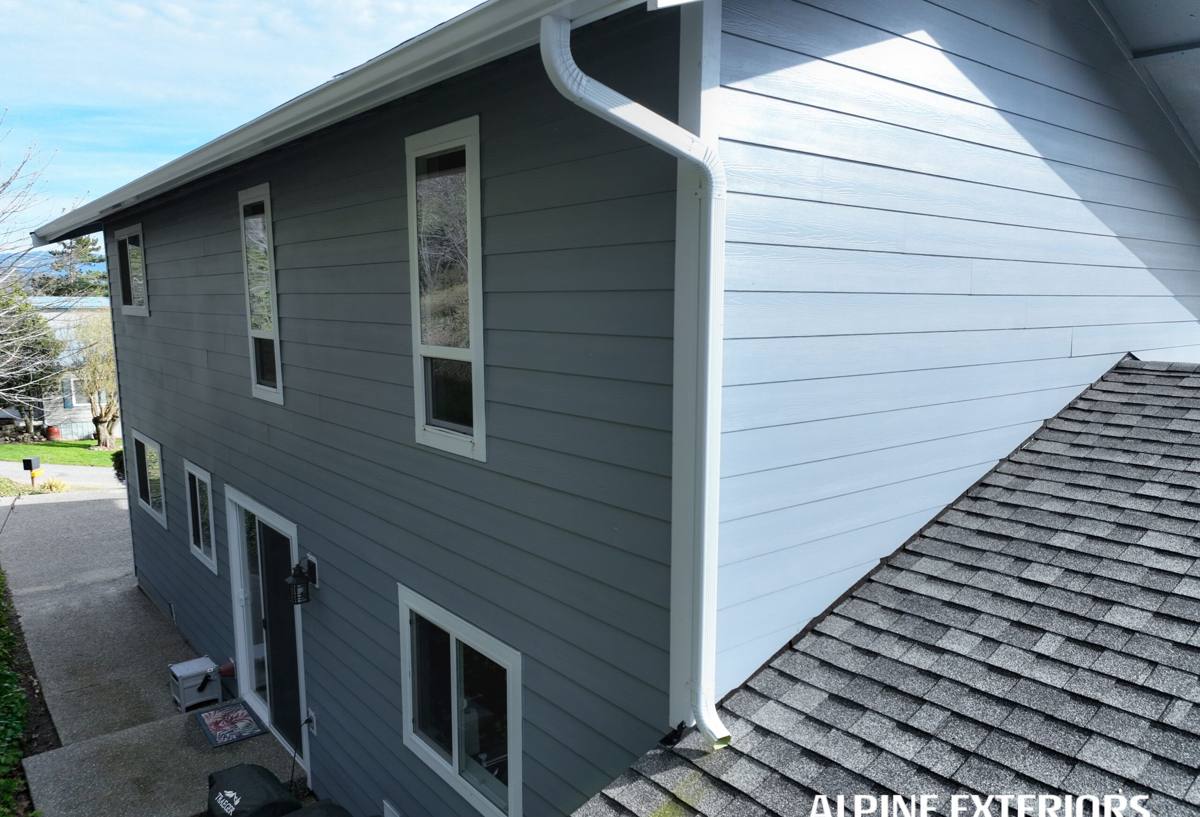
What Salt Air, Rain, and Moss Actually Do to a Shingle Roof
Salt Air
Airborne salt doesn't just sit on the surface — over years it works into metal flashing, fasteners, and vent components, accelerating corrosion. On a roof close to the water, that shows up first at the small metal details: rusting nail heads bleeding through shingles, pitted flashing around chimneys and vents, and corroded gutter hardware. The shingles themselves hold up reasonably well against salt, but everything metal around them is under more stress than it would be a few miles inland.
Driving Rain
Anacortes doesn't get the heaviest rainfall totals in Western Washington, but wind-driven rain off the water finds every weakness in a roof that a straight-down rain never would. Water gets pushed sideways and upward under shingle edges, around chimneys, and into valleys. That's why flashing detail and underlayment quality matter more here than the shingle brand printed on the wrapper.
Moss and Algae
Between the moisture and the shade many Flounder Bay lots have from mature trees, moss and algae growth is close to a certainty over time, not a maybe. Moss holds moisture against the shingle surface, lifts shingle edges as it grows, and shortens the life of the roof if it's left unaddressed. Black streaking from algae is mostly cosmetic, but heavy moss growth is a real durability problem.
Signs a Flounder Bay Roof Needs Attention
Because the wear pattern here is different than inland, the warning signs are often different too. Homeowners in this area should watch for:
- Moss clumps or a green-black film building up along the shaded, north-facing slopes of the roof
- Rust streaks running down from nail heads, flashing, or metal vents
- Granules collecting in gutters or at downspout outlets, especially after wind events
- Soft spots or discoloration on interior ceilings near exterior walls, which often trace back to wind-driven rain intrusion rather than a simple leak
- Lifted or curling shingle edges along the roof's windward side
- Corroded or loose gutter fasteners and flashing seams
Any one of these on its own might not mean an urgent problem. Several showing up together, especially on a roof past the 15-year mark, usually means it's worth a real inspection rather than a patch job.
What a Correct Installation Involves Here
A shingle roof is only as good as the layers underneath it, and in a marine climate like this those layers do more of the actual waterproofing work than people assume. A properly done job for a Flounder Bay home includes:
Tear-Off and Deck Inspection
We remove the old roofing down to the deck rather than layering over it. That's the only way to actually see the plywood or sheathing underneath — in a damp climate, hidden rot under an old roof is common, and it has to be found and replaced before new material goes down, not discovered later as a leak.
Ice and Water Barrier at Vulnerable Points
Eaves, valleys, and any low-slope transitions get a self-adhered waterproof membrane underneath the underlayment. This is the single biggest defense against wind-driven rain finding its way under the shingles at the roof's most exposed edges.
Flashing That's Actually Rated for the Environment
Chimney flashing, step flashing along walls, and vent boots get corrosion-resistant materials and fasteners, not the cheapest option available. Given how hard salt air is on ordinary metal here, this is one place we don't cut corners regardless of the shingle chosen.
Ventilation That Matches the Home
Balanced intake and exhaust ventilation keeps moisture from building up in the attic, which both protects the deck from the inside and helps the shingles themselves last their expected lifespan. A roof that looks fine on top but is trapping moisture underneath will fail early regardless of shingle quality.
Correct Nailing and Exposure
Manufacturer nailing patterns exist for a reason, and in a windy coastal spot like Flounder Bay, following them exactly — right nail count, right placement, right depth — is what keeps shingles attached in a real windstorm instead of peeling off in strips.
Choosing a Shingle for This Environment
Not every asphalt shingle product performs the same way in salt air and heavy moss pressure. Here's how the common tiers stack up for a home in this setting:
| Feature | Standard 3-Tab | Architectural (Dimensional) | Algae-Resistant / Impact-Rated |
|---|---|---|---|
| Typical lifespan here | 12–18 years | 20–30 years | 25–30+ years |
| Wind resistance | Lower | Higher | Highest |
| Moss/algae resistance | None built in | Varies by line | Copper or zinc granules built in |
| Upfront cost | Lowest | Moderate | Higher |
| Best fit for Flounder Bay | Budget projects, less shaded lots | Most homes here | Heavily shaded or wind-exposed lots |
For most Flounder Bay homes, we recommend architectural shingles at minimum, and algae-resistant versions for lots with significant tree shade or a north-facing roof plane. The upfront cost difference is modest compared to the cost of dealing with moss removal and early replacement down the road.
Our Process for Flounder Bay Projects
Waterfront and marina-adjacent properties often have practical details that a standard job doesn't — narrower access, boats or docks nearby, landscaping close to the house, and sometimes shared or private road access. We walk each property before quoting so there are no surprises on install day. In general, our process looks like this:
- On-site inspection of the current roof, deck condition, ventilation, and any problem areas specific to the property
- A written estimate that spells out material choice, scope of work, and timeline in plain language
- Protecting landscaping, walkways, and any nearby structures before tear-off begins
- Full tear-off, deck inspection and repair as needed, and disposal of old material
- Installation of underlayment, ice and water barrier, flashing, ventilation, and shingles per manufacturer specification
- Final walkthrough and cleanup, including a magnetic sweep for stray fasteners
We don't quote a job sight unseen, and we don't ask for full payment before the work is done. If a roof needs deck repair that wasn't visible from the ground, we tell you before we proceed, not after the invoice arrives.
Maintenance That Actually Matters After Installation
A new roof in Flounder Bay isn't maintenance-free just because it's new. A few habits go a long way:
- Keep gutters clear — clogged gutters push water back under the shingle edge during heavy rain
- Trim back overhanging branches where possible to reduce shade and debris buildup
- Have moss treated before it takes hold rather than after it's established across a slope
- Get a roof looked at after any significant windstorm, even if nothing looks obviously wrong from the ground
- Schedule a general inspection every few years, not just when a leak shows up
Why Local Experience Matters Here
Anacortes and the rest of Skagit County have their own permitting requirements, wind exposure considerations, and inspection standards, and they're not identical to what applies elsewhere in Western Washington. A crew that regularly works in and around Flounder Bay already knows the practical realities of the area — how the wind typically hits a given roof orientation, which details tend to fail first on waterfront homes, and how to plan around tighter or shared access without turning a routine reroof into a hassle for the homeowner. That local familiarity isn't a guarantee of a better outcome by itself, but it does mean fewer surprises and fewer guesses.
If you're weighing whether your current roof needs repair, moss treatment, or full replacement, we're happy to take a look and give you a straight answer — including telling you if a smaller repair will hold you over rather than pushing a full reroof you don't need yet. Reach out for a free, no-pressure estimate using the form below.