 Anacortes
 Why Bow Homes Need a Roof Built for This Exact Climate
Bow sits close enough to Samish Bay and the Skagit County shoreline that salt-laden air is a constant, quiet stressor on any exposed metal, fastener, or painted surface. Add in the long, wet stretch of fall through spring that Skagit County sees every year, and you've got a combination that punishes roofing systems that weren't specified with this environment in mind. Driving rain off the water doesn't just fall straight down here — wind pushes it sideways under lap joints and around penetrations that would stay dry in a more sheltered inland location. Then there's moss. Bow's tree cover and shade patterns, combined with months of damp conditions, create a moss season that can run nearly year-round on north-facing slopes and shaded valleys.
A metal roof that's installed correctly handles all three of these pressures well. A metal roof that's installed with shortcuts — wrong fastener spacing, missing underlayment detailing, poor flashing at transitions — will show problems within a few winters, usually right where you can't see them until water's already inside the wall or attic assembly.
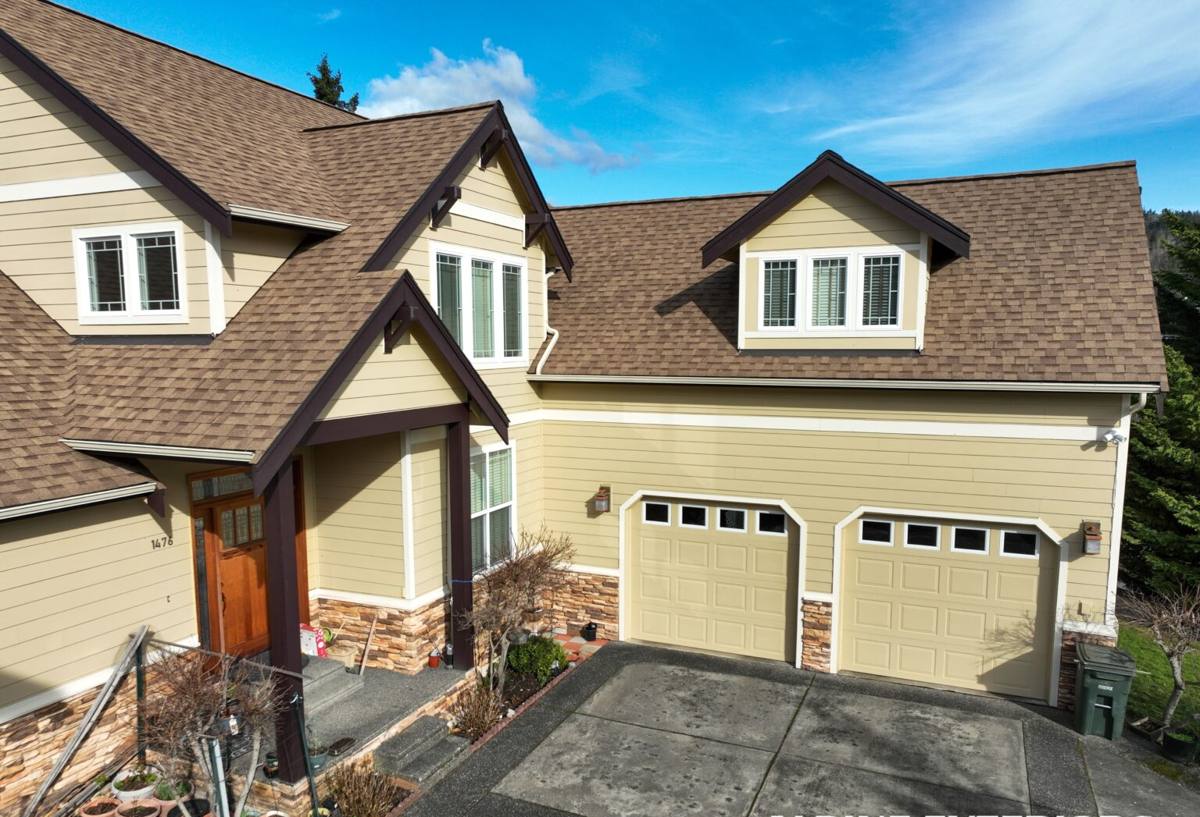
What "Correct" Actually Means on a Metal Roof Install
Metal roofing looks simple from the ground: panels, seams, done. The part that determines whether it lasts twenty years or leaks in five happens underneath and at the edges, not in the field of the panel itself.
Underlayment and Moisture Barrier
Metal panels are not, by themselves, a complete waterproofing system — they're the outer shell. Underneath needs a synthetic underlayment (or, in ice- and condensation-prone areas, a self-adhered membrane at eaves and valleys) that's rated to handle any moisture that gets past the panel seams over time. In a climate like Bow's, with sustained damp periods rather than short storms, skipping or skimping on this layer is one of the most common causes of slow, hidden rot.
Fastening and Panel Attachment
Exposed-fastener panels rely on screws with rubber washers seated correctly and torqued to spec — too loose and they leak, too tight and the washer splits and stops sealing. Standing seam systems use concealed clips instead of through-panel screws, which removes that failure point entirely but requires more precise layout and installation. Salt air accelerates corrosion on any fastener or clip that isn't rated for coastal exposure, so material selection here matters as much as the labor.
Flashing at Every Transition
Valleys, chimneys, skylights, sidewall intersections, and roof-to-wall transitions are where the vast majority of roof leaks actually originate, on metal roofs and every other type. Flashing has to be formed, lapped, and sealed in the correct order — installed after the field panels in some spots, before them in others — so that water is always directed downhill and off the roof, never trapped behind a lap.
Ventilation
A sealed, tight metal roof over a poorly ventilated attic traps moisture from the inside. Ridge and soffit ventilation sized correctly for the roof keeps condensation from forming on the underside of the deck, which matters just as much in our climate as keeping rain out from above.
Metal Roofing Material Options for Coastal Skagit County Conditions
| Material | Coastal Salt-Air Performance | Moss Resistance | Typical Lifespan |
|---|---|---|---|
| Standing seam steel (Galvalume or painted) | Very good with proper coating; concealed fasteners reduce corrosion points | High — smooth, steep-pitch-friendly surface sheds moss growth | 40-60+ years |
| Exposed-fastener steel panels | Good, but fastener washers are the weak point over time near salt air | Good, with periodic gutter and valley cleaning | 30-45 years |
| Aluminum panel systems | Excellent — naturally corrosion-resistant, a strong fit for shoreline-adjacent properties | High | 40-60+ years |
| Stone-coated steel | Good, coating protects the substrate but installation detailing is more sensitive | Moderate — textured surface can hold organic debris longer | 30-50 years |
For homes closer to the water in and around Bow, we generally steer people toward standing seam steel with a quality coating system, or aluminum where budget allows, specifically because concealed fasteners and corrosion resistance matter more here than they would further inland. That's a professional judgment call based on how these systems actually hold up in salt air over decades, not a knock on other products — exposed-fastener panels are a perfectly good, more affordable option on a covered porch roof or an outbuilding that isn't taking the same direct coastal exposure.
Moss: The Slow-Motion Damage Nobody Notices Until It's Expensive
Moss doesn't just look bad. On a shaded, damp roof slope, it holds moisture against the roof surface far longer than an open, sun-exposed area would dry out on its own. On metal roofs specifically, moss tends to gather where debris collects — valleys, behind chimneys, along the low edge of a shaded slope — and it can hold enough moisture to promote corrosion at seams and fastener points, even on otherwise well-installed systems.
The fix isn't chemical moss killers sprayed on a schedule. It's roof design and maintenance that keeps moss from getting a foothold in the first place:
- Panel and seam layout that avoids unnecessary flat or low-slope transitions where debris and moisture sit
- Keeping overhanging branches trimmed back so shaded areas get more light and airflow
- Clear valleys and gutters going into fall, before the wet season builds up organic debris
- Zinc or copper strips at the ridge on roofs with a known heavy moss history, which release trace metal ions that discourage regrowth as rain washes over them
- A periodic soft wash rather than pressure washing, which can strip protective coatings and force water under seams
Our Process for a Bow Metal Roof Install
We start with an on-site look at the existing roof, not just measurements. That means checking deck condition, ventilation, current flashing details, and how the roof has actually been performing — where moss collects, where the previous roof (if there was one) showed wear, and how the house sits relative to prevailing wind and rain direction. That last part matters more in Bow than in a more sheltered part of Skagit County, because it changes where we prioritize sealed detailing versus standard lap coverage.
From there:
- Deck inspection and any necessary repair or replacement before anything goes down
- Underlayment installed to spec for the specific roof pitch, exposure, and material chosen
- Panel or system installation with fastening and seam method matched to the manufacturer's requirements and the site's wind and moisture exposure
- Flashing formed and installed at every valley, penetration, and transition — this is where we spend the most careful attention
- Ventilation checked and corrected if the existing setup is inadequate for the new roof assembly
- Final walkthrough covering care, warranty coverage, and what to watch for over the first year
What a Metal Roof Costs — and What Actually Drives the Number
Pricing on any roofing project depends on more than just square footage. For an accurate number, we need to see the roof in person — but these are the factors that move the price up or down on most Bow projects:
| Factor | Effect on Cost |
|---|---|
| Roof pitch and accessibility | Steeper or harder-to-access roofs take longer and require more safety setup |
| Panel system (exposed-fastener vs. standing seam) | Standing seam costs more upfront but requires less long-term maintenance |
| Existing roof removal vs. overlay | Tear-off adds labor and disposal cost but lets us fully inspect and repair the deck |
| Number of penetrations and transitions | More chimneys, skylights, and valleys mean more flashing labor |
| Underlayment and ice/water barrier upgrades | Coastal exposure and moss-prone areas often justify a heavier moisture barrier package |
| Ventilation corrections | Adding or upgrading ridge/soffit venting adds modest cost but protects the whole assembly |
Broadly speaking, metal roofing costs more upfront than asphalt shingles, and that gap is real — but it's offset by a lifespan that's often two to three times longer and far less maintenance in a climate where moss and moisture are constant pressures.
A Practical Checklist Before You Hire Anyone for a Bow Metal Roof
- Ask what underlayment system they use and why — a specific answer, not a vague "we use good stuff"
- Ask how they handle flashing at valleys and penetrations, and whether that work is done by the same crew installing the panels
- Confirm they carry current Washington contractor licensing and liability insurance, and ask to see it
- Ask about fastener and clip material — coastal exposure calls for corrosion-resistant hardware, not standard-grade
- Ask whether they'll address ventilation as part of the project, not just panels
- Get the warranty structure in writing — material warranty and workmanship warranty are two different things, from two different parties
- Ask for a written scope that specifies tear-off vs. overlay, deck repair terms, and cleanup
Why Local Experience in Bow and Skagit County Matters
A crew that's worked roofs throughout Bow and the surrounding Anacortes area already knows how the wind comes off the water, which slopes hold moss longest through the winter, and which flashing details actually get tested by this specific climate rather than a generic one. That's not marketing — it's the difference between a roof design that looks right on paper and one that's been proven against the actual conditions a Bow home faces every wet season. We're not guessing at how salt air and driving rain behave here; we see it on roofs we've worked on throughout Skagit County.
If you're weighing a metal roof for a home in Bow, we're happy to come take a look and give you a straight assessment — what your roof actually needs, what it doesn't, and a real number to work from. Reach out below for a free, no-pressure estimate.