 Anacortes
 Burlington sits low in the Skagit Valley, close enough to Skagit Bay to pick up salt-laden air on a regular basis and shaded enough on many lots that moss gets a real head start each year. A deck built for a national-average climate doesn't hold up well under those conditions. Fasteners corrode faster than expected, ledger connections trap moisture against the house, and decking that looks fine in a showroom photo can turn slick and green by its second winter. This page covers what a Burlington deck actually needs to hold up here, what correct construction involves, and how we approach a deck build or replacement in this specific corner of Skagit County.
What Burlington's Climate Does to a Deck
Three things drive deck wear in this part of the valley: salt-tinged air moving inland off the bay and the broader Puget Sound system, driving rain that gets pushed sideways by storm fronts rather than falling straight down, and a moss season that runs longer here than in drier parts of the state. None of these cause dramatic failures overnight. They work slowly — corroding fasteners a little at a time, holding moisture against framing members that never quite get a chance to dry out, and building up a moss layer on decking and stair treads that turns a walking surface genuinely slippery.
The ledger board connection, where the deck attaches to the house, is usually where problems start. It's a joint between two structures that sit at different heights, collect water differently, and were often built at different times by different crews. If that connection isn't flashed correctly, water works its way behind the ledger and into the rim joist or wall framing behind it — damage that's invisible from the deck surface until it's advanced. Shaded, north-facing decks and any deck sitting under tree cover see this problem more often, because those areas stay damp longer between storms.
Why a Generic Build Falls Short
Most deck-building guidance and pre-packaged framing hardware is written for an average American climate, not for a valley that stays wet for most of the year. The gap between "meets code in most of the country" and "actually performs in Burlington" shows up in fastener corrosion, ledger rot, and decking that stays damp long after a sunnier lot would have dried. We build to the conditions this specific site sits in, not to a generic spec sheet.
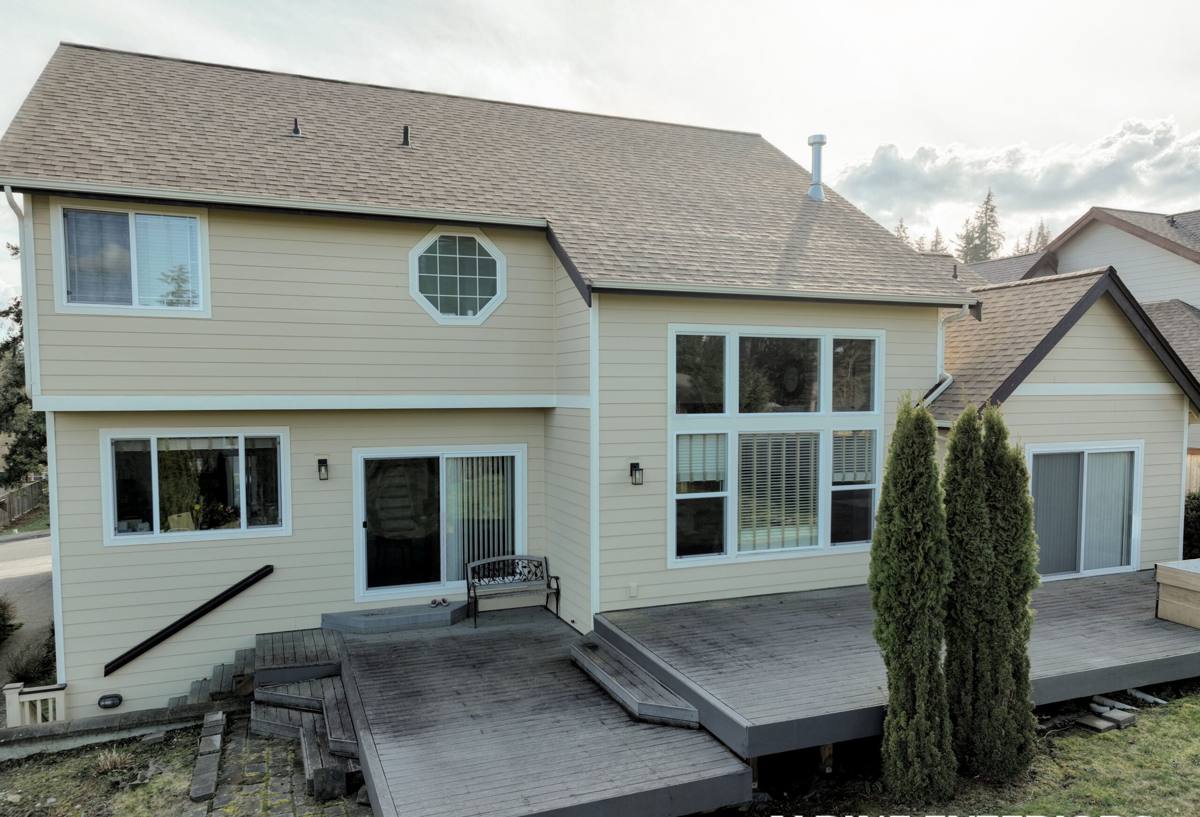
Framing and Ledger Connection: Where the Job Is Actually Won or Lost
The visible decking gets all the attention, but the framing underneath and the ledger connection to the house are what determine whether a deck lasts fifteen years or needs major repair in five. Correct construction here means pressure-treated framing rated for ground contact where it's in contact with soil or persistent moisture, proper joist spacing and blocking for the actual decking material being installed, and post footings sized and set below frost depth and clear of standing water.
Ledger Flashing
The ledger board needs a continuous flashing system — not just caulk — that directs water away from the house band joist rather than letting it pool at the connection. This includes flashing tape or a metal flashing cap integrated with the house's existing water-resistive barrier or siding, sloped washers or spacers where required to keep the ledger slightly off the wall for drainage, and lag bolts or through-bolts rated for the load, not just nails or deck screws. On a shaded or north-facing wall, this detail matters even more, because that section of the house dries out more slowly between rain events.
Fastener and Hardware Corrosion
Salt air accelerates corrosion in exposed metal, and a deck has more exposed metal than almost any other part of a house — joist hangers, structural screws, post bases, and railing hardware are all sitting outside, unprotected, year-round. Using the correct fastener coating for the treated lumber being installed isn't optional here; mismatched metals can corrode each other through galvanic reaction, and undersized coatings fail years before the wood around them does.
Choosing a Decking Surface for a Wet Valley Climate
The surface material is the most visible decision on a deck project, and it's also where homeowners have the most legitimate options. Each material handles Burlington's moisture and moss conditions differently, and there's a real trade-off between upfront cost, appearance, and long-term maintenance in every choice.
| Material | How It Handles Local Conditions | Maintenance Burden |
|---|---|---|
| Pressure-treated lumber | Resists rot when properly maintained, but absorbs moisture and needs regular sealing to keep performing | Higher — annual or biennial sealing, periodic moss and mildew treatment |
| Cedar | Naturally moisture- and insect-resistant, attractive grain, but still an organic material that needs upkeep in a valley climate | Moderate to high — refinishing and moss control to keep it looking and performing well |
| Composite decking | Doesn't absorb moisture the way wood does, resists moss growth better on shaded sections, holds up well to salt air | Lower — occasional cleaning, no sealing or staining required |
We don't push one material on every homeowner. A cedar deck with proper upkeep can look excellent for years, and plenty of Burlington homeowners are willing to put in that maintenance for the look of real wood. What we do insist on is being honest about the upkeep each option actually requires in this climate before you commit, rather than letting a showroom sample make the decision for you.
Railings and Stairs: The Details That Get Overlooked
Railings and stair stringers see the same salt air and moisture exposure as the deck surface, but they're often built with lighter-duty hardware because they carry less structural load. That's a mistake in this climate. Railing posts need to be through-bolted to framing, not just screwed to the rim joist, and any metal railing components should be rated for coastal or high-moisture exposure rather than a generic interior-grade finish. Stair stringers, especially on a shaded staircase, are prone to the same moss buildup that affects decking — a slippery stair tread is a real safety issue, not just a cosmetic one.
Our Process for a Burlington Deck Project
- On-site assessment of the house connection point, grade, drainage, and sun/shade exposure specific to your lot
- Honest walkthrough of decking material trade-offs for your budget and maintenance preference
- Permitting handled for the scope of work, since most deck construction and replacement in Skagit County requires it
- Ledger flashing and structural framing built to hold up against sustained moisture, not just to pass a quick inspection
- Fastener and hardware selection matched to the treated lumber and decking material actually being installed
- Final walkthrough covering what to watch for and how to maintain the specific materials on your deck
Cost Factors for a Burlington Deck
We don't publish blanket pricing because the honest answer depends on the specifics of your project. That said, the factors that move a deck project's cost up or down are consistent enough to lay out plainly.
| Factor | How It Affects Cost |
|---|---|
| Decking material | Composite typically costs more upfront than pressure-treated lumber but less over its lifetime in maintenance |
| Deck size and layout | Multiple levels, angles, or built-in features add framing complexity and labor time |
| Existing structure condition | Replacing a deck on an existing footprint may uncover ledger or framing damage that adds repair scope |
| Site access and grade | Sloped lots, tree cover, or tight access can affect footing work and staging time |
| Railing and stair complexity | Custom railing designs or multiple stair runs add material and labor beyond a basic build |
Why Hiring a Crew That Works Burlington Regularly Matters
A crew that builds decks across Burlington and the rest of Skagit County on a regular basis sees, year over year, how a shaded north-facing deck ages differently than an open, sun-exposed one two lots over — and adjusts ledger flashing, fastener choice, and maintenance advice accordingly. That judgment comes from doing this work repeatedly in this specific climate, not from following a generic framing manual written for the whole country. It also means someone local is reachable years down the road if a warranty question comes up or a connection needs a second look, rather than chasing down a crew that's moved on to other regions.
What to Look For When Hiring a Deck Builder
- A clear explanation of how the ledger connection will be flashed, not just a verbal assurance that "it'll be fine"
- Proper licensing, bonding, and insurance you can verify before signing anything
- A written scope of work specifying framing lumber grade, fastener type, and decking material
- Willingness to pull the required permit rather than suggesting you skip it
- Honest discussion of maintenance trade-offs between decking materials for your budget
- A track record of deck work specifically in Skagit County's wet, salt-air conditions
Maintaining Your Deck Once It's Built
Even a correctly built deck needs some basic seasonal attention in a valley climate like this one. Sweeping standing debris off the surface and out of gaps between boards keeps moisture from sitting against wood or collecting under composite decking. Checking shaded areas and stair treads for early moss growth and addressing it before it spreads reduces slip risk and keeps moisture from being held against the surface. Inspecting the ledger flashing and railing connections every year or two catches small issues before they become structural ones. None of this is a heavy lift, but a builder who did the work correctly should be able to tell you exactly what to watch for on your specific deck.
If you're planning a new deck or need to replace one that's showing its age, we're happy to take a look and give you a straight assessment — no pressure, no generic sales pitch. Reach out for a free estimate and we'll walk the site with you and talk through what your Burlington property actually needs.