 Anacortes
 Windows Built for Skyline's Exposure
Skyline sits up on the hill above Anacortes, which means the homes here get more of everything the weather has to offer — more wind off the water, more direct salt spray on clear days, and more driving rain when a system rolls in off the Strait of Juan de Fuca. That elevation and exposure is great for the view, but it's hard on windows. Old single-pane and early-generation dual-pane units in this neighborhood tend to show their age faster than the same windows would a few miles inland: fogged glass, swollen sashes, drafts you can feel standing next to the frame in January.
When we talk about "energy-efficient windows" for a Skyline home, we're not just talking about a lower heating bill, though that's real. We're talking about windows that hold up to salt-laden wind, shed driving rain without letting it work into the frame, and don't become a moss and mildew magnet on their north-facing sides during the long gray stretch from November through April.
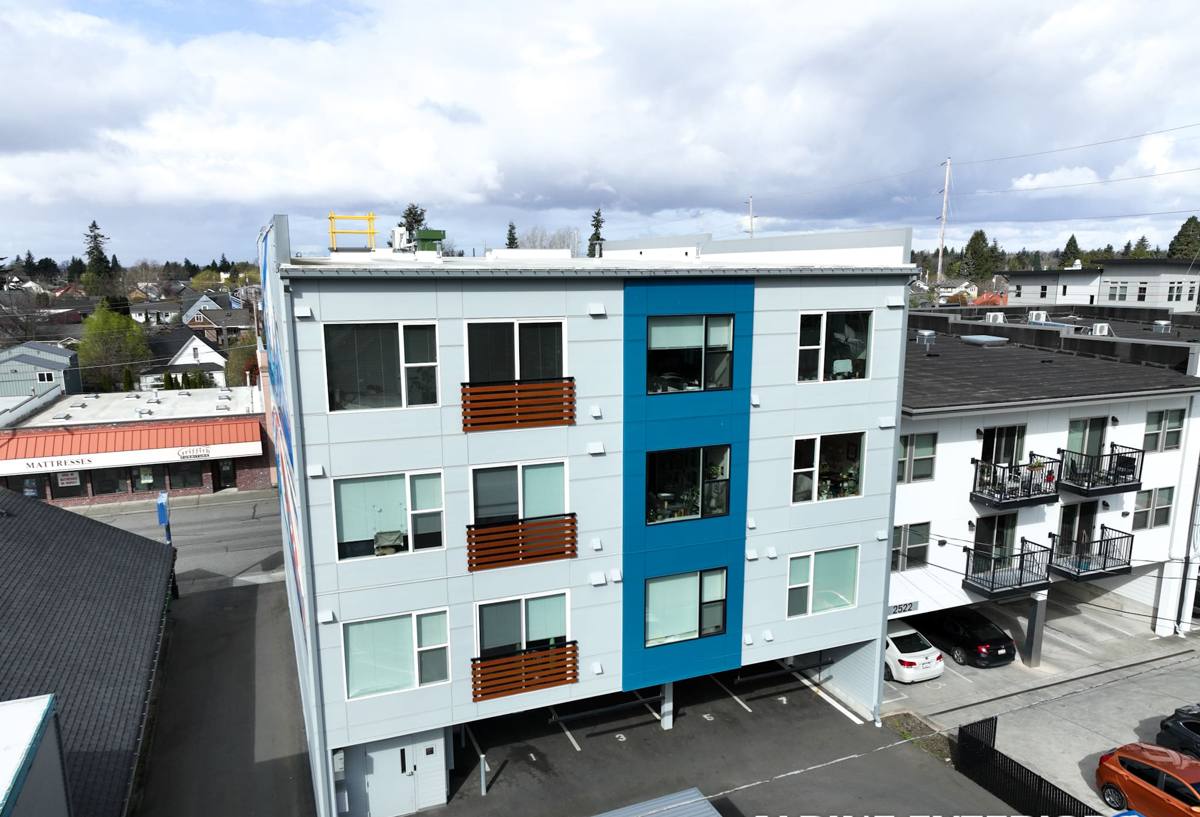
What Anacortes and Skagit County Weather Does to Windows
Salt Air
Anacortes' marine air carries fine salt particulate, and Skyline's elevation puts homes right in its path. Salt accelerates corrosion on window hardware — hinges, cranks, balances, and especially lower-grade aluminum components. Over years, that corrosion is what turns a smooth-operating casement or slider into one that sticks, binds, or won't seal tight anymore. Once a window won't seal, its energy performance drops no matter how good the glass package is.
Driving Rain
Wind-driven rain doesn't just hit a window — it gets pushed sideways and upward into any gap in the flashing or frame. On an exposed hillside lot, that pressure is higher than it would be on a sheltered, low-lying site. Correct flashing and sealant detail around the window opening matters as much as the window unit itself; a great window installed with poor flashing will still leak.
The Long Moss Season
Skagit County's wet season stretches long, and anywhere moisture sits — sill tracks, the underside of exterior trim, shaded north walls — moss and algae get a foothold. On windows, that usually shows up first in the sill and the bottom corners of the frame, where standing water lingers longest. Left alone, that trapped moisture works into wood trim and sheathing behind the window, which is a bigger repair than the window itself.
Signs a Skyline Home's Windows Are Underperforming
- Visible fog or moisture between the panes of a dual-pane unit — the seal has failed and the insulating gas is gone
- A noticeable draft near the frame even with the window latched shut
- Condensation forming on the inside of the glass regularly during cold snaps
- Sashes that are hard to open, close, or lock — often a sign of corroded hardware or a swollen frame
- Soft or discolored wood trim around the window, especially at the bottom corners
- Moss, algae, or black staining building up on the sill or lower frame
- A room near the window that's noticeably colder or draftier than the rest of the house in winter
What Correct Energy-Efficient Window Work Involves
Replacing a window is straightforward in concept — pull the old unit, set the new one, seal it up — but doing it right on an exposed Skyline lot takes more care than that. Here's what we consider non-negotiable:
Frame and Rough Opening Inspection
Before a new window goes in, we check the rough opening for rot, soft wood, or old water damage that the previous window may have been hiding. Setting a new, well-sealed window into a compromised opening just traps the problem behind new material — it doesn't fix it.
Flashing Done in the Right Order
Flashing tape and building paper have to be layered so water is always directed outward and downward, shingle-style, at every layer. This is the single biggest factor in whether a window stays dry through a wind-driven storm off the Sound, and it's also the step that's easiest to rush or skip.
Glass Package Suited to the Exposure
For Skyline homes, we typically recommend dual-pane, low-E coated glass with an argon or krypton gas fill, in a frame material that resists salt corrosion. The specific glass coating and gas fill can be tuned depending on which direction the window faces — south and west exposures benefit from more solar control, while north-facing windows are more about cutting heat loss.
Hardware and Frame Material
Because of the salt exposure here, we steer clients toward vinyl or fiberglass frames with corrosion-resistant hardware over bare aluminum. Aluminum conducts heat and cold directly through the frame and its hardware corrodes faster in marine air — it's a maintenance burden we'd rather clients avoid than deal with in a few years.
Sealing and Trim Finish
Exterior sealant has to be a product rated for UV and moisture exposure, applied in the right conditions and given time to cure. Trim gets finished in a way that sheds water off the sill rather than letting it pool — small detail, but it's exactly where moss and rot start.
Comparing Frame Materials for a Skyline Exposure
| Frame Material | Salt Air Resistance | Insulation Value | Maintenance |
|---|---|---|---|
| Vinyl | Good — won't corrode | Good, especially multi-chamber designs | Low — occasional cleaning |
| Fiberglass | Very good — dimensionally stable | Very good | Low |
| Wood-clad | Fair — depends on cladding integrity | Good | Moderate — cladding seams need monitoring |
| Bare Aluminum | Poor — prone to corrosion in marine air | Poor unless thermally broken | Higher — hardware wears faster |
We don't install bare aluminum frames on Skyline projects as a matter of standard practice — not because the material can't be made to work anywhere, but because the corrosion and thermal performance trade-offs don't make sense for this specific exposure. Thermally broken aluminum exists and performs better, but even then it's competing with vinyl and fiberglass options that handle salt air with less long-term upkeep.
Cost Factors for Skyline Window Projects
| Factor | Why It Affects Cost |
|---|---|
| Number of windows | Per-unit pricing drops somewhat with larger whole-house projects |
| Frame material | Fiberglass generally costs more than vinyl; both outperform bare aluminum long-term |
| Glass package | Triple-pane or specialty low-E coatings add cost but may be worth it on the most exposed elevations |
| Existing damage | Rot or soft framing found during removal adds repair time before the new window can go in |
| Access and elevation | Upper-story or hard-to-reach windows on hillside lots can add labor time |
| Trim and finish work | Matching existing exterior trim or upgrading it adds to the scope |
Every Skyline home is a little different, and the honest answer on cost is that it depends on how many windows, what condition the openings are in, and what glass and frame package makes sense for each elevation. We'll walk through that specifically during an estimate rather than quoting broad numbers that don't reflect your house.
Our Process for Skyline Projects
- On-site assessment of existing windows, framing condition, and exposure by elevation
- Recommendation on frame material and glass package suited to each side of the house
- Written estimate with a clear scope — no surprise add-ons once work starts unless hidden damage is found
- Removal of old units with inspection of the rough opening before anything new goes in
- Proper flashing, sealing, and installation, followed by trim and finish work
- Final walkthrough to confirm operation, sealing, and appearance
Because we already work regularly in Anacortes and the surrounding Skagit County area, we're familiar with how this hillside exposure behaves compared to lower, more sheltered parts of town — that's not something a crew coming from outside the area picks up on the first job.
Why Local Experience on This Job Matters
Window replacement looks similar on paper everywhere, but the details that make it hold up — how aggressively to flash a west-facing opening, which frame materials are worth the extra cost given the salt exposure, how to finish a sill so it doesn't collect moss by the second winter — come from having done this work on Skyline and similar Anacortes hillside lots before. A crew that's replaced windows here knows what condition to expect behind a 20-year-old frame before they even pull it, and that shows up in fewer surprises and a tighter final installation.
If your Skyline home has drafty, foggy, or hard-to-operate windows, we're happy to come take a look and give you a straightforward, no-pressure estimate — just fill out the form below.