 Anacortes
 Why Conway Homes Need a Different Approach to Siding
Conway sits in the lower Skagit Valley, close enough to Skagit Bay and the Sound to catch salt-laden air on a regular basis, and low enough in the valley that fog, ground moisture, and slow-draining humidity linger longer than they do up on higher ground around Anacortes. That combination — salt exposure, near-constant damp, and a long moss season that can run from October through May — is hard on exterior materials that weren't built for it. Siding here doesn't just need to look good going up; it needs to survive years of driving rain hitting it sideways off the water, freeze-thaw cycles in the shoulder seasons, and organic growth trying to get a foothold in every shaded, north-facing wall.
We install fiber cement siding exclusively — specifically James Hardie products — on homes throughout Conway and the surrounding Skagit County farmland-to-shoreline corridor. This page covers what that actually means for a Conway property: what the climate demands, what a correct installation looks like, and why local experience matters as much as the product itself.
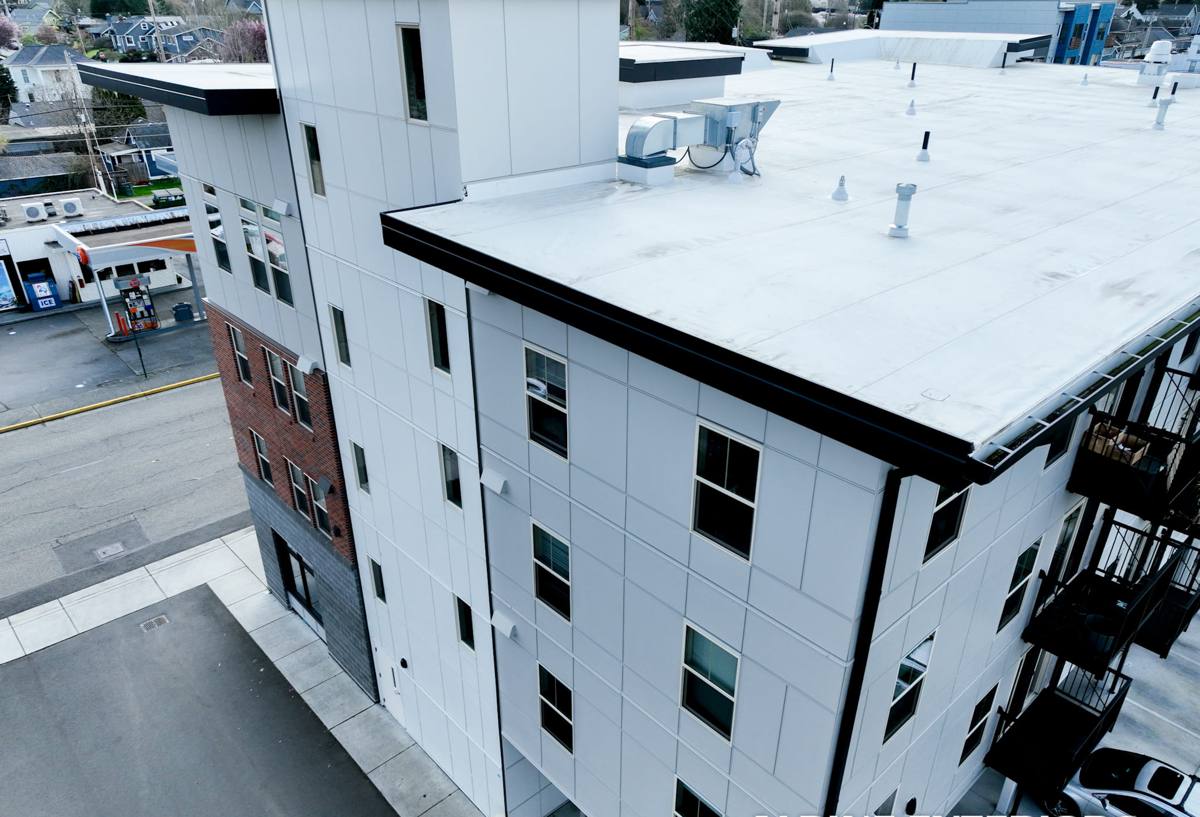
What Conway's Climate Actually Does to Siding
Salt Air and Corrosion
Proximity to Skagit Bay means airborne salt settles on exterior surfaces even when a home isn't directly waterfront. Salt accelerates corrosion of fasteners, trim flashing, and any metal components in a siding system. It also breaks down lower-grade paint finishes faster than inland exposure would, leading to chalking, fading, and eventually bare substrate exposed to moisture.
Driving Rain
Storms coming off the water don't fall straight down — wind-driven rain gets pushed horizontally into wall assemblies, working its way behind poorly lapped siding, undersized flashing, or caulk-dependent joints. A siding system that relies on sealant alone to keep water out will eventually fail here; the assembly has to be built to shed water by design, not just by maintenance.
Moss, Algae, and Prolonged Dampness
Shaded walls, tree cover, and the valley's slower air movement mean surfaces stay damp longer after a storm than they would in a breezier or sunnier spot. That's ideal for moss and algae growth, which holds moisture against the siding surface and, on materials that aren't dimensionally stable or properly sealed on all sides, can contribute to swelling, cupping, or paint failure over time.
Why We Only Install James Hardie Fiber Cement Here
Fiber cement is cement, sand, and cellulose fibers formed under pressure — it doesn't rot, it isn't a food source for organic growth, and it holds paint and factory finish far longer than wood-based or vinyl products in a coastal-adjacent climate like Conway's. Within fiber cement, we've standardized on James Hardie specifically because of three things that matter directly for this location:
- ColorPlus factory finish — baked-on, not field-applied, so the finish resists the fading and chalking that salt air and UV accelerate on site-painted materials.
- HZ5 engineering — Hardie's HZ5 product line is engineered for wetter, harsher climate zones, which fits the Pacific Northwest and specifically a low-lying, water-adjacent community like Conway better than a generic all-climate product.
- Non-combustible core — a practical benefit anywhere, and one more reason it holds up to the freeze-thaw and moisture cycling common here without the material itself degrading.
We don't install LP SmartSide, vinyl, Cemplank, Allura, or primed wood siding. Each of those has legitimate uses elsewhere, but for the specific stack of moisture, salt, and organic growth exposure a Conway home deals with, we've found Hardie's combination of factory finish, engineered product line, and warranty structure gives homeowners the best long-term outcome — and we'd rather install one product correctly and stand behind it than offer five and hedge.
What a Correct Fiber Cement Installation Involves
The siding itself is only part of the system. Most siding failures we get called to inspect — regardless of brand — trace back to installation details, not the material. For a Conway property, we pay particular attention to:
Weather-Resistive Barrier and Flashing
A properly lapped weather-resistive barrier behind the siding, correctly integrated flashing at every window, door, and roofline intersection, and rainscreen or drainage gap detailing where the wall assembly calls for it. This is the layer that actually keeps driving rain out of the wall cavity — the siding is the second line of defense, not the only one.
Fastener Selection
Corrosion-resistant fasteners, installed at the manufacturer-specified pattern and depth. In a salt-air environment, the wrong fastener — or one driven too deep and cracking the board's face — is a slow-motion failure point that won't show up for a few years but will show up eventually.
Clearances and Gaps
Hardie specifies minimum clearances from grade, roofing, decks, and other siding terminations. These clearances exist specifically to keep splash-back moisture, ground moisture, and standing water away from the bottom edge of the board — the single most common place we see damage on any siding job that wasn't installed to spec.
Joint and Seam Treatment
Properly caulked and painted joints, correctly lapped horizontal seams, and factory-finished cut edges sealed in the field. Skipping the touch-up on a factory-cut edge is a small shortcut that creates a real entry point for moisture over time.
Our Process for a Conway Project
- On-site assessment — we look at your home's specific exposure: how much direct salt-air and wind-driven rain it takes, where shade and moisture linger, and the condition of the existing wall assembly underneath the current siding.
- Tear-off and substrate check — we don't side over rot or hidden moisture damage. If we find compromised sheathing or framing, we flag it before covering it back up.
- Weather barrier and flashing installation — done to current best practice, not just "what was there before."
- Hardie installation to manufacturer spec — correct fasteners, clearances, and lap details, sized and detailed for this specific home.
- Final finish and walkthrough — caulking, touch-up, and a walkthrough so you understand what was done and why.
What to Expect: Cost Factors for Conway Homes
Every home is different, but the same handful of factors drive cost on most Conway projects:
| Factor | Why It Matters Here |
|---|---|
| Home size and wall complexity | More corners, gables, and trim details mean more cut edges and flashing work |
| Current siding removal | Tear-off cost and disposal, plus any substrate repair found underneath |
| Exposure level | Waterfront or highly exposed walls may warrant heavier-duty flashing and detailing |
| Siding profile and finish | Lap width, texture, and ColorPlus color selection affect material cost |
| Access and site conditions | Long driveways, mature landscaping, or tight lot lines affect labor time |
We give honest, itemized estimates rather than a flat per-square-foot number pulled out of the air — a home with hidden moisture damage or difficult access costs more to do correctly, and we'd rather tell you that up front than surprise you mid-project.
Signs Your Current Siding Is Already Losing the Fight
- Moss or algae staining that comes back within a season of cleaning
- Soft spots, especially near the bottom courses or around window trim
- Paint that's chalking, peeling, or fading unevenly across different walls
- Visible gaps or separation at seams and corner boards
- Rust streaks below fasteners or metal trim
- Warping, cupping, or bowing panels, particularly on shaded or north-facing walls
If you're seeing two or more of these, it's worth having someone look at the wall assembly, not just the surface — surface symptoms in this climate often mean the moisture problem started behind the siding.
Why a Crew That Already Works Conway Matters
Skagit County covers a lot of ground, and Conway's conditions — lower elevation, closer to the bay, more fog and standing moisture than areas further inland — aren't identical to Anacortes proper or the drier parts of the county. A crew that already works this specific area knows to check for the moisture patterns particular to low-lying, water-adjacent lots, understands how far salt air travels inland here, and isn't guessing at clearance and flashing details based on a climate zone map instead of firsthand experience. That local familiarity shows up in the small decisions — where to add extra flashing, which walls need closer attention to drainage — that a generic install often misses.
Get a Free, No-Pressure Estimate
If you're planning a siding project in Conway or anywhere else in the Anacortes area, we're happy to take a look at your home, walk you through what we'd recommend, and give you a straightforward estimate — no pressure, no hard sell. Fill out the form below to get started.