 Anacortes
 Building a Deck That Actually Holds Up on Fidalgo Island
Fidalgo Island sits right where the Salish Sea meets the Skagit County mainland, and that location is exactly what makes deck-building here different from a typical inland project. Homes on and around the island deal with salt-laden air off the water, long stretches of driving rain through fall and winter, and a moss season that can stretch from October well into spring. A deck that would last two decades in a drier, inland part of Washington can start showing real problems in half that time here if it wasn't designed and built with this climate in mind.
This page covers what a custom deck built for Fidalgo Island actually needs — materials, framing details, hardware, and maintenance — plus how we approach the work and why local experience matters more than it might seem.
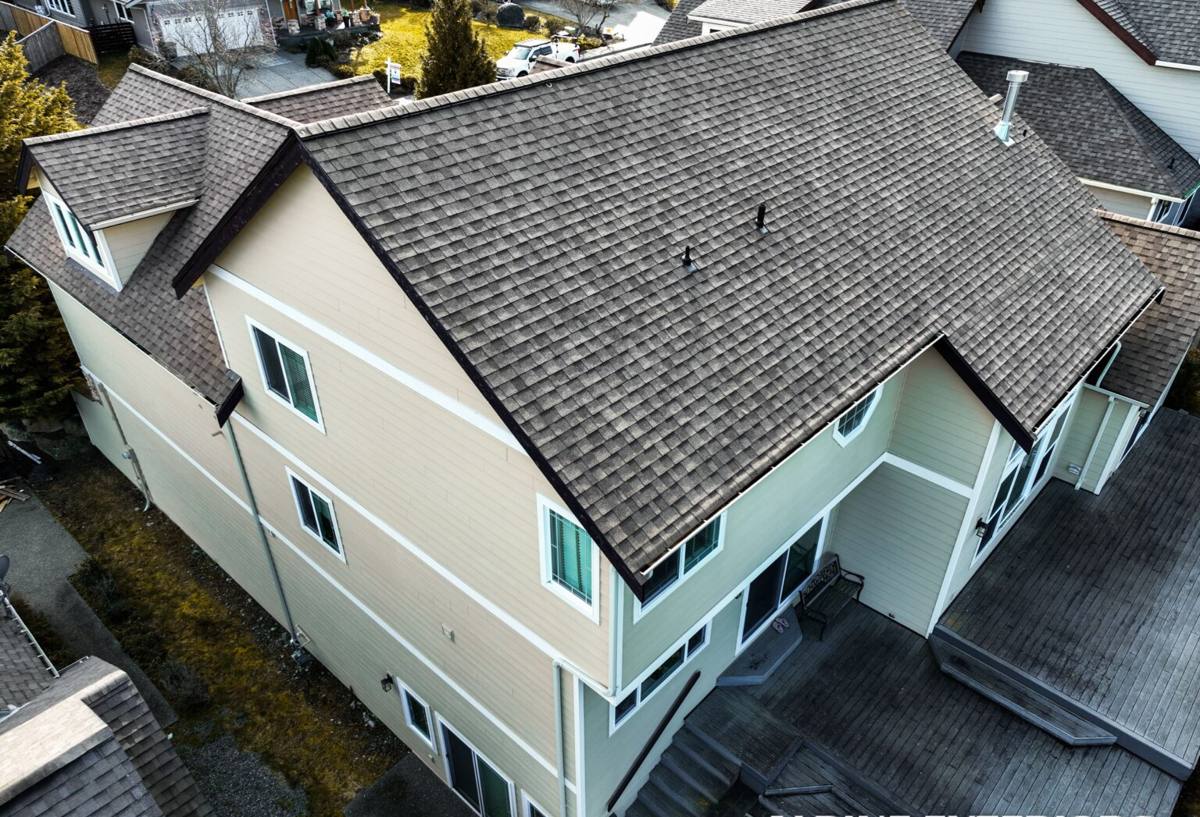
What This Climate Does to an Ordinary Deck
Salt Air and Metal Corrosion
Airborne salt from the Sound doesn't just affect homes right on the water — it travels, and it accelerates corrosion on anything metal: fasteners, joist hangers, railing brackets, and post bases. On a standard-grade deck, this shows up first as rust streaks bleeding out around screw heads and hardware, then as actual hardware failure at connection points you can't see once the decking is down.
Driving Rain and Trapped Moisture
Rain that comes in sideways off the water finds its way into gaps that vertical rain never would — around ledger boards, at deck-to-house transitions, and under railing posts. Combined with our long wet season, that means more cumulative days of standing moisture against wood fibers and fastener points than most decking products are rated to handle without extra protection.
Moss, Algae, and Surface Buildup
Shade, moisture, and mild temperatures are exactly what moss and algae need, and Fidalgo Island offers all three for a good chunk of the year. Beyond looking bad, a mossy deck surface gets genuinely slick and dangerous, and moss holds moisture against the decking surface long after the rain has stopped — which speeds up rot in wood and can dull or stain composite surfaces if it's left to sit.
Wind Exposure
Open, elevated decks on the island and its surrounding bluffs can see stronger, more sustained wind than a sheltered inland lot. That matters for railing strength, post spacing, and how a pergola or privacy screen is anchored — details that are easy to underbuild if the design was templated from a calmer site.
What a Correctly Built Deck for This Area Involves
None of the issues above are exotic — they're well-understood problems with well-understood solutions. The difference between a deck that ages well here and one that doesn't usually comes down to whether those solutions were actually used, not skipped to save time or cost.
- Fasteners and structural hardware rated for coastal/marine exposure, not standard exterior-grade
- Ledger board flashing detailed to shed water away from the house band joist, with a capillary break
- Joist tape or equivalent protection on top of framing lumber before decking goes down
- Proper drainage slope built into the substructure, not just the surface boards
- Post bases set to keep end-grain wood off standing water, with drainage gaps maintained
- Railing posts and connections engineered for real wind load, not just code minimums on paper
- Decking material and gap spacing chosen to let air move underneath and shed moss-friendly debris
Decking Material Choices, Compared for This Climate
There's no single "correct" decking material for every project — it depends on budget, how much upkeep you want to do, and how exposed the site is. Here's how the common options actually perform under salt air, rain, and moss pressure specifically.
| Material | How It Handles Moisture & Salt | Moss/Algae Behavior | Upkeep |
|---|---|---|---|
| Pressure-treated lumber | Good rot resistance in the wood itself, but fasteners and hardware need to be corrosion-rated or they'll fail first | Can hold moss if not cleaned; grain texture gives it more to grip | Needs re-sealing/staining every 1-2 years in this climate |
| Cedar | Naturally rot- and insect-resistant, but softer and more sensitive to standing water over time | Moderate — smoother grain than PT lumber, still needs periodic cleaning | Regular sealing to hold color and water resistance |
| Traditional composite | Doesn't rot, but uncapped versions can absorb some moisture at cut edges over many wet seasons | Can stain if moss/algae sit on the surface; needs occasional washing | Low — no sealing or staining required |
| Capped composite / PVC | Fully sealed outer layer resists moisture and salt exposure the best of the group | Sheds moss and algae most easily; smooth cap doesn't hold onto growth | Lowest — periodic rinsing is usually enough |
For most Fidalgo Island projects, we lean toward capped composite or PVC decking specifically because it holds up to the combination of salt air and near-constant winter dampness with the least ongoing work. That's not a knock on real wood — cedar and pressure-treated lumber both have a place, and plenty of homeowners prefer the look and are willing to keep up with the maintenance. It's a matter of matching the material to how much upkeep you actually want to do, and being honest about what each option asks of you over the deck's lifespan.
Framing, Fasteners, and the Parts You Won't See Again
The decking surface is what you'll notice day to day, but the framing underneath is what determines whether the deck is still solid in fifteen years. This is also the part of the job that's easiest for a lower-bid contractor to cut corners on, because it's invisible once the project is done.
Ledger Attachment
Where the deck attaches to the house is the single most common source of hidden rot on older decks in wet coastal climates. Correct flashing here — with the right lap order and a gap for water to drain instead of pool — is not optional detail work, it's the difference between a deck that protects your home's band joist and one that slowly rots it.
Hardware Grade
We spec corrosion-resistant fasteners and connectors as standard on Fidalgo Island projects, not as an upgrade. Standard exterior-rated hardware is built for general outdoor exposure, not the accelerated corrosion that salt air causes — using it here is a false economy that shows up as rust and loosening connections well before the deck's expected lifespan is up.
Footings and Post Bases
Footing depth and post base selection both need to account for our soil conditions and the amount of standing moisture the site sees through the wet months. Post bases that keep wood end grain elevated off the footing, with a drainage gap underneath, prevent the slow wicking of moisture that rots posts from the bottom up.
Our Process, Start to Finish
- Site walk and assessment — we look at sun/shade exposure, prevailing wind and rain direction, drainage, and how exposed the site is to salt air off the water
- Design and material selection — layout, decking material, railing style, and any built-ins are worked out with your budget and maintenance preferences in mind
- Permitting — Skagit County and City of Anacortes both have permit requirements for most new decks; we handle the paperwork and inspections as part of the project
- Framing and structural work — ledger flashing, footings, joists, and hardware go in first, with every connection built to the standard above, not the minimum
- Decking, railings, and finish work — surface material, railing system, stairs, and any lighting or accessories are installed and detailed
- Final walkthrough — we go over the finished deck with you, including what maintenance it needs and on what schedule
Keeping a Deck Ahead of Moss Season
Even a well-built deck needs some seasonal attention in a climate that stays wet and shaded this much of the year. The good news is that with the right material and build, that attention is minor — a matter of staying ahead of buildup rather than fighting rot or structural repairs.
- Sweep leaves and debris off the surface regularly through fall — trapped organic matter is what moss and algae feed on
- Rinse the deck surface a few times a year, more often in shaded areas, before moss gets a foothold
- Check that gaps between boards stay clear so water and debris keep draining through
- Look underneath the deck once a year for standing water, blocked drainage, or hardware showing early rust
- Re-seal or re-stain wood decking on the schedule it needs — don't wait until it's visibly weathered
- Keep nearby vegetation trimmed back to let more light and air reach shaded sections of the deck
Why It Matters to Hire a Crew That Already Works Here
A lot of what separates a deck that ages well on Fidalgo Island from one that doesn't isn't visible in a set of plans — it's the fastener grade, the flashing detail at the ledger, the post base choice, and the material decision that accounts for moss season rather than ignoring it. A contractor who mainly builds inland, in a drier climate, can turn out a deck that looks identical on installation day and still runs into avoidable problems within a few wet seasons.
Working regularly in Anacortes and across Skagit County means we're already building to this climate by default, not treating it as a special case. We've made the material and hardware calls for salt air and driving rain enough times to know what actually holds up here versus what just looks fine on the showroom sample.
Get a Straightforward Estimate
If you're planning a new deck or replacing one that's showing its age, we're happy to walk the site, talk through material options for your specific spot on Fidalgo Island, and give you a clear, no-pressure estimate. Use the form below to get started.