 Anacortes
 Siding Installation Built for Fidalgo Island's Marine Climate
Fidalgo Island sits where the Salish Sea meets the mainland, and homes here take a different kind of weathering than houses even twenty miles inland. Salt-laden air moves off the water and settles onto exterior surfaces, driving rain comes in sideways off Rosario Strait and Guemes Channel, and the long gray stretch from October through April keeps siding damp for days at a time. Add in the moss and algae that thrive in that shade-and-moisture combination, and you have a building envelope that's under more sustained stress than the marketing photos on most siding websites ever show.
We install siding across Skagit County, and Fidalgo Island projects get the same product line every time: James Hardie fiber cement, installed to the manufacturer's specification for our climate zone. This page covers what that actually means for a Fidalgo Island home, why the material matters as much as the labor, and what to expect if you're planning a siding installation on the island.
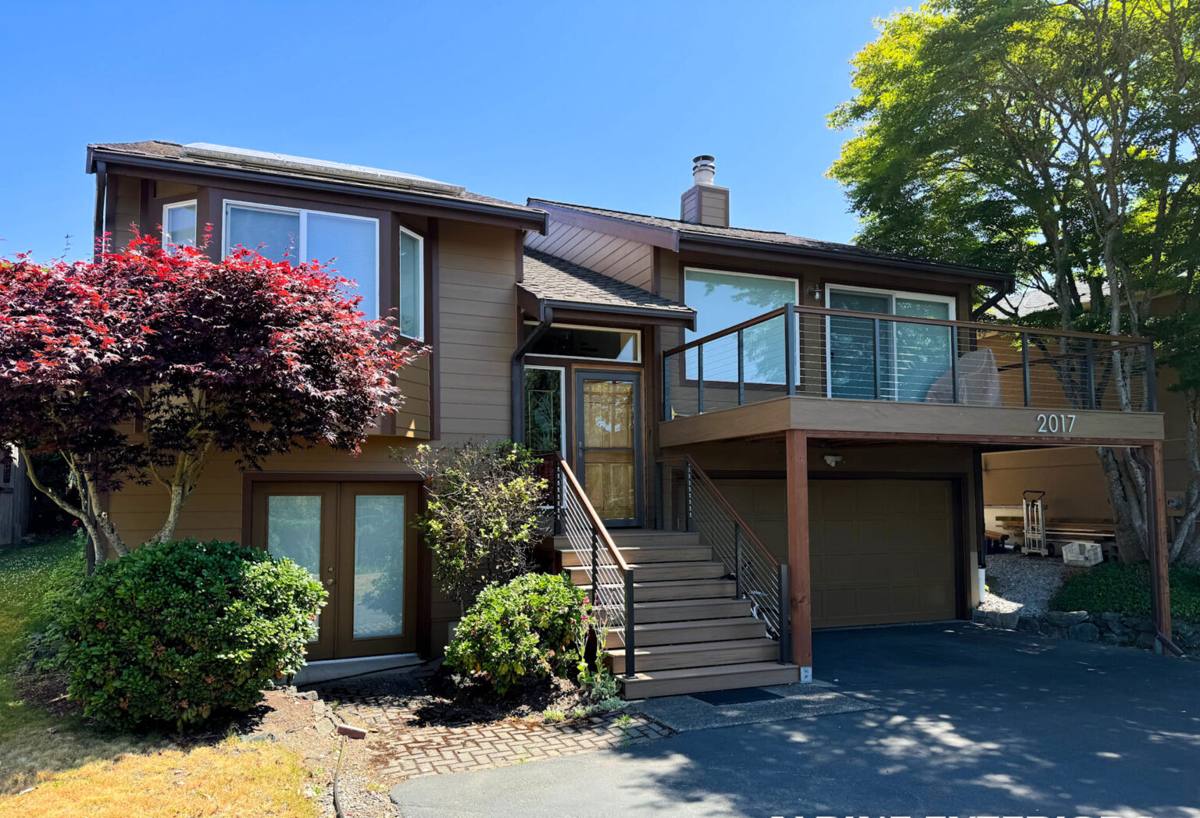
What Salt Air and Driving Rain Actually Do to Siding
It helps to understand the specific mechanisms at work, because they're different from what a siding contractor deals with in, say, Spokane or Yakima.
Salt Air and Corrosion
Airborne salt is mildly corrosive to exposed metal fasteners, flashing, and trim edges, and it accelerates the breakdown of finishes that aren't formulated to resist it. Over years, a coastal exposure without the right materials and fastener choices shows chalking, fastener bleed-through, and finish failure well ahead of schedule.
Wind-Driven Rain
Anacortes and the surrounding island get weather that doesn't fall straight down. When rain is pushed horizontally by wind off the water, it finds every lap, seam, and penetration that isn't properly overlapped, caulked, or flashed. A siding system that's rated for a calmer climate but installed loosely will let water behind the cladding, where it soaks sheathing and framing out of sight.
Moss, Algae, and Prolonged Dampness
Fidalgo Island's tree cover and marine humidity mean siding on shaded or north-facing walls can stay damp for extended stretches, especially in fall and winter. Materials that absorb moisture swell, distort, and eventually rot. Materials that don't absorb it stay dimensionally stable and just need periodic cleaning to keep moss and algae from taking hold.
Why We Install James Hardie and Nothing Else
We standardized on James Hardie fiber cement siding for every home we side, and Fidalgo Island's climate is exactly why. Fiber cement is engineered from cement, sand, and cellulose fibers, which makes it dimensionally stable in wet-dry cycling and non-combustible. It doesn't swell, cup, or rot the way wood-based or wood-adjacent products can when they take on repeated moisture. James Hardie also builds region-specific product engineering into its HZ5 line for areas that see the kind of cold, wet weather Skagit County gets, which matters more here than in a dry inland climate.
The factory-applied ColorPlus finish is the other half of the equation. It's baked on under controlled conditions rather than field-applied, which gives it better adhesion and UV/weather resistance than a job-site paint job, and it comes with its own finish warranty separate from the substrate warranty. For a coastal property, that finish durability is what keeps the house looking maintained instead of chalky and faded five years in.
We don't install vinyl, LP SmartSide, Cemplank, Allura, or primed wood siding. That's a deliberate standard, not an oversight — we cover the specific trade-offs of those products on other pages, but the short version is that none of them hold up to a marine climate as predictably as correctly installed Hardie fiber cement, and we'd rather install one product very well than several products with mixed results.
What a Correct Installation Involves
The product is only half the equation. Fiber cement siding performs to spec only when the assembly behind it is done right, and that's especially true on a site exposed to wind-driven rain.
- Weather-resistive barrier: A continuous, properly lapped house wrap or building paper behind the siding, installed shingle-style so water sheds outward rather than working its way in.
- Rainscreen or drainage gap: A ventilated gap between the siding and the weather barrier lets any incidental moisture drain and dry instead of sitting against the wall assembly — important on shaded, moisture-prone elevations.
- Flashing at every penetration: Windows, doors, vents, hose bibs, and light fixtures all need proper flashing details so wind-driven rain can't track behind the cladding at those points.
- Correct fastening: James Hardie specifies fastener type, spacing, and placement by product and exposure. Coastal exposure calls for corrosion-resistant fasteners, and under- or over-driving them both compromise the panel.
- Proper clearances: Minimum gaps from grade, roof lines, decks, and other transitions keep siding out of standing water and splash-back zones.
- Caulking and sealant at the right joints only: Hardie's lap siding is designed to shed water without sealant at every horizontal joint — over-caulking can actually trap moisture where it shouldn't be.
Any one of these done wrong shortens the life of an otherwise excellent product. This is where installation quality and product quality have to work together, and it's why we treat the install spec as non-negotiable rather than a set of suggestions.
Our Process for a Fidalgo Island Project
1. On-Site Assessment
We walk the exterior, check the current siding and sheathing condition, note the home's exposure (which walls face the water and prevailing wind, which stay shaded), and look at existing moisture damage or moss buildup that points to problem areas.
2. Scope and Product Selection
We talk through James Hardie's plank, panel, and shingle options and which ColorPlus finish fits the home, then put together a scope that addresses both the visible siding and anything underneath it that needs attention — rotted sheathing, missing flashing, undersized drainage gaps.
3. Tear-Off and Substrate Repair
Old siding comes off, and we inspect and repair sheathing and framing before anything new goes on. Covering up existing rot or moisture damage just locks the problem behind a new wall.
4. Weather Barrier and Drainage Plane
House wrap, flashing, and rainscreen furring go in next, detailed around every window, door, and penetration before a single piece of siding is hung.
5. Installation to James Hardie Spec
Siding goes up following James Hardie's fastening schedule, clearances, and joint treatment for our climate zone, not a generic national standard.
6. Final Walkthrough
We review the finished job with the homeowner, check clearances and caulk lines, and cover basic care going forward.
Why Hiring a Crew That Works Fidalgo Island Matters
A siding crew that mostly works dry, inland climates can do a technically fine job and still get the details wrong for a place like Fidalgo Island — because the failure points on a marine site aren't the ones they're used to watching for. Knowing which walls on an island property take the worst of the wind-driven rain, how much drainage gap actually matters on a shaded north wall, and how salt exposure affects fastener choice comes from doing this work in this specific climate repeatedly, not from a manufacturer's general install guide alone. We work throughout Skagit County and see the same coastal conditions on Fidalgo Island jobs that show up in Anacortes proper, so the assessment and the spec aren't generic — they're built around what actually happens to a house here over a Pacific Northwest winter.
Cost Factors for a Fidalgo Island Siding Installation
Every home is different, but the same variables tend to move the price up or down on island properties specifically.
| Factor | Why It Matters Here |
|---|---|
| Home size and wall complexity | More corners, dormers, and roof lines mean more flashing and cutting, which adds labor time regardless of siding brand. |
| Current substrate condition | Coastal moisture exposure means a higher chance of hidden sheathing or framing repair once old siding comes off. |
| Exposure and orientation | Walls facing prevailing wind and water spray may need extra flashing detail or a more robust drainage plane. |
| Siding profile and finish | James Hardie's plank, shingle, and panel lines, plus ColorPlus color selection, carry different material costs. |
| Site access | Waterfront or wooded island lots can limit staging and equipment access, affecting labor time. |
| Trim and accessory scope | Fascia, soffit, and trim work bundled into the project add to overall scope beyond the field siding itself. |
We won't quote a number without seeing the house, but these are the factors that actually move a Fidalgo Island estimate up or down, and we'll walk through each one with you during the assessment.
Signs Your Current Siding Is Losing the Fight
- Soft spots, bubbling, or visible swelling, especially near the bottom courses or window sills
- Persistent moss or algae growth that comes back quickly after cleaning
- Paint or finish that's chalking, peeling, or fading noticeably faster on water-facing walls
- Visible gaps, warping, or separation at seams and corners
- Rising energy bills that suggest the wall assembly is no longer performing as insulation
- Interior signs — musty smell, staining, or soft drywall near exterior walls — that point to moisture getting through
Any of these on a Fidalgo Island home is worth a look sooner rather than later, since coastal moisture problems tend to compound quickly once they start.
Get a Free, No-Pressure Estimate
If you're planning a siding project on Fidalgo Island, we're happy to come take a look, walk the exterior with you, and put together a straightforward estimate — no pressure, no sales script. Use the form below to get started.