 Anacortes
 Fidalgo Island sits where the Salish Sea meets the San Juan Islands, and that location is exactly what makes siding here different from siding fifty miles inland. Homes on the island face a combination of conditions that few other parts of Skagit County deal with at the same time: salt-laden air off the water, wind-driven rain that hits walls sideways instead of straight down, and long stretches of gray, damp months that keep moss and algae growing on north-facing walls well into what other regions would call the dry season. Siding that isn't built and installed for that combination fails faster here than it would in a drier, inland climate — and we see it on Fidalgo Island homes regularly.
This page is about one thing: replacing siding on a Fidalgo Island home the right way, with a product designed for this exact climate and an installation process that respects how water actually moves around a house near the water. We install only James Hardie fiber cement siding, and on this page we'll explain why that matters specifically here, what a correct replacement job looks like, and how we run the project from first estimate to final walkthrough.
Why Fidalgo Island Is a Tougher Test for Siding
Anacortes and the surrounding island communities get a mix of exposures depending on which side of the island a home sits on. West- and north-facing homes catch more direct wind and salt spray off the water. South- and east-facing walls often stay shaded and damp longer, which is where moss and mildew take hold. Almost every home on the island deals with some version of both.
Salt Air and Metal Fasteners
Salt air accelerates corrosion on anything metal — nail heads, flashing, trim fasteners, even some siding hardware. Over years, corroding fasteners can streak the siding, loosen boards, and create small gaps where water gets behind the cladding. This is one of the most overlooked failure points on waterfront and near-waterfront homes, and it's a detail that shows up in the fastener and flashing choices we make on every Fidalgo Island job, not just the siding material itself.
Driving Rain and Wind Exposure
Rain that comes in sideways doesn't behave like rain that falls straight down. It gets pushed under laps, around trim, and into any gap in the water-resistive barrier. Siding systems on exposed Fidalgo Island walls need tighter installation tolerances — correct lap exposure, properly bedded caulk joints, and flashing that actually sheds water outward rather than trapping it — because the margin for error is smaller when wind is actively driving moisture at the wall.
Moss, Algae, and the Long Damp Season
Skagit County's marine climate means long stretches of overcast, damp weather, especially from fall through spring. Shaded walls, areas under overhangs, and anything near mature trees or landscaping stay wet longer and grow moss and algae faster than a drier climate would allow. Siding that absorbs moisture or has a finish prone to organic growth ends up needing regular pressure washing or repainting just to stay presentable — an ongoing maintenance cost that's easy to underestimate when a homeowner is comparing siding options up front.
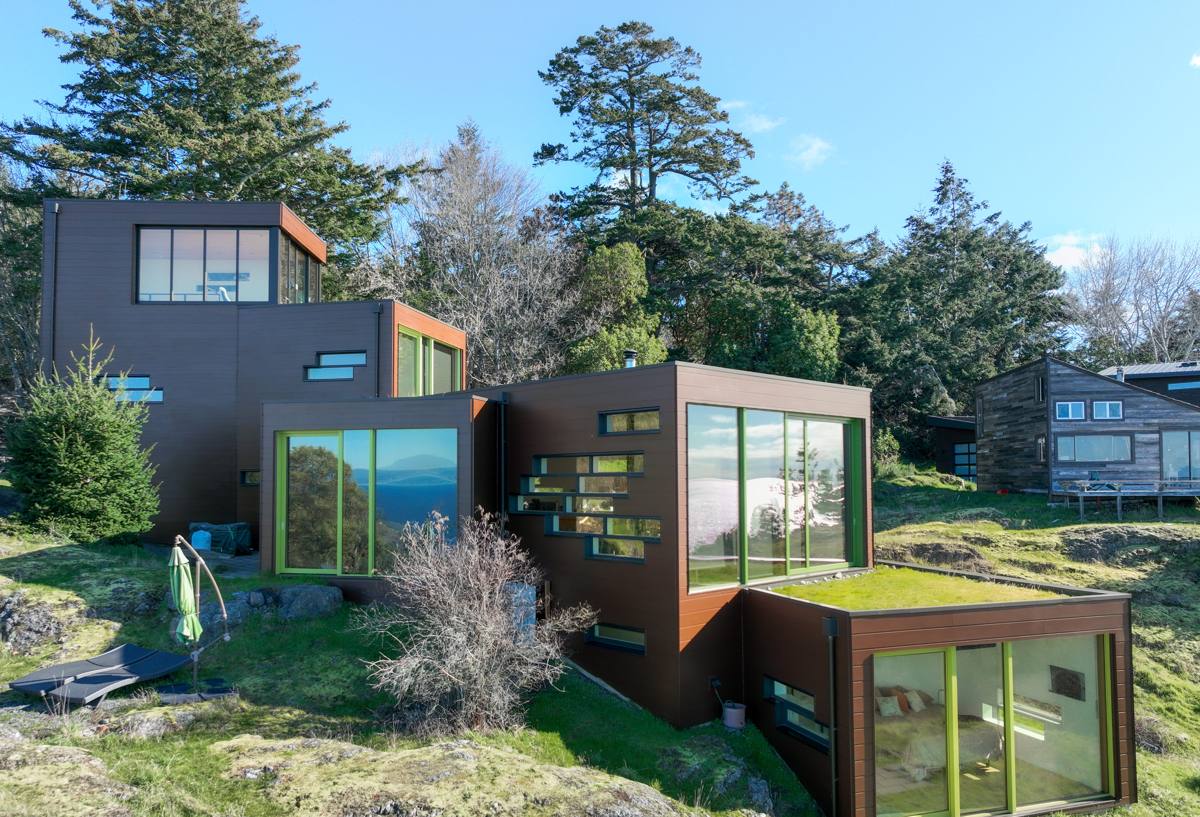
What This Means for Material Choice
We install James Hardie fiber cement siding exclusively, and Fidalgo Island's climate is a big part of why. Fiber cement is non-combustible, dimensionally stable, and doesn't rot, swell, or delaminate the way wood-based or wood-adjacent siding products can when they take on repeated moisture exposure. James Hardie's HZ5 product line in particular is engineered for the freeze-thaw and moisture cycling common to the Pacific Northwest, which matches the conditions on the island closely.
Just as important as the substrate is the finish. James Hardie's ColorPlus factory-applied finish is baked on under controlled conditions and backed by a separate finish warranty, which matters directly for moss and algae resistance — a consistent, tightly bonded factory finish sheds dirt and organic growth better than field-applied paint, and it holds its color longer under UV and salt exposure. We do not install vinyl siding, LP SmartSide, primed wood, or cedar on Fidalgo Island homes. Each of those has legitimate uses elsewhere, but given the salt air, wind-driven rain, and moss pressure here, we've standardized on a product system built to handle all three at once rather than mixing and matching materials that each solve only part of the problem.
What a Correct Siding Replacement Involves
Replacing siding is not just swapping old boards for new ones. On an island property exposed to wind and salt, the work happening underneath the siding matters as much as the siding itself.
Tear-Off and Sheathing Inspection
Once old siding comes off, we inspect the sheathing underneath for rot, soft spots, or water staining — problems that are invisible until the wall is opened up. Salt air and driving rain both increase the odds of finding moisture damage behind older siding on Fidalgo Island homes, especially around window and door openings and at the base of walls near grade.
Water-Resistive Barrier and Flashing
A new, correctly lapped water-resistive barrier goes down before any siding. Flashing at windows, doors, decks, and roof-to-wall intersections is installed to direct water outward and downward, never trapping it against the sheathing. On wind-exposed walls, this layer is doing most of the real work of keeping the house dry — the siding is the visible layer, but the barrier and flashing are what actually stop water intrusion.
Fastening and Fastener Selection
Given the corrosive effect of salt air, fastener choice and placement matter more here than in a dry inland climate. We follow James Hardie's fastening specifications for exposure and substrate, using corrosion-resistant fasteners placed and set correctly — not overdriven, not underdriven — because either mistake shortens the life of the installation.
Joints, Caulking, and Trim Details
Butt joints, trim intersections, and penetrations (vents, hose bibs, light fixtures) are common points where water gets in if they're rushed. We use manufacturer-approved sealants at the joints that need them and, where possible, detail the installation so fewer joints need caulk in the first place — caulk is a maintenance item, not a permanent fix, and minimizing reliance on it up front pays off over the life of the siding.
Our Process for a Fidalgo Island Project
| Step | What Happens |
|---|---|
| Free On-Site Estimate | We walk the exterior, note exposure direction, existing moisture or moss issues, and trim/detail complexity, then provide a clear written estimate. |
| Material and Color Selection | Homeowner selects James Hardie profile and ColorPlus color; we confirm product line (typically HZ5) is right for the home's exposure. |
| Tear-Off and Sheathing Check | Old siding removed, sheathing inspected and repaired if needed before anything new goes up. |
| Barrier, Flashing, and Install | Water-resistive barrier, flashing, and Hardie siding installed to manufacturer spec with correct fastening and joint detailing. |
| Trim and Detail Work | Corner boards, window and door trim, and penetrations finished and sealed. |
| Final Walkthrough | We walk the finished job with the homeowner and address any punch-list items before calling it complete. |
Why Hire a Crew That Already Works Fidalgo Island
Siding crews that mostly work drier, inland areas don't always adjust their habits for a marine, wind-exposed island climate. Fastener selection, flashing details, and even the recommended siding line can differ once salt air and driving rain are part of the equation. A crew that already works Anacortes and the surrounding Skagit County waterfront knows which walls on a given lot orientation tend to take the worst weather, which detailing shortcuts fail first in this climate, and how to sequence a project around the area's wetter months.
There's also a practical logistics side: island and ferry-adjacent access, staging materials on tighter lots, and working around the shorter weather windows common to a marine climate all go smoother with a crew that's done it before on similar Fidalgo Island properties.
Signs Your Fidalgo Island Home May Need Siding Replacement
- Visible warping, buckling, or soft spots when you press on the siding
- Persistent moss or algae staining that returns quickly after cleaning
- Paint that's peeling, bubbling, or failing faster than a normal repaint cycle would suggest
- Gaps opening up at butt joints, corners, or trim intersections
- Rust streaking below nail heads or fasteners
- Soft or discolored sheathing visible at outlets, vents, or siding edges
- Rising energy bills that may point to a compromised weather barrier behind aging siding
Cost Factors for a Fidalgo Island Siding Job
Every home is different, so we don't quote pricing without seeing the property, but a few factors consistently drive cost on island projects specifically:
- Wall exposure and complexity — homes with more corners, dormers, and trim detail take more labor per square foot than a simple rectangular footprint.
- Sheathing condition — if tear-off reveals rot or water damage, repair work is priced separately once it's actually visible, not guessed at up front.
- Access and staging — tighter island lots, steep driveways, or limited street access can affect how efficiently material gets staged and moved.
- Product line and profile — HZ5 boards, specific plank widths, and ColorPlus color selections carry different material costs.
- Trim and detail scope — full trim replacement alongside siding adds cost but also gives the whole exterior a consistent, factory-finished look.
Maintenance After Replacement
James Hardie siding with a ColorPlus finish is low-maintenance compared to painted wood or vinyl, but "low-maintenance" isn't "no-maintenance" in a marine climate. A periodic gentle rinse to clear salt residue and organic buildup, especially on shaded or north-facing walls, keeps the finish looking new longer. Caulked joints and trim intersections are worth a visual check every year or two, since caulk is the one part of the system that wears out well before the siding itself does. Compared to the repainting and rot-watch cycle that wood siding demands on Fidalgo Island, this is a modest ask.
If your Fidalgo Island home's siding is showing its age, or you're planning ahead before the next wet season, we're happy to take a look and walk you through what we'd recommend. The estimate is free, there's no pressure, and you'll get a straight answer about what your home actually needs — just fill out the form below to get started.