 Anacortes
 Roofing on Flounder Bay Isn't the Same as Roofing Inland
Flounder Bay sits close to the water on Fidalgo Island, which means homes here take on weather that a house ten miles inland in Skagit County simply doesn't see as often. Salt-laden air moves off the water and settles on every exposed surface. Wind-driven rain comes in at angles that push moisture under poorly lapped materials instead of over them. And the long gray stretch of fall through spring keeps roofs damp long enough for moss and algae to take hold and stay there. None of this is unusual for western Washington, but a roof installed without those specifics in mind will show its age faster on a bay-adjacent lot than it would a few miles away.
When we install a new roof for a Flounder Bay property, we're not just laying down shingles or panels to code minimums. We're building in the extra margin — flashing, fasteners, ventilation, underlayment choice — that this particular stretch of Anacortes coastline actually needs.
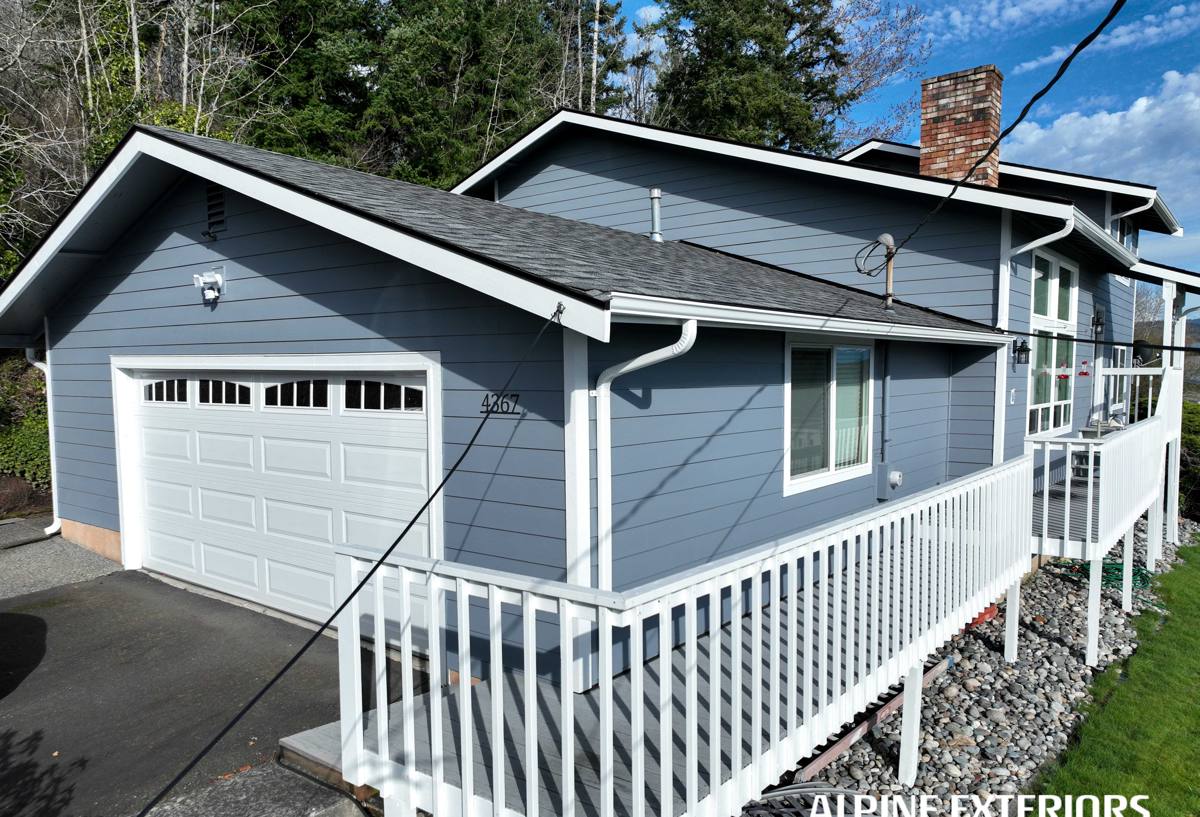
What Salt Air, Rain, and Moss Actually Do to a Roof
Salt Air
Airborne salt is corrosive to unprotected or lightly coated metal. Over years, it can accelerate rust on standard fasteners, flashing, and vent components that weren't specified for coastal exposure. It also degrades the surface of some sealants faster than inland conditions would.
Driving Rain
Anacortes gets wind off the water that carries rain sideways during storms. A roof detailed for straight-down rain — thin flashing laps, minimal underlayment overlap, standard nail patterns — can let water find its way under shingles or panels at valleys, eaves, and penetrations. This is where most "new roof" leaks actually originate: not in the field of the roof, but at the transitions.
Moss and Algae
Skagit County's wet season runs long, and a north-facing or heavily shaded roof plane can stay damp for days at a stretch. Moss doesn't just look bad — it holds moisture against the roofing material, works into shingle laps, and can lift edges over time. Algae streaking is mostly cosmetic but is a sign that a roof surface is staying wet longer than it should.
What a Correct New Roof Installation Involves
A roof is a system, not a single product. Getting a new roof right on a Flounder Bay home means every layer is doing its job:
- Tear-off and deck inspection: old material comes off completely so we can check the roof deck for soft spots, rot, or delamination before anything new goes down — covering up a bad deck is how "new roofs" fail early.
- Ice-and-water shield at vulnerable areas: eaves, valleys, and around penetrations get a self-adhering waterproof membrane, not just standard felt, because these are the spots wind-driven rain targets first.
- Synthetic underlayment across the field: more tear-resistant and more water-resistant than old-style felt, and it holds up better if weather moves in mid-project.
- Corrosion-resistant flashing and fasteners: in a salt-air environment, the metal details matter as much as the shingles or panels themselves.
- Proper ventilation: balanced intake and exhaust airflow keeps the attic dry and the roof deck at a stable temperature, which slows moss growth and extends material life.
- Manufacturer-spec installation: correct nail placement, exposure, and starter course — the details that keep a warranty valid and a roof performing as designed.
Material Options for a Flounder Bay Home
There's no single "right" roofing material for coastal Anacortes — it depends on your home's style, your budget, and how much long-term maintenance you want to take on. Here's how the common options compare for this kind of exposure:
| Material | Typical Lifespan | Coastal Considerations | Relative Cost |
|---|---|---|---|
| Architectural asphalt shingle | 25–30+ years | Good performance with proper ventilation and moss-resistant granules; most common choice locally | $ – $$ |
| Standing seam metal | 40–50+ years | Sheds moss and rain well; requires marine-grade fasteners and coatings near saltwater exposure | $$$ |
| Synthetic/composite shingle | 30–50 years | Resists moisture absorption; good option where wood-look is wanted without wood's maintenance | $$ – $$$ |
| Cedar shake | 20–30 years with upkeep | Traditional look but needs regular maintenance in a damp, moss-prone climate to avoid early failure | $$ – $$$ |
For most Flounder Bay homes, we lean toward architectural asphalt shingles with algae-resistant granules or standing seam metal, depending on the roofline and how exposed the home is to wind off the water. We'll walk through the honest trade-offs for your specific house rather than pushing one product line.
A Note on Cedar Shake
Cedar has a real appeal and a long history in this region, but our professional standard is to be upfront about its maintenance burden in a marine climate: it needs periodic treatment and cleaning to resist moisture and moss, and skipping that upkeep shortens its life considerably. If you want the look with less ongoing work, a synthetic shake product is worth a look.
Our Installation Process
- On-site assessment: we inspect the existing roof, attic ventilation, and any problem areas specific to your property's exposure.
- Written estimate: material options, scope, and a clear price — no vague allowances.
- Material order and scheduling: we work around Anacortes's weather windows to avoid starting a tear-off ahead of an incoming system.
- Tear-off and deck repair: old roofing removed, deck inspected and repaired as needed before anything new is installed.
- Installation: underlayment, flashing, ventilation components, and roofing material installed to manufacturer spec.
- Site cleanup: full cleanup including magnetic sweep for stray fasteners.
- Final walkthrough: we go over the finished roof and warranty paperwork with you before calling the job done.
Ventilation and Moisture: The Part That Gets Skipped
A new roof can still grow moss and trap moisture if the attic underneath isn't ventilating properly. Balanced intake (usually at the eaves) and exhaust (ridge or roof vents) let warm, moist air escape instead of condensing against the underside of the roof deck. In a climate like Skagit County's, where damp weather can stretch for months, this isn't optional — it's part of what makes a new roof actually last its rated lifespan instead of showing moss and staining within a few years. We check and correct ventilation as part of every new roof installation, not as an upsell.
Signs a Flounder Bay Home Needs a New Roof, Not Just Repairs
- Shingles that are cupping, curling, or missing granules across large areas rather than one isolated spot
- Daylight visible through the roof deck from inside the attic
- Soft or spongy spots when walked on, indicating deck damage underneath
- Repeated leaks in different locations after previous patch repairs
- Heavy, persistent moss growth that keeps returning after cleaning
- Roof age approaching or past its material's expected service life
- Visible sagging along the roofline
If you're only seeing one or two of these, a repair may still be the right call — we'll tell you honestly if that's the case rather than pushing a full replacement you don't need yet.
Why a Crew That Already Works Flounder Bay Matters
Roofing crews that work all over western Washington aren't wrong to do so, but a crew that regularly works the Flounder Bay area and the rest of Anacortes already knows how this particular stretch of coastline behaves — which roof planes catch the worst of the wind off the water, how fast moss comes back on shaded, damp roof sections here, and which flashing and fastener specs actually hold up to the salt air instead of just meeting minimum code. That local familiarity shows up in the small decisions made on-site, not just in the sales pitch.
It also matters for accountability. A local crew is easy to reach if a question comes up after the job, and stands behind its work in the same community it lives in.
After Installation: Keeping a New Roof Performing
A correctly installed roof still benefits from basic upkeep in this climate:
- Keep gutters clear so water isn't backing up under the eave line
- Have moss growth addressed early rather than letting it establish
- Trim back overhanging branches that keep roof sections shaded and damp
- Schedule a periodic visual inspection, especially after major storms
We're happy to explain what to watch for on your specific roof and materials once the job is done — no maintenance contract required.
Get a Straight Answer on Your Flounder Bay Roof
If your roof is aging, showing moss it can't shake, or you're just planning ahead, we're glad to take a look and give you an honest read on where it stands. Fill out the form below for a free, no-pressure estimate — we'll tell you what we actually see, not just what sells a job.