 Anacortes
 Why Guemes Island Siding Is Its Own Job, Not a Copy-Paste of a Mainland Install
Guemes Island sits close enough to Anacortes that it's easy to assume a siding job over there is identical to one on the mainland. It isn't, quite. The ferry adds a scheduling variable most contractors never have to think about. Homes are often more exposed to wind and salt spray off the water, or conversely tucked under heavy tree cover that keeps them shaded and damp most of the year. Either extreme changes how siding ages and how it should be installed in the first place. A crew that treats a Guemes Island home like any other job in Skagit County is skipping details that matter.
This page is about one thing specifically: installing siding correctly on Guemes Island homes, using a product built for this climate, done by a crew that has already worked out the logistics of getting there and doing the job right the first time.
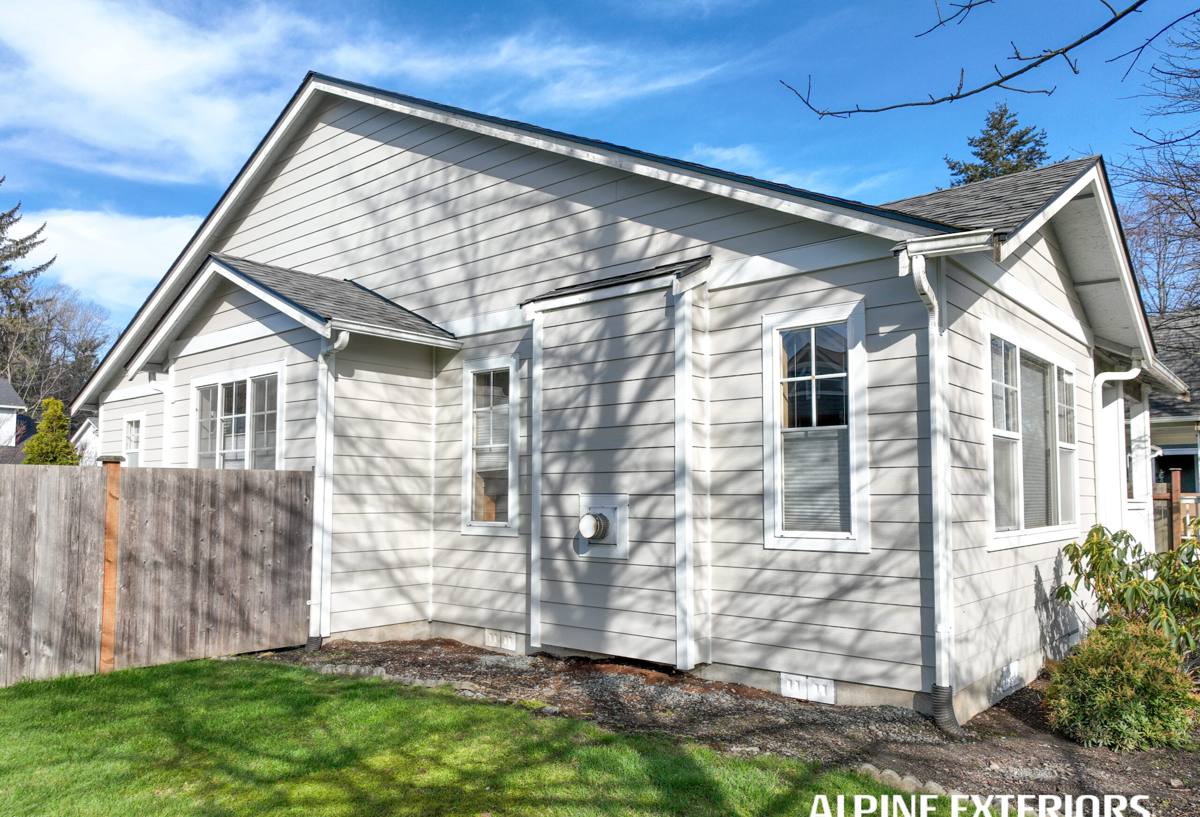
The Climate Guemes Island Siding Actually Has to Survive
Anacortes and the surrounding San Juan and Skagit County waters put every exterior surface through a specific combination of stresses. On Guemes Island, that combination tends to be more concentrated because so many homes sit close to shoreline or under a heavy tree canopy.
Salt Air
Homes near the water pick up airborne salt that settles on siding, trim, and fasteners. Over years, salt exposure accelerates corrosion on anything metal that isn't rated for it, and it can quietly break down paint and finish coatings that weren't engineered to handle it. Siding material and fastener choice both matter more here than they would fifty miles inland.
Driving, Wind-Driven Rain
Storms coming off the water don't just fall straight down — wind pushes rain sideways into wall assemblies, working it into any gap, seam, or fastener hole that isn't properly sealed or flashed. A siding job that would hold up fine in a sheltered inland yard can fail within a few seasons on an exposed island wall if the water management details were rushed.
Moss Season
Between the shade from mature trees and the region's long wet season, moss and algae growth on north-facing walls and anything under heavy canopy is a fact of life. Moss holds moisture against the wall surface, which is exactly the condition that causes rot in wood-based products and premature paint failure on anything not built to resist it.
None of this is unique to Guemes Island — it's the broader Anacortes and Skagit County marine climate. But island homes tend to sit at the more exposed or more shaded end of that spectrum, which is why the material and installation choices matter even more here.
What a Correct Siding Installation Actually Involves
Siding looks simple from the curb — boards or panels on a wall. What determines whether it lasts 10 years or 40 happens underneath, before a single piece of finished siding goes up.
- Removal of old siding and inspection of the sheathing underneath for hidden rot or moisture damage
- Repair or replacement of any compromised sheathing before covering it back up
- A continuous, correctly lapped weather-resistive barrier (house wrap) installed shingle-style so water sheds outward, not inward
- Properly flashed windows, doors, and any wall penetrations, so water is directed out and away from the framing
- Correct starter strip and z-flashing at the base and at every horizontal transition
- Fastener placement and spacing that follows the manufacturer's specification, not a general contractor's habit
- Proper gaps and sealant at butt joints and trim to allow for material movement without letting water in
Skip any one of these steps and the siding itself becomes almost irrelevant — water finds the gap, and the wall assembly starts failing behind a surface that still looks fine from the driveway. This is especially true on a wind-exposed Guemes Island wall, where driving rain will find any weak point faster than it would in a sheltered location.
Why We Install James Hardie Fiber Cement — and Nothing Else
We install James Hardie fiber cement siding exclusively. That's not a brand preference we picked up from a supplier rep — it's a standard we hold because of what this climate does to alternatives over time, and because Hardie's engineering directly addresses the conditions Guemes Island homes face.
Climate-Engineered for This Region
James Hardie makes region-specific HZ product lines engineered for different climate zones, and the Pacific Northwest falls into their moisture- and mildew-resistant HZ5 formulation. That matters directly here: fiber cement doesn't absorb and swell with moisture the way wood-based sidings can, and it resists the sustained dampness that drives moss and mildew growth on shaded island walls.
Non-Combustible
Fiber cement is non-combustible, which matters anywhere, but is worth noting for island and rural properties where fire department response times can be longer than in-town.
ColorPlus Factory Finish
Hardie's ColorPlus finish is baked on at the factory under controlled conditions, rather than field-painted on-site. In a climate where field-applied paint has to cure in unpredictable damp weather, a factory finish is simply more consistent and holds up longer against the fading and moisture stress that salt air and long wet seasons cause.
A Real, Transferable Warranty
Hardie backs its products with a strong warranty that's transferable if the home sells — a real consideration on an island where property changes hands and buyers want documented siding history.
We don't install vinyl, LP SmartSide, cedar, primed spruce, or other fiber cement alternatives. Each of those has legitimate uses elsewhere, but given what this specific climate does to a wall over 20-plus years, Hardie is the one product we're willing to stand behind here.
What Drives Cost on a Guemes Island Project
Every siding estimate is specific to the house, but a few factors come up consistently on island jobs that homeowners on the mainland don't usually have to think about.
| Cost Factor | Why It Matters Here |
|---|---|
| Ferry logistics and scheduling | Materials and crew have to move on ferry schedules — planning trips efficiently keeps this from adding cost |
| Home exposure (waterfront vs. wooded interior) | Waterfront homes need more attention to flashing and fastener corrosion resistance; wooded lots need more attention to moisture and moss |
| Condition of existing sheathing | Hidden rot found during tear-off, more common on shaded or older island homes, adds repair scope |
| Trim and architectural detail | Corner boards, window trim, and accent details add labor regardless of location |
| Square footage and wall height | Standard driver of material and labor cost on any siding job |
| Access for equipment and staging | Some island lots have tighter or steeper access than typical in-town properties |
An honest estimate accounts for these up front rather than surprising a homeowner with change orders mid-project.
How the Process Works
- Initial assessment: we look at the home's exposure, existing siding condition, and any visible moisture or moss issues
- Written estimate: scope, materials, and cost factors specific to the house, including any known access or ferry-scheduling considerations
- Tear-off and inspection: old siding comes off, sheathing is inspected, and any rot or damage is repaired before anything new goes up
- Weather barrier and flashing: house wrap and flashing installed correctly around every window, door, and penetration
- Hardie installation: siding installed to manufacturer fastener and spacing specifications
- Trim, caulking, and touch-up: joints sealed, factory finish touched up where needed at cut edges
- Final walkthrough: we go over the finished work with the homeowner before calling the job done
Signs Your Guemes Island Home's Siding Needs Attention
- Visible moss, algae, or dark staining that keeps coming back after cleaning
- Soft or spongy spots when you press on the siding, especially near the base of walls
- Paint that's peeling, bubbling, or chalking faster than it used to
- Gaps, warping, or buckling at seams and joints
- Visible rust streaks around fasteners or trim
- Rising energy bills that suggest the wall assembly is no longer doing its job
Any one of these on its own might be minor. Several together, especially on a wall that faces the water or sits under heavy shade, usually means the siding is past the point where cleaning or spot repair solves the problem.
Why It Matters That We Already Work on the Island
Getting a crew, equipment, and materials to Guemes Island isn't the same as pulling into a driveway in town. Ferry schedules dictate when a crew can arrive and leave, which means poorly planned trips waste time and money. A crew unfamiliar with the island often underestimates this and either shows up understaffed for the day or burns hours waiting on a ferry that a well-planned schedule would have avoided entirely.
There's also a familiarity factor with the conditions themselves. A crew that has worked several island homes already has a feel for which properties tend toward heavy moss versus which get hit hardest by wind and salt spray, and adjusts the installation details accordingly — extra attention to flashing on an exposed waterfront wall, extra attention to ventilation and moisture management on a shaded, tree-covered lot. That judgment comes from having done the work here before, not from a general siding background applied uniformly everywhere.
Permitting through Skagit County and the City of Anacortes also runs smoother with a contractor who has already been through the process for similar island projects and knows what's expected.
Get a Straight Answer on Your Guemes Island Siding
If your Guemes Island home's siding is showing moss, soft spots, failing paint, or you're simply planning ahead for a replacement, we're happy to take a look and give you a straightforward, no-pressure estimate. Use the form below to request a free estimate — we'll talk through what your home actually needs, not a generic sales pitch.