 Anacortes
 Deck Repair Built for La Conner's Waterfront Climate
La Conner sits right where the Swinomish Channel meets Skagit Bay, and that location shapes what happens to a deck here. Homes in and around La Conner deal with salt-laden air off the water, long stretches of driving rain through fall and winter, and a moss season that can run eight months or more in a shaded yard. A deck that would hold up fine in a drier inland town can show real damage here in half the time if it wasn't built or maintained with this specific climate in mind.
We work on decks throughout the Anacortes and Skagit County area, and La Conner's low-lying, waterfront exposure is its own animal. The combination of moisture and salt air accelerates corrosion on fasteners and hardware, softens wood fiber faster than people expect, and feeds the moss and algae growth that make decks slick and, eventually, structurally compromised. Repairing a deck out here isn't just about swapping a few boards — it's about understanding why the damage happened in the first place and fixing that root cause, not just the symptom.
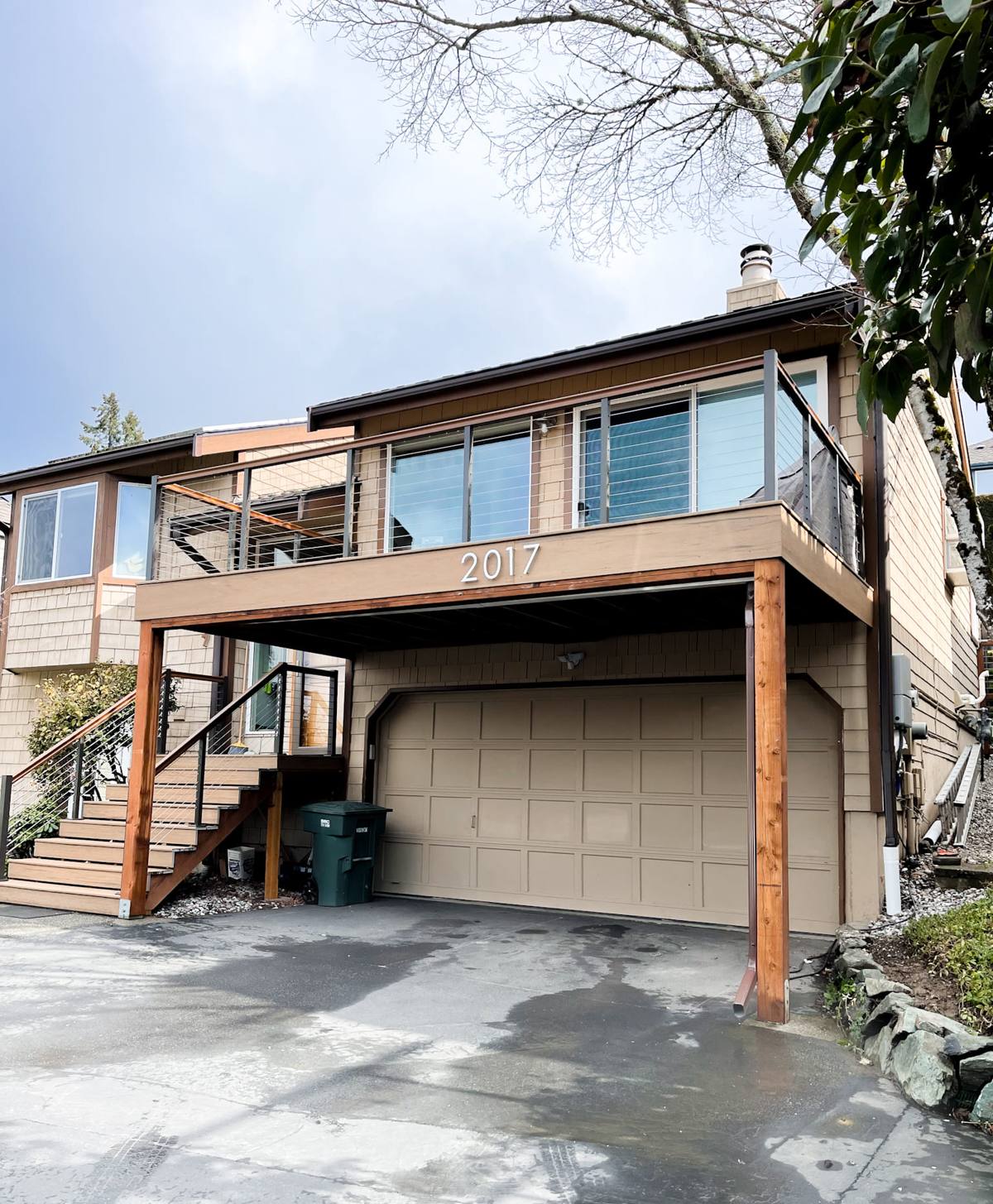
What Actually Wears Out a La Conner Deck
Salt Air and Metal Fasteners
Proximity to the channel and the bay means airborne salt settles on every exterior surface, including deck hardware. Standard fasteners and connectors that aren't rated for coastal exposure will corrode faster here than they would even ten or fifteen miles inland. Corroded fasteners lose holding strength quietly — you often don't see it until a board is loose or a railing has more play than it should.
Sustained Rain and Ledger Board Moisture
Where the deck attaches to the house — the ledger board — is the single most common failure point we find on repair calls. Skagit County's wet season means that connection stays damp for long stretches, and if the original flashing was undersized, missing, or improperly lapped, water works its way behind the ledger and into the rim joist. This is slow, hidden damage that surfaces as soft spots, staining, or a deck that feels slightly spongy near the house.
Moss, Algae, and Surface Degradation
Shaded and partially shaded decks in La Conner grow moss and algae readily, especially on north-facing surfaces or under mature trees. Beyond being a slip hazard, moss holds moisture against the wood surface constantly, which speeds up graying, checking, and eventually rot on the top faces of boards. Composite decking isn't immune either — algae will grow on composite surfaces too, though the material itself won't rot.
Freeze-Thaw and Fastener Movement
While Skagit County winters are mild by national standards, the region does see enough freeze-thaw cycling to work fasteners loose over years, particularly on older decks built before code required specific fastener spacing and hot-dip galvanized or stainless hardware in exposed coastal zones.
Signs Your La Conner Deck Needs Repair, Not Just Cleaning
- Boards that feel soft, spongy, or flex noticeably underfoot, especially near the house or at board ends
- Visible gaps opening up between the ledger board and the house siding
- Railings or posts that wobble or have more give than they used to
- Rust streaking below fastener heads or around joist hangers
- Persistent dark staining or a musty smell near the ledger or under the deck
- Stairs that feel less solid than the rest of the deck (stair stringers take a lot of abuse and are often overlooked)
- Moss or algae that returns within weeks of cleaning, which usually points to a drainage or shade issue rather than just a surface problem
What a Correct Repair Involves
A proper deck repair starts with figuring out why the damage happened, not just replacing what's visibly bad. We pull boards where there's any doubt, check the framing underneath, and inspect the ledger connection and flashing directly — that's the area most likely to have hidden rot even when the surface boards look fine.
Structural Assessment
Before any board goes back on, we check joists, beams, and posts for soft spots, checking for rot with a probe rather than guessing from appearance alone. Wood that looks weathered on the surface can still be structurally sound; wood that looks fine can be rotten a half-inch under the surface. This is also when we check footing stability, since ground moisture around waterfront and low-lying properties can affect post bases over time.
Fastener and Hardware Upgrade
Where we're opening up a deck for repair, we typically upgrade fasteners and structural hardware to stainless steel or coastal-rated hot-dip galvanized, even if the original hardware was standard galvanized. In a salt-air environment like La Conner, this is one of the highest-value upgrades you can make during a repair, because it directly addresses the corrosion problem rather than just delaying it.
Flashing and Water Management
If the ledger board shows any sign of past water intrusion, we address the flashing as part of the repair — not as an optional add-on. Proper flashing directs water away from the ledger-to-house connection instead of letting it pool or wick into the framing. This single detail has more impact on long-term deck life in this climate than almost anything else we do.
Board Replacement and Matching
For wood decks, we replace damaged boards with lumber that matches the existing decking as closely as possible in species and dimension. For composite decking, matching color and profile matters for appearance, and we'll be straightforward with you if an exact match isn't available due to discontinued colors or product lines — that's a real limitation of composite repairs worth knowing about upfront.
Repair vs. Replacement: How We Help You Decide
Not every deck with problems needs to be torn out. But sometimes trying to patch a deck that's failed structurally just delays a bigger cost. Here's how we typically think through it:
| Factor | Leans Toward Repair | Leans Toward Replacement |
|---|---|---|
| Ledger/framing condition | Isolated soft spots, framing otherwise solid | Widespread rot across multiple joists or the ledger itself |
| Age of deck | Under 15-20 years, built to reasonable standards | Older deck with outdated fastener patterns or undersized framing |
| Extent of damage | Limited to a few boards, stairs, or a railing section | Damage spread across the deck surface and substructure |
| Footings and posts | Stable, no movement or settling | Signs of settling, heaving, or footing failure |
| Budget goals | Address the immediate problem cost-effectively | Want to reconfigure size, add features, or upgrade materials |
We'll give you an honest read on which category your deck falls into. If a repair genuinely makes sense, we won't push a full replacement just to increase the job size — but we also won't patch over a structural problem that's going to come back in a year or two.
Why a Crew That Already Works La Conner Matters
Deck repair looks different depending on where you are. A crew used to drier, inland conditions may not think twice about standard galvanized hardware or may not flag ledger flashing as a priority if it "looks fine" on the surface. Working regularly in La Conner and along the Anacortes waterfront means we've seen how salt air, sustained rain, and heavy moss actually play out on decks over years, not just what a repair looks like on day one.
That matters for material choices, for where we spend extra time during inspection, and for what we recommend upgrading versus what's fine to leave as-is. It also means we're familiar with the permitting expectations in Skagit County for structural deck repairs, which can apply depending on the scope of work — we'll tell you upfront if your project needs a permit before we start.
Maintenance That Extends Your Repair
A repair is only as good as the maintenance that follows it, especially in this climate. A few habits make a real difference in how long a repaired La Conner deck stays solid:
- Clean moss and algae off the surface at least once a year, more often on shaded sections
- Keep gutters and downspouts clear so runoff isn't dumping extra water onto or near the deck
- Check the area where the deck meets the house periodically for gaps, staining, or soft siding
- Re-seal or re-stain wood decking on the manufacturer's recommended schedule — coastal exposure shortens the useful life of most sealers compared to inland conditions
- Trim back vegetation that's shading the deck and keeping it damp longer than necessary
- Address small issues — a loose board, a slightly soft spot — before they spread into a bigger repair
Our Process for a La Conner Deck Repair
We start with an on-site inspection where we look at the whole deck system, not just the area you called about — framing, ledger, footings, hardware, and surface boards. From there we give you a clear picture of what's actually going on, what needs to happen now, and what can reasonably wait. If repair is the right call, we walk you through the scope and materials before any work starts, including whether hardware upgrades or flashing work are part of the plan. We keep the work area safe and reasonably tidy throughout, and we'll flag anything unexpected we find once boards come up rather than surprise you with it on the invoice.
If your La Conner deck has soft spots, loose railings, persistent moss, or you just want an honest opinion on its condition, we're happy to take a look. Fill out the form below for a free, no-pressure estimate.