 Anacortes
 Why March Point Homes Need a Different Approach to Windows
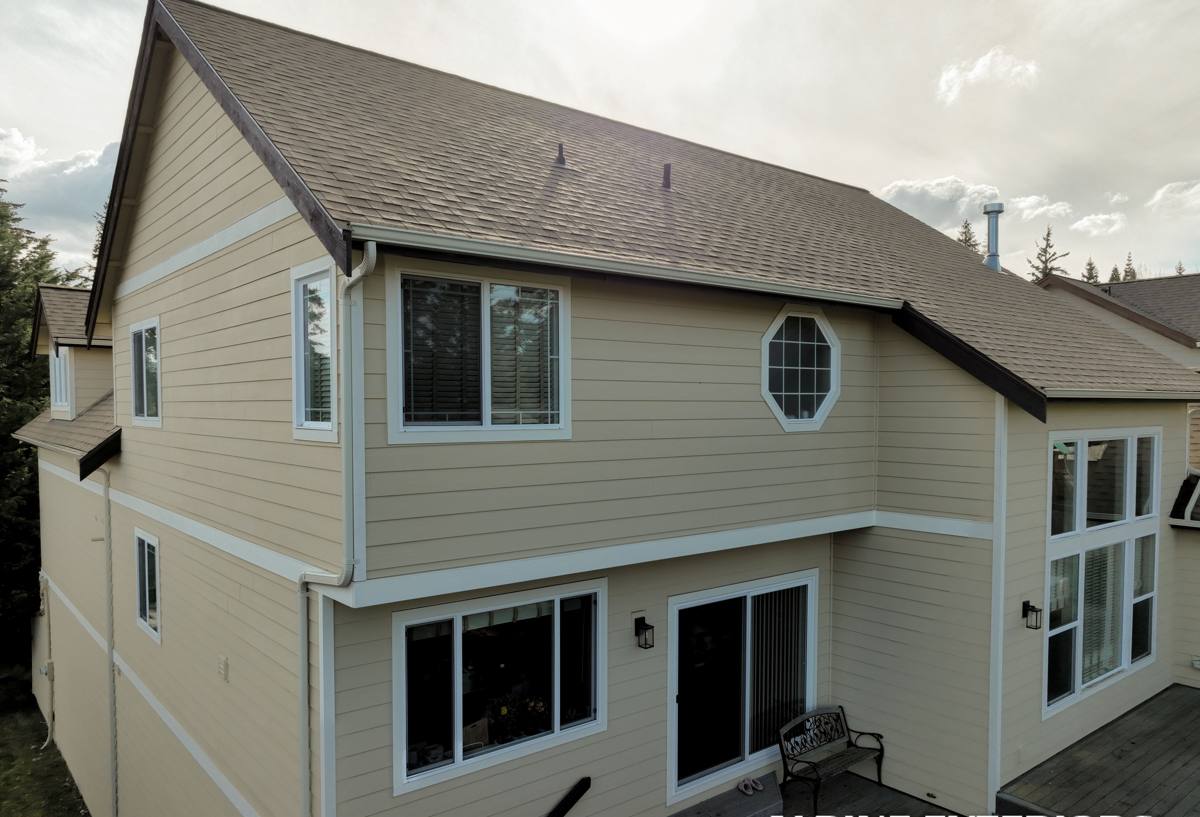
March Point sits out on the water, exposed on more sides than most Anacortes neighborhoods to wind coming off Fidalgo Bay and Padilla Bay. That exposure changes what "energy-efficient windows" should mean for a house out here. A window that performs fine three miles inland can underperform on March Point simply because it's fighting salt-laden wind, near-constant humidity, and driving rain almost every time weather rolls through Skagit County. Energy efficiency isn't just about the glass package — it's about whether the whole assembly, frame, flashing, and seal can hold up to this specific exposure without failing early.
We install windows around Anacortes and the surrounding peninsula regularly, and the difference between a window that saves a homeowner money for 20+ years and one that starts leaking air or water in year five almost always comes down to material choice and installation detail, not the brand name on the sticker.
What the Marine Climate Actually Does to Windows Over Time
Salt Air and Hardware Corrosion
Salt-laden air corrodes exposed metal faster than people expect — hinges, cranks, cam locks, and screws on lower-quality windows can start showing rust or seizing up within a few years on a waterfront-exposed home. This isn't a defect specific to one brand; it's a basic property of steel and lower-grade aluminum hardware in a salt air environment. It's why hardware finish and metal quality matter as much as the glass spec when you're choosing a window for March Point.
Driving Rain and Water Intrusion
Wind-driven rain doesn't fall straight down — it gets pushed sideways into window assemblies, testing every seam, flange, and sealant joint. A window that's watertight in a still-air test can still leak under real driving rain if the flashing detail around it wasn't done correctly. Around here, that's the failure mode we see most often: not a bad window, but a window installed without adequate weather protection behind the trim.
Moss, Algae, and Shaded Exposures
Skagit County's long wet season means moss and algae growth on north- and shade-facing exterior surfaces for much of the year. On windows, that shows up as green staining on sills, trim, and cladding, and it holds moisture against the frame longer than a dry climate would. Frame materials and finishes that resist organic growth and don't trap moisture against wood substrate hold up noticeably better here than in drier parts of the state.
What "Energy-Efficient" Really Means in This Climate
Marketing on window energy ratings is written for a national audience, and some of it doesn't translate well to the Pacific Northwest. Two numbers matter more than the rest for a March Point home:
U-Factor Over Solar Heat Gain Coefficient
U-factor measures how well the window resists heat transfer — lower is better, and it's the number that matters most in our climate, since we're heating far more days than we're fighting solar heat gain. Solar Heat Gain Coefficient (SHGC) gets a lot of attention in sunnier climates, but it's a secondary concern for most Anacortes homes unless you have a large south- or west-facing glass wall.
Air Infiltration and Condensation Resistance
Air infiltration rating tells you how much air leaks through the assembly under wind pressure — directly relevant given how consistently windy it gets on the water side of the peninsula. Condensation resistance matters too: in a humid marine climate, a window with poor thermal performance at the edge of the glass will fog or sweat on the inside during cold snaps, which over years contributes to sill rot and mold at the frame perimeter.
Frame Material Comparison for March Point Exposure
| Frame Material | Salt Air Durability | Moisture Behavior | Maintenance |
|---|---|---|---|
| Vinyl | Good — won't corrode | Doesn't absorb water; seams are the weak point | Low |
| Fiberglass | Very good — dimensionally stable | Minimal expansion/contraction, holds seals well | Low |
| Wood-clad (vinyl or aluminum exterior) | Good on the clad face; interior wood needs protection | Vulnerable if cladding is breached or poorly flashed | Moderate |
| Aluminum (non-thermally broken) | Prone to corrosion and pitting near saltwater | Conducts cold, prone to interior condensation | Moderate to high |
We steer most March Point homeowners toward vinyl or fiberglass for the exposed elevations, not because other materials are bad products, but because they hold up to this specific combination of salt, wind, and moisture with the least long-term maintenance. Wood-clad windows can still be the right call for a specific look or a historic-style home — that's a legitimate trade-off between appearance and upkeep, and we'll walk through it honestly rather than push one direction.
Installation Details That Actually Determine Performance
Flashing and Sill Pans
The window itself is only part of the system. A proper install includes a sloped sill pan so any water that gets past the exterior seal drains back out instead of sitting against the rough opening, plus flashing tape integrated with the house wrap in the correct shingle-lap order (bottom, sides, top) so water sheds down and out rather than behind the cladding. Skipping this step is the single biggest cause of hidden rot we find behind older window trim on this peninsula.
Sealant Choice and Application
Not every exterior sealant is rated for the movement and UV exposure a March Point window sees. We use sealants matched to the substrate and expected joint movement, and we don't rely on caulk alone to do a flashing detail's job — caulk is the last line of defense, not the primary water barrier.
Signs Your Current Windows Are Underperforming
- Visible condensation or fogging between panes (failed seal on a double- or triple-pane unit)
- Drafts you can feel near the frame on windy days
- Soft or discolored wood at the sill or lower corners
- Green or black staining on the frame or trim that returns shortly after cleaning
- Difficulty opening, closing, or locking — often a sign of corroded hardware or a warped frame
- Noticeably higher heating bills compared to similar-sized homes nearby
- Noise transfer that seems worse than it used to be, which can indicate seal degradation
Any one of these on its own isn't necessarily urgent. Several at once, especially on the water-facing side of the house, usually means it's worth having someone take a real look rather than waiting.
How We Approach a March Point Window Project
- On-site assessment. We look at current window condition, exposure direction, and any existing water or rot damage before recommending anything.
- Product selection based on exposure, not upsell. Water-facing elevations often get a different spec than a sheltered back wall — we'll explain why rather than selling one package across the whole house.
- Correct removal and opening prep. This includes checking for hidden rot behind old trim before the new unit ever goes in.
- Sill pan, flashing, and sealant installed per the sequence that actually sheds water in driving rain, not just a quick caulk bead.
- Interior and exterior trim finished to match the home, with debris cleaned up before we leave.
- Walkthrough with the homeowner covering warranty terms and basic care specific to a marine climate.
Cost Factors Homeowners Should Expect
| Factor | Why It Moves the Price |
|---|---|
| Frame material | Vinyl is typically the most affordable; fiberglass and wood-clad cost more up front but may cost less to maintain long-term |
| Number and size of openings | Larger and custom-sized units cost more than standard sizes |
| Condition of the existing opening | Hidden rot or out-of-square framing found during removal adds repair time |
| Full-frame vs. insert replacement | Full-frame replacement (removing down to the rough opening) costs more but is often the right call on older, exposed homes with flashing issues |
| Glass package | Triple-pane or upgraded low-E coatings add cost but can matter more here than in a milder inland climate |
We give exact pricing after seeing the actual openings and their condition — anyone quoting a firm number over the phone for a marine-exposed home hasn't accounted for what's usually hiding behind the old trim.
Why a Crew That Already Works March Point Matters
General window installers who mostly work inland don't always account for wind-driven rain loads or salt air hardware corrosion in their material picks or flashing approach — not because they're careless, but because it's not what they see every day. A crew that regularly works this stretch of Skagit County has already seen which details fail first on a peninsula exposure and builds the install around that from the start, instead of learning it from a callback. We're also familiar with local permitting expectations and typical construction on homes in this area, which keeps a project moving instead of stalling on paperwork surprises.
If your March Point home has drafty, foggy, or aging windows — or you're planning ahead for a remodel — we're happy to take a look and give you a straight, no-pressure assessment of what your home actually needs. Use the form below to request a free estimate.