 Anacortes
 New-Construction Windows for March Point Homes
March Point sits out on the water side of Anacortes, close enough to Fidalgo Bay and the Salish Sea that every building material on a new home has to earn its place. When a house is framed from scratch, the windows aren't just being installed — they're being built into the wall system as part of the water and air barrier. Get that step right and the house stays dry for decades. Get it wrong and you won't see the problem until there's already rot in the framing behind the trim.
New-construction window work is a different job than replacing an old window in an existing opening. There's no old frame to reference, no existing flashing to tie into, and no shortcuts available — the window has to be set, flashed, and sealed as an integrated part of the wall from the studs out. For homes going up in March Point, that job needs to be done with Skagit County's coastal exposure in mind from the very first window.
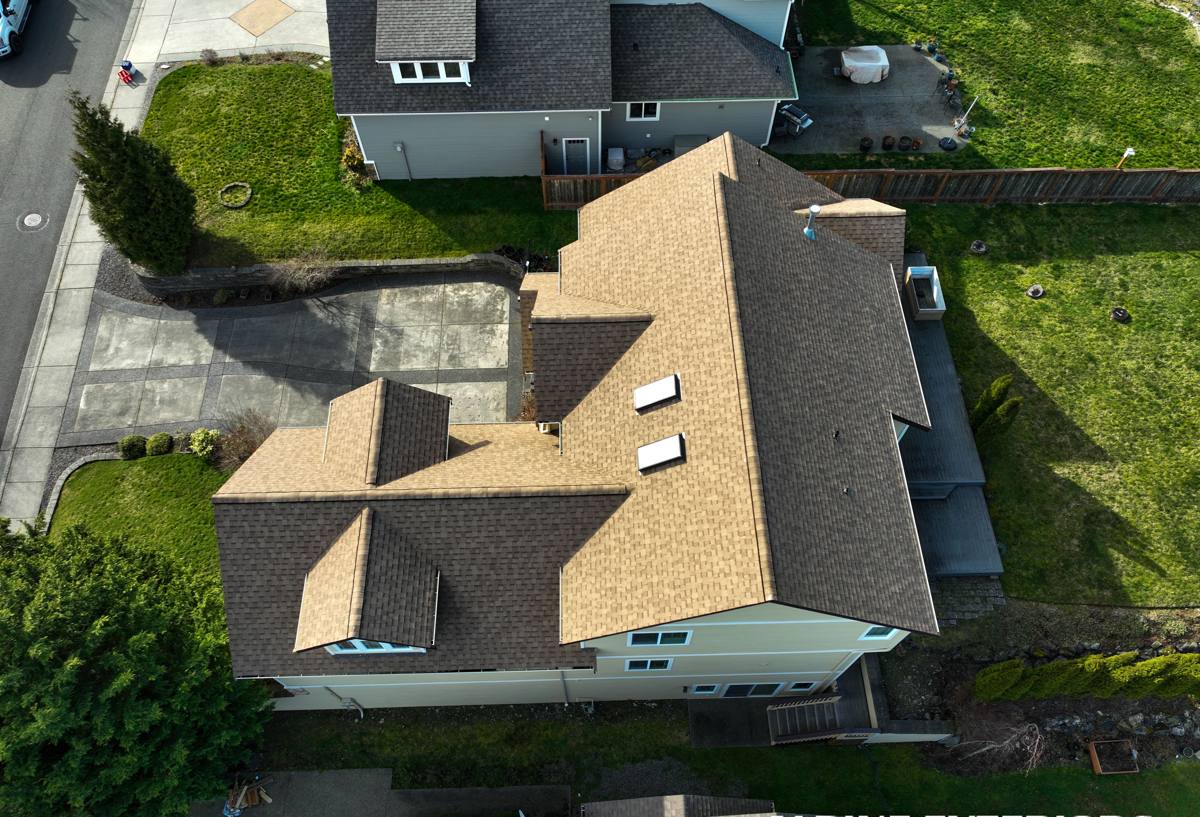
Why the March Point Climate Changes the Job
Three things about this stretch of Anacortes matter more here than in a typical inland build:
Salt Air
Being close to open water means airborne salt is a constant, low-level presence on every exterior surface. Salt accelerates corrosion on fasteners, hardware, and any exposed metal flashing that isn't rated for it. On a new build, this is the easiest problem to solve — because everything is still accessible — and the easiest to get wrong if the crew is using standard hardware out of habit instead of coastal-rated components.
Driving Rain
Wind off the water doesn't just drop rain straight down — it pushes it sideways, into every seam, joint, and gap in a wall. A window flashed correctly for a calm inland lot can still leak in March Point if the flashing sequence doesn't account for wind-driven water working its way upward and sideways, not just downward.
A Long Moss Season
Western Skagit County stays damp for most of the year, and anything that traps moisture against wood — trim, sills, sheathing — becomes a host for moss and mildew growth over time. On new construction, this mostly comes down to details: back-slope on sill pans, gaps for drainage, and materials that don't wick water into the wall cavity.
None of this means March Point needs exotic materials. It means ordinary good practice has to be followed without skipping steps, because the margin for error here is smaller than it is a few miles inland.
What a Correct New-Construction Installation Actually Involves
On a new build, the window opening is a bare rough opening in the framing, wrapped in a weather-resistive barrier (WRB) — usually house wrap or a fluid-applied membrane. The window has to be integrated into that barrier so water is always directed out, never in. A proper sequence looks like this:
- Rough opening is checked for square, level, and correct sizing before the window ever shows up on site.
- A sloped sill pan is installed at the bottom of the opening so any water that gets past the window drains back outward instead of pooling on the sill.
- The WRB is cut and integrated with the sill pan and side flashing using a shingle-lap sequence — each layer overlaps the one below it, the same way roof shingles do, so water always sheds downward and outward.
- The window is set, shimmed level and plumb, and fastened through the nailing fin per the manufacturer's schedule — not just "enough nails to hold it."
- Flashing tape is applied over the nailing fin at the sides and top, again in the correct shingle-lap order, tying the window fully into the WRB.
- A weep path is preserved at the sill so bulk water always has somewhere to go.
- Interior and exterior sealant is applied at the right joints only — sealing the wrong joint can trap water inside the wall instead of keeping it out.
Every one of those steps depends on the one before it. A beautiful sealant bead on the outside can't fix a sill pan that was skipped, and no window product — however good — performs to spec if it's flashed out of sequence.
Choosing a Window Product for a March Point New Build
For new construction, you're not limited by an existing opening, so this is the point to pick a frame material and glazing package that actually fits a marine climate rather than whatever was on sale. Here's how the common options stack up for this kind of exposure:
| Frame Material | Salt Air / Corrosion | Moisture Behavior | Maintenance | Typical Cost Position |
|---|---|---|---|---|
| Vinyl | Doesn't corrode | Won't rot; good for this climate | Low | Lower |
| Fiberglass | Doesn't corrode | Very stable, minimal expansion/contraction | Low | Mid to upper |
| Aluminum-clad wood | Cladding protects wood if sealed well | Wood core needs the cladding and seals intact | Moderate | Upper |
| Bare wood | Hardware needs coastal-rated fasteners | Requires diligent upkeep near salt air | Highest | Varies |
We don't push one brand or material as the only right answer — the right choice depends on the home's design, budget, and how much upkeep an owner wants to take on. What we do insist on for March Point builds is corrosion-resistant hardware and fasteners regardless of frame material, because standard-grade hardware is where salt-air failures usually start.
Glazing Considerations
Double-pane, low-E glazing is standard on new construction in this part of Washington, and the coating package matters more for solar heat gain than for the marine climate itself. What matters more locally is a tight, well-sealed sash and frame — condensation and fogging problems on this coastline are almost always installation issues, not glass defects.
Washington Energy Code and New Construction
New builds in Skagit County have to meet Washington State Energy Code requirements for window performance, which sets minimum standards for U-factor (how well the window resists heat loss) as part of the whole-house energy compliance path. This isn't optional on new construction — it's checked at permit and inspection. Part of our process on a new build is confirming the window specs the builder or homeowner has chosen actually meet the code path being used for that house, before the windows are ordered, not after they show up on site and don't pass.
Our Process for New-Construction Window Work in March Point
New-construction window installation only works smoothly when it's coordinated with the rest of the build, not treated as an isolated task. Our process:
- Review the rough openings and window schedule against the plans before ordering, catching sizing or spec issues early.
- Confirm window specs meet Washington energy code requirements for the project's compliance path.
- Coordinate timing with the builder or GC so windows go in right after the WRB is installed and before siding closes the wall up.
- Install sill pans, flashing, and the window itself in the correct sequence, with coastal-rated fasteners and hardware.
- Document flashing details before siding covers them, so there's a clear record of what was done at each opening.
- Final walkthrough on fit, operation, and weatherproofing before the crew leaves the site.
Because we're set up to work directly with builders and GCs, we can move on the framing crew's schedule rather than making a new build wait on us — which matters when a house needs to get weathertight before winter rain sets in.
A Practical Checklist for New-Construction Window Installation
Whether you're a homeowner working with a builder or a GC bringing in a window sub, these are worth confirming before the windows go in:
- Sill pan flashing is included at every opening, not just the ones facing the weather side.
- Flashing tape and WRB integration follow a shingle-lap sequence — top layer over the one below.
- Fasteners and hardware are corrosion-resistant, not standard-grade.
- Window U-factor and specs are confirmed against the Washington energy code path before ordering.
- A weep path is preserved at the sill for drainage.
- Flashing details are photographed or documented before siding covers them.
Why Local Experience on March Point Matters
March Point's exposure to wind and salt air isn't uniform across Anacortes — a lot in this area can see meaningfully more driving rain and salt exposure than a lot a few miles inland or on the more sheltered side of town. A crew that's already worked new-construction projects in this specific area has already seen how water moves on these lots, which openings take the worst of the weather, and where standard details need to be tightened up for the location. That's not something you get from a general installation manual — it comes from having actually flashed windows on this stretch of the county before.
If you're building in March Point and want the windows done right the first time — no repeat visits for callback leaks, no guessing on hardware or flashing — we'd be glad to take a look at your plans and put together a free, no-pressure estimate.