 Anacortes
 Old Town Sits Where the Weather Hits Hardest
Old Town is one of the older, closer-to-the-water neighborhoods in Anacortes, and that location comes with a roofing problem most inland Skagit County homes don't deal with in the same way. Being near the water means more airborne salt, more wind-driven rain hitting the roof plane instead of falling straight down, and shaded, moisture-holding lots that grow moss on a schedule most homeowners never expect. Add in the age of a lot of the housing stock in this part of town — steeper original rooflines, older sheathing, decades of prior roofing work stacked on top of each other — and you've got a neighborhood where a roof either fits the conditions or it fails early. Metal roofing, installed correctly, is one of the better answers to that combination. Installed poorly, it can trap the same moisture problems it's supposed to solve.
This page is about metal roofing specifically for Old Town Anacortes homes — what the local climate actually does to a roof over time, what a correct metal roof installation looks like on an older house, and why the details matter more here than they would on a newer subdivision roof twenty minutes inland.
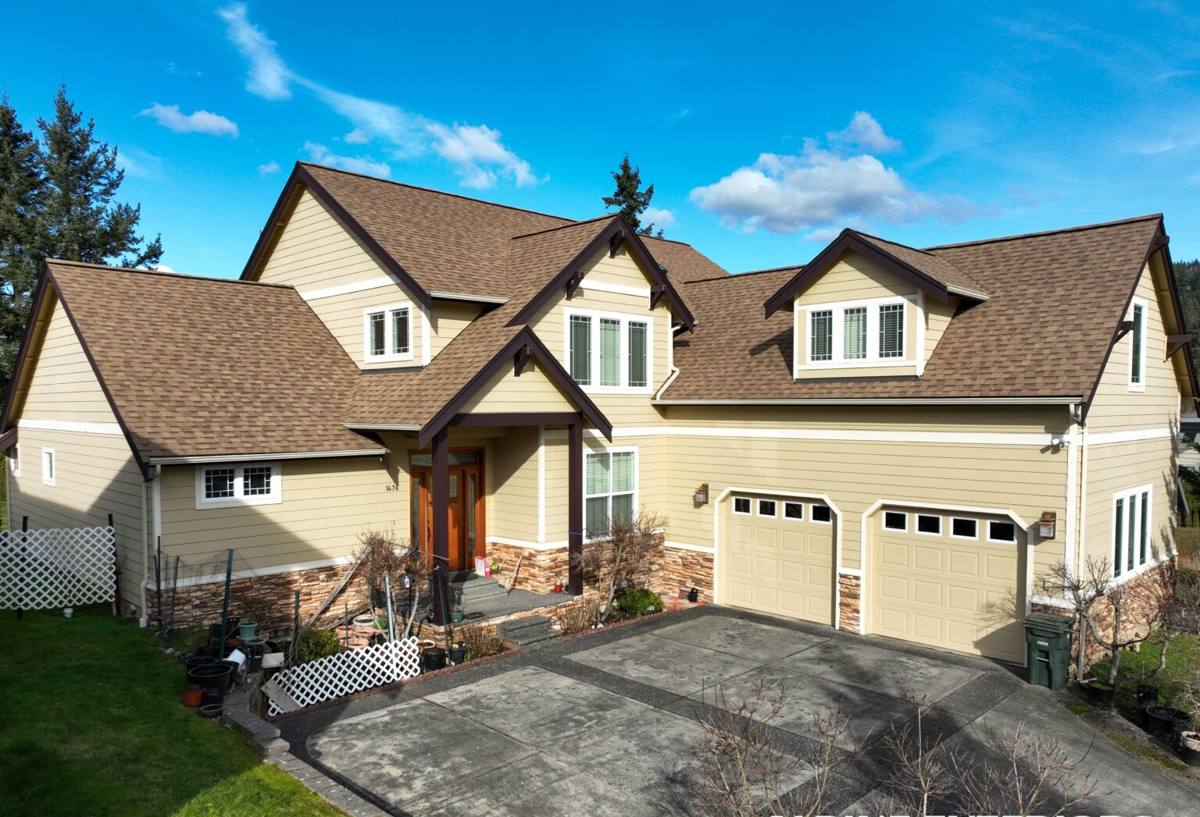
What Salt Air, Rain, and Moss Actually Do to a Roof
Salt-Laden Air and Corrosion
Anacortes sits on Fidalgo Island surrounded by saltwater, and homes in Old Town — closer to the shoreline than most of the rest of town — take the brunt of that. Airborne salt accelerates corrosion on any exposed metal: fasteners, flashing, gutters, and the roofing panels themselves if the wrong material or coating is used. This isn't a hypothetical; it's the reason we're selective about metal type, fastener grade, and coating class on any Old Town job, and it's a big part of why "any metal roof" isn't the same as "the right metal roof" this close to the water.
Driving Rain and Roof Geometry
Skagit County gets a lot of rain, and near the water it often arrives sideways rather than straight down. On a roof, that means water gets pushed up under laps, into valleys, and against vertical transitions — chimneys, dormers, wall intersections — with more force than a calm rain would produce. Flashing and seam design that would be adequate in a drier, more sheltered location can leak here. This is a geometry and detailing problem as much as a material problem, and it's where a lot of roofing failures actually start.
Moss, Moisture, and Wood Rot
The long moss season in this part of Washington isn't just a cosmetic issue. Moss holds moisture against a roof surface far longer than the surface would otherwise stay wet, which is exactly the condition that leads to rot in sheathing, decay in trim, and premature failure of underlayment. Shaded lots — common in older, more established neighborhoods with mature trees — are worse for this than open, sun-exposed sites. Metal roofing doesn't eliminate moss risk entirely, but a properly installed metal roof gives moss far less to hold onto and sheds water fast enough that surfaces dry out between rain events instead of staying damp for weeks.
Why Metal Roofing Fits Older Anacortes Homes
A lot of the homes in Old Town were built with steeper roof pitches than what you see in newer construction, which is actually a point in metal roofing's favor — steeper pitches shed water and debris faster and reduce the standing-moisture problems that drive moss growth and shingle failure. Metal roofing also weighs less than most people assume, which matters on older framing that wasn't engineered for today's heavier roofing products or for a second layer stacked over the original roof.
Beyond the technical fit, metal holds up to the specific stresses of this location: it doesn't absorb water the way organic shingle materials can, it doesn't provide the same foothold for moss and lichen, and a quality system is built to shrug off decades of salt air and driving rain rather than degrade under them. That combination — lighter weight, steep-pitch performance, and resistance to the exact conditions Old Town deals with — is why we recommend metal more often here than in some other parts of our service area.
Choosing a Metal Roofing System
Not all metal roofing is built the same way, and the differences matter more in a marine climate than they would somewhere drier. The table below is a general comparison of the systems we're most often asked about for Old Town homes.
| System | How It's Fastened | Salt-Air Durability | Best Fit |
|---|---|---|---|
| Standing seam | Concealed clips, no exposed fasteners | Strong — no penetrations for water or salt to work into | Full re-roofs, homes closest to the water, longer-term ownership |
| Exposed-fastener panel | Screws through the panel face | Moderate — durability depends heavily on fastener quality and maintenance | Outbuildings, budget-driven projects, less exposed sites |
| Metal shingle/shake panel | Interlocking panels, concealed fasteners | Strong, with the added benefit of a more traditional look | Homes where a metal roof needs to visually match an older neighborhood aesthetic |
For most Old Town properties we lean toward standing seam or a concealed-fastener shingle-style panel, specifically because exposed fasteners are the first thing salt air and driving rain go after. That's a maintenance-burden and long-term-performance judgment on our part, not a claim that exposed-fastener panels are unusable — they have a place, just less often on homes sitting closest to the water.
What a Correct Installation Actually Involves
Deck Inspection and Repair
Before any metal goes down, the roof deck gets inspected for rot, soft spots, and prior water damage — common on older Old Town homes that may have had moss sitting on the roof for years before a re-roof was scheduled. Metal roofing telegraphs an uneven or damaged deck more visibly than shingles do, so this step isn't optional; it's the difference between a roof that lies flat for decades and one that shows waves and stress points within a few years.
Underlayment Built for This Climate
We use a high-temperature synthetic underlayment rated for use under metal, with ice-and-water shield at eaves, valleys, and any wall or roof-penetration transition. In a climate with this much driving rain, the underlayment is a real second line of defense, not a formality — it's what protects the deck if wind ever pushes water past a seam or flashing edge.
Fasteners and Flashing
Every fastener on a metal roof this close to salt water should be a corrosion-resistant grade matched to the panel metal — mismatched metals accelerate corrosion through galvanic reaction, which is a detail that gets skipped on rushed jobs. Flashing at valleys, chimneys, and wall intersections is formed and installed to shed water outward at every transition, not just caulked and hoped over; caulk is a backup, not a flashing strategy.
Ventilation
A metal roof needs proper intake and exhaust ventilation underneath it just as much as any other roofing material — arguably more, since trapped moisture under a non-breathable metal surface has fewer ways to escape. We check attic ventilation as part of every metal roof estimate, because a beautiful roof over an unventilated attic just moves the moisture problem from the surface to the structure.
Our Process, Start to Finish
- Site visit and assessment — we look at pitch, deck condition, existing ventilation, exposure to wind and salt air, and any moss or moisture staining already present.
- System recommendation — based on that assessment, we recommend a panel type, gauge, and coating suited to the specific exposure of your property, not a one-size answer.
- Written estimate — scope, materials, and price laid out clearly before any work is scheduled.
- Deck prep and repair — any rot, soft sheathing, or damaged framing gets addressed before panels go on.
- Underlayment and flashing installation — the part that determines whether the roof actually performs in driving rain, done to manufacturer spec.
- Panel installation — set, seamed or fastened, and finished according to the system's engineering, not shortcut for speed.
- Final walkthrough — we go over the finished roof with you, including what maintenance to expect given the site's exposure and shade.
Living With a Metal Roof in This Climate
A metal roof in Old Town Anacortes needs less maintenance than most other roofing types, but "less" isn't "none." A short seasonal checklist keeps a good roof performing like one for its full lifespan:
- Clear overhanging branches and debris that shade the roof and feed moss growth, especially on lots with mature trees.
- Check and clear gutters before the fall rains arrive — clogged gutters back water up under eave flashing.
- Look at valleys and roof-to-wall transitions once a year for any sign of debris buildup or organic growth.
- Have fastener and seam condition checked periodically if your system uses exposed fasteners.
- Address any moss you do see early, with methods appropriate to a metal finish — pressure washing and harsh scraping can damage coatings and should be avoided.
What Affects the Cost
Metal roofing costs more upfront than asphalt shingles, and the final number on any given Old Town project depends on a handful of factors more than on the brand printed on the panel.
| Factor | Why It Matters Here |
|---|---|
| Panel system chosen | Standing seam costs more than exposed-fastener panel, largely due to labor and material |
| Roof pitch and complexity | Steeper, older Old Town rooflines with multiple valleys and transitions take more time and flashing work |
| Deck condition | Rot repair from long-term moss or prior leaks adds cost that's only known once the old roofing is off |
| Exposure to salt air | Closer-to-water properties often justify a higher fastener and coating grade, which affects price |
| Tear-off vs. overlay | Metal can sometimes go over an existing layer if the deck and code allow it, saving on tear-off cost |
We give a firm, itemized number after seeing the roof in person — we don't quote metal roofing off a phone call, because the deck condition and exposure on an older Old Town home can vary a lot from house to house.
Why Local Experience in Old Town Anacortes Matters
A metal roof installed by a crew unfamiliar with this specific stretch of Skagit County coastline is more likely to under-spec the fastener grade, under-detail the flashing, or miss the moss and shade pattern that's specific to a given lot. We work in this neighborhood regularly, which means we already know what salt air does to an under-specced fastener over five years, what shaded lots near mature trees do to moss growth, and how driving rain off the water behaves against different roof geometries. That local pattern recognition is the difference between a roof that's technically installed correctly on paper and one that's actually built for the block it sits on.
If you're weighing a metal roof for a home in Old Town Anacortes, we're happy to come take a look and walk you through what your specific roof, pitch, and exposure call for. Reach out for a free, no-pressure estimate using the form below.